Home Robots at $7,999, Meta Enters Cloud, and the Case for Skepticism About the Robotics Price Curve
How this was made Verified AI
Every Intellegix briefing is generated from that day's broadcast and run through automated checks before it publishes — with a human paged on any flag. Here is the trail for this edition.
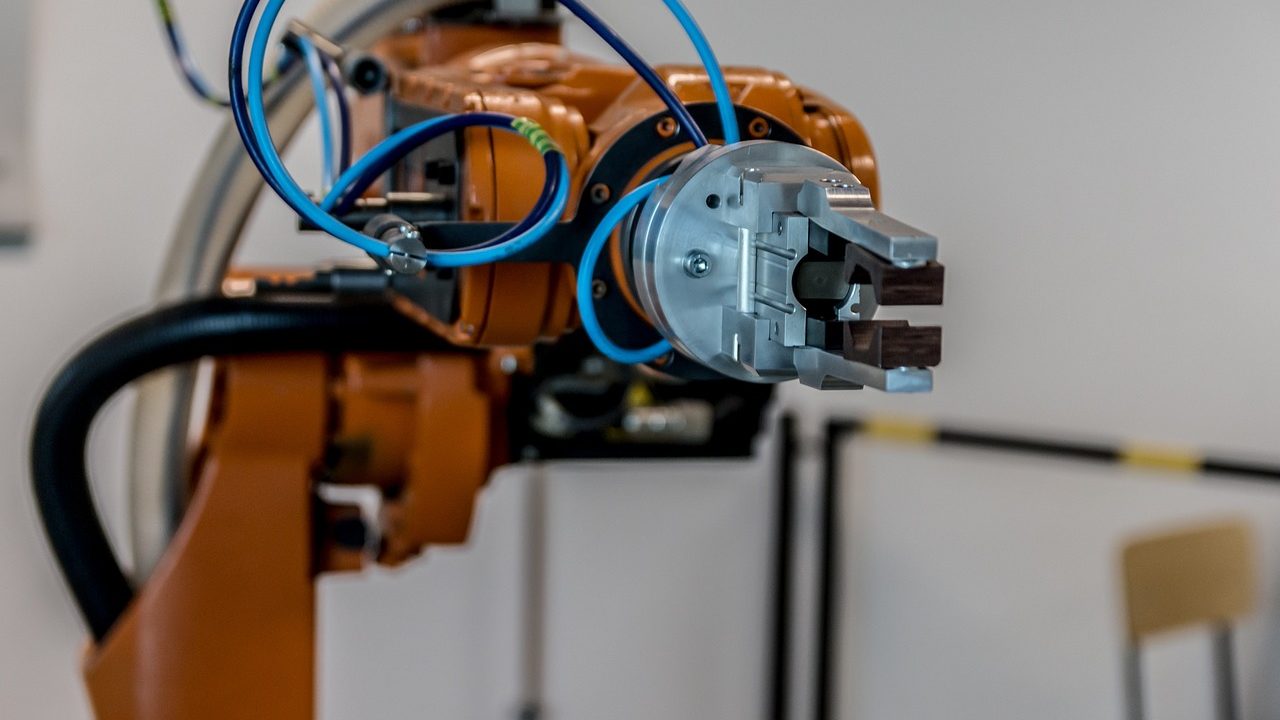
Weave Robotics announced the Isaac 1 — a bipedal home robot designed to navigate domestic environments and perform physical tasks — at $7,999 with Fall 2026 delivery commitments. The announcement drew 192 points and 278 comments. At that price point, the product sits squarely in enthusiast and early-adopter territory, and the dominant question in the thread was whether a credible path exists to the price compression that would make general-purpose home robots a mass-market product.
The optimistic case draws on the EV analogy: the Tesla Roadster in 2008 cost over $100,000; by 2024, EVs were available under $30,000. Scale manufacturing, software improvements without hardware changes, and component cost competition drove that compression. Skeptics in the thread, several of them robotics engineers, offered a structural counterargument. EVs replaced an existing product — the internal combustion vehicle — that consumers were already spending forty to fifty thousand dollars on. The value proposition was substitution of a known expenditure. Home robots are creating a new product category. More critically, EV cost compression was primarily a physical engineering problem with clear progress metrics in battery chemistry and manufacturing scale. Home robot capability requires solving open AI problems: reliable manipulation in unstructured environments, safe behavior around children and pets, and long-context task planning. The research timeline for those problems does not follow the same curve as lithium cell manufacturing.
The practical signal the thread converged on: watch for Isaac 1 and comparable products to achieve task completion rates above 95% on household errands in independent third-party testing — not manufacturer demonstrations or controlled environments, but standardized tests across diverse home configurations. If that figure does not appear by mid-2027, the timeline for mass-market adoption should be revised significantly. If it does, the price compression argument becomes substantially stronger. The technology readiness level, not the price announcement, will determine whether this is an early EV or an early Segway.
On adjacent business developments, Reuters reported that Meta plans to sell excess AI compute capacity through a cloud offering — a direct consequence of its infrastructure buildout for internal AI products, where owned GPU clusters are not saturated around the clock. The move places Meta in indirect competition with AWS, Azure, and Google Cloud for AI compute. Nvidia, meanwhile, is reportedly offering select startup customers access to compute in exchange for a percentage of future revenue rather than upfront payment — a venture-style financing model unusual for a chip company that reflects how central compute access has become to startup trajectories.
A searchable directory of more than 22,000 products from worker-owned cooperatives worldwide generated 362 points — a higher score than many hardware and software announcements. The comment thread attributed this to genuine philosophical and practical interest in alternative ownership structures among a significant portion of the Hacker News readership, with users identifying worker-owned alternatives to products they were buying from conventional companies. The July 2026 'Who Is Hiring' thread, meanwhile, showed meaningful concentration of hiring in AI infrastructure, robotics, and defense technology, and a notable pullback from mid-size SaaS companies — a structural shift from hiring patterns two to three years earlier.