Apple Bets on Google's AI as Industry Faces Security Threats, Performance Claims, and Regulatory Reckoning
Apple's reported decision to build its AI architecture around Google's Gemini models is shaking the technology industry's foundations, arriving alongside a Microsoft developer toolchain breach, extraordinary performance claims from Xiaomi, and mounting regulatory pressure on platforms worldwide.
“it is not possible, in the prevailing expert consensus, to create communication backdoors accessible only to authorized parties without also creating new vulnerabilities”
How this was made Verified AI
Every Intellegix briefing is generated from that day's broadcast and run through automated checks before it publishes — with a human paged on any flag. Here is the trail for this edition.
Apple Abandons 'Not Invented Here' as Google Gemini Powers New AI Strategy

Apple is reportedly building its new AI architecture around Google's Gemini models — a move that represents a striking departure from the company's decades-long philosophy of vertical integration and full-stack control. The announcement, which drew more than 600 votes and nearly 500 comments on Hacker News, arrives alongside the release of Apple's Core AI Framework and a new Siri AI announcement, suggesting the company is rushing AI capabilities to market rather than waiting years to develop competitive foundation models internally.
The architecture Apple describes is a hybrid one: sensitive personal data is processed on-device using Apple's own chips, while more complex reasoning tasks are routed to Gemini models running in what the company calls 'privacy-preserving cloud environments.' Seamlessly orchestrating between local and remote inference at iPhone scale, while honoring Apple's privacy commitments, represents an enormous technical challenge. The arrangement almost certainly involves substantial financial commitments to Google, raising questions about the unit economics of Apple's services business, which has served as the company's primary growth engine.
Critics in the Hacker News community have expressed skepticism about whether Apple can genuinely maintain its privacy positioning while routing complex queries through Google's infrastructure. Apple has cited sophisticated differential privacy and secure multi-party computation as safeguards, though implementing such systems at scale is, by any measure, unprecedented.
The announcement coincided with a serious security incident at Microsoft, where open-source developer tools were reportedly compromised to steal passwords from AI developers — a breach targeting the authentication mechanisms used to access training clusters, model repositories, and deployment infrastructure. The attack vector, analysts noted, suggests nation-state-level capabilities. The incident underscores how AI systems have crossed into critical infrastructure territory, and paradoxically lends some support to Apple's hybrid approach: by keeping sensitive operations on-device and anonymizing queries sent externally, the company limits its attack surface relative to fully cloud-dependent architectures, even as it accepts new risks around model supply chain security.
Apple's dependency on Google also carries geopolitical dimensions. Should international trade tensions escalate or new AI export restrictions emerge, the intelligence layer underpinning Apple's entire ecosystem could be directly affected — a risk that would have been unthinkable under the company's previous strategy of building critical technology in-house.
Xiaomi Claims Tenfold AI Speed Leap as OpenCV 5 Reshapes Computer Vision

Xiaomi has announced that its MiMo model achieves 1,000 tokens per second — a figure that, if verified, would represent roughly a tenfold improvement over current production systems and would fundamentally alter the economics of AI deployment, allowing the same workload to be served with a fraction of the hardware. The company describes a 'tile-based inference' architecture that breaks model computation into smaller, independent chunks processed simultaneously across multiple chips, though the memory bandwidth demands of such an approach are substantial.
Xiaomi is positioning MiMo as a commercial offering rather than a research demonstration, effectively claiming GPT-4-class capabilities at dramatically lower latency and cost. Independent verification of the performance figures has not yet emerged, and the AI industry has a documented history of benchmark results that depend heavily on carefully selected test conditions. Even so, real-world performance at half the claimed rate would still represent a significant advance.
The timing carries geopolitical overtones. The announcement follows Apple's Google partnership closely and can be read as a signal that Chinese companies believe they can compete directly with Western AI infrastructure — and that China need not rely on American foundation models to achieve superior performance.
On more established ground, the release of OpenCV 5 marks a major milestone for a library that has served as the backbone of computer vision development for more than two decades. The new version integrates a neural network module that makes it straightforward to incorporate modern deep learning models into traditional image-processing pipelines, bridging classical techniques and contemporary AI. Hardware acceleration improvements span mobile ARM processors to specialized AI chips, opening new possibilities for edge computing applications. Hacker News discussion highlighted particular excitement around real-time object tracking improvements, which are expected to benefit industries including retail analytics, sports broadcasting, and security systems. Because OpenCV is open source, these gains flow directly to every company using computer vision rather than being monetized by a single vendor.
GitHub Challenger, Satirical UI Library, and a New Era for Postgres Query Tuning

A project called Gitdot is positioning itself as a GitHub alternative built in Rust, emphasizing decentralization and cryptographic verification of code history. Its arrival taps into genuine frustration within the developer community: Hacker News discussion revealed concerns about vendor lock-in, pricing changes, feature bloat, and Microsoft's broader AI strategy as motivations for seeking alternatives. The choice of Rust signals a design priority for performance and memory safety from the outset. Still, Gitdot faces the classic platform adoption problem — GitHub's network effects, built on the social dynamics of collaborative coding, are formidable, and switching costs for established projects are substantial.
Performative-UI, a React component library that reportedly received more than 1,000 votes on Hacker News, takes a different approach to developer tools: it is simultaneously functional and satirical, implementing common design anti-patterns — including what it calls an 'infinite scroll of doom' — in ways that make their manipulative mechanics explicit to the developers deploying them. The project functions as education disguised as tooling, forcing teams to confront the user-experience implications of patterns they might otherwise adopt unconsciously.
On the database side, the PostgreSQL project is introducing query hints in Postgres 19, representing a meaningful philosophical concession from a team that has long resisted giving developers direct control over query execution plans. The implementation goes beyond simple directives; instead of commands such as 'use this index,' the system accepts semantic hints about data distribution, query selectivity, and execution patterns, preserving optimizer intelligence while expanding developer agency. Oracle and SQL Server have offered comprehensive hints systems for years, and their absence has historically been a barrier to PostgreSQL adoption in performance-critical enterprise environments.
Vintage Hardware, Digital Archaeology, and the Enduring Craft of Systems Programming
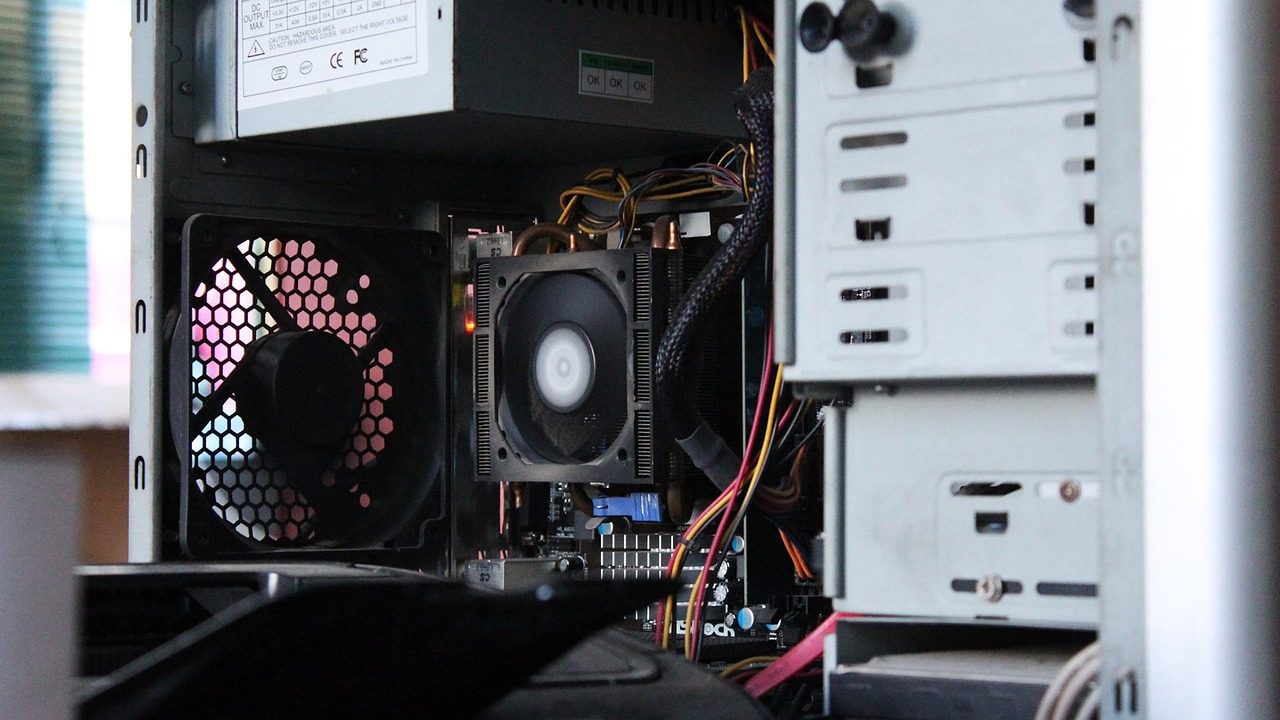
A project porting the ThinkPad X61 to Coreboot firmware illustrates the specialized engineering required to extend older hardware's useful life while meeting contemporary security standards. The X61 uses Intel's i965 chipset, whose complex memory controller initialization sequences and underdocumented proprietary interfaces require deep knowledge of x86 architecture and hardware bring-up procedures to reverse-engineer. For organizations with high-security requirements or embedded applications — where verifying every piece of firmware code is non-negotiable — Coreboot's open and auditable nature is a practical necessity, not a hobbyist indulgence.
A separate project called GentleOS is drawing attention for recreating the aesthetic simplicity of classic operating systems in a modern implementation. Though not targeted at practical daily computing, it reflects a broader current of interest in minimalist software environments that prioritize user agency over engagement mechanics — and demonstrates that building even a simple operating system demands genuine mastery of hardware interfaces, memory management, and user-space abstractions.
Old'aVista, a search engine for historical web content, addresses what its creators frame as a market failure: the original directories and search engines that indexed the early internet are largely gone, and modern search tools do not effectively surface archived material. Building search that functions coherently across decades of evolving document formats, character encodings, and link structures requires careful engineering. The project reflects growing recognition that early digital content constitutes cultural heritage worth preserving and retrieving.
Rounding out the systems-programming discussion, a Haskell-to-JVM library called H2JVM drew interest for bridging functional and object-oriented paradigms by allowing Haskell code to produce JVM bytecode directly. The approach could enable performance-critical applications to combine functional programming's expressiveness with the JVM's mature optimization infrastructure.
Pesticides, Surveillance Laws, and the Fracturing of the Global Tech Platform

The detection of EU-banned pesticides in imported food products points to systematic failures in international coordination on chemical safety standards. The substances in question were prohibited in the EU for health and environmental reasons, yet they are reportedly still being used in producing countries and reaching European markets through inadequate screening. The economic consequences for importers from affected regions could include broad trade restrictions and costly new inspection regimes, while the episode underscores the potential for supply chain technologies — blockchain provenance tracking, automated chemical analysis, AI-assisted pattern recognition — to close gaps that manual inspection cannot.
Signal is protesting surveillance legislation that it argues would require fundamentally compromising its encryption, and has threatened to exit that market rather than comply. The technical objection is widely shared among cryptographers: it is not possible, in the prevailing expert consensus, to create communication backdoors accessible only to authorized parties without also creating new vulnerabilities. For technology companies broadly, demands of this kind create difficult choices — compliance in one jurisdiction can erode global user trust, while refusal risks losing access to significant markets.
A report involving Facebook and Alberta separatism illustrated the evolving sophistication of foreign influence operations, with the alleged campaign reportedly paying overseas actors to promote separatist content using locally authentic-seeming voices — a tactic designed to amplify existing political divisions while evading attribution. Distinguishing coordinated inauthentic behavior from genuine grassroots political discourse requires increasingly sophisticated analysis and puts platforms in an uncomfortable position between content moderation and free-expression principles.
xAI is reportedly evolving to resemble a data center real estate investment trust more than a conventional frontier AI laboratory, monetizing its specialized compute infrastructure directly rather than treating capital investment in hardware, power, and cooling as a sunk cost of research. While the business logic is coherent — infrastructure monetization can provide more stable revenue than uncertain AI product development — the shift raises regulatory questions about how such a company should be classified and governed, and broader concerns about market concentration in the specialized hardware required for frontier model training.
Across all these cases, a common thread emerges: the assumption that global technology platforms can adapt their systems incrementally to comply with divergent national requirements may be tested to its limits. If compliance costs and technical conflicts between jurisdictions become severe enough, the result could be genuine platform fragmentation — different versions of major services for different regulatory environments, or outright market exits. Such an outcome would mark a significant reversal of technological globalization, though whether that threshold is approaching remains, for now, an open question.