City Closes the Books on Its Deficit — With Caveats
How this was made Verified AI
Every Intellegix briefing is generated from that day's broadcast and run through automated checks before it publishes — with a human paged on any flag. Here is the trail for this edition.
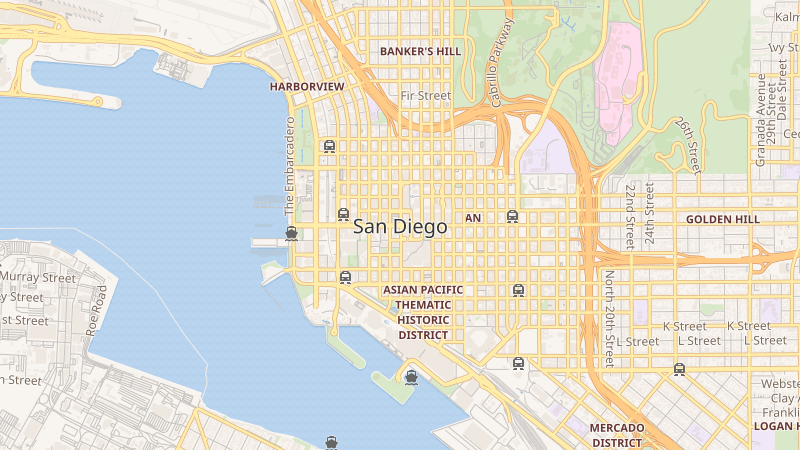
San Diego officials declared as of a November 6th report that the city's $300 million structural deficit has been eliminated, stating that no additional budget cuts are necessary after three years of reductions. The savings that closed the gap included roughly $180 million from position cuts and approximately $143 million in new annual revenue — among it the $80 million trash fee and $63 million from Measure C hotel tax revenue.
Yet in the same announcement, officials acknowledged there is not enough money to restore previously cut services or bring reserves to their target levels. Libraries with reduced hours, parks with deferred maintenance, and eliminated positions do not return automatically because the structural shortfall has been addressed. The city still faces roughly $7.8 billion in deferred infrastructure needs against about $5 billion in available funding over five years — a gap of approximately $2.8 billion that the balanced operating books do not close.
The trash fee central to achieving that balance is also central to a recall campaign building against Mayor Todd Gloria, illustrating how the same fiscal lever can represent progress and grievance simultaneously.
On the ballot measures that remain uncertified: Measure A, the county charter overhaul, sat at 52.07 percent with 424,548 affirmative votes as of November 7th reporting. Measure B, the half-cent sales tax, showed 435,487 yes votes to 402,023 no — roughly a 52-to-48 margin. Supervisor Terra Lawson-Remer declared victory after Thursday's tally, but a campaign declaration and a certified result are two distinct things. The next update is expected by 6 p.m. Monday, November 9th, with the official canvass closing on or before December 3rd.
If Measure A holds, it would establish an independent ethics commission, an independent budget analyst, and an independent program auditor for the county, while also allowing supervisors to serve three terms instead of the current two. Measure B's stated priorities — Tijuana River pollution, healthcare, childcare, nutrition, emergency response, and wildfire prevention — carry a projected revenue range of $400 to $450 million annually, a broad mandate that will require sustained oversight to track. Meanwhile, Mexican Ambassador to the United States Roberto Lazzeri pledged during a San Diego visit to work on the Tijuana River pollution crisis, according to November 7th reporting — a diplomatic commitment whose infrastructure investment and timeline remain to be established.