Sixteen Times the Legal Limit: County Moves Toward a $5.8 Million Fix for the Tijuana River
How this was made Verified AI
Every Intellegix briefing is generated from that day's broadcast and run through automated checks before it publishes — with a human paged on any flag. Here is the trail for this edition.

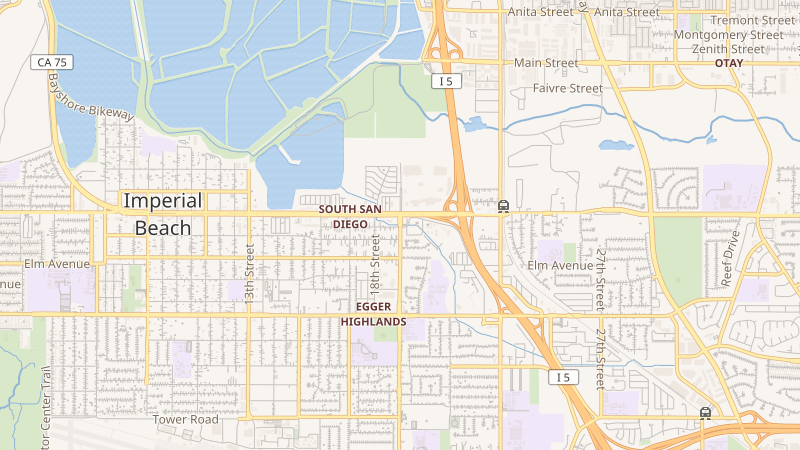
Hydrogen sulfide readings at Saturn Boulevard have reached sixteen times California's air-quality standard — a number that transforms what many residents have long experienced as a chronic nuisance into a documented public-health emergency. On Tuesday, County Supervisors Terra Lawson-Remer and Paloma Aguirre are asking the full Board to commit $5.8 million to begin addressing the Tijuana River sewage crisis through county-controlled infrastructure.
The funding breaks into two parts: $1.8 million for an 18-month engineering and project-development analysis of a Tijuana River capture-and-cleanup system, and $4 million to design, environmentally review, and permit a permanent Saturn Boulevard box-culvert project — a concrete containment structure intended to intercept polluted flows before they reach the estuary and coast. Silver Strand has been fully closed to water contact this summer due to Tijuana River contamination, and Imperial Beach remains closed, with water-contact advisories active at multiple Mission Bay locations.
The longer-term financing picture links to a proposed November countywide half-cent sales tax measure. If approved by voters, the measure would raise the regional sales tax rate from 7.75% to 8.25%, generating a projected $360 million in first-year revenue — of which 22.5%, roughly $81 million, would be earmarked for Tijuana River Valley sewage mitigation. None of that, however, is settled: the measure has not been placed on the ballot, and voters have not weighed in.
What Tuesday's vote would actually authorize is the analysis and permitting work — the precondition for any construction. For South Bay residents who have waited through years of acknowledgment without resolution, the most honest timeline remains: years away, contingent on funding, permitting, and a sales-tax election. Whether today's county action also creates pressure on federal mechanisms — including the U.S. International Boundary and Water Commission, a participant in the issue for decades — is an open question that will unfold in the months ahead.