Floods Swamp the East, Fires Scorch the West, and the Skies Claim Two Lives in Greece
How this was made Verified AI
Every Intellegix briefing is generated from that day's broadcast and run through automated checks before it publishes — with a human paged on any flag. Here is the trail for this edition.
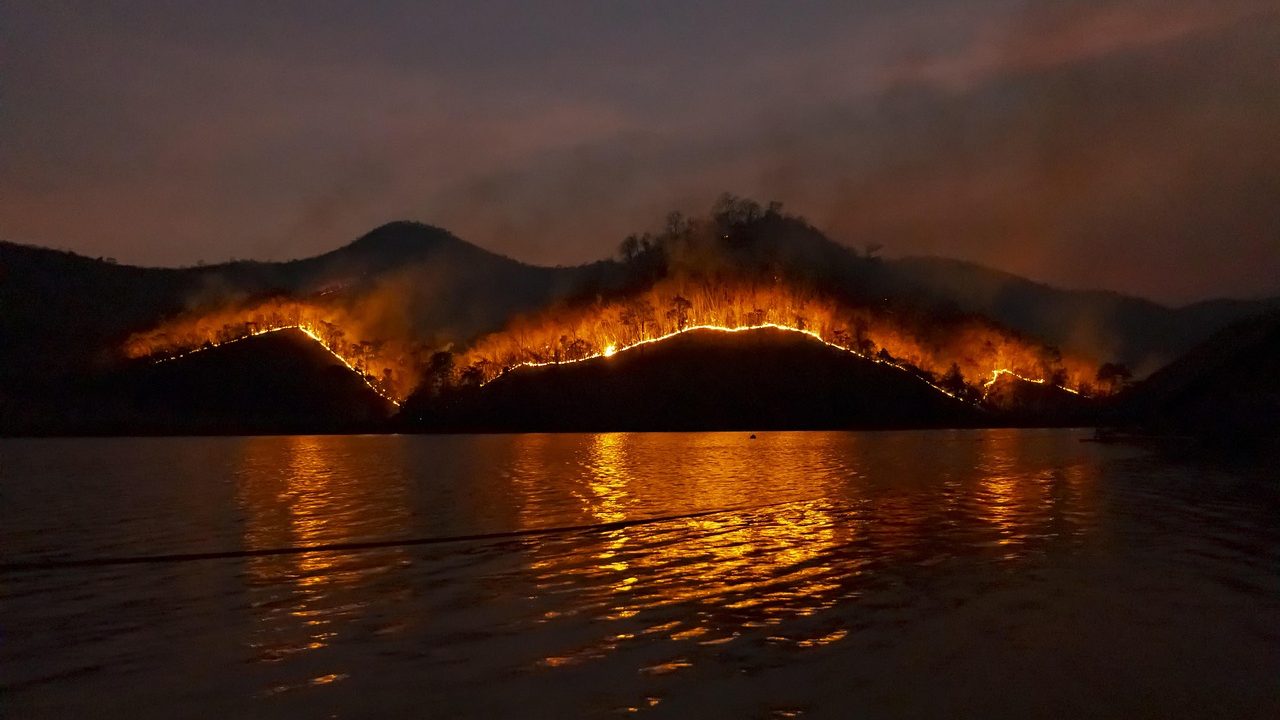
The eastern United States is enduring flash floods stretching from the Carolinas to the Hudson Valley while California simultaneously burns under a heat dome — two extremes driven by the same underlying dynamic: an atmosphere carrying more energy and more water vapor, producing more intense precipitation in some regions and more intense fire conditions in others. Mount Airy and Surry County in North Carolina declared states of emergency after the Ararat River hit a record crest, with flooding spreading to the Washington area and New York.
California has several new blazes as of Sunday reporting, including the Masonite Fire in Mendocino County. Record temperatures under a heat dome create conditions where fire spreads faster and burns hotter than normal suppression resources are built to handle. Greece brought its own wildfire largely under control this week, but at the cost of two helicopter pilots killed when their aircraft crashed during firefighting operations — a reminder of the underappreciated dangers of the low-altitude water bombing that wildfire suppression demands.
Long-range forecasters are warning that a super El Niño could bring heavy snow to the Northeast this winter, with models pointing to an active East Coast storm track and significant nor'easter potential. 'Very strong' intensity El Niño events tend to produce warmer and wetter conditions in regions already experiencing moisture extremes, and the same atmospheric pattern driving August flooding tends to establish the winter storm track. The coordination problem across all three wildfire stories — the U.S., California, and Greece — is itself significant: firefighting aircraft cannot be in California and Greece simultaneously, and emergency management systems remain fundamentally national and state-level in a crisis that is increasingly global.