Nvidia's Half-Trillion Week and the Battle Over Open AI Models
How this was made Verified AI
Every Intellegix briefing is generated from that day's broadcast and run through automated checks before it publishes — with a human paged on any flag. Here is the trail for this edition.
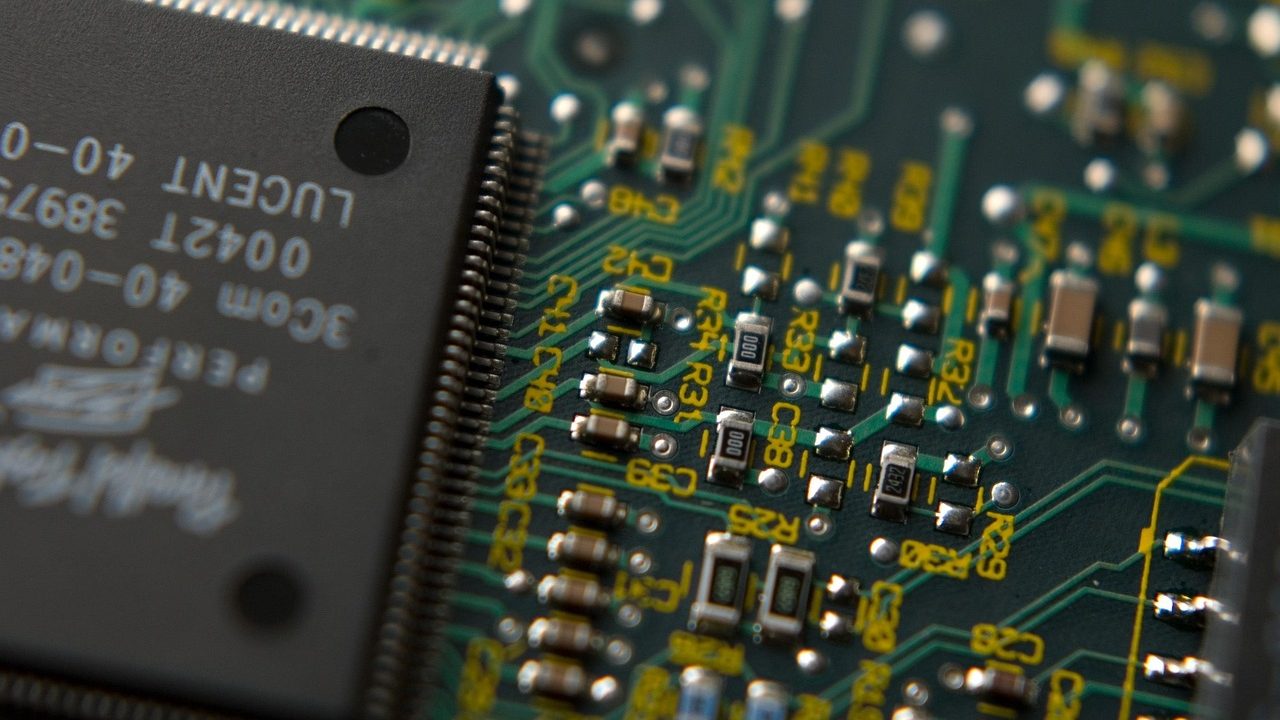
Nvidia announced more than $500 billion in AI infrastructure deals spanning Japan and South Korea, and is reportedly in talks to guarantee $250 billion toward an OpenAI data center build-out — a commitment that would make Nvidia a structural co-investor in OpenAI's stack rather than merely a vendor. CEO Jensen Huang said at a conference the chip boom 'won't bust soon,' grounding the claim in AI inference economics: running deployed models at scale requires sustained compute investment that will continue for years regardless of which model companies succeed or fail. At $250 billion, locking in a supplier at that scale reshapes competitive dynamics in a market where AMD and custom silicon from Google and Amazon are all competing for AI workloads.
Apple's shares surged on a strategy that runs in the opposite philosophical direction. Apple's AI approach centers on efficient, on-device inference — models small enough to run locally without cloud round-trips, with privacy as an explicit differentiator. That approach is outperforming market expectations this quarter. The divergence between Apple's 'smaller model, edge deployment' path and the 'bigger model, more compute' approach that Nvidia and OpenAI represent is now visible in share-price performance, and the competitive implications are real.
An open-weight AI letter urging Washington not to restrict downloadable AI models doubled from 25 to 50 signatories in 48 hours. Open-weight models release the trained numerical parameters publicly, allowing anyone to download and run them without API access or payment. The rapid growth of the coalition is a significant lobbying development. Anthropic and Amazon remain notably absent. Anthropic's position — that open weights create proliferation risks that closed API access does not — is defensible on safety grounds but places the company in a politically awkward position as the coalition expands.
DeepSeek, the Chinese AI lab targeting a $71 billion valuation, suspended its funding round after a leaked investor call in which founder Liang Wenfeng's private remarks about the impact of U.S. export controls on Nvidia and AMD chips spread online and spooked investors. What the pause reveals is significant for U.S. policy debates: even the most capable Chinese AI lab is privately acknowledging that chip restrictions are creating real computational constraints. Separately, Chinese technology firms declined to meet with U.S. congressional advisers during a recent U.S.-China Economic and Security Review Commission fact-finding visit — a refusal to engage at lower levels that does not bode well for U.S.-China AI talks scheduled for September. The Debian Linux distribution, meanwhile, is voting on a full ban of AI-generated code contributions over concerns about code provenance, license contamination, and the introduction of subtle security vulnerabilities — placing it in direct tension with the Linux kernel project, which is actively welcoming AI tools.