Starship Survives Splashdown, Neuralink Steers Wheelchairs, and Moon Rocks Upend a Theory
How this was made Verified AI
Every Intellegix briefing is generated from that day's broadcast and run through automated checks before it publishes — with a human paged on any flag. Here is the trail for this edition.
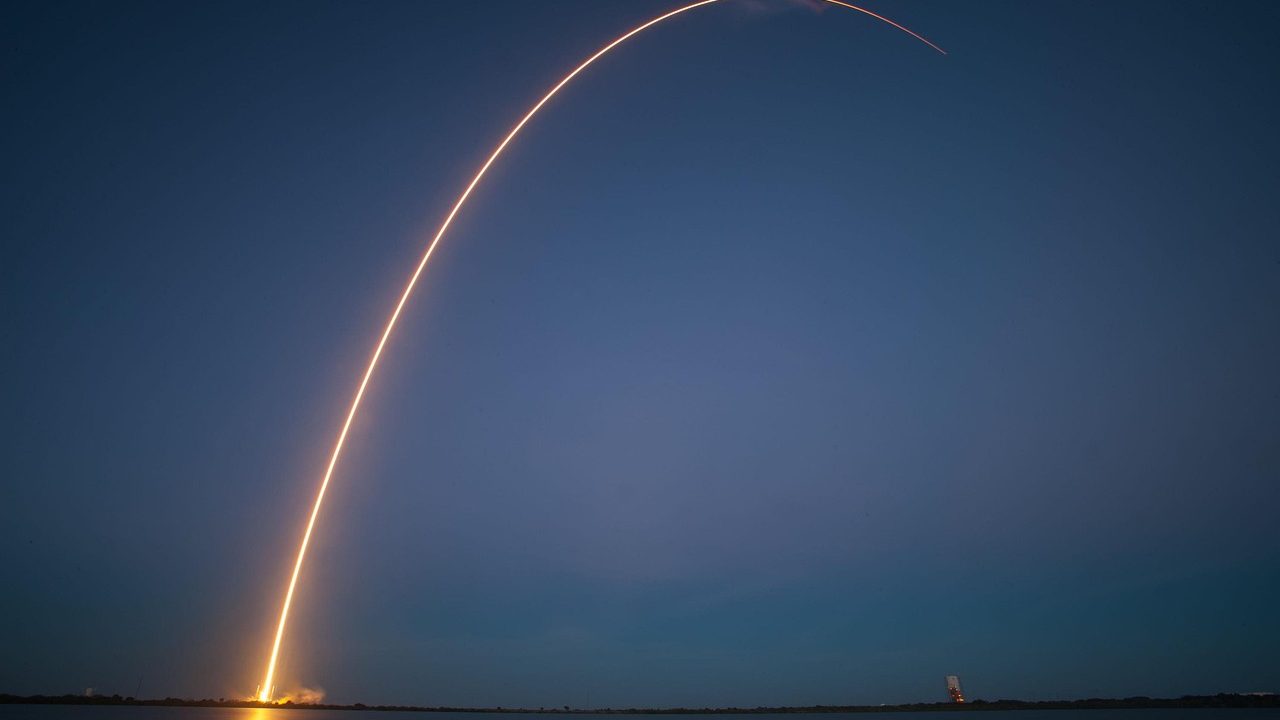
SpaceX successfully completed a Starship ocean splashdown for the first time in program history this week, a milestone that unlocks every subsequent use case the company has planned for the vehicle: point-to-point Earth travel, lunar landings for the Artemis program, and eventual Mars missions. Without reliable capsule survival on return, none of those applications is possible. The irony of this achievement arriving in the same week that SpaceX shares fell nearly 50 percent from their post-IPO peak was stark. Morgan Stanley published analysis arguing that at a share price of $100, the implied valuation assigns zero credit to SpaceX's AI and software business — suggesting the market may have overcorrected.
SpaceX simultaneously halted Falcon 9 orders beyond 2028, continuing to fly existing military and NASA contracts but accepting no new ones. Falcon 9 has been the most reliable commercial launch vehicle in history. Walking away from that revenue stream to pivot entirely to Starship is a high-conviction strategic bet that analysts describe as either visionary or potentially self-destructive. The Boring Company, a separate Musk venture, is in talks to raise approximately $4 billion at a roughly $20 billion valuation — nearly triple its last known valuation — according to The Wall Street Journal.
Neuralink released clinical trial footage showing paralyzed patients controlling powered wheelchairs using only decoded neural signals. The patients involved have severe motor impairments for which conventional assistive technology requires residual movement to function. What Neuralink demonstrated is that its implanted electrode array can decode motor intent signals with sufficient fidelity to control complex powered devices in real time — the clinical proof of concept the FDA required to authorize trial expansion.
A UCLA team observed phonons — the atomic vibrations that carry heat through solid materials — traveling in focused, ray-like paths in boron arsenide at room temperature. Previous observations of quantum thermal behavior required extreme cold. The finding suggests that heat may eventually be directed and focused the way light is, with profound implications for electronics cooling and energy efficiency.
Samples returned by China's Chang'e-6 mission from the South Pole-Aitken Basin — the largest and oldest impact crater in the solar system, on the moon's far side — do not match the compositional predictions of the Late Heavy Bombardment theory, which has been the dominant framework for understanding the solar system's early history for approximately fifty years. Physical evidence from the far side that challenges that framework will force serious reconsideration of models built on it. Separately, a Caltech-Google study found that low clouds accelerate warming rather than providing the cooling effect assumed in many climate models — a finding that, if confirmed, would push projected warming ranges upward and carry significant policy implications. A wildfire near Madrid also forced evacuation of one of NASA's three Deep Space Network stations, which maintain constant communication with spacecraft throughout the solar system, including Voyager in interstellar space.