Galaxy Winds, Cellular Power Lines, and a 1.5-Degree Countdown
How this was made Verified AI
Every Intellegix briefing is generated from that day's broadcast and run through automated checks before it publishes — with a human paged on any flag. Here is the trail for this edition.
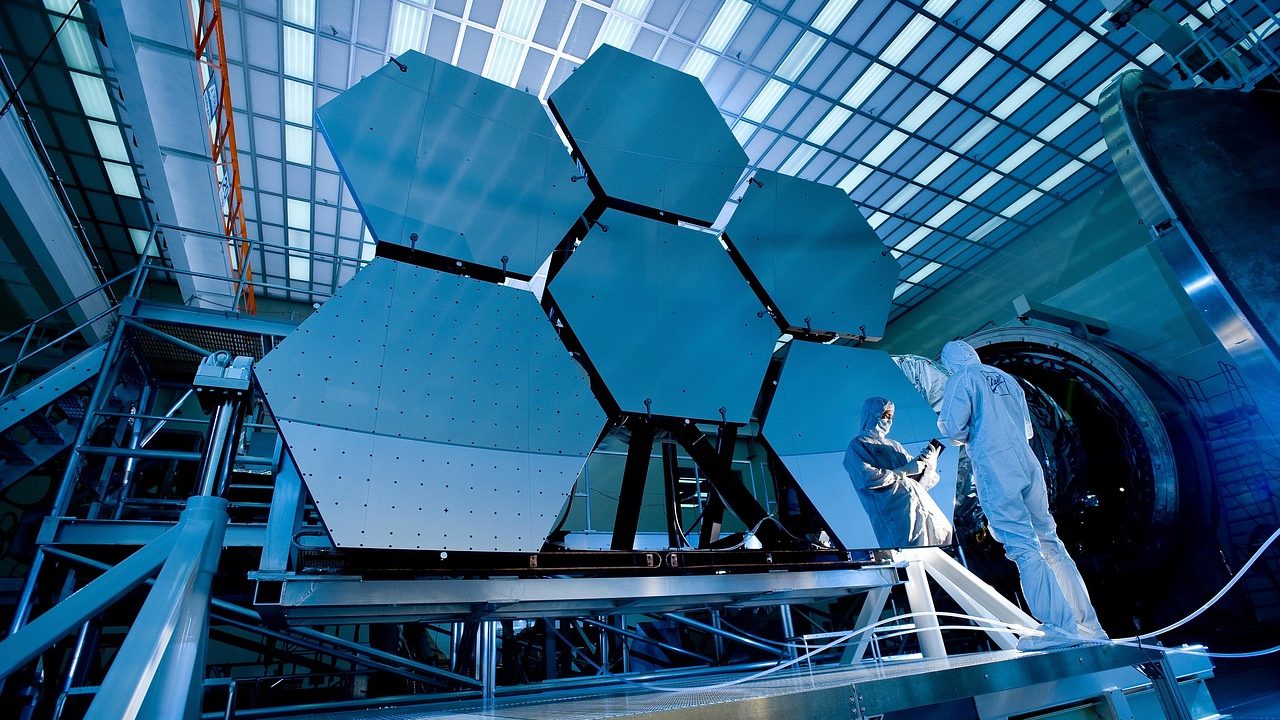
The James Webb Space Telescope captured images of a galaxy actively blowing away its own star-forming gas and dust, providing direct observational evidence of galactic feedback mechanisms that theorists have long argued must exist to explain why some galaxies cease forming stars and become 'quenched.' The observation advances understanding of how galaxies regulate their own growth and evolution over cosmic timescales.
A new study reaffirmed that the universe's expansion is accelerating — confirming the role of dark energy, which is estimated to comprise roughly 68 percent of the universe but remains entirely unexplained in terms of its fundamental nature. The acceleration appears to be strengthening over time, researchers noted, pointing toward a future in which galaxies grow increasingly isolated as space expands between them.
At the cellular scale, a study published in Nature found that mitochondria do not merely diffuse energy molecules randomly through cells but instead form direct, structured connections to the cell nucleus — what researchers described as a 'private power line' ensuring efficient energy delivery to the cell's command center. A second Nature study published the same week suggested that giant viruses played a crucial role in assembling the first complex eukaryotic cells, reframing the origin of all plant, animal, and fungal life as a millions-of-years-long collaboration among microbes and viruses rather than a straightforward evolutionary transition.
Clinically, the first person was treated with a cell-rejuvenating gene therapy for glaucoma, an approach that targets retinal ganglion cell damage rather than merely managing symptoms. On climate, global warming reached 1.37 degrees Celsius in 2025 and is on track to surpass the 1.5-degree threshold — the level at which scientists expect irreversible changes in ice sheets, ocean circulation, and ecosystems — by 2030, a timeline faster than many previous projections.