Indian Sailors Killed in Gulf Strike as Iran Crisis Goes Global, AI Bubble Fears Mount
Three Indian crew members were confirmed dead after U.S. forces struck the tanker MT Settebello in the Gulf of Oman, widening the human toll of the Iran-U.S. confrontation even as record equity outflows, an impending OpenAI IPO, and sweeping Supreme Court rulings signaled deepening uncertainty across markets, technology, and American political life on Thursday, June 11, 2026.
“Bank of America reported that its clients posted equity outflows of $14.4 billion for the week ending June 5th — the largest net selling recorded in the bank's database since 2008.”
How this was made Verified AI
Every Intellegix briefing is generated from that day's broadcast and run through automated checks before it publishes — with a human paged on any flag. Here is the trail for this edition.
Civilian Blood in the Strait: Iran Crisis Claims Lives Beyond the Battlefield

India's Minister Sonowal confirmed that three Indian crew members were killed when U.S. forces struck the MT Settebello tanker in the Gulf of Oman, marking a significant escalation in the Iran-U.S. confrontation by producing civilian casualties from a third country. The incident underscored the interconnected nature of global maritime trade and raised pointed questions — whether intelligence on crew composition failed, or whether the strike proceeded despite knowledge of foreign nationals aboard.
President Trump added a remarkable disclosure to an already volatile situation by revealing what he called a 'secret military mission' to move oil through the Strait of Hormuz. The announcement was striking on two counts: it amounted to a public confirmation of ongoing covert operations, and it signaled the strategic weight the administration places on keeping the waterway — through which roughly 20 percent of global petroleum liquids flow — open at any cost. Analysts noted the disclosure could reflect either compromised operational security or a deliberate attempt to pressure Tehran.
Vice President Vance injected additional complexity by offering unusually critical remarks about Israeli Prime Minister Netanyahu, saying he had 'gotten some things wrong' during the conflict. Vance stated that the U.S. would side with 'the American people' over Israel when their interests diverged — a rare public acknowledgment of friction between Washington and Jerusalem from within the Trump administration, and one that suggested domestic economic pressures are beginning to strain alliance commitments.
A new Brookings Institution analysis warned that the Iran conflict has exposed deep vulnerabilities in U.S. military capabilities, while Tehran mounted its own information campaign, accusing Washington of staging the Kuwait airport attack using a copied Iranian drone as a 'false flag' operation to justify a $1.98 billion Anduril defense sale to Kuwait. Shell CEO Wael Sawan, speaking at the Wall Street Journal CEO Summit, forecast that oil prices will rise for years to come due to what he described as 'dwindling easy-to-access reserves' — a structural prognosis that, if accurate, could force central banks worldwide to permanently revise their inflation assumptions.
Fractures in the Western Alliance: Meloni Challenges E3 Legitimacy Ahead of G7

Britain, France, and Germany — the so-called E3 — are preparing to press President Trump on his Ukraine peace plan at the upcoming G7 summit, but the united European front they hope to project is already fraying. Italian Prime Minister Giorgia Meloni told parliament that the Franco-German axis 'lacks legitimacy to negotiate on behalf of all of Europe' and called for a dedicated EU envoy on Ukraine, framing the dispute not as procedural quibbling but as a fundamental challenge to how European foreign policy is made.
Meloni's intervention carries strategic weight beyond procedure. Italy is the eurozone's third-largest economy, and her objections, if they succeed in fragmenting the European position before the G7 opens, could hand Trump additional leverage to pursue a negotiated settlement on Ukraine — one that may involve territorial concessions that the E3 has sought to resist. Trump has consistently signaled interest in reducing American overseas commitments, a posture that sits uneasily alongside European calls for sustained support of Ukrainian resistance.
Russia, meanwhile, applied pressure of its own, warning Armenia over its post-Soviet alliance membership. Armenia has been gradually shifting toward the West since the 2020 Nagorno-Karabakh conflict, illustrating how smaller states navigate between great powers in an increasingly multipolar environment — dependent on Russian security guarantees yet disappointed by Moscow's support during recent crises.
On a separate front, a bipartisan Senate bill targeting the ongoing civil war in Sudan with new sanctions advanced this week. The legislation reflected growing recognition that the Sudan conflict, despite receiving less media attention than Ukraine or the Middle East, has produced one of the world's worst humanitarian crises, with an estimated 25 million people in need of assistance. The bipartisan nature of the Senate response suggested it remains one of the few areas of remaining consensus in American foreign policy.
Courts, Purges, and Impeachment: American Democracy Under Constitutional Strain
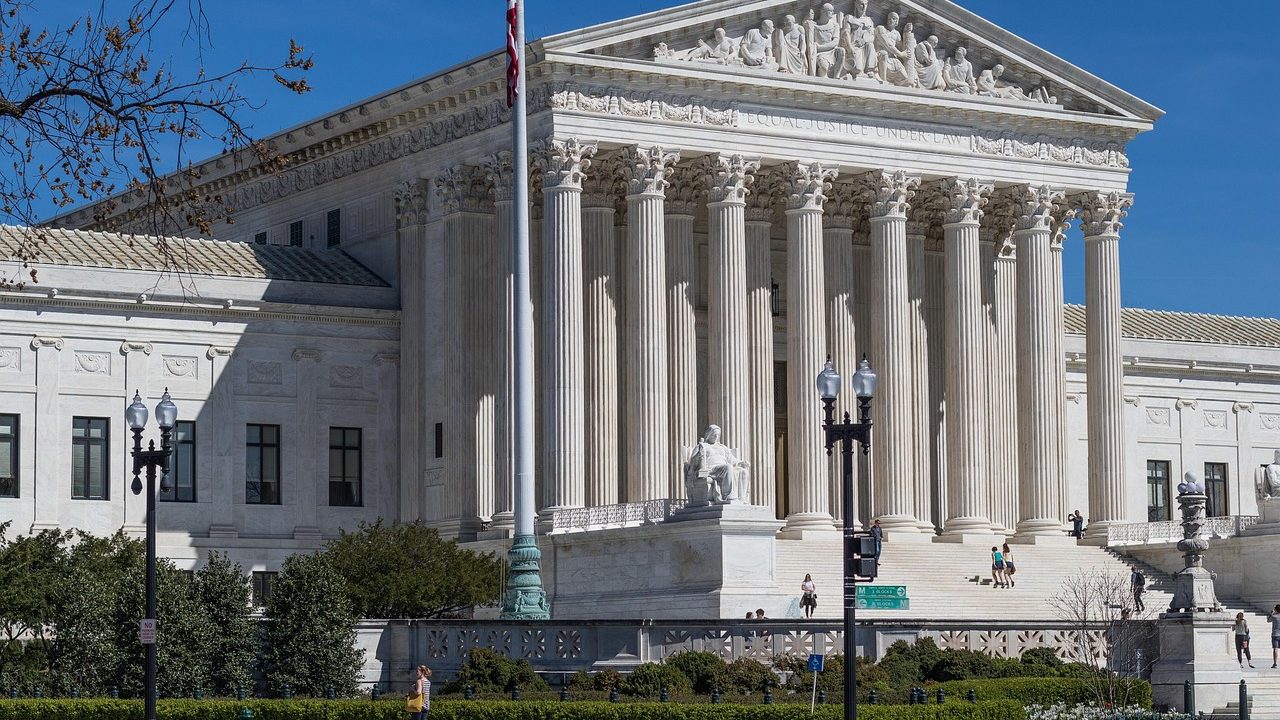
The Supreme Court is set to issue rulings on 23 pending cases — covering birthright citizenship, mail-in ballots, and transgender athletes — that could fundamentally reshape the landscape of the 2026 midterm elections. The decisions arrive as political warfare is simultaneously escalating at multiple levels of government, with Georgia Republicans filing impeachment articles against federal Judge Eleanor Ross in a move that, while not constitutionally viable at the state level, signals the intensity of the conflict between state and federal authority.
The Trump Justice Department added its own constitutional provocation, arguing that states may purge voters during the normally protected 90-day pre-election window, asserting that the National Voter Registration Act does not bar individual removals based on federal referrals. Voting rights groups expressed alarm that the interpretation could fundamentally alter election administration nationwide.
Not all dissent ran along party lines. Representative Ro Khanna broke with fellow Democrats to urge California to accelerate its vote-counting process, citing concerns that prolonged delays undermine public confidence in electoral outcomes regardless of their accuracy. The criticism from a prominent progressive congressman suggested that anxieties about systemic credibility extend across the partisan divide.
A BBC report citing an internal GOP memo revealed that mid-decade redistricting added roughly ten Republican-leaning House seats across nearly a dozen states — a structural advantage that could influence the balance of Congress for years. Separately, the ActBlue CEO invoked the Fifth Amendment at a House hearing on foreign donations, a move that raised serious questions about the integrity of the Democratic fundraising platform, which processes billions of dollars in small-dollar contributions. Corporate executives rarely invoke constitutional protections absent significant legal exposure, analysts noted, suggesting the investigation may be uncovering substantial irregularities.
IPOs, Job Fears, and a $200 Million Mea Culpa: AI's Reckoning Arrives
Sam Altman sent a message to OpenAI staff indicating the company expects to go public within a year, offering the most specific IPO timeline yet for the maker of ChatGPT. The disclosure followed the company's confidential S-1 filing on Monday, and the prospective listing is expected to force public markets to put concrete valuations on artificial intelligence capabilities for the first time, reshaping investment priorities across the broader sector.
Competitor Anthropic took a strikingly different public posture, pledging $200 million to study AI-driven job displacement and floating the concept of universal basic income funded by taxes on AI companies. CEO Dario Amodei warned that AI could cause permanent unemployment — a remarkable acknowledgment of potential negative externalities from the company's own products, and one that a new poll suggests resonates with the public: half of Americans reported fearing that AI threatens their household jobs.
The regulatory front shifted as well, with Anthropic urging Congress to pass comprehensive federal AI safety legislation before preempting state-level rules. The company called for mandatory independent safety testing of powerful models and warned that industry self-policing is no longer sufficient — putting it in direct opposition to much of the tech sector's preference for lighter-touch approaches, while simultaneously signaling it would rather face unified national standards than a patchwork of conflicting state requirements.
Technical and financial pressures within the industry were also evident. Google released DiffusionGemma, an open model that generates text in parallel rather than sequentially, a development that could substantially reduce latency and computational costs for AI applications. Venture capitalists are meanwhile pouring money into AI routing startups — companies that optimize which models handle which queries to manage spiraling token costs — while AI security startup Pi exited stealth mode with $35 million in funding and a reported $100 million valuation, reflecting growing investor concern about the vulnerabilities that large-scale AI deployment creates.
Machines That Pay Their Own Bills: Tech Infrastructure Reshapes Commerce and Security

Mastercard launched a payment framework specifically designed for AI agents, enabling artificial intelligence systems and machines to authorize and settle transactions across cards, bank accounts, and stablecoins. The system anticipates an economy in which AI entities transact with significant financial autonomy — purchasing computing resources, paying for logistics, or managing energy contracts — and addresses the challenge of processing high volumes of micropayments that traditional payment infrastructure makes uneconomical.
Amazon opened a $1 billion data center in Mississippi, occupying a former auto parts plant that had sat vacant for decades. The facility symbolizes the massive infrastructure buildout underpinning the AI and cloud computing boom, but it has also sparked controversy over electricity costs, with critics questioning whether data centers of this scale are driving up utility bills for residential customers by placing outsized demand on regional power grids.
Google's YouTube division staked out an aggressive intellectual property position, claiming its terms of service permit the company to train AI models on uploaded music — a stance that puts it on a collision course with record labels and artists who argue their catalogs are being exploited without proper compensation or consent. The dispute encapsulates a broader battle over who owns the raw material of the AI era.
On the security front, a zero-day vulnerability struck Windows Defender within hours of Microsoft's record Patch Tuesday release, raising concerns about whether the patching process itself introduced new attack surfaces. SpaceX's forthcoming IPO, meanwhile, is reportedly oversubscribed ahead of Friday's debut, reflecting sustained investor appetite for space technology and the company's competitive advantage in reusable rocket economics.
Record Stock Selling and a 93% Crypto Crash: Markets Flash Warning Signs
Bank of America reported that its clients posted equity outflows of $14.4 billion for the week ending June 5th — the largest net selling recorded in the bank's database since 2008. The scale of the exodus was notable in part because BofA's wealth management clients typically represent sophisticated, long-term investors rather than retail traders reacting to short-term noise, suggesting the selling reflects concerns about deeper economic fundamentals.
The semiconductor sector absorbed much of the pressure, with Broadcom shares sliding as inflation worries deepened a broader chip selloff. Broadcom sits at the intersection of AI, data center networking, and enterprise software through its VMware acquisition, making its struggles a potential signal that even the most favorably positioned technology companies may be vulnerable to macroeconomic headwinds.
At the speculative end of the market, a Trump-linked firm faced Nasdaq delisting after a cryptocurrency bet dropped 93 percent — a stark illustration of the concentrated risks that large crypto positions carry during periods of regulatory uncertainty and price volatility. Many companies that made sizable cryptocurrency investments during the 2021-2022 bull market have since found those positions transformed into significant liabilities.
Not all indicators pointed downward. S&P futures rose 53 points to 7,331, a 0.73 percent gain, suggesting that some market participants remain willing buyers at current levels. Oracle also announced a $400 million federal contract to overhaul government HR systems, underscoring the stability of enterprise software companies with government exposure during uncertain economic periods. A partnership between Google Cloud and SpaceX drew attention after BNP Paribas analysts said it signaled upside for Microsoft Azure, arguing that SpaceX's demanding technical requirements validate the capabilities of the broader cloud infrastructure market.
Galaxy Winds, Cellular Power Lines, and a 1.5-Degree Countdown
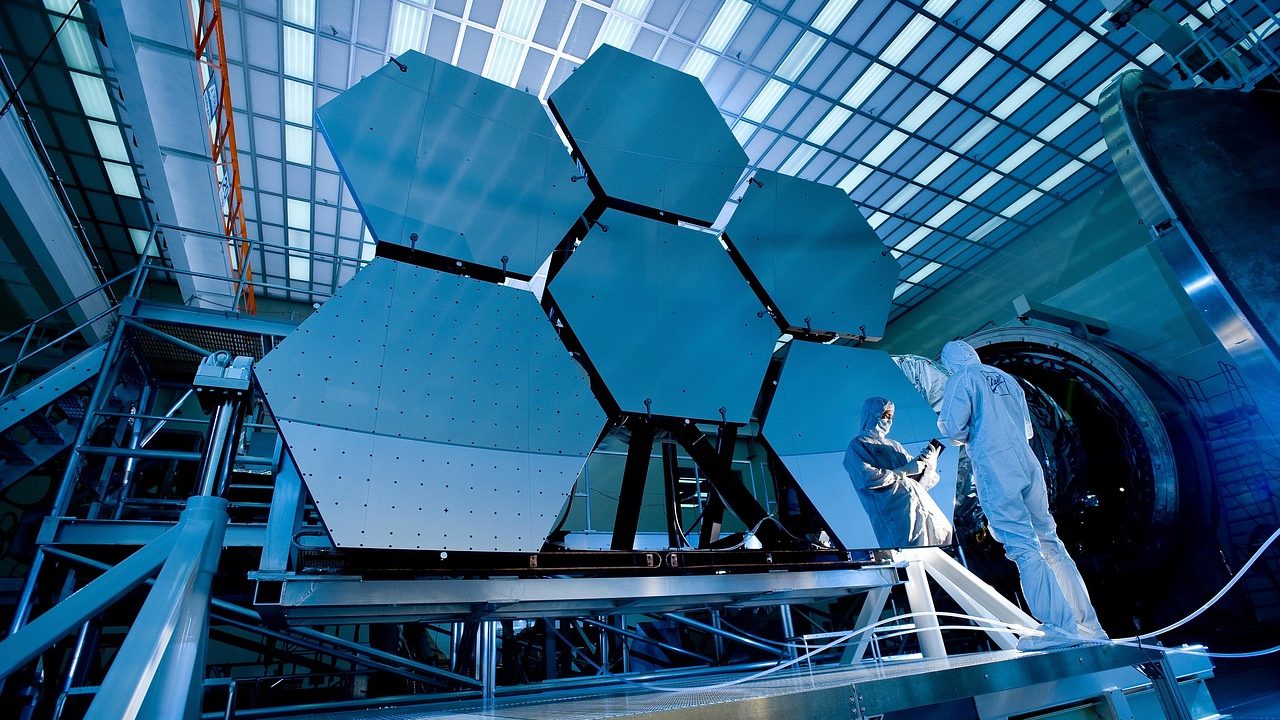
The James Webb Space Telescope captured images of a galaxy actively blowing away its own star-forming gas and dust, providing direct observational evidence of galactic feedback mechanisms that theorists have long argued must exist to explain why some galaxies cease forming stars and become 'quenched.' The observation advances understanding of how galaxies regulate their own growth and evolution over cosmic timescales.
A new study reaffirmed that the universe's expansion is accelerating — confirming the role of dark energy, which is estimated to comprise roughly 68 percent of the universe but remains entirely unexplained in terms of its fundamental nature. The acceleration appears to be strengthening over time, researchers noted, pointing toward a future in which galaxies grow increasingly isolated as space expands between them.
At the cellular scale, a study published in Nature found that mitochondria do not merely diffuse energy molecules randomly through cells but instead form direct, structured connections to the cell nucleus — what researchers described as a 'private power line' ensuring efficient energy delivery to the cell's command center. A second Nature study published the same week suggested that giant viruses played a crucial role in assembling the first complex eukaryotic cells, reframing the origin of all plant, animal, and fungal life as a millions-of-years-long collaboration among microbes and viruses rather than a straightforward evolutionary transition.
Clinically, the first person was treated with a cell-rejuvenating gene therapy for glaucoma, an approach that targets retinal ganglion cell damage rather than merely managing symptoms. On climate, global warming reached 1.37 degrees Celsius in 2025 and is on track to surpass the 1.5-degree threshold — the level at which scientists expect irreversible changes in ice sheets, ocean circulation, and ecosystems — by 2030, a timeline faster than many previous projections.
Bosch Bets on Robots While Tesla's Robotaxi Stalls at Fewer Than 60 Cars
Bosch announced a target of one billion euros in humanoid robot revenue as the German industrial conglomerate pivots away from its traditional automotive parts business, which faces margin compression from electric vehicles and intensifying Chinese competition. The target implies either high-value industrial sales or mass-market deployment at moderate price points, and represents a strategic bet that robots will become a mainstream product category within the decade.
Tesla's robotaxi program offered a sobering counterpoint to ambitious automation promises. A year after launch, the fleet reportedly remains stuck below 60 vehicles — far short of the scale required for meaningful commercial operations — suggesting that real-world autonomous driving deployment faces technical or regulatory challenges that laboratory performance does not capture. The company has been promising full autonomous driving capabilities for years.
Shopify attracted scrutiny after The Atlantic reported that the company had published at least 60 'best of' blog posts that consistently ranked its own platform first — a content strategy apparently designed to influence AI chatbot recommendations rather than traditional search rankings. The tactic illustrates how marketers are already engineering the information environment that large language models draw on when advising users.
Senator Maggie Hassan reported that Spotify removed 57,000 drug-peddling podcast episodes following congressional inquiry. The episodes were not legitimate podcasts but fake content promoting illegal online pharmacies, exposing how podcast platforms — which receive less automated scrutiny than social media — can be systematically abused. On retirement security, PensionBee warned that Americans retiring in 2032 could face a $137,280 gap due to projected Social Security cuts, reflecting the demographic pressure of an aging population on a trust fund that, absent legislative intervention, is projected to be depleted by that year.