Autonomous Vehicles, Internet Fatigue, Relativistic Physics, and an Octopus That Breaks the Rules
How this was made Verified AI
Every Intellegix briefing is generated from that day's broadcast and run through automated checks before it publishes — with a human paged on any flag. Here is the trail for this edition.
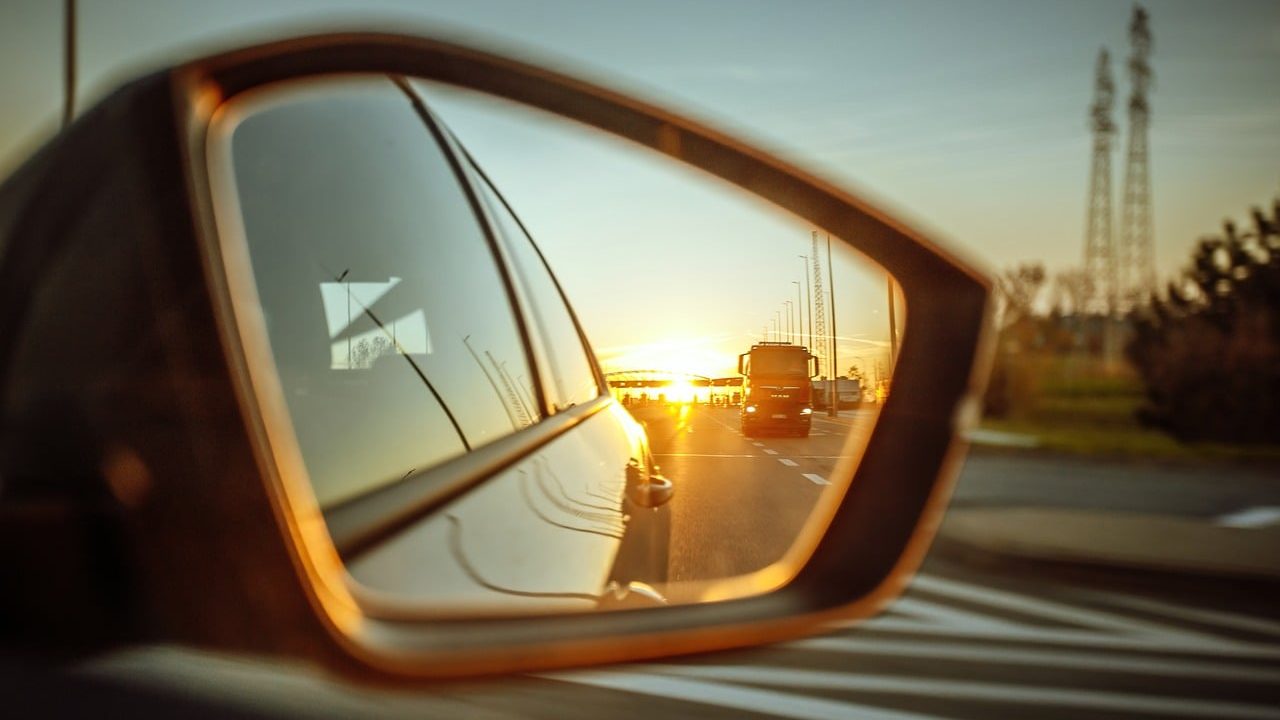
An IEEE Spectrum piece presenting what it describes as 'growing proof' that self-driving cars save lives drew 360 points and 627 comments — the comment volume itself signaling contested territory. The methodological challenges are real: AV deployments are concentrated in mapped urban environments during favorable weather on pre-surveyed routes, meaning 'comparable conditions' is doing significant analytical work in any comparison to human drivers. There is also a survivor bias problem: when an autonomous vehicle encounters a scenario it cannot handle confidently, it often slows or stops rather than proceeding, removing that scenario from collision statistics in a way that doesn't have a clean human-driver equivalent.
The steelman case for AV safety, however, is worth taking seriously. Human drivers are impaired in wildly inconsistent ways — fatigue, distraction, intoxication, emotional states — and a self-driving system that is worse than the best human driver may still be dramatically better than the distribution of actual human behavior, which includes people texting, intoxicated, or falling asleep on a highway at 3 a.m. Every mile driven by an AV also generates training data that improves subsequent generations in a way human driving experience does not compound across the broader driver population. The metrics to watch, on this account, are how safety statistics hold up as operational domains expand beyond San Francisco and Phoenix into suburban mixed-traffic environments, and how systems perform in their first major cold-weather deployment at scale — snow on lane markings, ice, and adversarial conditions that have not yet been stress-tested in real-world deployment data.
Terence Tao posted on Mathstodon about adults forgetting childhood, drawing 194 points and 144 comments. Working from a Saint-Exupéry quotation, the post uses childhood as a lens for thinking about how adult cognition gradually loses access to the mode of understanding that made learning fundamental things possible. A streaming price analysis found that the same nine streaming subscriptions now cost $702 per year more than they did in 2021 — a compounding increase that outpaces both general inflation and wage growth for most consumers, reflecting the end of subscriber-acquisition spending and the beginning of monetization from installed bases.
A physics education tool imagining the speed of light as five kilometers per hour drew 380 points and 157 comments. Special relativity is conceptually difficult to internalize because its effects are invisible at human scales; making the speed of light walking pace means a person moving normally experiences time dilation, length contraction, and relativistic mass effects in a viscerally imaginable way. The Larger Pacific Striped Octopus — 77 points, 41 comments — is a Wikipedia subject that turns out to defy several standard assumptions about octopus behavior: it reportedly lives in social groups rather than alone, mates face-to-face rather than at arm's length, and females continue to eat during brooding rather than starving themselves. And Raymond Chen's Old New Thing blog, excavating how Windows XP chose default user avatar photos through a scoring algorithm evaluating color diversity, face-like pixel distributions, and contrast ratios, drew 79 points and 32 comments — a small piece of computing history revealing how much engineering thought went into things users experienced as passive and automatic.