Birds, Benchmarks, and Tao: AI Capability Finds Unexpected Homes
How this was made Verified AI
Every Intellegix briefing is generated from that day's broadcast and run through automated checks before it publishes — with a human paged on any flag. Here is the trail for this edition.
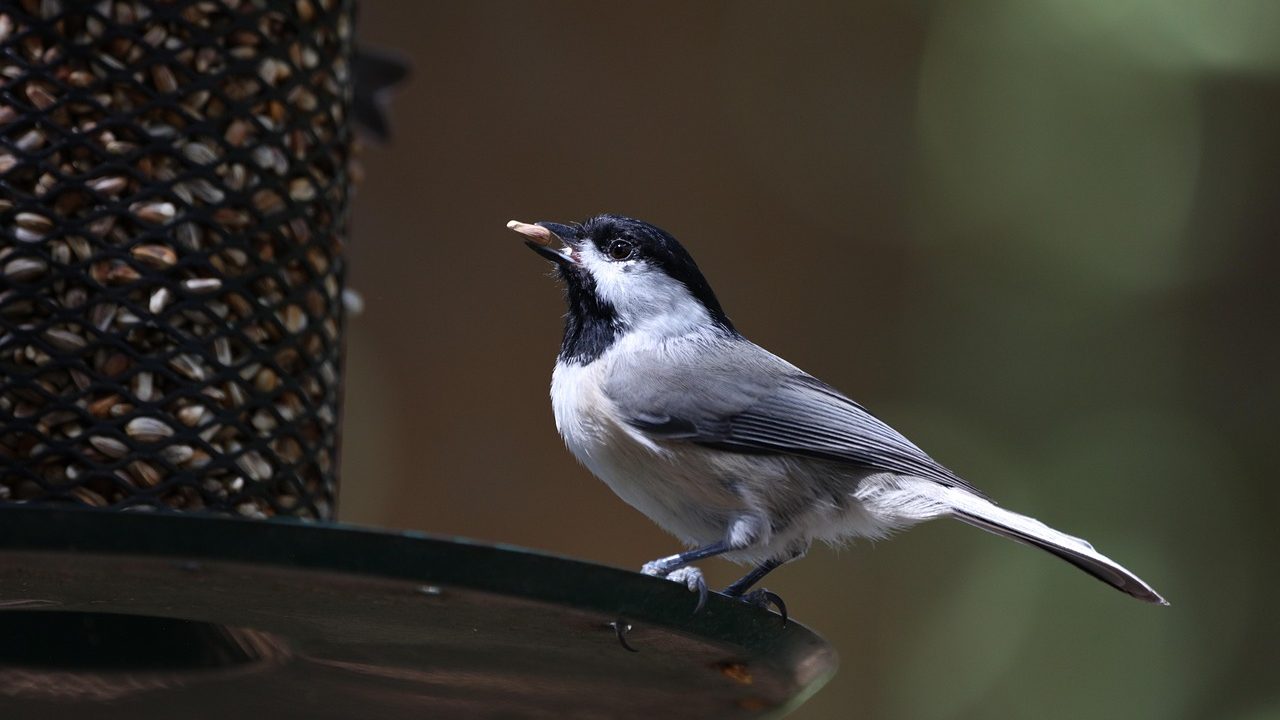
A creator posting at jasontucker.blog repurposed existing home security cameras to run BirdNet-Go — an open-source bird identification system based on a neural network developed by the Cornell Lab of Ornithology — building an automatic logging system that identifies and catalogs every bird visiting their yard. The project required no custom hardware, no new cameras, and minimal compute, and now runs as a continuous ambient wildlife monitoring station. The Hacker News thread, running to 127 comments, drew people sharing variations: mammal detection integrations, cross-referencing with eBird's public dataset to track migration patterns.
BirdNet-Go is the Go-language port of Cornell's BirdNet, lightweight enough to run on a Raspberry Pi, capable of identifying birds by sound in near-real-time on consumer hardware. That an ornithology research project from Cornell ended up as the backbone of a home automation hack illustrates how scientific computing infrastructure percolates into applications its creators never anticipated. The project also inverts the usual surveillance framing: the same cameras deployed almost universally in discussions of facial recognition and mass monitoring here point at songbirds.
Terence Tao, widely regarded as one of the greatest living mathematicians, sits at the opposite end of the capability-versus-comprehension spectrum in a video on six essential mathematical concepts that drew 451 upvotes and 63 genuinely substantive comments. Where benchmark-chasing optimizes performance on specific tasks, Tao's project articulates the foundational intuitions underlying mathematical reasoning itself — ideas including abstraction, proof by contradiction, and the relationship between discrete and continuous mathematics. The shelf life of such material is, as commenters noted, effectively infinite.