From NFC Business Cards to Matrox Nostalgia: The Week in Hardware Craft and History
How this was made Verified AI
Every Intellegix briefing is generated from that day's broadcast and run through automated checks before it publishes — with a human paged on any flag. Here is the trail for this edition.
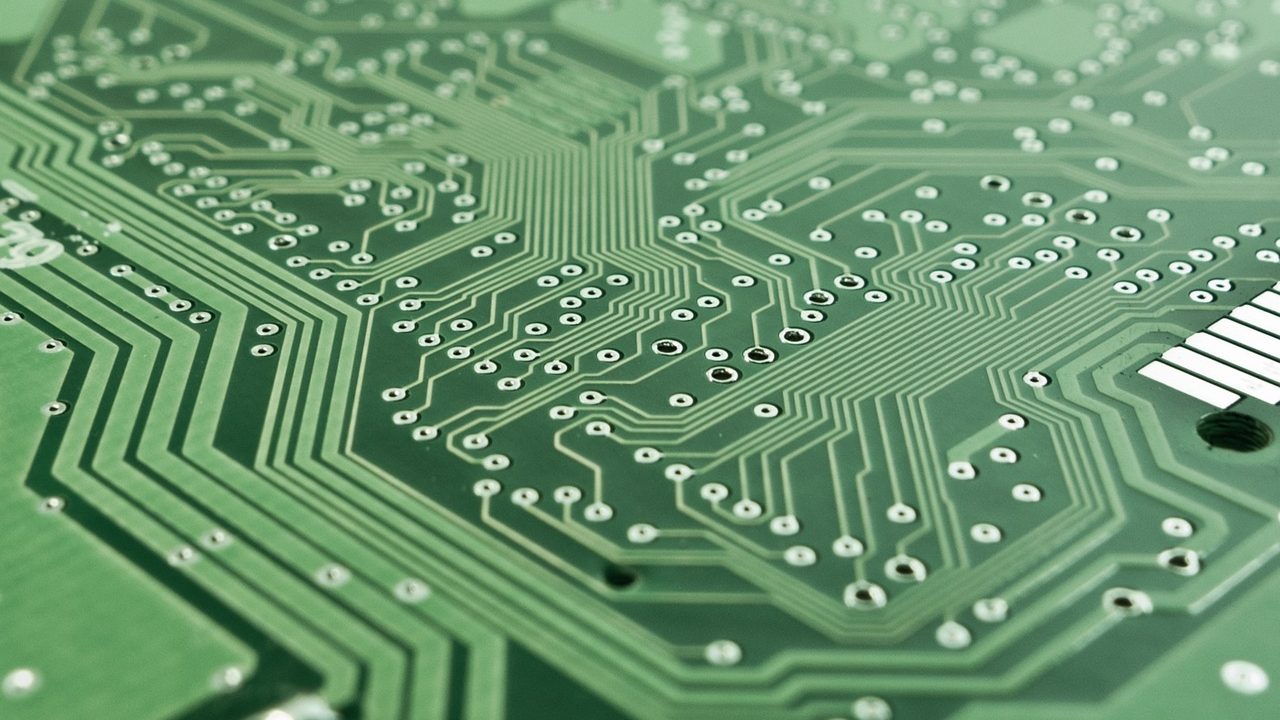
Wilson Harper's NFC energy-harvesting PCB business card — a device containing a microcontroller and e-ink display that runs entirely on power harvested from a phone's NFC field, with no battery — drew substantive discussion about the engineering constraints involved. NFC readers transmit very limited power, and Harper documented the ultra-low-power microcontroller selection, capacitor sizing, and firmware optimization required to run meaningful computation within that envelope. The HN comment section quickly turned to possible extensions: what else could be embedded in that form factor, what other applications could be built on energy-harvesting NFC.
The Matrox retrospective on abortretry.fail sent GPU history enthusiasts into what one host described as a nostalgic spiral. Covering the G200 and G400 era, when Matrox offered genuinely superior 2D image quality and was a legitimate professional workstation option, the post documents the strategic decisions — some reasonable, some questionable in retrospect — that led to Matrox's retreat from the consumer market as gaming drove the 3D acceleration cost curve down faster than the company could follow. The broader lesson: professional markets can sustain a company for a long time, but they are vulnerable when consumer market economics collapse the price differential that justified the professional tier.
Ken Shirriff's analysis of a 1980 Spacelab computer's core memory module documented a detail specific to space-rated hardware: the write cycle differs from terrestrial equivalents because magnetic core memory stores information as a magnetic state rather than a charge state, making it inherently more radiation-tolerant. That property kept it viable in space applications longer than it survived in consumer computing. A separate post documented a father's custom Atari 8-bit peripherals — joysticks, input devices, memory expansions — built in the early 1980s and preserved in family documentation decades later, representing the kind of homebrew hardware history that almost never survives because its creators were solving problems rather than publishing.
An open source framebuffer driver for the SM750 Silicon Motion GPU, enabling HDMI output previously unsupported in Linux and submitted for mainline kernel inclusion, illustrated why the open source development model produces value in long-tail hardware support that commercial incentives cannot. A commercial driver for a niche industrial GPU rarely justifies its development cost; an open source contributor who simply needed the hardware to work changes that calculus entirely.