Hardware Frontiers, Historical Detours, and the Limits of Expert Intuition
How this was made Verified AI
Every Intellegix briefing is generated from that day's broadcast and run through automated checks before it publishes — with a human paged on any flag. Here is the trail for this edition.
Dan Luu's essay on bug blindness accumulated 275 points and 166 comments, making it one of the most-discussed pieces of the weekend outside of the AI coverage. Luu's argument concerns a specific cognitive trap: experienced engineers can lose the ability to see certain categories of bugs because they have internalized the assumption that particular things simply work. The Hacker News thread was unusually self-reflective for a technical audience, with engineers sharing examples from their own careers in which expertise had become a liability — where pattern recognition that normally accelerates debugging caused them to dismiss the true root cause. One commenter observed that this is why diverse teams debug faster: an engineer who has not internalized the assumption that the database is reliable will actually check the database, while a senior engineer digs through application code.
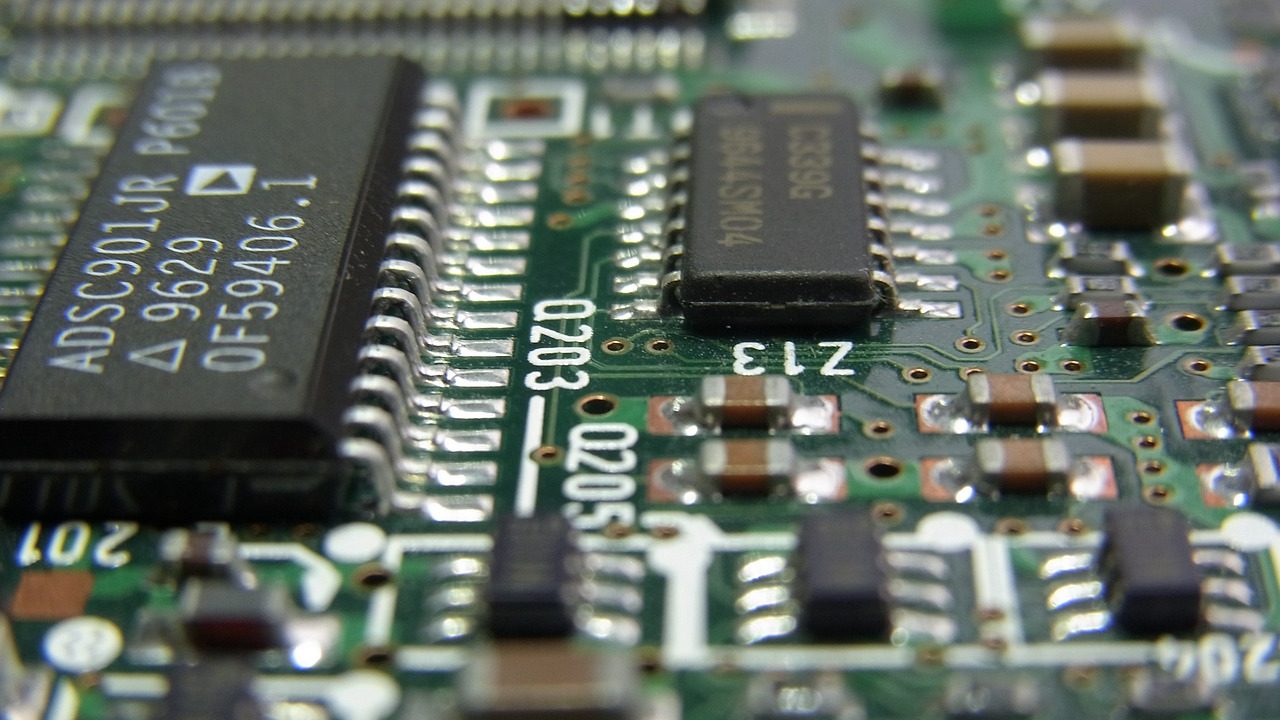
Hot Chips 2026 brought substantive hardware news. Xcena and Samsung presented a CXL device — Compute Express Link, a high-bandwidth interconnect standard — that places compute units physically adjacent to memory. The premise is that the bottleneck in many AI and data-processing workloads is not raw compute or raw memory bandwidth in isolation, but the latency and energy cost of moving data between processor and memory. Computing where the data lives eliminates most of those transfers. The Samsung implementation adds compute capability to a CXL memory tier, enabling it to run inference operations directly. CXL's cache-coherence properties mean the CPU and the memory-side compute unit can share a unified memory view without software managing explicit data movement — a property that could meaningfully change the cost structure of running AI models at scale.
A 1999 essay by Brian Raiter on constructing the smallest possible Linux ELF executables resurfaced on Hacker News, as it periodically does, with the same reception: engineers reading it as a masterclass in understanding what a computer actually does at the binary level, stripping away every abstraction until the author is manually constructing memory layouts and system-call tables. The core lesson — understanding your tools at the level below your usual abstraction — does not expire, and the piece connects directly to the dn42 networking argument covered earlier: build it from scratch at least once.
The Einstein-Szilard refrigerator offered a characteristic Hacker News historical detour. In the 1920s, Albert Einstein and Leo Szilard co-invented a refrigerator design with no moving parts, motivated by a newspaper account of a family killed when refrigerant leaked from a mechanical pump. Their design uses thermodynamic principles to drive refrigerant movement through temperature differentials alone — no seals that can fail, no moving parts that can leak. It was patented, briefly commercialized, and largely abandoned as more efficient mechanical designs prevailed, but has found renewed interest in solar-powered cooling applications where silence and reliability matter more than efficiency. Benjamin Franklin's use of pen names received parallel treatment in a Smithsonian piece making the rounds: Franklin, the post argues, used constructed personas not merely for political protection but as a cognitive tool, writing as 'Silence Dogood' or 'Richard Saunders' to explore ideas that Franklin-as-statesman could not afford to hold publicly. Hacker News commenters drew connections to the way anonymous online communities sometimes enable more honest technical discourse for similar reasons.
Finally, glacier mice: spherical clumps of moss that form on glaciers and move in coordinated groups, roughly one centimeter per day, in directions that appear to shift together. They do not blow in the wind, follow melt patterns, or roll downhill — they move collectively, and nobody has a fully satisfying explanation. The leading hypothesis involves subtle thermal gradients within the moss ball creating differential melting on different sides, but the synchronized group movement remains mysterious. The item thrived on Hacker News, predictably, because the community includes people who will immediately begin modeling the thermal dynamics and posting back-of-envelope calculations in the comments.