A Forty-Dollar Watch, a GPU Geolocation Feat, and Questioning Go's Conservative Bet
How this was made Verified AI
Every Intellegix briefing is generated from that day's broadcast and run through automated checks before it publishes — with a human paged on any flag. Here is the trail for this edition.
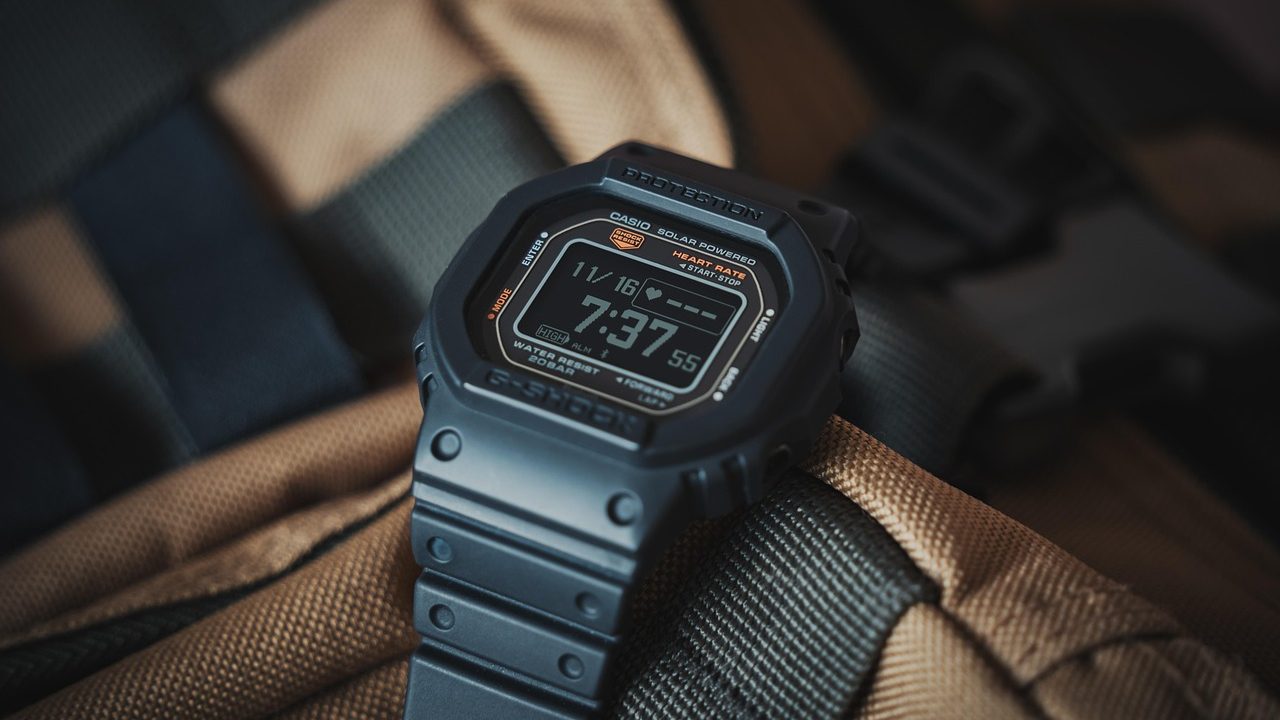
The Casio F-B100W-1A generated 335 comments on the strength of adding Bluetooth connectivity to the classic F-series design without compromising battery life or the minimalist aesthetic that has kept the form factor essentially unchanged for decades. The community's response was read as a values statement about what product design should optimize for: durability, repairability, a single function performed reliably, no subscription required. The implicit contrast with the Cricut Maker story — in which a machine pulled from e-waste had been rendered inoperable by the manufacturer's subscription gating, before being reverse-engineered back to functionality in a right-to-repair exercise with 219 points and 55 comments — was noted in the discussion.
The CUDA geolocation project drew 487 points and 78 comments for a technical showcase in geometric reasoning: the author took an OSINT challenge photograph of an unidentified island and wrote a CUDA program to constrain its possible location by analyzing coastline shapes, shadow angles, and visible geography. The approach was described as impressive for making its solution feel almost inevitable once seen — a hallmark, it was noted, of good algorithmic thinking. The Air Theremin browser project — controlling a theremin's pitch and volume by waving at a webcam, with hand-tracking running in real time — drew 279 points and 96 comments, and the comments included user recordings.
A turns-versus-radians essay from 2022 gained fresh circulation Thursday with 229 points and 112 comments. Its argument — that measuring angles in 'turns,' where one complete rotation equals one rather than two-pi radians, is mathematically cleaner, pedagogically clearer, and produces simpler formulas in most practical contexts — was credited in comments for carefully identifying where radians remain the correct choice, giving it more persuasive force than a purely contrarian take. A post on faster day-of-the-week calculation presented a method claimed to be more computationally efficient than Zeller's Congruence or Tomohiko Sakamoto's algorithm, prompting the HN comment section to enumerate at least half a dozen competing approaches.
The episode's most substantive self-critical exercise targeted the day's Go 1.27 consensus. The dominant HN position — that Go's stability-first, feature-conservative approach is correct for a production systems language — was put under pressure with a specific challenge: the traditional argument for language simplicity rests on human working-memory limits, which weaken if a significant fraction of code is generated by AI systems that do not share those constraints. If the human role shifts from generating code to reviewing and validating it, the relevant question becomes whether the code is correct, not whether the language's semantics fit in a developer's head. The counterargument — that review is actually harder with more expressive code, because reviewers must understand what expressive constructs are doing to evaluate whether an AI used them correctly — was acknowledged as the crux of the uncertainty. The scenario under which the consensus would be wrong was formulated precisely: if serious production systems written in Go come to be generated primarily by AI assistants and review processes become predominantly automated, Go's design choices start functioning as constraints rather than virtues. That condition, it was noted, has not yet arrived.