Intel's Manufacturing Comeback, AMD's Cache Advantage, and the MCP Quality Gap
How this was made Verified AI
Every Intellegix briefing is generated from that day's broadcast and run through automated checks before it publishes — with a human paged on any flag. Here is the trail for this edition.
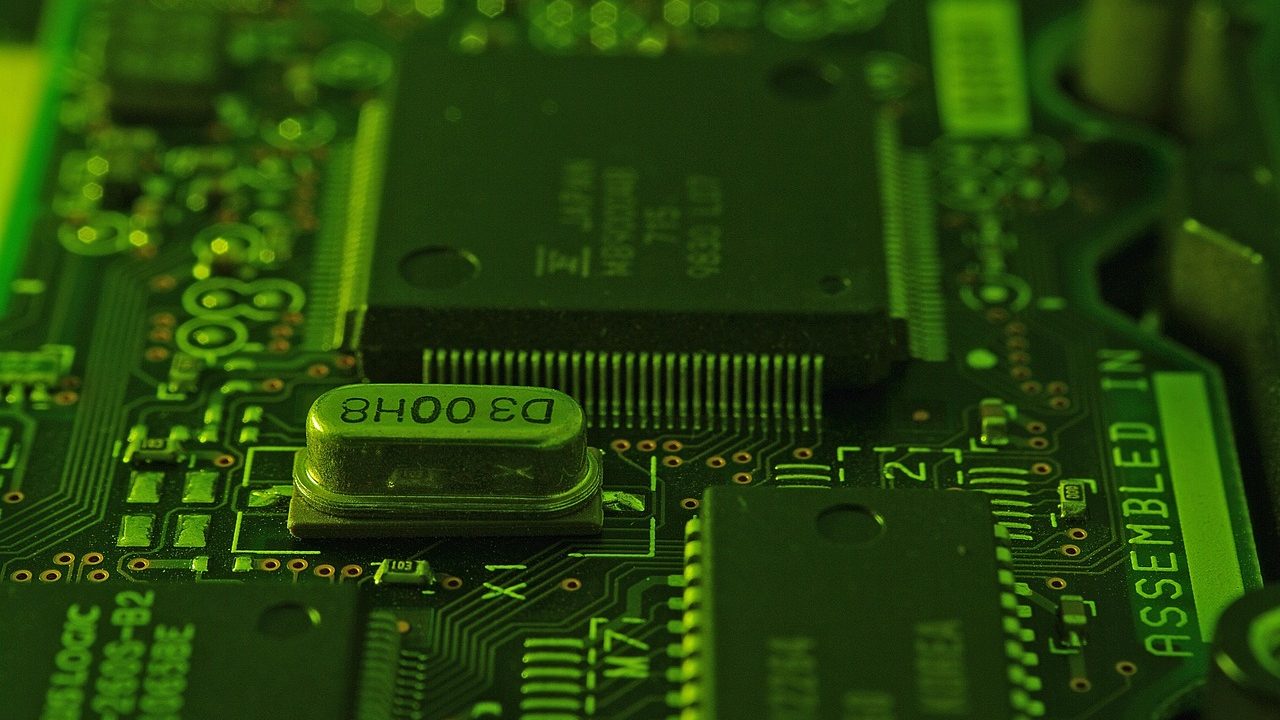
Intel became the first company to ship product manufactured using High-NA Extreme Ultraviolet lithography, a next-generation chip-printing technology that enables higher resolution circuit patterns than standard EUV. The machines are built by ASML, but achieving production-viable yields — not merely laboratory demonstrations — is the hard part, and Intel's shipment announcement represents a meaningful step toward commercial viability. The technology is expected to enable chips below two nanometers in effective feature size, approaching fundamental physical limits of silicon fabrication.
Intel's manufacturing credibility has been damaged by years of ceding ground to TSMC in leading-edge process technology, a gap that hurt the company's competitiveness in data center and consumer chip markets. High-NA EUV leadership, if sustained through the coming production quarters, would be the most significant Intel manufacturing development in several years — though observers noted that first-to-ship and sustained manufacturing leadership are different claims.
AMD's Ryzen 7 7700X3D brought a different hardware story: the 3D V-Cache technology, which stacks additional cache memory directly on the CPU die, delivers performance gains of thirty to forty percent in gaming workloads compared with equivalently clocked chips without the cache layer. The 7700X3D extends this capability to a more accessible price point than previous 3D V-Cache offerings, and analysts noted that AMD has built a genuine gaming-market differentiator that Intel currently lacks a direct equivalent for.
A systematic audit of 36 popular Model Context Protocol servers — the integration layers that connect AI agents to external tools and data sources — found that roughly a third scored D or F on agent usability. Failures were not primarily about raw functionality but about how well servers communicated their capabilities to agents, handled errors gracefully, and provided actionable feedback when operations failed. The finding reflects a recurring pattern in emerging developer ecosystems: adoption outpaces quality standards, and a systematic audit like this one contributes to establishing norms the community has not yet formalized. Jack Dorsey's newly launched Buzz — an ambitious combination of team chat, AI agents, and Git hosting — drew cautious interest from the same community, with skepticism focused on whether a product covering that much surface area can find the sharp initial value proposition that made both Square and Twitter viable.