When AI Proves Theorems No One Understands: Math, Physics, and Brain Imaging
How this was made Verified AI
Every Intellegix briefing is generated from that day's broadcast and run through automated checks before it publishes — with a human paged on any flag. Here is the trail for this edition.
An IEEE Spectrum piece examining AI's effect on the philosophy of mathematics scored 136 points and 103 comments, surfacing a question that formal-methods researchers have been approaching for years: what does it mean to understand a proof? Systems such as AlphaProof can now construct formally correct proofs — proofs that automated proof assistants verify as valid — that no human mathematician fully comprehends in the traditional sense of being able to follow and intuit each step.
Two schools of thought emerged in the Hacker News discussion. One holds that mathematics is ultimately about formal truth, and a verified proof is a verified proof regardless of human intuition. The other argues that the purpose of mathematical proof is not only to establish truth but to generate understanding — that when Paul Cohen proved the independence of the continuum hypothesis, mathematicians gained new ways of thinking about set theory, not merely a new true statement. The community raised the possibility that mathematics may bifurcate: some done by humans for human insight, some done by AI systems for applications where correctness suffices and comprehension is optional.
A fifteen-year-old Stack Exchange question — why kinetic energy scales as one-half mv-squared rather than linearly with velocity — resurfaced to score 256 points and 122 comments, a remarkable figure for archival content. The core insight in the celebrated answers: 'energy' is defined by the work integral, and when accelerating an object already in motion, each incremental velocity gain occurs over a greater distance than the previous one, because the object is moving faster throughout. The quadratic scaling falls out necessarily from the geometry of acceleration in time and space. Hacker News commenters extended the discussion to special relativity, dimensional analysis, and Noether's theorem.
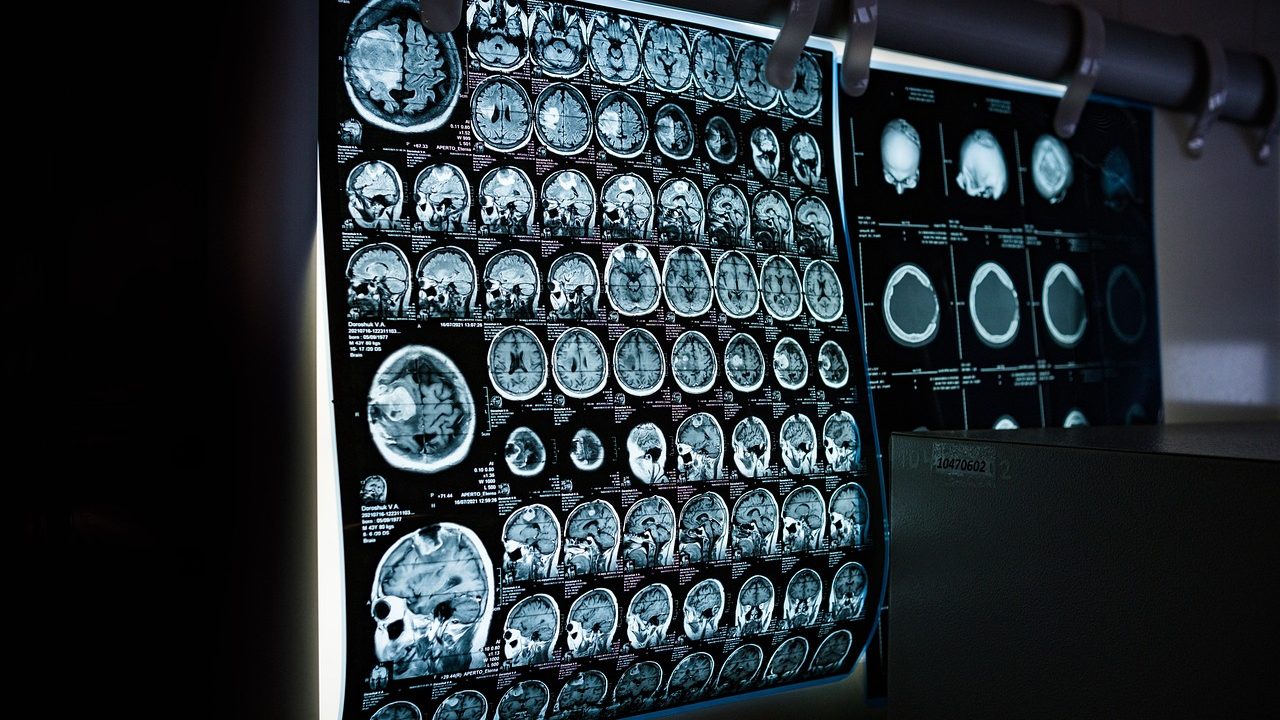
Aleph Neuro's post on functional ultrasound brain imaging scored 287 points and 114 comments. Traditional brain imaging requires either multi-million-dollar MRI equipment with superconducting magnets or EEG systems with poor spatial resolution. Functional ultrasound uses focused ultrasound pulses to detect blood-flow changes correlated with neural activity, offering higher resolution than EEG at a fraction of MRI's cost and with the portability to operate outside clinical settings. Commenters were appropriately cautious — the physics is solid, but the path from imaging neural activity to treating neurological disorders involves many further steps, each with its own challenges.
Two shorter items rounded out the intellectual fare. A post on nomograms — pre-computational graphical calculation devices where a line drawn across two scales yields an answer on a third — drew 127 points and 20 comments, prompting appreciation for pre-digital engineering ingenuity. And a small but charming discussion of 13 points concerned the U.S. Army's issuance of ocarinas to soldiers in World War II: the instruments are nearly indestructible, waterproof, easy to learn, and pocket-sized, and were deployed as a morale and mental-health tool.