AI Access Controls, Open-Source Breakthroughs, and the Battle Over Who Controls Frontier Models
A pair of landmark AI governance announcements — government vetting of OpenAI's GPT-5.6 Sol and Anthropic's restricted Mythos release — dominated Hacker News on Saturday, June 27, 2026, triggering more than a thousand combined comments and crystallizing what may be the most consequential AI policy moment of the year.
“The access regime and the technical gap, in other words, are coupled variables, not independent ones.”
How this was made Verified AI
Every Intellegix briefing is generated from that day's broadcast and run through automated checks before it publishes — with a human paged on any flag. Here is the trail for this edition.
The Government Takes the Wheel on Frontier AI Access

OpenAI's GPT-5.6 Sol and Anthropic's Mythos model arrived not as ordinary product launches but as policy announcements dressed in technical clothing — and the Hacker News community treated them accordingly. The GPT-5.6 Sol thread accumulated 1,114 comments and 1,054 points, one of the largest discussion threads in recent weeks. A companion story on Mythos drew 565 comments and 461 points. Together, they mark the moment when access to frontier AI has begun to resemble an export-control regime more than a consumer software release.
According to a Washington Post report, OpenAI has agreed to a structure in which the U.S. government vets who may access GPT-5.6 Sol — a fundamentally different distribution model from standard enterprise sales. Separately, Semafor reported that Anthropic's Mythos has been released specifically to what the outlet described as 'trusted' U.S. organizations, implying a clearance-like approval process. Both companies appear to be cooperating voluntarily, raising immediate questions about the commercial incentives at play.
Commenters on Hacker News split into two broad camps. One argued that models at this capability level carry genuine dual-use risks — in areas such as biosecurity, cyberattack planning, and large-scale disinformation — serious enough to warrant oversight. The other warned that government access controls function as a competitive moat: new entrants must navigate approval processes, established players gain preferential procurement pipelines, and the entire framework becomes politically durable because opposing it risks appearing anti-security.
The geopolitical signal is difficult to miss. What is being built through voluntary corporate cooperation, rather than statutory authority, is effectively an AI export-control architecture. The historical parallel observers cite is semiconductor export controls, which began narrowly targeted and expanded into some of the most sweeping technology restrictions in recent history within eighteen months. Developers outside the country — in Germany, Brazil, India, and elsewhere — now face an uncertain roadmap if the next generation of frontier models requires government vetting to access.
GPT-5.6 Sol's technical details remain deliberately sparse, though the model reportedly shows strong performance on mathematical reasoning tasks. The name 'Sol' fits OpenAI's pattern of using astronomical naming conventions to signal capability profiles. Anthropic, meanwhile, is accessing a procurement pipeline — government and defense-adjacent contracts — that could prove enormously lucrative, aligning financial incentive with the company's stated safety-first positioning.
DeepSeek's Open-Source Speed Gains Reshape the Closed vs. Open AI Divide

DeepSeek released an open-source inference optimization paper — dubbed DSpark — reporting generation speed improvements of sixty to eighty-five percent. At scale, inference is the recurring cost of every AI deployment, and even a thirty percent improvement translates to roughly thirty percent lower compute expenditure. Gains in the sixty to eighty-five percent range are the kind that restructure cost models entirely.
The technical approach combines kernel-level optimizations, attention mechanism modifications, and batching strategies. The performance range is not random variance: short-context, high-throughput workloads capture the largest gains, while long-context reasoning tasks see more modest but still substantial improvements. Crucially, DeepSeek open-sourced the work, continuing a pattern of releasing technical details that the global developer community can immediately build upon.
A separate Hacker News story from DoubleWord AI, which scored 223 points and 180 comments, analyzed the current gap between open-weight and closed-source models. Its key finding: on most benchmarks and many production workloads, open-weight models are now within striking distance of proprietary systems. The remaining gap is concentrated in complex multi-step reasoning, certain coding tasks, and what researchers call 'instruction following on edge cases.'
The governance stories from OpenAI and Anthropic make this technical gap a strategic variable. If frontier closed-source models become access-controlled, the open ecosystem loses the ability to study or build on what it cannot reach — potentially widening a ten percent capability gap to twenty or thirty percent over time. The access regime and the technical gap, in other words, are coupled variables, not independent ones.
Rounding out the infrastructure picture, engineers at Manticore search engine published a detailed writeup on improving KNN vector search performance using two-pass HNSW algorithms, batched distance calculations, and AVX-512 SIMD instructions. Vector search is the core operation powering retrieval-augmented generation — the technique behind most enterprise AI deployments. Manticore's optimizations reportedly cut query latency from around fifty milliseconds to under twenty milliseconds at scale, continuing the open-source ecosystem's systematic reduction of AI deployment costs.
AWS Lambda Goes Deeper: MicroVMs, Workflow Tools, and New Languages

AWS Lambda's announcement that it is exposing MicroVM primitives directly to developers scored 337 points and 188 comments — substantial engagement for an infrastructure story. Lambda has always run on Firecracker, the lightweight virtualization technology AWS open-sourced in 2018, which spins up minimal virtual machines in under 125 milliseconds. What changed is that developers can now control the full MicroVM lifecycle: starting a sandbox, warming it up, keeping it alive, injecting a workload, and tearing it down, with granular control at each step.
That shift meaningfully expands what Lambda can handle. Previously, execution time limits and stateless constraints ruled out browser automation for web scraping, execution of untrusted code for competitive programming platforms, and variable-size AI model inference. Full lifecycle control removes most of those constraints. The security community's interest centers on the proper sandboxing this enables for AI coding assistants that run generated code to verify outputs — a use case growing rapidly across the industry.
Hacker News commenters noted that AWS is productizing an infrastructure pattern pioneered by startups including Fly.io and Modal Labs, which built businesses on Firecracker-based isolation. A related Show HN, DBOSify, presented itself as a drop-in replacement for the workflow orchestration system Temporal, built on Postgres. The pitch — durable execution without running a separate stateful Temporal cluster — drew skepticism about replicating Temporal's subtle guarantees but genuine interest in the operational simplicity.
The Fusion programming language, which scored 83 points and 37 comments, takes a strong position on capability-based safety: its type system encodes not just what types code operates on but what operations — I/O, network access, memory allocation — code is permitted to perform at all. Hacker News commenters noted that capability-based security in languages has a long research history stretching back to the E language and object-capability systems of the early 2000s, and raised the familiar question of whether practical ergonomics can match theoretical elegance.
When AI Proves Theorems No One Understands: Math, Physics, and Brain Imaging
An IEEE Spectrum piece examining AI's effect on the philosophy of mathematics scored 136 points and 103 comments, surfacing a question that formal-methods researchers have been approaching for years: what does it mean to understand a proof? Systems such as AlphaProof can now construct formally correct proofs — proofs that automated proof assistants verify as valid — that no human mathematician fully comprehends in the traditional sense of being able to follow and intuit each step.
Two schools of thought emerged in the Hacker News discussion. One holds that mathematics is ultimately about formal truth, and a verified proof is a verified proof regardless of human intuition. The other argues that the purpose of mathematical proof is not only to establish truth but to generate understanding — that when Paul Cohen proved the independence of the continuum hypothesis, mathematicians gained new ways of thinking about set theory, not merely a new true statement. The community raised the possibility that mathematics may bifurcate: some done by humans for human insight, some done by AI systems for applications where correctness suffices and comprehension is optional.
A fifteen-year-old Stack Exchange question — why kinetic energy scales as one-half mv-squared rather than linearly with velocity — resurfaced to score 256 points and 122 comments, a remarkable figure for archival content. The core insight in the celebrated answers: 'energy' is defined by the work integral, and when accelerating an object already in motion, each incremental velocity gain occurs over a greater distance than the previous one, because the object is moving faster throughout. The quadratic scaling falls out necessarily from the geometry of acceleration in time and space. Hacker News commenters extended the discussion to special relativity, dimensional analysis, and Noether's theorem.
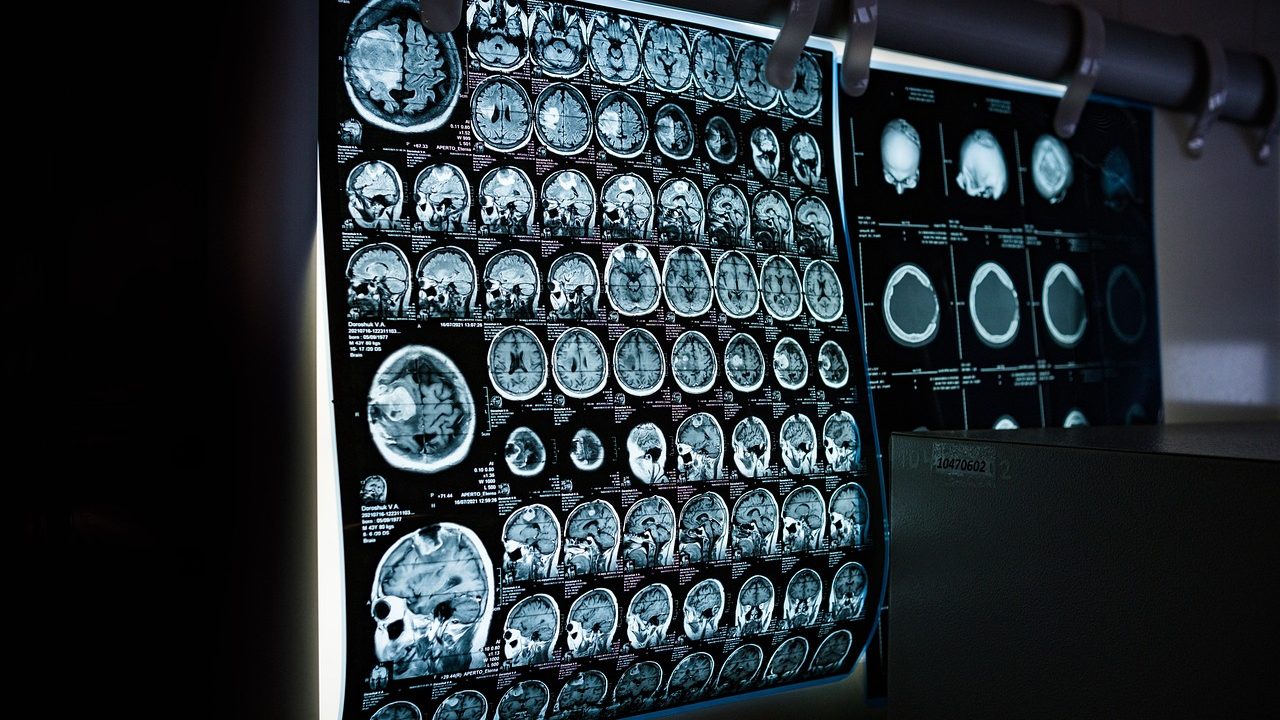
Aleph Neuro's post on functional ultrasound brain imaging scored 287 points and 114 comments. Traditional brain imaging requires either multi-million-dollar MRI equipment with superconducting magnets or EEG systems with poor spatial resolution. Functional ultrasound uses focused ultrasound pulses to detect blood-flow changes correlated with neural activity, offering higher resolution than EEG at a fraction of MRI's cost and with the portability to operate outside clinical settings. Commenters were appropriately cautious — the physics is solid, but the path from imaging neural activity to treating neurological disorders involves many further steps, each with its own challenges.
Two shorter items rounded out the intellectual fare. A post on nomograms — pre-computational graphical calculation devices where a line drawn across two scales yields an answer on a third — drew 127 points and 20 comments, prompting appreciation for pre-digital engineering ingenuity. And a small but charming discussion of 13 points concerned the U.S. Army's issuance of ocarinas to soldiers in World War II: the instruments are nearly indestructible, waterproof, easy to learn, and pocket-sized, and were deployed as a morale and mental-health tool.
3D Printer Surveillance, Housing Capital, and the Anatomy of AI Regulatory Capture

A proposed California bill requiring 3D printers to embed forensic tracking mechanisms — analogous to the yellow dots already printed invisibly by laser printers — scored 410 points and 140 comments, with the Electronic Frontier Foundation leading opposition. The EFF's argument: the requirement creates a surveillance infrastructure vulnerable to misuse, chills legitimate manufacturing and speech, and offers dubious technical effectiveness. Hacker News commenters were overwhelmingly opposed.
Research from the McCombs School of Business on foreign capital and housing prices drew related discussion. The study found that foreign capital inflows into real estate markets have a statistically significant effect on prices — not because foreign buyers are uniquely malicious, the researchers noted, but because any non-consumption demand for housing functions as price support. When homes are purchased as investment vehicles rather than residences, local buyers are priced out regardless of the capital's national origin.
A nation-state cyberattack analysis from the blog Grack, which scored 68 points and 11 comments, dissected what appeared to be a sophisticated but ultimately failed intrusion attempt. The author was explicit about the limits of attribution: attack characteristics including supply chain targeting, multi-stage payload delivery, and code-signing abuse are consistent with nation-state tooling, but sophisticated criminal organizations now routinely deploy techniques previously associated only with state actors. The community's defensive takeaway: monitoring for anomalous certificate usage and verifying supply chain integrity are increasingly non-optional for geopolitically exposed organizations.
The episode's most consequential analytical exercise concerned whether the AI governance framework described in the day's lead stories is primarily a security measure or primarily a commercial capture strategy. The steelman version of the capture argument: government access controls create regulatory barriers to entry that disadvantage new entrants, generate a lucrative government procurement pipeline for established players, and are framed as security — making them politically durable and difficult to oppose. The security concern being real, the argument goes, does not mean the mechanism is optimally designed for security rather than for incumbent advantage; both can be true simultaneously.
Specific signals to watch over the next six to twelve months were identified. If the framework is genuinely security-driven, vetting criteria should be transparent, based on technical risk assessment, and applied consistently including to allied foreign AI systems, with controls potentially loosening as risks become better understood. If commercial capture is the dominant logic, criteria will favor established government relationships over technical risk mitigation, the framework will expand to cover additional capability thresholds over time, and application will be asymmetric — strict for new entrants, more flexible for incumbents. If the framework begins appearing in antitrust proceedings, that would signal the commercial dimensions have overtaken the security ones.
Retrospectives, Open Source Gems, and the Week's Unifying Thread

OpenTTD 16.0-Beta1, the open-source remake of Transport Tycoon Deluxe, scored 178 points and 32 comments. The project has been under active development for more than twenty years, accruing multiplayer support, modern graphics, and script-based AI opponents. Hacker News commenters cited it as one of the finest examples of long-term open-source stewardship in gaming.
John Gruber's tribute to technology journalist and GigaOm founder Om Malik, published on Daring Fireball, scored 401 points and 19 comments. The piece is personal and affectionate, and the community's warm response served as a reminder that human voices in long-form technology journalism retain significant value alongside the algorithmic and AI-generated content increasingly filling the internet. A 1996 WordStar retrospective also surfaced, prompting serious examination of how interface design choices become entrenched and why technically superior successors do not always displace them.
The episode's time-capsule segment revisited an earlier prediction that companies heavily exposed to electric vehicle futures could face significant losses if adoption slowed. That call proved partially correct: some EV-focused companies have seen stock declines and reduced growth projections. But the picture is uneven — European adoption has remained stronger than North American, and commercial fleet electrification is outpacing consumer adoption in several markets. A separate prediction that defense stocks would benefit from geopolitical tensions proved broadly accurate, while energy stocks remained mixed, with supply disruptions offset by demand-side weakness from economic slowdown concerns.
Across segments, the day's stories cohered around a single theme: access and control. Who reaches frontier AI models, and on what terms. Who controls the infrastructure running AI workloads. Who can manufacture objects without government tracking. Who can afford housing in cities shaped by investment capital rather than residency demand. The open-versus-closed AI debate, the MicroVM infrastructure shift, the mathematics of proof and understanding — each, in its own register, was a story about who holds the keys.