OpenAI's Custom Chip and a Crowded Race for Compute Sovereignty
How this was made Verified AI
Every Intellegix briefing is generated from that day's broadcast and run through automated checks before it publishes — with a human paged on any flag. Here is the trail for this edition.
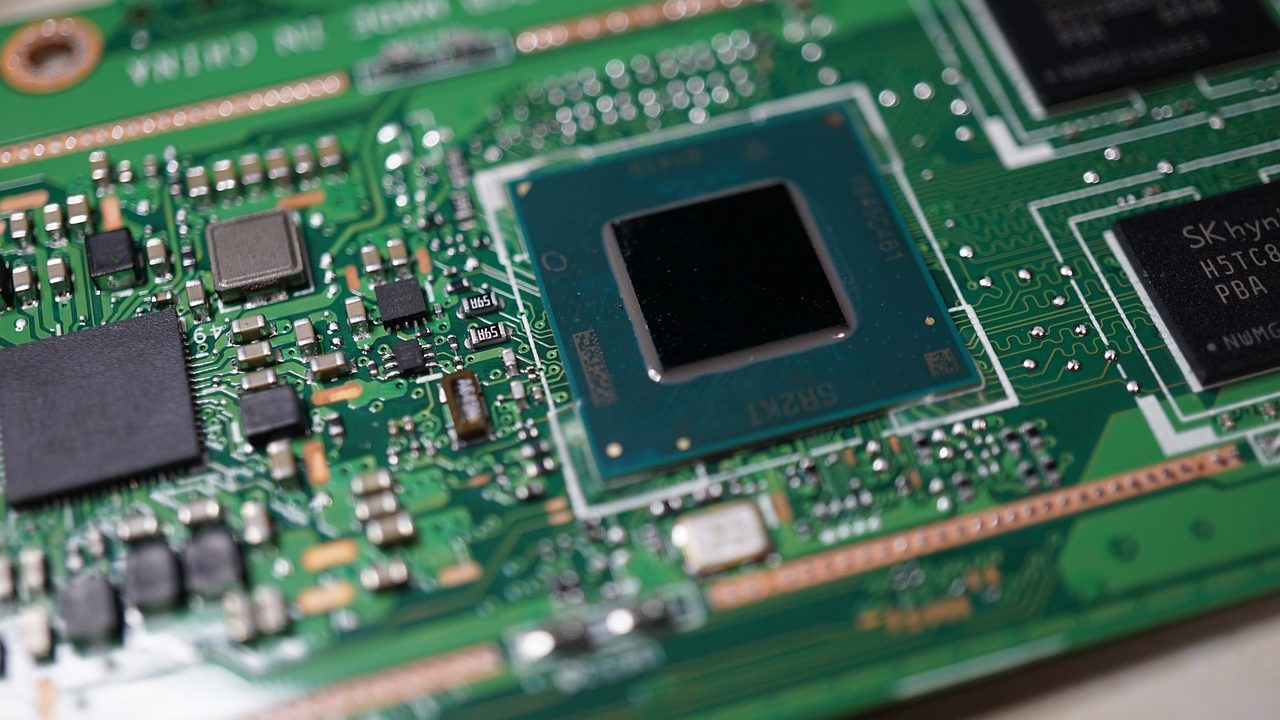
OpenAI has announced its first custom chip, built in collaboration with Broadcom, a move that reshapes the company's relationship with NVIDIA and restructures who controls the bottleneck of its entire production operation. For years OpenAI ran virtually all training workloads on NVIDIA H100 and A100 clusters; purpose-built silicon changes that dependency fundamentally, shifting leverage away from a chip supplier that is itself expanding into software and services.
The nature of the partnership matters enormously. Broadcom does not build its own foundation models, making this a genuine collaboration rather than a vendor relationship with a latent competitor. A 405-comment Hacker News thread is debating whether the chip represents fully custom silicon designed from first principles — as Google's TPUs are — or a configured ASIC based on existing Broadcom platform IP. Even the latter would carry meaningful advantages: optimization for inference workloads specifically can dramatically reduce cost-per-token at scale, and cost-per-token is where OpenAI faces its most acute competitive pressure as Anthropic, Google, Meta, Mistral, and a growing list of open-weights providers compete on price as much as capability.
Google, meanwhile, has introduced computer-use capabilities in Gemini 3.5 Flash, its speed-optimized, lower-cost model tier. Computer use — the ability for an AI model to operate a graphical user interface by clicking, typing, reading screen content, and taking actions as a human would — was introduced by Anthropic for Claude last year. Google bringing it to a production-grade, cost-efficient tier signals the capability is moving from experimental to broadly deployable, with significant implications for automating legacy enterprise software that lacks a proper API.
The open-weights front is seeing its own inflection point. GLM-5.2, released by Chinese AI lab Zhipu AI, has drawn 248 points and 146 comments on Hacker News for what researchers describe as a genuine step change in open-source agent workflows. Its differentiator is not raw benchmark performance but specific optimization for tool use and multi-step agentic tasks — areas where open-weights models have historically lagged far behind closed frontier systems. For enterprises that want AI agents running on private infrastructure rather than calling back to external APIs, a competitive open-weights option materially changes the build-versus-buy calculation.
Rounding out the model landscape, Krea has released Krea 2, a 12-billion-parameter open-weights image generation model claiming state-of-the-art benchmark performance. With 387 points, it landed strongly on Hacker News. The open-weights release is the strategic headline: it enables fine-tuning, custom deployment, and commercial use without API metering, and a competitive quality level at 12 billion parameters means broader deployability than heavier architectures.