AI Espionage, Custom Silicon, and the Battle for the Intelligence Stack
From allegations of capability theft targeting Anthropic's Claude to OpenAI's first custom chip and a wave of open-weights model releases, Thursday's technology news revealed an industry in an all-out contest for control of artificial intelligence at every layer of the stack.
“email spam emerged when the cost of sending fell to near zero; AI PR spam is emerging as the cost of generating a plausible-looking code change approaches the same floor”
How this was made Verified AI
Every Intellegix briefing is generated from that day's broadcast and run through automated checks before it publishes — with a human paged on any flag. Here is the trail for this edition.
Anthropic Accuses Alibaba of Siphoning Claude's Intelligence

Anthropic has publicly accused Alibaba of illicitly extracting capabilities from its Claude AI model, according to Reuters reporting that immediately became the most-discussed story on Hacker News, drawing 466 points and 809 comments. The allegation centers on techniques designed to reverse-engineer or distill Claude's outputs in violation of Anthropic's terms of service — effectively siphoning the model's learned behaviors into Alibaba's own systems without authorization.
The suspected technique is model distillation: using a powerful 'teacher' model to generate vast quantities of high-quality training data, then training a smaller 'student' model to approximate the teacher's behavior without ever accessing the teacher's underlying weights. The practice is legitimate when applied to one's own model; it becomes legally and ethically contested when conducted against a commercial model whose terms of service explicitly prohibit using outputs to train competing systems.
Proving the allegation is a complex forensic exercise. Anthropic would need to demonstrate behavioral fingerprints — specific quirks, systematic biases, or distinctive reasoning patterns appearing in the suspected model that trace back to Claude. The company's willingness to go public suggests significant internal evidence, though observers on Hacker News remain split on whether such a case can be made to stick.
The geopolitical stakes amplify the dispute beyond a standard terms-of-service matter. Alibaba is deeply embedded in China's technology ecosystem, and Claude is among the frontier Western AI models; if the accusation holds, it would represent industrial-scale capability extraction of the kind U.S. policymakers have warned about for years. For Anthropic, the business stakes are equally acute: its entire commercial model depends on Claude remaining a differentiated product, and distillation at scale could let competitors approximate that differentiation at a fraction of the original training cost.
The dispute may ultimately force courts to answer a question that has not yet been resolved cleanly: what constitutes intellectual property in the context of a language model? Weights are proprietary, training data is proprietary, but whether the emergent style, reasoning patterns, and explanatory structure of a model's outputs are legally protectable remains an open question. Jurisdictional complexity compounds the problem — any remedy would need to bridge U.S. intellectual property law, Chinese commercial law, and whatever international frameworks actually govern AI model capabilities, a gap that is currently enormous.
OpenAI's Custom Chip and a Crowded Race for Compute Sovereignty
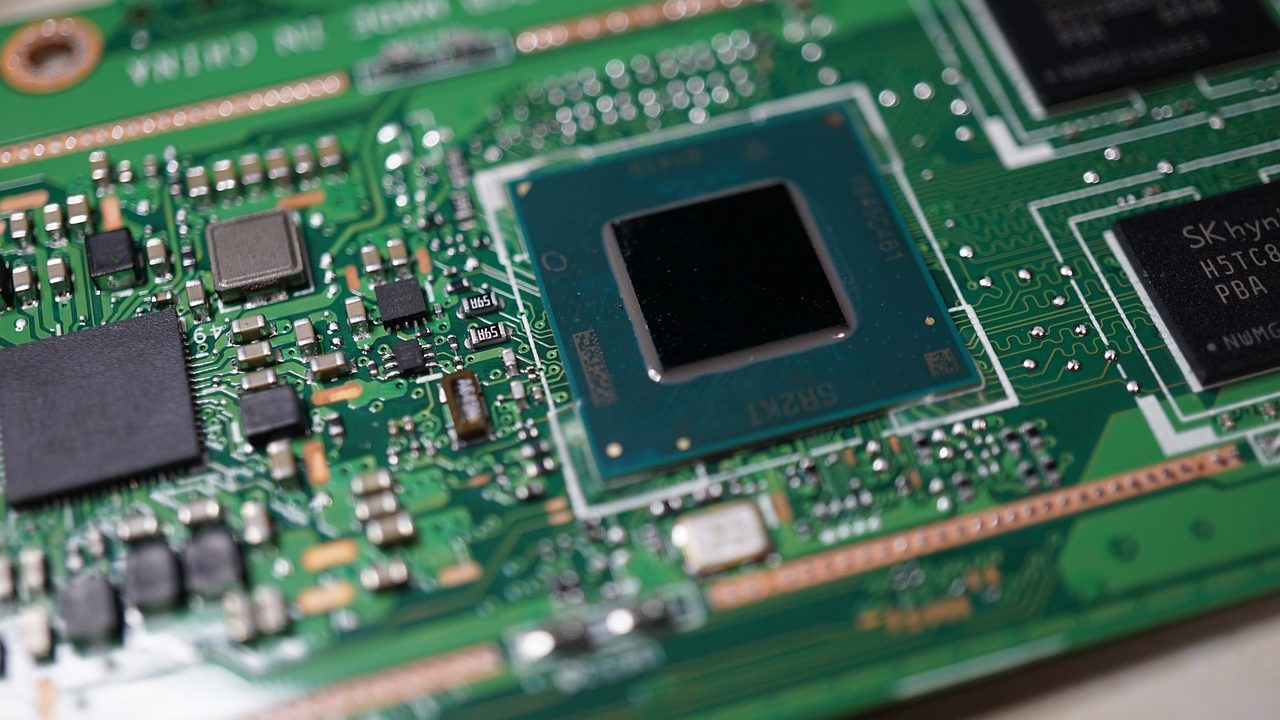
OpenAI has announced its first custom chip, built in collaboration with Broadcom, a move that reshapes the company's relationship with NVIDIA and restructures who controls the bottleneck of its entire production operation. For years OpenAI ran virtually all training workloads on NVIDIA H100 and A100 clusters; purpose-built silicon changes that dependency fundamentally, shifting leverage away from a chip supplier that is itself expanding into software and services.
The nature of the partnership matters enormously. Broadcom does not build its own foundation models, making this a genuine collaboration rather than a vendor relationship with a latent competitor. A 405-comment Hacker News thread is debating whether the chip represents fully custom silicon designed from first principles — as Google's TPUs are — or a configured ASIC based on existing Broadcom platform IP. Even the latter would carry meaningful advantages: optimization for inference workloads specifically can dramatically reduce cost-per-token at scale, and cost-per-token is where OpenAI faces its most acute competitive pressure as Anthropic, Google, Meta, Mistral, and a growing list of open-weights providers compete on price as much as capability.
Google, meanwhile, has introduced computer-use capabilities in Gemini 3.5 Flash, its speed-optimized, lower-cost model tier. Computer use — the ability for an AI model to operate a graphical user interface by clicking, typing, reading screen content, and taking actions as a human would — was introduced by Anthropic for Claude last year. Google bringing it to a production-grade, cost-efficient tier signals the capability is moving from experimental to broadly deployable, with significant implications for automating legacy enterprise software that lacks a proper API.
The open-weights front is seeing its own inflection point. GLM-5.2, released by Chinese AI lab Zhipu AI, has drawn 248 points and 146 comments on Hacker News for what researchers describe as a genuine step change in open-source agent workflows. Its differentiator is not raw benchmark performance but specific optimization for tool use and multi-step agentic tasks — areas where open-weights models have historically lagged far behind closed frontier systems. For enterprises that want AI agents running on private infrastructure rather than calling back to external APIs, a competitive open-weights option materially changes the build-versus-buy calculation.
Rounding out the model landscape, Krea has released Krea 2, a 12-billion-parameter open-weights image generation model claiming state-of-the-art benchmark performance. With 387 points, it landed strongly on Hacker News. The open-weights release is the strategic headline: it enables fine-tuning, custom deployment, and commercial use without API metering, and a competitive quality level at 12 billion parameters means broader deployability than heavier architectures.
From Zero-Water Cooling to OAuth for All: The Week's Infrastructure Shifts

An NVIDIA-backed cooling design claiming near-zero data center water consumption is attracting serious attention from engineers, drawing 353 points and 251 comments on Hacker News. The approach runs liquid coolant at 45 degrees Celsius rather than the conventional 20-to-30-degree range — warm enough to reject heat directly to outside air in most climates without the chiller systems that typically account for 30 to 40 percent of a data center's cooling energy and require evaporative water loops. Eliminating chillers removes a major siting constraint in water-stressed regions such as Arizona, Texas, and parts of Northern Europe, where regulatory pressure on water consumption is becoming a genuine barrier to hyperscale facility construction. Several Hacker News commenters note that 'near zero' water use in practice depends heavily on ambient climate.
Cloudflare has opened self-managed OAuth to all developers, allowing teams to implement token issuance, refresh, and validation flows through Cloudflare's infrastructure without building their own OAuth server. The announcement drew 187 points and 85 comments — an indication that OAuth remains one of those protocol-level problems complicated enough that most teams would prefer not to own it internally.
A Show HN project called Nub, positioning itself as a Bun-like all-in-one toolkit for Node.js, reached 247 points and 68 comments. Where Bun replaced the Node runtime entirely, Nub applies the same opinionated, integrated, fast philosophy within the existing Node ecosystem. The thread debates whether this addresses a genuine developer pain point or adds another layer to an already fragmented JavaScript tooling landscape.
A QuestDB piece titled 'Lies, Damn Lies and Database Benchmarks' may have a modest point count but carries outsized practical value for engineering teams facing vendor evaluations. It catalogs the specific mechanisms by which database vendors game benchmarks: cherry-picked query patterns, favorable hardware configurations, workload sizes calibrated to fit in cache, and compression settings adjusted to flatter the vendor's architecture. Meanwhile, a proposed LuaJIT 3.0 syntax extension thread on GitHub drew 167 points and 100 comments, signaling that active development may be resuming for an implementation embedded in everything from game engines to network equipment firmware.
RubyLLM, a framework providing a unified API surface across all major AI providers for Ruby developers, was the sixth highest-scored story of the day at 394 points. As Python-centric AI tooling has dominated the integration landscape, a well-built Ruby equivalent filling the gap drew largely positive reception in its 68-comment thread.
Digital Archaeology: Half-Life 2 in a Browser and the Scripts That Built the Early Web

A project running Half-Life 2 entirely in a browser — no installation required — earned 301 points and 108 comments as both a technical achievement and a demonstration of how comprehensively the web platform has matured. The implementation at hl2.slqnt.dev uses WebAssembly to run the Source engine directly, with WebGL for rendering and the Web Audio API for sound. What would have been unthinkable a decade ago is now achievable by skilled individuals, not major corporations.
Bohemia Interactive, the studio behind the Arma series, has released the source code for Cold War Assault — the remastered version of Operation Flashpoint — on GitHub. With 92 points and 16 comments, the release won't break records, but source code releases extend a game's lifespan indefinitely by enabling modders and historians to study engine architecture and preserve titles in ways proprietary binaries cannot sustain.
A Tedium retrospective on Matt's Script Archive — the late-1990s collection of CGI scripts that served as the infrastructure layer for much of the personal and small-business web — earned 57 points as genuine internet history. Before content management systems, before WordPress, before cloud functions, Matt Wright's form handlers, guestbooks, and hit counters written in Perl democratized dynamic web publishing for a generation of site owners. The security implications of those widely distributed scripts were poor by modern standards, but the culture of sharing reusable solutions to common problems is a direct ancestor of npm, PyPI, and RubyGems at scale.
The Dolphin Emulator's June 2026 progress release, at 42 points, represents over two decades of continuous open-source work preserving GameCube and Wii software. Each fix to a previously glitching title and each performance improvement is a small act of digital preservation for games that would otherwise become inaccessible as original hardware ages. Separately, Markdy, a project applying the diagram-as-code philosophy of Mermaid to animated motion graphics, drew 77 points and 36 comments for its text-based syntax approach to explainer content.
Zombie Unicorns, AI PR Spam, and the Integrity Crisis in Research

The Economist's accounting of Silicon Valley's 'zombie unicorns' — private companies that achieved billion-dollar valuations during the 2021–2022 funding boom but have neither grown into those valuations nor found an exit — drew 113 points and 63 comments. These companies are not dead, because they are still operating; they are not meaningfully alive, because they cannot raise at comparable valuations, cannot IPO without admitting the paper numbers were fictional, and cannot be acquired at prices that would vindicate early investors. Venture funds continue marking them at inflated figures because write-downs have not yet been forced, though everyone involved reportedly knows the numbers do not reflect reality. Elevated interest rates and the absorption of available capital into AI investment have kept the exit window narrow.
Qualcomm's acquisition of Modular — the AI startup co-founded by Chris Lattner, creator of Swift and LLVM — drew 204 points and 76 comments. Modular's flagship product was Mojo, a programming language designed to bridge Python's usability and C's performance for AI workloads. Qualcomm's own AI chip efforts, centered on the NPU business in its Snapdragon lineup, provide an obvious strategic rationale for absorbing Modular's compiler and runtime expertise. The Hacker News community noted some concern that Mojo's development roadmap will now be shaped by what is useful for Qualcomm's hardware rather than the broader ecosystem.
Workers at the Wikimedia Foundation's UK operation are seeking union recognition in what is being described as a global first for a digital media nonprofit. The story drew 97 points and 105 comments — a high comment-to-score ratio that typically signals genuine debate — with discussion spanning labor rights at mission-driven organizations and the broader landscape of tech worker organizing.
A Science magazine report on medical students using research tools to generate methodologically flawed and potentially misleading studies drew 61 points and 34 comments. The pipeline from AI-assisted research writing to systematically compromised published literature is short, and the implications for evidence-based medicine are serious even if the story has not yet achieved widespread circulation.
Greptile's essay comparing AI-generated pull request spam to early email spam reached 230 points and 135 comments. The company, which maintains an open-source repository, reports a surge of AI-generated pull requests — minor text changes, superficial refactoring, documentation tweaks that improve nothing — submitted without meaningful human review. The analogy is precise: email spam emerged when the cost of sending fell to near zero; AI PR spam is emerging as the cost of generating a plausible-looking code change approaches the same floor. Likely responses mirror the email playbook: filtering systems, reputation scores, and friction requirements for new contributors.