Midjourney Goes Clinical, DeepSeek Gains Eyes, and Local Models Find Their Defense
How this was made Verified AI
Every Intellegix briefing is generated from that day's broadcast and run through automated checks before it publishes — with a human paged on any flag. Here is the trail for this edition.
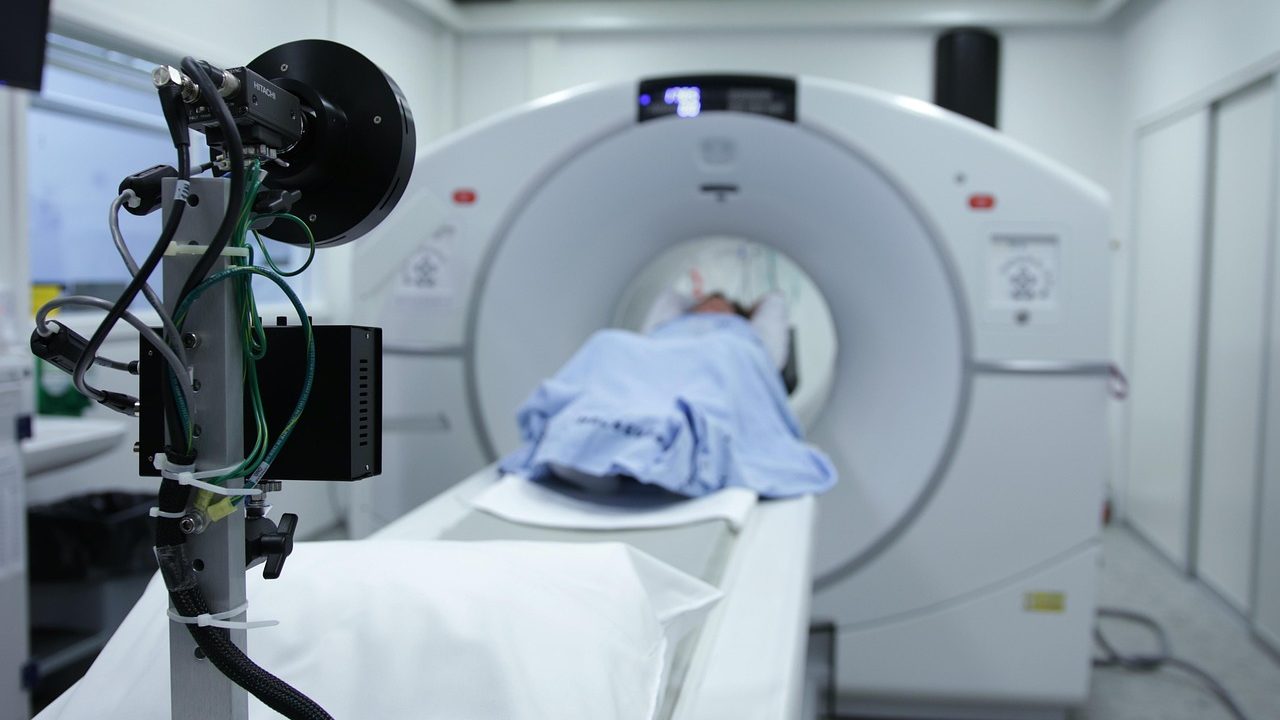
Midjourney — best known as an image-generation platform — has announced a medical imaging initiative that drew 578 comments, the second-highest engagement count of the day. Excitement in the thread centers on medical imaging's suitability for pattern-recognition AI: radiology, pathology, and dermatology are fields where anomaly detection could carry genuine clinical impact. Skepticism is equally present, grounded in medical AI's well-documented history of impressive benchmark performance that fails to translate to clinical deployment, and in the lengthy, expensive regulatory pathway through the FDA for any diagnostic tool.
A technical tension the thread surfaces is that generative models — Midjourney's architecture — are fundamentally different from the discriminative models typically used in medical imaging. A discriminative model classifies: this scan shows a tumor, this one does not. A generative model learns the distribution of what images look like. Whether Midjourney's generative strengths translate to clinical diagnostic accuracy is, commenters with clinical AI backgrounds note, genuinely open. One potential use case that sidesteps the concern is synthetic data generation: medical imaging datasets are difficult to acquire at scale due to privacy regulations and the rarity of rare conditions, and a system that could generate realistic synthetic training data would be valuable independent of direct diagnostic capability.
DeepSeek introduced vision capability in its chat interface, drawing 181 points and 81 comments. The announcement places DeepSeek in direct competition with GPT-4o and Claude's vision features for multimodal reasoning tasks. Technical benchmarks posted in the thread are described as competitive, but the HN reaction treats a DeepSeek vision launch differently than a similar announcement from a Western lab — geopolitical context and data-handling questions arise immediately, connecting to the policy story covered later in the episode.
The day's third AI story reframes the conversation entirely. A post titled 'Local Qwen isn't a worse Opus, it's a different tool' — 246 points, 119 comments — by Alex Ellis of the OpenFaaS project argues that local AI models running on-premises should not be evaluated primarily against cloud frontier models on the same benchmarks, a framing that sets them up to lose every time. The proper frame, Ellis argues, is deployment context: a local Qwen model runs offline, processes data that never leaves the network, carries zero marginal inference cost, and operates without API rate limits or latency variability. For airgapped development environments, regulated-industry document processing, or edge hardware, those properties are irreplaceable. The thread extends this into the economics of production deployment: an operation running a hundred thousand inference calls per day faces entirely different math than an individual developer making dozens of personal productivity calls.
Quietly significant in the background is the AI Compute Extensions specification — the ACE spec from x86ecosystem.org — a proposal for standardized hardware extensions enabling CPUs to natively accelerate tensor operations currently offloaded to dedicated GPUs or NPUs. If the spec achieves adoption across AMD, Intel, and potentially ARM, it alters the calculation of where AI inference can run efficiently. The comment thread is small at 17 replies but the participants appear to be processor architects.