AI Medical Imaging, Hardware Trust Crises, and the Version Control Revolution: Hacker News Digest for June 18, 2026
From a bold new challenge to Git's two-decade dominance to AMD quietly stripping memory encryption from consumer chips, Thursday's top technology stories surface a recurring tension between what systems promise and what they actually deliver. A packed day on Hacker News ranges from Midjourney's medical imaging ambitions to the geopolitics of open-weight AI — with bread bag clip taxonomy thrown in for good measure.
“If GrapheneOS with sandboxed Google Play passes VW's checks while GrapheneOS without it fails, the targeting is the privacy configuration, not any security property.”
How this was made Verified AI
Every Intellegix briefing is generated from that day's broadcast and run through automated checks before it publishes — with a human paged on any flag. Here is the trail for this edition.
Today's Agenda: Code, Chips, and AI Policy in Focus
Thursday's Hacker News feed arrived with unusual breadth: a clean-slate version control system challenging Git's assumptions, a medical imaging pivot from an image-generation company, a firmware controversy at AMD, and a US government decision on AI blacklisting that carries significant policy weight. The day's top post drew 1,159 points and 614 comments; its runner-up by comment count pulled 578.
Alongside the technical and policy heavyweights, the community surfaced a formal new HTTP method ending years of awkward workarounds, a YC-backed open-source CAD tool, and infrastructure engineering posts describing browser environments that spin up in under one second. The episode closes with a satirical scientific taxonomy of bread bag clips and a phone-based web server constructed from smashed hardware.
Can Lore Unseat Git? A New Version Control System Ignites Debate

The top-scoring story of the day — 1,159 points and 614 comments — is the launch of Lore, an open-source version control system at lore.org designed from the ground up for scalability that Git was never architected to handle. The project's central argument is that Git's foundational assumptions — local repositories, full history clones, single-namespace branching — were calibrated for a Linux kernel-sized codebase in 2005, and those assumptions create real problems at the scale of a decade-old corporate monorepo or a hyperscaler engineering organization.
The Hacker News thread immediately divided into two camps. One group contended that Git's limitations are well understood and that the industry has already constructed workable solutions: Microsoft's virtual filesystem GVFS, shallow clones, and purpose-built monorepo tooling. The counter-argument held that all of those are workarounds layered atop a fundamentally mismatched data model, and that genuine relief requires a system designed for scale from the first commit rather than retrofitted afterward.
Lore's core architectural departure appears to lie in object storage and graph traversal. Git's content-addressable storage is elegant but creates a situation where operations touching history — blame, bisect, complex merges — scale with the depth of the commit graph. Lore reportedly uses a different indexing strategy intended to keep those operations closer to constant time regardless of repository age, a claim that, if it holds in practice, would meaningfully change the economics of large-scale code review and continuous integration.
There is also a governance dimension the thread surfaced. Git is effectively maintained by a small group with Linus Torvalds as final arbiter, an arrangement that has worked remarkably well for twenty years but places certain classes of design changes off the table because they would break backward compatibility in ways Torvalds will not accept. A clean-slate project carries no such constraint — which is simultaneously its opportunity and its risk, given that GitHub, GitLab, every CI system, and every IDE plugin are built around Git's object model and wire protocol.
A companion piece trending today — 'The Forge We Deserve' at btao.org, with 33 comments — takes a more philosophical angle, arguing that GitHub's interface and collaboration model are themselves products of Git's underlying assumptions, and that genuinely rethinking version control would also mean rethinking code review, issue tracking, and project governance. Several commenters pointed to Fossil, SQLite's bundled version control and issue-tracking system, as a project that got the integration right but the timing wrong.
Midjourney Goes Clinical, DeepSeek Gains Eyes, and Local Models Find Their Defense
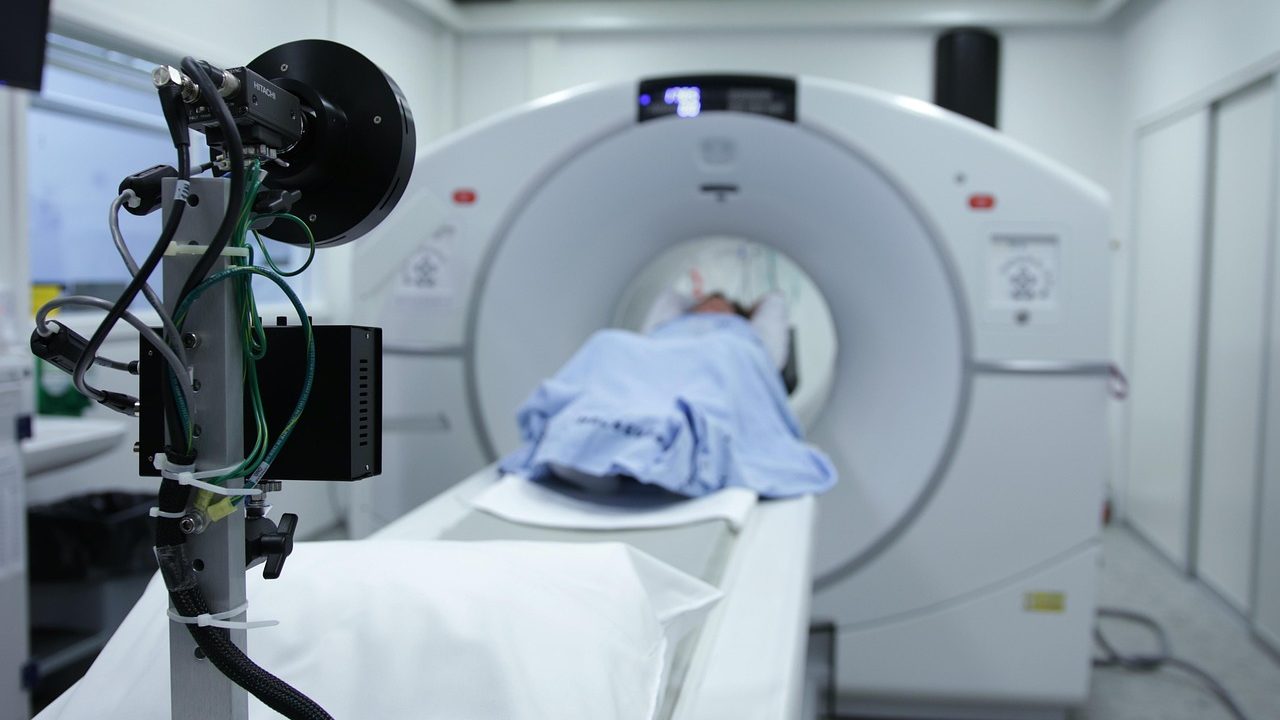
Midjourney — best known as an image-generation platform — has announced a medical imaging initiative that drew 578 comments, the second-highest engagement count of the day. Excitement in the thread centers on medical imaging's suitability for pattern-recognition AI: radiology, pathology, and dermatology are fields where anomaly detection could carry genuine clinical impact. Skepticism is equally present, grounded in medical AI's well-documented history of impressive benchmark performance that fails to translate to clinical deployment, and in the lengthy, expensive regulatory pathway through the FDA for any diagnostic tool.
A technical tension the thread surfaces is that generative models — Midjourney's architecture — are fundamentally different from the discriminative models typically used in medical imaging. A discriminative model classifies: this scan shows a tumor, this one does not. A generative model learns the distribution of what images look like. Whether Midjourney's generative strengths translate to clinical diagnostic accuracy is, commenters with clinical AI backgrounds note, genuinely open. One potential use case that sidesteps the concern is synthetic data generation: medical imaging datasets are difficult to acquire at scale due to privacy regulations and the rarity of rare conditions, and a system that could generate realistic synthetic training data would be valuable independent of direct diagnostic capability.
DeepSeek introduced vision capability in its chat interface, drawing 181 points and 81 comments. The announcement places DeepSeek in direct competition with GPT-4o and Claude's vision features for multimodal reasoning tasks. Technical benchmarks posted in the thread are described as competitive, but the HN reaction treats a DeepSeek vision launch differently than a similar announcement from a Western lab — geopolitical context and data-handling questions arise immediately, connecting to the policy story covered later in the episode.
The day's third AI story reframes the conversation entirely. A post titled 'Local Qwen isn't a worse Opus, it's a different tool' — 246 points, 119 comments — by Alex Ellis of the OpenFaaS project argues that local AI models running on-premises should not be evaluated primarily against cloud frontier models on the same benchmarks, a framing that sets them up to lose every time. The proper frame, Ellis argues, is deployment context: a local Qwen model runs offline, processes data that never leaves the network, carries zero marginal inference cost, and operates without API rate limits or latency variability. For airgapped development environments, regulated-industry document processing, or edge hardware, those properties are irreplaceable. The thread extends this into the economics of production deployment: an operation running a hundred thousand inference calls per day faces entirely different math than an individual developer making dozens of personal productivity calls.
Quietly significant in the background is the AI Compute Extensions specification — the ACE spec from x86ecosystem.org — a proposal for standardized hardware extensions enabling CPUs to natively accelerate tensor operations currently offloaded to dedicated GPUs or NPUs. If the spec achieves adoption across AMD, Intel, and potentially ARM, it alters the calculation of where AI inference can run efficiently. The comment thread is small at 17 replies but the participants appear to be processor architects.
AMD's Silent Security Rollback and Volkswagen's War on Privacy Software
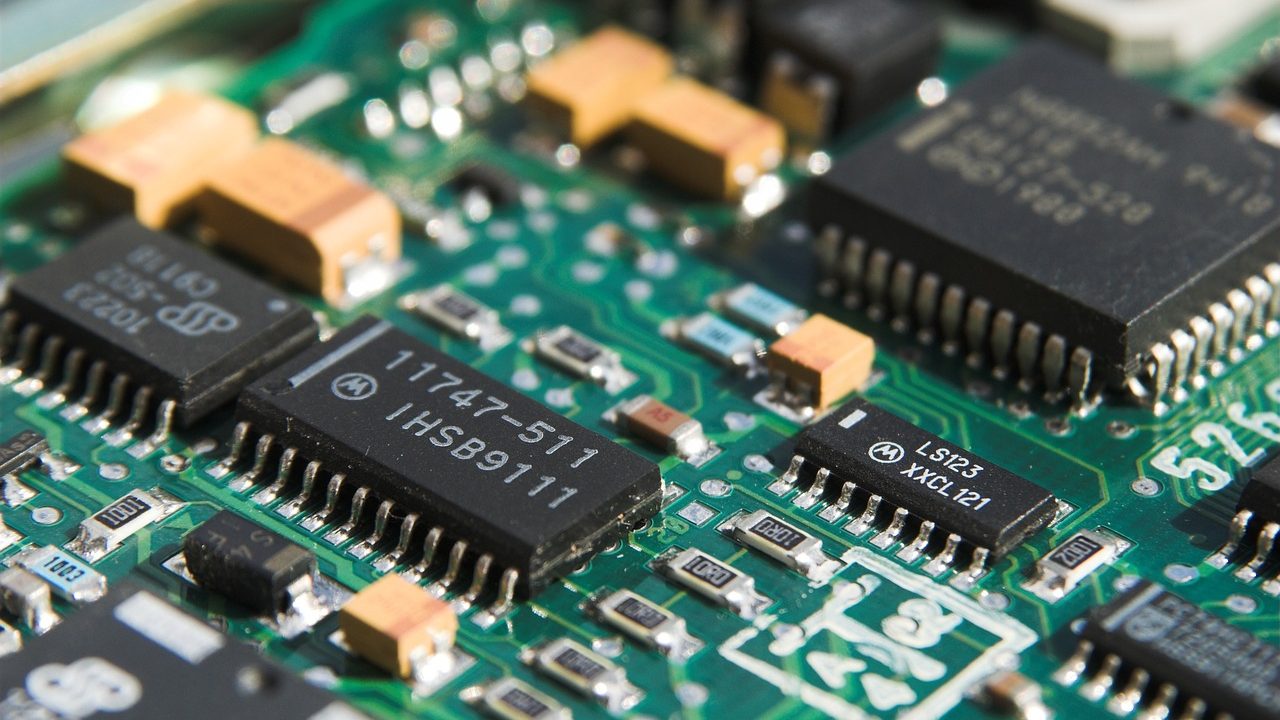
Two stories in Thursday's feed share an underlying structure: a corporation exercising unilateral control over security properties that users believed they owned. The first involves AMD and a firmware update; the second involves Volkswagen and a mobile operating system.
Reported by Tom's Hardware and drawing 150 points and 72 comments, the AMD story concerns the silent removal of Transparent Secure Memory Encryption — TSME — from consumer Ryzen CPUs through an AGESA firmware update distributed via motherboard vendors. There was no changelog entry, no security advisory, and no communication to users. Engineers discovered the change by testing memory protection features and finding them absent. TSME is AMD's hardware-level memory encryption protecting against cold boot attacks, DMA attacks, and certain firmware exploits. On professional and enterprise AMD processors, the feature remains active. Commenters with security backgrounds describe the removal as a product segmentation decision — distinguishing the EPYC server line from the consumer Ryzen line — but characterize the method of delivery, a quiet update that actively removes a previously available security feature with no opt-out, as a meaningful failure of user trust. The usual advice to avoid firmware updates creates its own risk, because AGESA packages frequently contain critical bug fixes.
The Volkswagen story is the second-highest engagement item of the day by comment count: 709 points and 420 comments. Volkswagen has begun blocking users of GrapheneOS — a hardened, privacy-focused Android operating system — from accessing the Volkswagen app, which handles remote vehicle monitoring, EV charging management, and navigation updates. The HN community's immediate question is what legitimate reason a car company could have for blocking a hardened operating system rather than a compromised one from features unrelated to vehicle safety.
The GrapheneOS developers' response, linked in the thread, is described as characteristically direct. They note that VW's blocking mechanism is bypassed when GrapheneOS is configured with sandboxed Google Play — a finding that, observers argue, definitively establishes the block is not security-motivated. If GrapheneOS with sandboxed Google Play passes VW's checks while GrapheneOS without it fails, the targeting is the privacy configuration, not any security property. The thread's darker interpretation is that VW's app collects and monetizes user data, and GrapheneOS's privacy protections interfere with that data collection — making this a business-model concern dressed as a security one. A legal dimension is noted: right-to-repair and software interoperability regulation is growing in several jurisdictions, and a car company blocking a privacy OS from non-safety-critical vehicle features represents a relatively clean test case for those principles.
The HTTP QUERY Method Arrives, and Browser Environments Boot in Under a Second

RFC 10008 — the formal introduction of an HTTP QUERY method — drew 382 points and 159 comments, with a reaction described as almost uniformly positive, which is noted as rare for an HTTP standards discussion. The problem QUERY solves is longstanding: GET is the correct HTTP method for safe, idempotent read operations, but conventionally carries no request body. When a client needs to send complex, structured query parameters to a server without causing side effects — a pattern common in GraphQL, ElasticSearch, and many search APIs — the industry settled on using POST, which is semantically wrong because POST implies state mutation. Reverse proxies, caches, API gateways, and logging systems treat POST as non-cacheable and potentially mutating. QUERY explicitly signals a read operation with a body, allowing all that infrastructure to be correctly configured. Several engineers from API companies note in the thread that a similar proposal went nowhere in 2017; there is evident appreciation that the standard has now been formalized.
The Firecracker VM post from browser-use.com drew 286 points and 178 comments and is described as one of the more technically impressive engineering writeups to appear on HN recently. Browser-use provides browser automation infrastructure and has built a system capable of spinning up a complete browser environment in under one second using AWS Firecracker microVMs. Firecracker, the microVM technology Amazon built for AWS Lambda and Fargate, uses the Linux KVM hypervisor while stripping out QEMU's hardware emulation overhead, resulting in virtual machines that boot in approximately 125 milliseconds. Browser-use's contribution is pre-warming via VM snapshots: a Firecracker VM already booted with Chrome running has its memory state snapshotted, and subsequent environments restore from that snapshot rather than booting from scratch. The memory restore is significantly faster than a cold boot, producing the sub-second browser start time. The post covers the engineering challenges of restoring browser state — open connections, cached DNS, timing-sensitive JavaScript — and the handling of stale network state in restored snapshots. Comments include engineers from AWS discussing how similar techniques apply to Lambda warm-start optimization.
A post from writer and engineer Xe Iaso titled 'I hate compilers' — 89 points, 65 comments — provides a specific, technically grounded account of WebAssembly toolchain pain encountered while attempting to vendor a binary for the Anubis anti-bot system. The frustration is concrete rather than abstract: the post identifies the exact points where WASM toolchain design choices around binary distribution, reproducible builds, and cross-compilation create acute problems that the native binary ecosystem has mostly resolved. The thread drew responses from engineers working on the relevant tools.
Also trending: the Nim Conference, scheduled for Saturday June 20th, online and free to attend, for listeners following the Nim programming language — a systems language with Python-like syntax that compiles to C and JavaScript. And a comparison post examining Varnish Cache and the newer Vinyl Cache, touching on architectural innovation in the HTTP caching layer, which the post describes as infrastructure that rarely draws attention until something goes wrong.
DeepSeek Spared the Blacklist, Drug Repurposing Slashes Costs, and Madrid Builds Cheap Metros

The US government's decision to hold off on blacklisting DeepSeek — while simultaneously designating more than 100 other Chinese technology firms as security risks — drew 467 points and 516 comments. Reuters reporting suggests the decision is at least partly pragmatic: DeepSeek's models are open-weight, meaning the weights are publicly available and a blacklist of the company does not affect availability of the underlying capability. The parallel drawn in the thread is to the NSA's largely unsuccessful attempt to classify public-key cryptography in the 1970s — restrictions on mathematical knowledge have a poor historical track record. The more than 100 firms that were designated reportedly span surveillance technology, telecommunications infrastructure, and AI-assisted military systems, suggesting capability-specific assessments rather than broad sector blacklisting.
Against that policy backdrop, the episode examines a structural assumption running through coverage of open-weight AI: that distributing model weights is equivalent to distributing the capability. The counterargument is hardware-gated access. GPT-4-class models require multiple high-end GPUs to run at useful speeds; even smaller open models require hardware costing several thousand dollars. The population currently running local models is described as small, technically sophisticated, and relatively affluent or institutionally affiliated. A second complicating factor is training concentration: the organizations capable of training frontier-class models may be narrowing rather than widening as training costs increase faster than hardware cheapens. Two falsifiable signals are proposed for tracking the thesis: whether hardware costs for capable model inference fail to decrease at the rate of 1990s-era PC hardware, and whether the number of organizations capable of training competitive frontier models contracts rather than expands by 2028.
A lower-scoring story — 19 points — on drug repurposing from researchers at King's College London carries outsized substantive weight. The research documents hospitals and universities successfully repurposing existing drugs for new indications at costs reportedly 90 percent lower than developing new drugs. The mechanism is that off-patent generics can be tested for new uses through academic clinical trials without a full FDA new drug application, provided the indication covers a population already eligible for the drug. The HN thread, small but substantive, identifies a structural barrier: academic institutions lack the commercial infrastructure to bring repurposed drugs through regulatory approval and to market at scale, and pharmaceutical companies have little commercial interest in running expensive trials for drugs they cannot patent — a market failure where clear social value exists but no private actor is positioned to capture enough of it to justify the investment.
The Madrid metro construction piece from Works in Progress — 157 points, 101 comments — examines how Madrid built its metro system at dramatically lower per-kilometer costs than comparable systems in New York, London, or Paris. The attributed factors are continuous tunneling rather than cut-and-cover excavation, a national workforce that specialized and scaled through repetition, and a procurement model that kept contracts simple and made changes expensive. The HN thread extends this into a broader discussion of why US infrastructure costs are high, with the Madrid case providing what commenters describe as unusually clear comparative data. Australia's new SMS sender ID registration requirement from the ACMA — 106 points, 61 comments — rounds out the policy segment, with Australia implementing a mandatory registry for alphanumeric SMS sender IDs to prevent phishing and impersonation, a system the UK has adopted but the US has not, partly due to First Amendment complexity around compelled registration for communication.
Bread Bag Clips, Smashed-Phone Servers, and the Dialogue Dividend
The day's lighter material begins with the Taxonomy of the Occlupanida — a satirical scientific cataloguing of plastic bread bag closures as if they were biological specimens, complete with genus names, morphological descriptions, and distribution maps. It drew 152 points and 38 comments, with the thread described as a mix of people who have clearly been waiting their whole lives for this and people discovering it for the first time. In a similar register, a post on the Jgs font and ASCII art history is characterized as a genuine love letter to a form of visual expression that predates graphical interfaces and has outlasted predictions of its obsolescence.
The post 'Why thinking out loud with someone beats thinking alone,' from The Signalist, drew 282 points and 122 comments. The author proposes the concept of a 'dialogue dividend' — the observation that explaining thinking to another person produces insights that internal deliberation alone does not, even when the other person contributes nothing substantive. The HN thread explores the mechanism without reaching a clean resolution: the benefit may come from hearing oneself speak, from social pressure toward coherence, from the other person's reactions providing low-information but high-bandwidth feedback, or from the simple effect of slowing thought into verbal sequential form. The post extends the rubber-duck debugging phenomenon familiar to programmers into a broader cognitive and social theory.
Storied Colors — a catalogue of named colors — drew 181 points, with commenters sharing favorites in a thread described as simply lovely. The Smashed Toilet Phone Web Server, which is exactly what it sounds like, collected 20 points and 11 comments; someone ran a functional web server from a smashed phone, documented the experience, and posted it, to appropriately delighted reception. A Show HN from two second-year electrical engineering students who built an 8-bit CPU from first principles — designing the ALU, the control unit, and the instruction set — drew 80 points and 20 uniformly supportive comments, with the HN community treating the project as genuine engineering education done well.
The episode closes with a Time Capsule review of two earlier predictions. A May prediction that companies with heavy EV bets could face significant losses if adoption slowed was characterized as more nuanced than a simple vindication: EV-focused companies experienced stock pressure and reduced growth projections in some markets, but the overall transition continues unevenly, with some markets accelerating faster than expected while North American markets have stalled. A prediction that defense and energy sectors would benefit from geopolitical tensions saw defense gains from increased military spending commitments, but energy stocks had mixed performance as supply disruptions were partially offset by demand-side softening from economic headwinds — the variable described as underweighted was demand destruction, characterized as a recurring humbling factor in energy market predictions.