San Diego Enters Fall With Enforcement Gaps, a Shrinking Labor Force, and a Postseason Chase
As schools reopened and summer wound down, San Diego County on Tuesday confronted a cliff-safety crisis that citations alone cannot solve, an immigration enforcement surge reshaping immigrant communities, and a labor market whose headline numbers obscure a quiet contraction beneath the surface.

How this was made Verified AI
Every Intellegix briefing is generated from that day's broadcast and run through automated checks before it publishes — with a human paged on any flag. Here is the trail for this edition.
A County in Motion: Public Safety, Labor, and Playoff Stakes Define a Pivotal Week
The first full week of September found San Diego County navigating a set of pressures that span public safety, governance, and economics — each moving faster than the institutions managing them. The Padres were chasing a wild-card berth, two major employers had issued layoff notices, and a standoff between the county sheriff and the Board of Supervisors over immigration enforcement remained unresolved.
The Intellegix San Diego Daily, an independent AI-curated briefing aggregating public reporting from outlets including the Union-Tribune, KPBS, Voice of San Diego, and inewsource, covered the full slate for Tuesday, September 8th, 2026.
Citations Mount at Sunset Cliffs While ICE Arrests Surge Across Two Counties

Sunset Cliffs has become a slow-motion emergency. Since July 26th, San Diego police and fire-rescue personnel have issued more than 300 warnings and 20 formal citations at the cliffs, conducted three separate rescue operations — including a technically demanding rope rescue near The Arch at Sunset Cliffs Boulevard and Froude Street — and, by their own acknowledgment, produced no measurable change in visitor behavior. At roughly seven warnings per day, the current enforcement model is not communicating risk effectively to visitors who may arrive with no knowledge of how unpredictable the wave sets can be, particularly as September swells build.
The city's options are structurally constrained. Any physical restriction of access — barriers, formal closure of specific promontories — requires navigating the California Coastal Commission, which has historically been protective of public shoreline access. San Diego Police can write citations, but cannot unilaterally restrict access, leaving authorities in an uncomfortable middle ground where the tools available are not producing results and the tools that might work are legally complicated. The three rescue operations in six weeks also represent real danger to first responders, not only to those who climb out onto the rocks.
The immigration enforcement picture is equally significant in scale. In July 2026, ICE conducted nearly 2,000 arrests across San Diego and Imperial counties combined — roughly 50 percent more than the approximately 1,300 arrests recorded in June. About 60 percent of those arrested had no criminal conviction and no pending criminal charge at the time of detention. ICE frames such actions as civil immigration enforcement, which falls within the agency's broad statutory authority, but the practical effect in communities such as City Heights and Encinitas has been the detention of individuals not previously considered enforcement priorities.
That surge is unfolding against the backdrop of an unresolved standoff between Sheriff Kelly Martinez and the San Diego County Board of Supervisors. The Board voted 3-to-2 on August 18th to terminate training access for ICE and Customs and Border Protection at Otay Mesa and Camp Elliott. Sheriff Martinez subsequently restored CBP access unilaterally, citing officer recertification needs and independent executive authority. The Board has not yet taken legal action to compel compliance. A separate inspection report found shortcomings at the Otay Mesa Detention Center in how the facility notifies authorities about contagious illness, including tuberculosis — access the county had to obtain through federal court proceedings. Separately, the county's Office of Emergency Services has been reaching out directly to roughly 7,000 properties identified as vulnerable in flood-prone or steep-slope areas ahead of what could be a challenging El Niño season.
Sheriff-Board Standoff Tests the Limits of County Executive Authority
The dispute between Sheriff Martinez and the Board of Supervisors is testing a genuinely unresolved constitutional question about executive authority in California county government. California sheriffs are independently elected constitutional officers who derive their authority directly from the electorate rather than from the Board of Supervisors. The Board controls the budget — a real lever of power — but the sheriff's assertion that officer recertification falls within her operational authority represents a legally defensible position, even as the Board disputes it. That the Board has not pursued legal action suggests either uncertainty about its own legal footing, a calculation about political cost, or both. The practical result is that CBP training access has been restored while the Board's August 18th vote formally stands — a functional standoff rather than a resolution.
At the City Council level, an August 27th report identified police litigation as the primary driver of rising city legal payouts, prompting the Council to mandate that the Risk Management Department produce a full accounting of SDPD litigation costs before the next budget cycle. Separately, a city audit has drawn attention to the financial terms governing eight city-owned golf courses covering more than 800 acres of public land. Private operators generated $34 million in gross revenue in fiscal year 2025; the city collected three-and-a-half million dollars in rent for all of calendar year 2024 — meaning roughly 90 cents of every revenue dollar remained with private operators. Renegotiating those leases using current revenue figures as the baseline could significantly shift that calculus.
The County Board also passed an ethics package that includes a two-year cooling-off period for former officials seeking to lobby their former government and a restriction on officials trading on prediction-market platforms when they hold relevant nonpublic information. Ironwood Public Affairs has until end of September to report revenue-planning work conducted under a $320,000 contract. On the Midway Rising project, the Council repealed Measure C on August 25th under a court order; State Senator Akilah Weber Pierson is reportedly positioned to pursue a gut-and-amend maneuver that would exempt the project from standard CEQA review — a legally unusual step in a coastal zone where the California Coastal Commission holds jurisdiction.
A Labor Market Shrinking Behind Its Own Headlines

San Diego County's unadjusted unemployment rate held at 4.7 percent in July 2026 — tied for the year's high — while the seasonally adjusted figure stood at 4.3 percent. On its own, neither number signals crisis. But the denominator tells a more troubling story: the regional labor force stood at 1.63 million in July, the lowest in three years and roughly 49,000 people below the March 2025 peak. A falling unemployment rate alongside a shrinking labor force can reflect two very different realities — workers finding jobs, or workers giving up looking. Available data suggests a meaningful share of the contraction reflects the latter.
Company-specific layoffs are compounding the picture. ServiceNow is cutting 133 San Diego positions, with terminations concentrated at senior and director levels and an effective date of September 28th. Stone Brewing issued a WARN notice covering 220 positions, with the first phase of layoffs scheduled for October 19th. Stone attributed the cuts to a national decline in craft beer consumption as consumers shift toward ready-to-drink products and hard seltzers — a category-level shift affecting the broader industry, not a single-company story. For a brewery that has been part of San Diego's cultural identity for decades, the scope of the reduction carries significance beyond the workers directly affected.
The residential real estate market is bifurcating sharply by segment. The single-family county median reached $1.099 million in July, up 5.7 percent year-over-year, while sales volume fell 6.7 percent month-over-month; the 30-year fixed rate at 6.69 percent keeps affordability constraints firmly in place for first-time buyers. The condo market tells a different story: older condos and townhomes in some submarkets are down 10 to 15 percent from their 2022 peaks, HOA fees have surged 60 to 70 percent in some buildings since 2022, and documented special assessments have reached as high as $100,000 per unit in buildings with deferred maintenance — a potential trifecta of declining value, rising carrying costs, and major one-time charges landing on the same owners simultaneously.
Industrial real estate vacancy reached 7.06 percent in Q2 2026, with net absorption flipping to negative 236,000 square feet — a significant reversal from positive 1.1 million square feet the prior quarter. Against that backdrop, the innovation sector offered notable counterweights: Khartis Therapeutics closed a $50 million Series B; Japan-based Craif established a $33 million R&D fund in San Diego focused on pancreatic cancer diagnostics; General Atomics received a $20 million California Competes tax credit tied to job creation at the DIII-D fusion facility expansion; and Northrop Grumman's $3 billion Department of Defense agreement provides meaningful insulation for defense-sector workers, one of the more stable anchors of the region's middle-class workforce.
No New Developments in Santee and East County

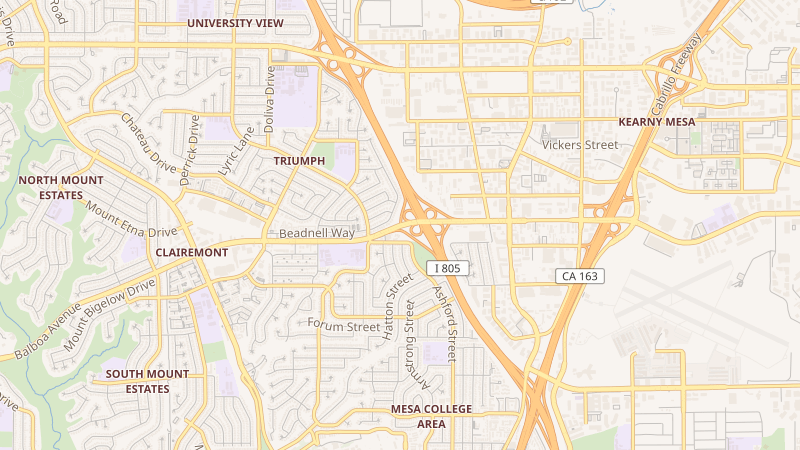
No new votes, filings, rulings, or public-record developments emerged from Santee or the broader East County region in the 48 hours preceding this report that had not already been covered in prior briefings.
Padres Hunt the Wild Card, Wave Stay Alive, and a Close Look at What Enrollment Numbers Don't Prove

The Padres entered the week at 72-62, sitting second in the NL West with the Dodgers' divisional lead making the wild card the realistic postseason path. With the final month of the regular season underway, every series carries direct playoff implications. The stakes carry added weight for the team's new ownership group: José Feliciano and Kwanza Jones, whose $3.9 billion purchase was ratified by MLB on August 24th, are watching their first full month of ownership intersect directly with a legitimate postseason chase. The San Diego Wave, meanwhile, kept their NWSL playoff hopes alive with a 4-2 win over Utah — Trinity Byars scored twice, and Melanie Barcenas also found the net — buying time heading into the final weeks of the regular season.
San Diego Unified's Chromebook restriction policy went fully live across all 175 district schools serving more than 100,000 students. YouTube is now blocked by default unless a teacher actively enables it, non-instructional gaming has been eliminated, and device carts have been removed from transitional kindergarten classrooms. The board passed the policy 5-to-0. The district also reported that its summer enrollment push brought in 3,033 new students — more than double its annual recruitment target of 1,309 — deployed across 52 in-person enrollment hubs. More than 71 percent of 2026 graduates were deemed college- or career-ready. SDSU, separately, reported a record 124,000-plus applications for the incoming class, driven by improving research rankings and students priced out of UC campuses.
The enrollment figures warrant scrutiny, however. The district's own framing identified the October average daily attendance report — not August enrollment headcount — as the true test of whether the summer push translates into sustained funding. State funding is generated by attendance, not enrollment; a student enrolled in August who stops attending regularly by October produces no lasting financial benefit to the district. San Diego Unified has faced years of enrollment decline, competing for students with charter schools, private institutions, and neighboring districts. A net gain of more than 3,000 students in a single summer is historically unusual, and sustaining it requires that families' September and October experience matches what drew them to enroll.
Several additional uncertainties complicate the celebratory framing. The composition of the new enrollees matters: students transferring between San Diego Unified schools count toward the headcount but do not represent genuinely new investment in the district. Without breakout data on where these students came from, the net effect on the district's competitive position remains unclear. Additionally, the 71 percent college-or-career-ready graduation rate, while noteworthy, means 29 percent of 2026 graduates did not meet that benchmark — a substantial number in a district of this size. The October ADA report, expected this fall, is the concrete indicator to watch: a gap of more than five or six percent between August enrollment and October daily attendance would suggest the summer numbers are not translating into sustained community commitment to the district.
What to Watch as San Diego Heads Deeper Into Fall

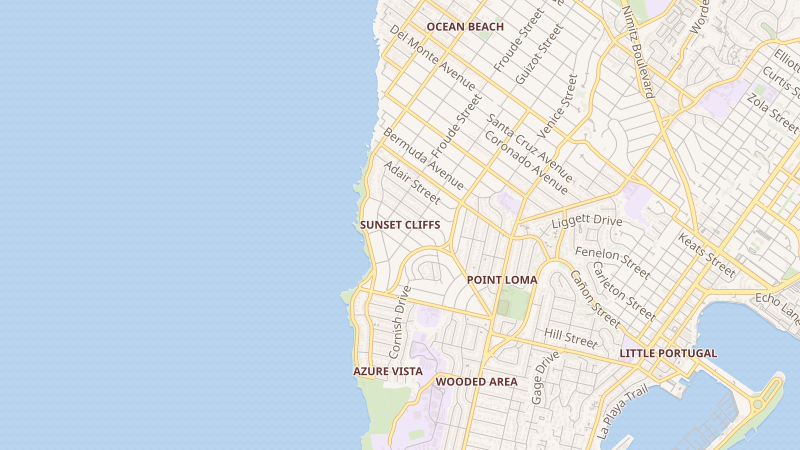
Three threads are worth holding as the week unfolds. At Sunset Cliffs, the mismatch between citation-based enforcement tools and the behavioral problem they are meant to address is structural — and the August-September swell season is not likely to make it smaller. Harder decisions about physical access restrictions, involving both the city and the California Coastal Commission, appear increasingly unavoidable.
The labor market is the subtler concern. An unadjusted unemployment rate of 4.7 percent sounds manageable in isolation, but a labor force 49,000 people smaller than it was 18 months ago, combined with 220 Stone Brewing positions and 133 ServiceNow positions disappearing this fall, paints a more sobering picture for working San Diegans heading into the holiday season.
Temperatures across the county for the next 48 hours are expected to follow a mild September pattern, with coastal highs in the mid-to-upper seventies and inland valley highs — including East County — in the upper eighties to low nineties Tuesday and Wednesday. Overnight lows are expected in the mid-sixties for most inland areas. No extreme heat advisory was in effect as of Tuesday morning, a notable improvement over the August pattern. Winds are expected to remain light and variable through Wednesday, with onshore flow keeping air quality in the good-to-moderate range. The county's three backcountry preserves — El Capitan near Lakeside, Hellhole Canyon in Valley Center, and Mount Gower in Ramona — were closed through August due to extreme heat; visitors are advised to check directly with San Diego County Parks on current reopening status before planning backcountry trips this week.
On a local sports note, the USTA Girls 18s and 16s National Championships concluded just before Labor Day at Barnes Tennis Center in Balboa Park, with Bella Payne and Sarah Shoemate winning the Girls 18 doubles title — a tournament of national caliber making its home in San Diego.