San Diego Enters Fall With a Divided Economy, a Baseball Race, and Hard Questions About Its Schools
The day after Labor Day, San Diego faces a tightening Padres pennant race, a post-summer housing market under stress, and a civic landscape shaped by three high-stakes fights over who controls public land and resources.

“roughly ten cents returned to the public for every dollar generated on public land”
How this was made Verified AI
Every Intellegix briefing is generated from that day's broadcast and run through automated checks before it publishes — with a human paged on any flag. Here is the trail for this edition.
A Region Catches Its Breath — But Not for Long

Wednesday, September 2, 2026 arrives as a relative pause in San Diego's news cycle — a city exhaling after the Labor Day weekend before what promises to be a consequential fall season.
The weeks ahead carry significant weight: a Padres team pressing for a playoff berth under new ownership, a housing market signaling strain at its edges, and a school district whose much-celebrated summer enrollment surge is about to face its first real accountability test in October attendance figures.
Civic battles over public land, law enforcement authority, and environmental review are also deepening heading into a November ballot that will ask San Diego County voters to weigh in on tax measures ranging from a local one-cent sales tax in Santee to a countywide half-cent levy for Tijuana River mitigation.
New Owners, Old Pressure: Padres Enter September Chasing the Division

The San Diego Padres enter September sitting at 72 wins and 62 losses, second in the NL West, with Fernando Tatis Jr. powering an offense that carried the team through a late-August road series against the Tampa Bay Rays — then leading the AL East at 79-54. The matchup offered a genuine measure of where this roster stands, and the arithmetic of the wild card race now looms as the more likely path to October than closing a division gap from behind.
The playoff push unfolds in front of new ownership for the first time. José Feliciano and Kwanza Jones received MLB ratification of their purchase on August 24th, completing what was reported as a $3.9 billion deal — the largest ownership transfer by sale price in baseball history. The incoming ownership group signaled during the purchase process an intention to invest aggressively, but a first September under new management carries its own pressure: the team they inherited is in the hunt, not comfortable, and September in the National League West has a way of accelerating every organizational question.
On the women's side, San Diego Wave FC carried momentum into the NWSL stretch run with a 4-2 victory over Utah on Fan Appreciation Night. Trinity Byars scored twice, with Melanie Barcenas and Ludmila also on the scoresheet — a multi-scorer performance suggesting depth across the attack rather than reliance on a single playmaker. Meanwhile, the Barnes Tennis Center at Balboa Park closed out the USTA Girls 18s and 16s National Championships just before the holiday weekend, with Bella Payne and Sarah Shoemate claiming the Girls 18 doubles title.
Land, Authority, and Accountability: Three Civic Fights Defining San Diego's Fall

Three overlapping disputes are shaping San Diego's civic landscape this fall, each turning on a version of the same fundamental question: who controls public assets, and through what process are those decisions made?
The Midway Rising development saga entered a new phase after the City Council repealed Measure C on August 25th under a court order — erasing the arena-anchored development measure voters had originally approved. State Senator Akilah Weber Pierson is now expected to pursue a gut-and-amend maneuver in Sacramento to exempt Midway Rising from standard California Environmental Quality Act review. Critics of the exemption argue that Pechanga Arena's coastal zone location — with its complex baseline of stormwater, traffic, and groundwater considerations — is precisely the kind of site CEQA was designed to scrutinize. Supporters counter that the project has already cleared years of public process and that environmental review is being used as a delay tactic against a development the community needs. The gut-and-amend legislative technique itself draws scrutiny: it replaces the content of an existing bill at the last minute, allowing proponents to bypass the committee hearings and stakeholder input a new bill of comparable significance would otherwise require.
The second conflict pits the San Diego County Board of Supervisors against Sheriff Kelly Martinez over law enforcement training access. The Board voted 3-2 on August 18th to terminate ICE and Customs and Border Protection training access at Otay Mesa and Camp Elliott. Sheriff Martinez subsequently used her independent executive authority to restore CBP access for roughly 1,700 officers requiring recertification, while keeping ICE entirely cut off. The Board majority's position frames their vote as a policy decision with civil liberties implications — July arrest figures across San Diego and Imperial counties reached nearly 2,000, roughly 50 percent above June levels, with approximately 60 percent of those arrested carrying no criminal conviction and no pending charge. The Sheriff's position holds that officer recertification is an operational matter within her executive authority, not subject to Board direction. The legal and constitutional question of whether a separately elected sheriff can reinstate what the Board voted to terminate remains unresolved.
The third story has received less attention than its implications warrant. A city audit of municipal golf course leases found that San Diego owns eight courses covering more than 800 acres of public land. Private operators generated $34 million in gross revenue in fiscal year 2025; the city received $3.5 million in rent for calendar year 2024 — roughly ten cents returned to the public for every dollar generated on public land. The audit creates a durable public record in a city where affordable housing and park access are perennial budget fights, and renegotiating the leases — though legally complex — could meaningfully shift what those 800 acres return to city coffers.
San Diego's Economy: Durable at the Core, Stressed at the Edges
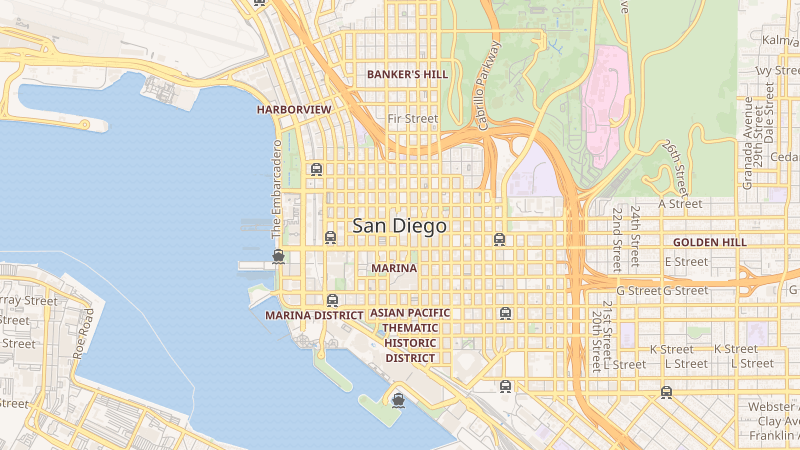
San Diego's post-summer economic picture resists simple characterization. The unadjusted unemployment rate held at 4.7 percent in July — tied for the year's high and up from 4.5 percent in June — while the seasonally adjusted figure of 4.3 percent trails Orange County at 4.2 percent and San Francisco at 3.9 percent. The regional labor force fell to 1.63 million workers in July, the lowest in three years and nearly 50,000 below the March 2025 peak.
Against that softening headline, the region's defense and research anchors are holding firm. Northrop Grumman's $3 billion Department of Defense agreement provides multi-year economic visibility for a major local employer. General Atomics secured a $20 million California Competes tax credit for fusion expansion at the DIII-D National Fusion Facility — the only fusion research device operating as a Department of Energy national user facility in the western United States. UC San Diego landed an $18 million NSF grant for a quantum materials research center, part of a six-center, $108 million national initiative led through the Jacobs School of Engineering under Professor Michael Sailor. In biotech, Khartis Therapeutics closed a $50 million Series B, and Japan's Craif established a $33 million R&D fund in San Diego focused on pancreatic cancer diagnostics.
The contraction is visible in other sectors. ServiceNow is eliminating 133 San Diego positions by September 28th, with reductions concentrated at the senior and director level — described as strategic rather than driven by financial distress, but significant in scale. Stone Brewing's WARN notice covering 220 positions, with an initial layoff phase scheduled for October 19th, reflects broader structural pressures in craft brewing nationally: consolidation, shifting consumer preferences, and production capacity that outpaced demand.
The housing market presents its own contradictions. The county median for existing single-family homes reached $1.099 million in July — up 5.7 percent year-over-year — while sales volume fell 6.7 percent month-over-month, though it remained approximately 4.5 percent above the prior July. The condo picture is more distressed: older condos and townhomes are down 10 to 15 percent from 2022 peaks in some submarkets, with HOA fees surging 60 to 70 percent in some buildings and documented special assessments reaching as high as $100,000 per unit. Industrial real estate vacancy rose to 7.06 percent from 6.91 percent the prior quarter, with net absorption turning negative at minus 236,000 square feet — a reversal from the positive 1.1 million square feet absorbed in the preceding quarter.
East County: A Quiet Day Before the Post-Holiday Record Cycle Resumes
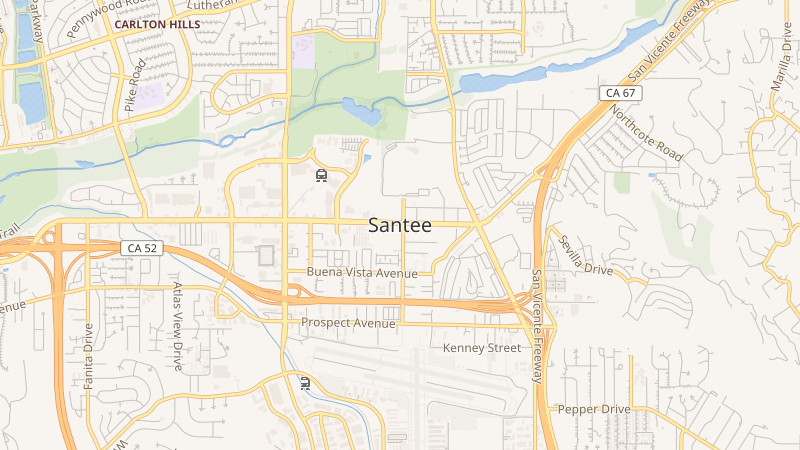
No new qualifying votes, rulings, arrests, or public filings emerged from Santee and the surrounding East County communities in the 48 hours surrounding the Labor Day holiday — a predictable pause in the public-record cycle that typically resumes with the first full government workday after a federal holiday.
The post-holiday week is expected to bring fresh material, including early movement on the Santee one-cent sales tax measure headed to the November ballot. The proposed measure would raise Santee's combined sales tax rate from 7.75 to 8.75 percent, with revenue designated for fire station construction, infrastructure replacement, and road repair. The San Diego County Taxpayers Association has already weighed in on the measure; the formal campaign advertising cycle has not yet begun, making the coming days a useful window for voters to examine the substance before messaging takes over.
San Diego Unified's Enrollment Surge: Interrogating the Confident Narrative

San Diego Unified opened the new school year carrying a summer enrollment story that dominated August coverage: 3,033 new students enrolled against an annual recruitment target of 1,309, driven by 52 in-person enrollment hubs deployed across the county. Superintendent Fabiola Bagula framed the results as validation of the district's outreach strategy. Separately, the district reported that more than 71 percent of 2026 graduates were deemed college- or career-ready.
Two other initiatives took effect as students returned from the holiday weekend. The district's new Chromebook restrictions — passed 5-0 by the board — are now fully live across more than 100,000 students at 175 schools. YouTube is blocked by default unless a teacher explicitly enables it for instructional use; non-instructional gaming is blocked entirely; and device carts were removed from transitional-kindergarten classrooms. A January 2027 assessment is scheduled to evaluate early outcomes. The Teach Lead program, meanwhile, now serves 400 high school students from 20 schools — up from 22 students at two schools when the program launched in 2021 — placing them as paid assistant teachers in elementary classrooms while earning elective credit, a locally grown response to the contracting national teacher pipeline. San Diego State University also set an application record, surpassing 124,000 applicants for the incoming cycle.
The enrollment surge, however, deserves scrutiny alongside its celebration. California's school funding mechanism ties revenue to Average Daily Attendance, not enrollment headcount — meaning 3,033 enrolled students translates to meaningful funding only if those students attend consistently through October, when the state's ADA count is taken. The district flagged October as a key indicator, an acknowledgment that carries weight. The profile of the new students matters: summer enrollment drives can reach genuinely underserved families connecting with the district for the first time, but they can also capture families who enrolled during the campaign and do not persist, or households navigating housing instability, immigration uncertainty, or work schedules that make consistent attendance structurally difficult.
The operational cost of 52 enrollment hubs is also relevant to the calculus. If net ADA retention by October lands at, say, 1,400 students rather than 3,033, the cost-per-retained-enrollment figure looks substantially different from the cost-per-enrollment headline number. And distributed across 175 schools, even the full 3,033 new students averages roughly 17 per campus — meaning the surge's impact will be highly uneven, potentially concentrating pressure on schools already at capacity rather than spreading benefit across the network.
The Chromebook restrictions face a parallel implementation question: whether blocking access on school-issued devices changes student behavior or simply shifts it to personal phones, which the policy does not cover. If students are switching devices to stream or game, the policy may generate compliance metrics without producing the focused learning time that motivated it. The January 2027 assessment will be the first real data point — and the concrete indicator to watch is whether teachers report meaningfully different classroom dynamics, or whether distraction has simply migrated to a different screen.
Weather, Ballots, and What to Watch Before Thursday


The extreme heat that defined the final week of August — with inland valley temperatures running 10 to 15 degrees above late-August averages — has broken. The coastal heat advisory expired August 28th, and the region is settling into an early-fall pattern. Coastal areas should see temperatures in the low to mid-70s with morning marine layer over the next 24 to 48 hours. Inland communities including Santee, El Cajon, and La Mesa are forecast for highs in the upper 80s to low 90s Wednesday and Thursday — warm, but well below the triple-digit readings of the heat advisory period. No fire weather watches are currently in effect, though vegetation moisture remains depressed from the preceding heat event, a condition worth monitoring as September progresses.
Several near-term civic touchpoints are worth marking. The Padres' home schedule resumes at Petco Park after the road trip. El Cajon has a late-September public workshop planned on the Parkway Plaza redevelopment, including the former Walmart site that has sat vacant for nearly three years; Mayor Bill Wells has confirmed negotiations with three separate investors exploring retail, restaurant, entertainment, and housing uses. And the November ballot is beginning to take shape: the Santee one-cent sales tax measure, a proposed countywide half-cent sales tax for Tijuana River mitigation, and additional measures will require voters to engage with arguments that deserve more than a campaign advertisement's worth of attention.