San Diego Enters September at a Crossroads: New Ownership, Arena Battles, and a Housing Market Telling Two Stories
As Labor Day closes out August 2026, San Diego faces a convergence of high-stakes decisions — a Padres franchise under brand-new ownership navigating the playoff stretch, a contentious legislative maneuver that could bypass environmental review for the city's long-awaited arena, and a public land audit that raises sharp questions about who benefits from 800 acres of prime real estate.

How this was made Verified AI
Every Intellegix briefing is generated from that day's broadcast and run through automated checks before it publishes — with a human paged on any flag. Here is the trail for this edition.
Padres, Wave FC, and the Price of Momentum

The San Diego Padres entered the final week of August at 72 wins and 62 losses, sitting second in the NL West — a position that sounds comfortable until the schedule comes into focus. Their weekend road series in Tampa Bay pitted them against a Rays squad that came in at 79 wins and 54 losses, leading the American League East by a meaningful margin. With the NL West tightening and September looming, the Tampa series functioned as a calibration test: how does this roster perform against a genuinely elite opponent when a playoff berth is still something to earn rather than expect? Fernando Tatis Jr., the engine of San Diego's offense all season, carried particular scrutiny in that context.
The on-field drama unfolded against a franchise-altering backdrop. Major League Baseball officially ratified the ownership transfer from the Sycuan Band to José Feliciano and Kwanza Jones on August 24th — a deal described at the time as the largest ownership transfer by sale price in baseball history at $3.9 billion. The new owners are now watching their first meaningful stretch of pennant-race baseball with full authority, and how they respond to roster pressure this month will offer early signals about organizational philosophy.
On the women's side, San Diego Wave FC delivered a statement performance on Fan Appreciation Night Friday, beating Utah 4-2 behind goals from Trinity Byars (two), Melanie Barcenas, and Ludmila. Four different contributors, all in different ways — a sign of squad depth that the club has chased through a season defined by inconsistency. The result arrives at a critical moment heading into the final stretch of the NWSL regular season. Separately, the USTA Girls 18s and 16s National Championships wrapped up at Barnes Tennis Center in Balboa Park, where Bella Payne and Sarah Shoemate claimed the Girls 18 doubles title — a national-caliber result at a civic facility that often goes underappreciated.
Arena Shortcuts and Golf Course Giveaways: The Public-Land Reckoning
San Diego's city auditors have put stark numbers on the table. The city owns eight leased golf courses covering more than 800 acres of public land — an area roughly the size of Balboa Park, and some of the most valuable real estate in Southern California. In fiscal year 2025, the private operators running those courses generated $34 million in gross revenue. The city received $3.5 million in rent for calendar year 2024. That works out to roughly ten cents of every dollar flowing back to the public treasury from its own land. The audit stops short of alleging wrongdoing — the leases were legal and the city signed them — but the fundamental question it raises is whether San Diego is extracting fair value from assets that belong to its residents.
The City Council now faces a spectrum of options: renegotiating lease terms at renewal, restructuring the revenue-sharing model, or the most disruptive path — declining to renew leases and reconsidering how 800 acres of publicly owned land should be used. None of those choices is simple, and each involves tradeoffs between existing golf course users, operators who have invested in the facilities, and a broader public interest that the audit suggests has gone underserved.
The Midway Rising arena project is navigating its own public-accountability tension through a different mechanism. The City Council formally repealed Measure C — the 2021 ballot initiative that removed the 30-foot coastal height limit in the Midway-Pacific Highway corridor — on August 25th after a court order. Simultaneously, State Senator Akilah Weber Pierson is expected to lead a gut-and-amend process on existing legislation, replacing its text with provisions that would exempt Midway Rising from California Environmental Quality Act review. Proponents argue CEQA timelines would effectively kill a project the city genuinely needs; critics counter that bypassing environmental review on a coastal mixed-use development of this scale is precisely the kind of shortcut that generates unforeseen costs after construction begins.
The gut-and-amend path also carries a democratic cost that the efficiency argument tends to obscure. Environmental review is one of the few formal mechanisms through which residents, neighborhood groups, and advocacy organizations hold a legally recognized right to participate. Stripping that process removes not just regulatory friction but a structured feedback channel — a distinction that matters on a site with specific geotechnical and coastal characteristics that don't disappear simply because the paperwork does.
On immigration enforcement, the County Board's 3-2 vote on August 18th to terminate ICE and CBP training access at Otay Mesa and Camp Elliott prompted a subsequent move by Sheriff Kelly Martinez, who used her independent authority to carve out a CBP exception covering roughly 1,700 officers' recertification while cutting off ICE access entirely. The episode revealed that sheriff's operational autonomy runs further than the board's resolution assumed. The policy fight remains charged by July arrest data showing nearly 2,000 arrests across San Diego and Imperial counties — roughly 50 percent more than June's approximately 1,300 — with about 60 percent of those arrested carrying no criminal conviction and no pending criminal charge.
Robotaxis, Layoffs, and the Defense Sector Holding the Line

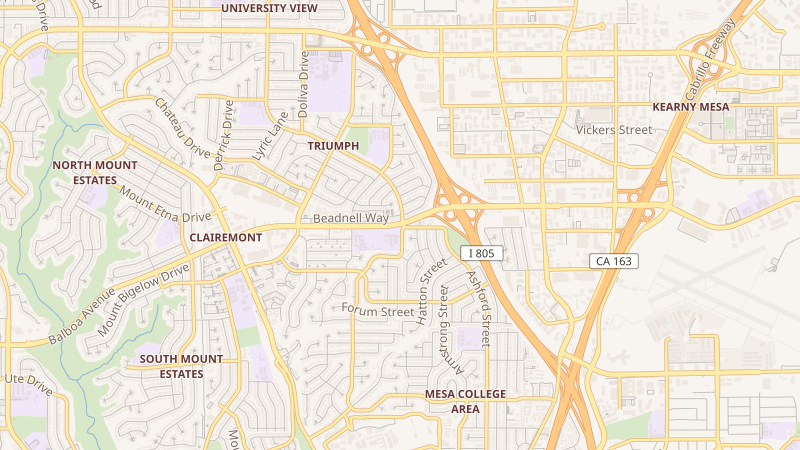
The California Public Utilities Commission approved Waymo's Passenger Safety Plan on August 14th, authorizing an initial service area of roughly 40 square miles in San Diego. A commercial launch was expected before September 22nd — now three weeks out — but as of Monday morning no official launch announcement had been made. The gap between regulatory approval and public rollout is drawing attention. Possible explanations include final fleet calibration for San Diego's specific road environment — canyon roads, beach communities, and trolley-adjacent traffic patterns that differ meaningfully from Phoenix or San Francisco — or a strategic decision about timing the announcement for maximum impact. The geography of the eventual service footprint will matter as much as the launch date itself: a zone concentrated downtown and in Mission Valley is a materially different product for residents of North Park or Kearny Mesa.
The regional job picture is bifurcated. Stone Brewing, one of San Diego's most globally recognized craft beer brands, filed a WARN notice covering 220 positions, with the first layoff phase scheduled for October 19th. The cuts reflect structural headwinds across the craft brewing industry — market consolidation, shifting consumer preferences, and rising ingredient costs — that Stone is navigating alongside peers nationwide. ServiceNow is cutting 133 San Diego positions by September 28th, concentrated at the senior and director level; the reductions signal not financial distress but a profitable tech firm trimming higher-cost roles, a pattern with its own implications for the regional tech sector.
Defense and research provide a counterweight. Northrop Grumman locked in a $3 billion Department of Defense agreement, providing multi-year employment visibility for a company with deep roots across the region. General Atomics received a $20 million California Competes tax credit for fusion development expansion at the DIII-D National Fusion Facility — the only fusion research device in the western United States operating as a Department of Energy national user facility. And UC San Diego secured an $18 million NSF grant to lead a quantum materials research center, part of a $108 million NSF initiative funding six centers nationally. Professor Michael Sailor is leading the effort out of the Jacobs School of Engineering. These investments tend to look modest at announcement and transformative in retrospect.
A Housing Market Telling Two Completely Different Stories
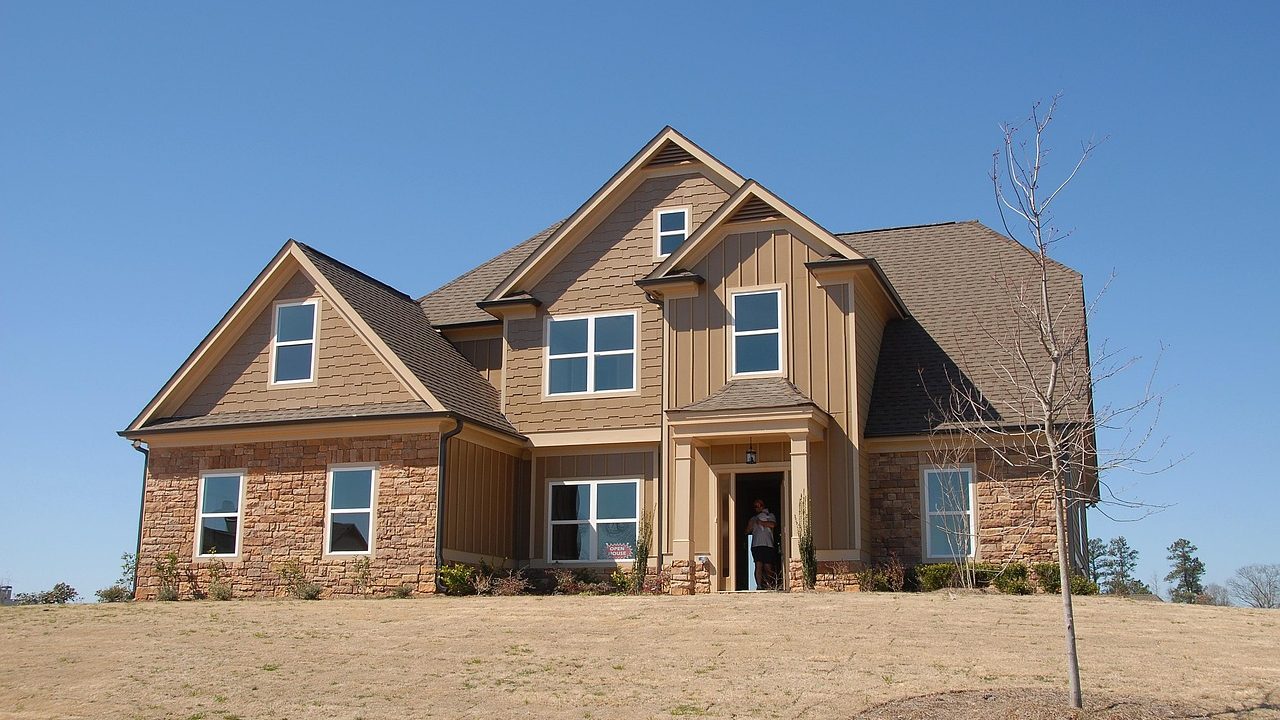
San Diego's housing market has split into two distinct narratives depending on property type. Single-family homes are holding firm: the countywide median sits between $1,074,000 and $1,085,000, up roughly five to six percent year-over-year, with properties moving in a median of 33 days. That is not a buyer's market by any reasonable measure. Condos and townhomes are telling a different story — particularly older units, which are down ten to fifteen percent from their 2022 peaks. The driver is structural: HOA fees have surged 60 to 70 percent in some buildings, and special assessments have reached as high as $100,000 per unit in certain cases.
That special assessment figure represents something more disruptive than a market fluctuation. A $100,000 assessment on a unit that may have cost $450,000 to purchase fundamentally alters the financial calculation buyers made at closing — and it is being driven largely by deferred maintenance catching up with buildings constructed under less stringent HOA reserve requirements. The problem is not unique to San Diego and is expected to intensify across California.
On the commercial side, industrial real estate — San Diego's strongest sector for three consecutive years — is showing early signs of softening. Vacancy reached 7.06 percent in Q2 2026, up from 6.91 percent the prior quarter, and net absorption turned negative at minus 236,000 square feet, a reversal from positive 1.1 million square feet the quarter before. Third-quarter numbers, when they arrive, will indicate whether this represents a temporary fluctuation or the beginning of a broader shift in the commercial portfolio picture.
East County: No New Developments
No new public-record developments emerged from Santee and East County on Monday. Coverage resumes Tuesday.
Schools Surge, Device Bans Take Hold, and a Program Worth Watching


San Diego Unified School District is two weeks into the 2026-27 school year, and early indicators are encouraging. A summer enrollment campaign brought in 3,033 new students — more than double the district's annual recruitment target of 1,309 — through 52 in-person enrollment hubs deployed across the county. More than 71 percent of 2026 graduates were deemed college- or career-ready, strong figures for a district that has navigated enrollment pressure and demographic shifts for several years.
A new technology restriction policy is now fully live across more than 100,000 students at 175 schools: YouTube blocked by default on district Chromebooks unless a teacher explicitly enables it, non-instructional gaming banned, and device carts removed from transitional kindergarten classrooms. The board passed the policy 5-0, with a January 2027 early assessment scheduled. The posture puts San Diego Unified in a different position than many large urban districts that have struggled to adopt any coherent device-use framework.
The Teach Lead program deserves particular attention. Launched in 2021 with 22 students at two schools, it now serves 400 high school students from 20 schools across the district. The model places high schoolers as paid assistant teachers in elementary classrooms while they earn elective credit — giving older students professional experience, providing elementary kids with additional support, and building a pipeline of potential future educators who have already stood in a classroom. It requires no bond measure and no federal grant. It requires thinking differently about what high school students can do.
Families in the 4S Ranch area should note that approximately 946 Del Sur Elementary students have been relocated to Stone Ranch Elementary for mold and moisture remediation, with a proposed return date of September 21st. SDSU crossed 124,000 applicants this cycle, and together with UC San Diego the two campuses received about 265,700 fall 2026 admission applications. Both institutions are part of a $10.7 billion campus construction wave that includes $4.3 billion earmarked for nearly 12,000 new student housing beds — a number that matters for the broader regional housing market, as on-campus beds remove students from competition with working families for off-campus rentals.
Heat Breaks, Blood Drive Opens, and a Million Dollars Sits Unclaimed

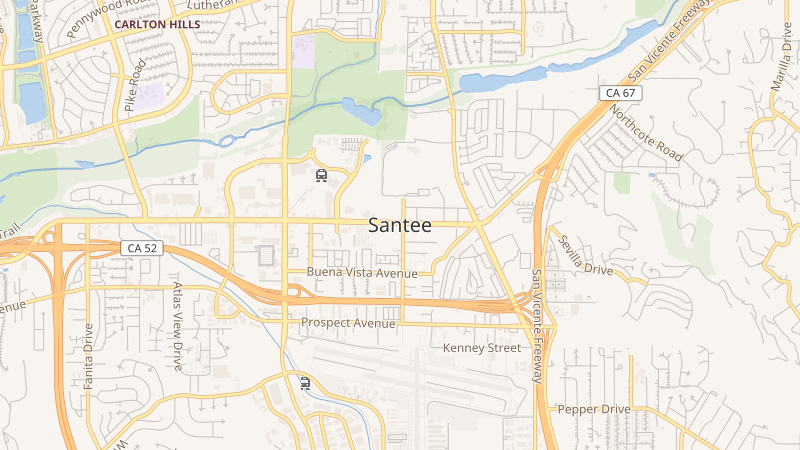
The heat advisory affecting inland East County communities including El Cajon, La Mesa, and surrounding valleys — where temperatures ranged from 90 to 102 degrees through the weekend — expires tonight at 8 p.m. The Santee Branch Library has been serving as a Cool Zone through Monday for heat-sensitive residents who need a resource before conditions improve. Starting Tuesday, coastal San Diego should see temperatures in the low to mid 80s with overnight lows dropping into the upper 60s along the coast. Inland valleys are expected to cool to the mid-80s through Wednesday, with a possible marine layer Tuesday morning that could keep skies overcast through mid-morning before clearing. No precipitation is in the forecast.
On the events calendar: the SDCCU Santee branch is hosting a blood drive Tuesday, September 1st, at 286 Town Center Parkway. Labor Day weekend is historically one of the most difficult periods for blood supply nationally, as donation rates decline during holidays. Santee Lakes has also announced its fall and winter programming lineup, including Create on Deck workshops, a Trunk-or-Treat and Spooktacular event, a live music series, a fall market, and a Water Lantern Festival in December.
Finally, residents should be aware that a county unclaimed property window opened August 27th with an October 11th deadline. Treasurer-Tax Collector Larry Cohen's office has identified more than $1 million in unclaimed property across approximately 2,200 potential recipients, with the largest single claim sitting at $27,000. If you have not checked whether you have unclaimed property with the county, the window is open now.