San Diego Bets $500 Million on Housing, Braces for Triple-Digit Heat, and Closes a Homicide Case in Logan Heights
On a sweltering Sunday with inland temperatures approaching triple digits, San Diego confronted the week's defining stories: a landmark housing reform package, a murder arrest, and a heat emergency pushing county parks to close and libraries to open their doors.

“The vote matters — but the permits pulled and the dollars collected will determine whether the ambition survives contact with the market.”
How this was made Verified AI
Every Intellegix briefing is generated from that day's broadcast and run through automated checks before it publishes — with a human paged on any flag. Here is the trail for this edition.
A City Under Heat — And Under the Microscope

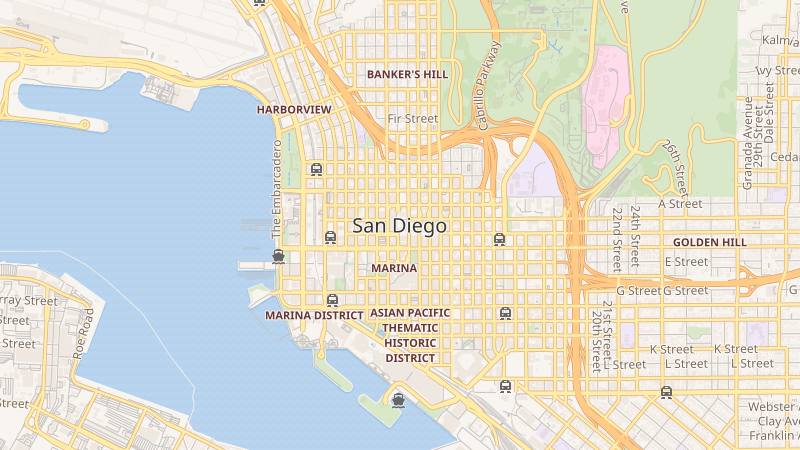
Sunday, August 2, 2026 arrived in San Diego with the coast wrapped in marine layer and the inland communities of El Cajon, Santee, and Ramona baking under temperatures well into the 90s. The contrast — cool sea air against backcountry heat — set the tone for a day when the region was simultaneously grappling with a historic housing vote, active police investigations, and a heat emergency stretching from the valleys to the desert.
This briefing draws on public reporting from the San Diego Union-Tribune, Times of San Diego, KPBS, NBC San Diego, Voice of San Diego, and other local outlets whose original journalism makes regional accountability possible.
San Diego's $500 Million Housing Gamble — and Why the Math Is Harder Than It Looks

The San Diego City Council voted 7-2 on Tuesday, July 28 to approve what may be the most ambitious housing reform package the city has seen in a generation. At its center is a $500 million Affordable Housing Trust Fund, assembled from three distinct revenue streams: $200 million redirected from tax-increment financing, $150 million from a new commercial linkage fee on office and retail developments exceeding 25,000 square feet, and $150 million in anticipated federal and state matching funds — the last of which remains the least guaranteed portion of the package.
The fund carries an explicit priority structure. Permanent supportive housing for the chronically unhoused comes first, followed by workforce housing for households earning between 80 and 120 percent of area median income — the schoolteacher, the firefighter, the hospital technician who earns too much for low-income programs but cannot afford market-rate homes. Senior housing and family-sized units of three or more bedrooms round out the priorities, the latter a deliberate departure from San Diego's historical tendency to build studios and one-bedrooms that pencil out more easily for developers.
Paired with the trust fund is a density bonus structure tied to transit corridors. Developers building near the Trolley Blue, Orange, and planned Purple lines may now construct up to 50 percent more units than current zoning permits. City planners project the change will yield roughly 12,000 additional housing units over the next decade — a meaningful number against a county shortage estimated at more than 80,000 units, but not a solution on its own.
Separately, on July 20, the Council passed Resolution R-316897 endorsing four state Assembly bills — AB 1903, 1406, 1070, and 1834 — all aimed at expanding affordable homeownership statewide, signaling to Sacramento that San Diego wants the Legislature to move in the same direction.
The heat crisis added its own policy footnote: San Diego County Parks and Recreation confirmed on Saturday, August 1, that El Capitan Preserve near Lakeside, Hellhole Canyon Preserve in Valley Center, and Mount Gower Preserve in Ramona are all closed for the entire month of August. They join Agua Caliente Regional Park and Vallecito County Park, shuttered since Memorial Day weekend. County meteorologist Sam Zuber reported that Valley Center and Lakeside are running 5 to 7 degrees above normal for early August, while Ramona is 9 to 11 degrees above average. A slight cooldown is expected by week's end, Zuber said — though 'slight' is doing considerable work in that forecast.
A Fatal Shooting, Injured Officers, and a Missing Woman — San Diego's Stretched Weekend

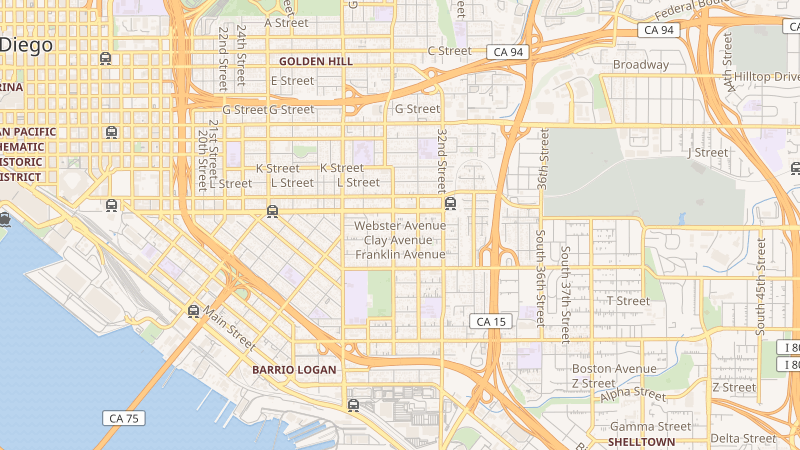
A 46-year-old man was fatally shot on Webster Avenue in Logan Heights following an argument among four acquaintances. SDPD investigators arrested 23-year-old Jamie Roberts on a murder charge; two additional individuals were detained for questioning, and whether they will face charges remains part of an active investigation.
In a separate incident, two SDPD sergeants were injured after a suspected DUI driver crashed through a police barricade. Dispatch logs did not specify the officers' current condition or the precise location, but striking law enforcement officers through reckless driving constitutes a serious felony under California law.
Police are also conducting an active search for an 83-year-old woman who uses a wheelchair and has been classified as at-risk — a designation SDPD uses to expedite search resources. Anyone with information is urged to contact the department directly. Investigators separately continue to seek tips in an El Cerrito hit-and-run that left a woman with serious injuries.
The four concurrent incidents — a homicide investigation, an officer-injury response, a vulnerable missing-person search, and an unresolved hit-and-run — underscore the demands placed on the department on a summer weekend.
Capital Still Flows to the Right Deals in a Sorting San Diego Market


A cluster of commercial real estate transactions closed in the final days of July, revealing a market that is not broadly booming but is directing institutional capital toward quality assets in resilient submarkets. On July 31, First-Citizens Bank and Trust acquired a 165,000-square-foot, LEED Gold-certified office campus on High Bluff Drive in Del Mar Heights from PGIM. Del Mar Heights has weathered rising vacancy better than downtown or UTC, owing largely to its proximity to the life-science corridor and the profile of its tenant base; a bank acquiring rather than leasing the campus signals a long-term conviction about that submarket.
Also on July 31, HomeFed completed the Luminary at Cota Vera — a 267-unit apartment development in Chula Vista representing a milestone in the multi-year buildout of that master-planned community. The timing is notable: the summer 2026 Allen Matkins survey found that Southern California multifamily developers are pulling back on new project starts even as they finish construction already underway. Luminary is the tail end of a building wave, not the beginning of a new one — a distinction with real consequences for rental supply two to three years out.
On July 23, Breakthrough Properties and Tishman Speyer provided a $90 million mezzanine loan on the Aperture Del Mar life-science campus, a 538,000-square-foot property fully occupied by San Diego-based biotech Neurocrine. Life-science vacancy across San Diego runs at roughly 26 percent, but fully leased, creditworthy assets are still commanding serious capital — a distinction that matters for understanding the sector's unevenness.
Comic-Con's five-year commitment to remain in San Diego through 2030, locked in on July 24, anchors the hospitality picture. The event generates an estimated $160 million in annual regional spending and 61,000 hotel room nights, giving hotels, restaurants, and event businesses a planning horizon that multifamily developers currently lack.
Santee Opens Library Doors Against the Heat


The National Weather Service heat advisory for inland San Diego County, including Santee, runs through 8 p.m. Sunday. Forecast highs are above 90 degrees across much of East County — a stark contrast to the 77-degree afternoon forecast for downtown San Diego, where the marine layer provides meaningful relief.
In response, the City of Santee and San Diego County's Cool Zone program have designated the Santee Branch Library at 9225 Carlton Hills Boulevard as an active cooling site. The library is normally closed on Sundays, but is open today specifically because of the heat advisory, from noon to 5 p.m., offering free air conditioning, restroom access, and library services. The county's broader Cool Zone information line is 1-800-339-4661.
Standard heat-safety protocols apply across East County: hydrate with water rather than sugary drinks or alcohol, limit outdoor exertion, and under no circumstances leave children or pets in parked vehicles, where internal temperatures can reach lethal levels within minutes even on an overcast day.
Schools Restrict Screens, Padres Win Three of Four, and a Hard Look at the Housing Math

San Diego Unified's Board of Education voted unanimously, 5-0, to approve a phased classroom technology restriction affecting more than 100,000 students when school begins August 10. The policy bars YouTube and other video-streaming platforms on personal one-to-one devices, removes computer carts from Transitional Kindergarten classrooms entirely, establishes scheduled on-and-off hours for district-issued Chromebooks, and restricts AI-enabled software. An early assessment is scheduled for January 2027, with a full annual review due by May 2027.
Enrollment figures released in June showed SDUSD had enrolled 1,085 new students for the 2026-27 school year, reaching 82 percent of a target of 1,309 — a solid pace, though set against a backdrop of San Diego County having lost roughly 33,000 public school students over the past eight years, driven by lower birth rates and rising housing costs. Superintendent Dr. Fabiola Bagula received the 2026 Leadership Award from the San Diego LGBT Community Center and the National Art Schools Network's Outstanding Superintendent Award for Arts Leadership ahead of the new school year.
The Padres closed out their home series against San Francisco with a 6-5 win Sunday at Petco Park, claiming three of the four games. San Diego stands at 57-54 overall, 31-25 at home. Right-hander Michael King started at 6-7 with a 3.38 ERA; reliever Yuki Matsui earned a win in long relief Friday with three scoreless innings and two strikeouts; and Jake Cronenworth delivered the decisive single Sunday, following a similar clutch performance the day before. The team also signed pitcher J.P. France to a minor-league deal Saturday.
The housing reform package drew largely celebratory coverage, but the underlying assumptions deserve scrutiny. The projection of 12,000 additional units from transit-corridor density bonuses depends on developers choosing to build — which in turn depends on financing costs, construction labor, materials prices, and whether projects pencil out at targeted income levels. Multifamily developers are already pulling back on new starts, per the Allen Matkins survey. The $150 million in anticipated federal and state matching funds is just that — anticipated — and federal housing policy has been volatile. The $150 million in commercial linkage fees accumulates over time as commercial projects are built, meaning a softening in office and retail development could cause that revenue stream to undershoot projections.
The concrete indicators to watch: permit issuance numbers for ADU and multifamily projects in transit corridors beginning in early 2027, and the trust fund's first full-year budget reconciliation, expected around mid-2027. If commercial linkage fee revenue in year one tracks below the projected pace, the $150 million assumption may need revision before projects already in the pipeline are fully committed. The vote matters — but the permits pulled and the dollars collected will determine whether the ambition survives contact with the market.
Heat Lingers, Events Continue, and a Week of Consequences Begins

The heat advisory for San Diego County remains in effect through 8 p.m. Sunday. Inland valleys and foothills are seeing highs in the mid-90s to around 105 degrees; desert areas including Borrego Springs face the most extreme conditions, with temperatures potentially reaching 122 degrees before the warning lifts. Coastal areas are under a separate advisory with highs in the mid-80s to around 90 degrees for mesas and higher terrain. Downtown San Diego sits at roughly 77 degrees with partly cloudy skies, 71 percent humidity, and winds around 11 miles per hour. High surf generated by Hurricane Genevieve — waves of 4 to 9 feet on south- and southwest-facing beaches — was expected to subside heading into the weekend. Inland areas can expect a slight cooldown toward the latter part of the week, though conditions remain well above seasonal averages in Ramona, Valley Center, and the eastern backcountry.
On the events calendar: ArtWalk Liberty Station closes out Sunday, the Cardiff Dog Days festival is on tap for the week, Coronado's outdoor concert series continues, and Santee residents can catch the Santee Lakes Concert Series on Deck at 9310 Fanita Parkway on Friday and Saturday evenings throughout August. The August 6 Summer Concerts installment at Town Center Community Park East doubles as the Sheriff's Office National Night Out — The Sea Monks perform rockabilly-country from 6:30 to 8 p.m. at no charge. Comic-Con week and a Brew Festival arrive the following weekend.
The week ahead will test whether the housing reform's ambitions survive their first encounters with the development market, whether the technology restrictions in San Diego Unified's classrooms generate the outcomes the board is hoping for, and whether the Padres can sustain momentum through a tougher August stretch. Residents across the county are advised to monitor AlertSanDiego for any changes to heat advisory status.