Sea Lions, Wildfires, and a Softening Housing Market: San Diego's Packed Thursday Briefing
Federal investigators are weighing criminal charges after a viral video showed a man kicking a sea lion at La Jolla Cove, while a new wildfire ignited in San Diego County and a multi-agency trafficking sting during Comic-Con weekend netted 27 arrests and freed nine victims.

“Civil fines could reach eleven thousand dollars on the low end; criminal charges carry penalties of up to a hundred thousand dollars and a year in prison.”
How this was made Verified AI
Every Intellegix briefing is generated from that day's broadcast and run through automated checks before it publishes — with a human paged on any flag. Here is the trail for this edition.
From Viral Clip to Federal Case: The La Jolla Cove Sea Lion Attack

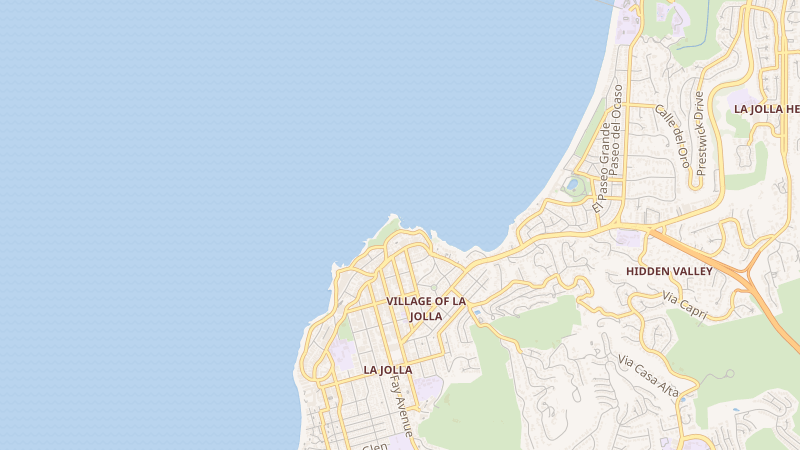
Federal wildlife investigators disclosed Tuesday, July 28th, that they are weighing possible criminal charges after a video showing a man repeatedly kicking a sea lion at La Jolla Cove went viral. The incident occurred late on July 22nd at one of the most photographed stretches of coastline in California, and San Diego police said they first learned of the footage not through patrol or a 911 call but through a flood of public tags and messages sent to them on Instagram.
Because sea lions are protected under the Marine Mammal Protection Act, the case is a federal matter rather than a local animal cruelty proceeding. NOAA is directing the probe, with the U.S. Fish and Wildlife Service confirming they are weighing which enforcement route to pursue. Civil fines could reach eleven thousand dollars on the low end; criminal charges carry penalties of up to a hundred thousand dollars and a year in prison. No charges have been filed as of Thursday morning.
The case illustrates a growing dynamic in local law enforcement: social media functioning as an informal enforcement mechanism. The investigative thread was handed to authorities entirely by the public, with investigators receiving the tip through the department's Instagram account rather than through conventional channels.
Officer Fires Single Round at Stolen-Vehicle Suspect in San Ysidro

A San Diego police officer shot and wounded a person suspected of riding in a stolen vehicle Wednesday morning near the 1900 block of Del Sur Boulevard in San Ysidro. The shooting occurred shortly before 7:05 a.m. Officer Colin Steinbroner confirmed that more than one person was in the vehicle when the officer fired a single round through the windshield. One occupant was hospitalized with a shoulder wound; a second was taken into custody.
Del Sur Boulevard between Caithness Drive and Beyer Boulevard was closed for several hours while investigators worked the scene, with police urging drivers to seek alternate routes well into the morning. Procedurally, Sheriff's homicide detectives — not SDPD's internal affairs unit — are handling the investigation, consistent with the countywide agreement requiring outside agencies to review officer-involved shootings. The names of the officer and both occupants had not been released as of Thursday morning, a timeline typical of the OIS review process.
Separately, a new wildfire dubbed the '4th Fire' ignited at 11:32 a.m. on July 29th on private land in San Diego County. Containment percentage and cause both remained undetermined as crews continued to assess the blaze. Cal Fire reports that statewide this year 2,813 wildfires have burned 82,633 acres and destroyed 36 structures — a backdrop that underscores the significance of each new ignition heading into peak fire season.
Comic-Con Sting Frees Nine Trafficking Victims, Yields 27 Arrests
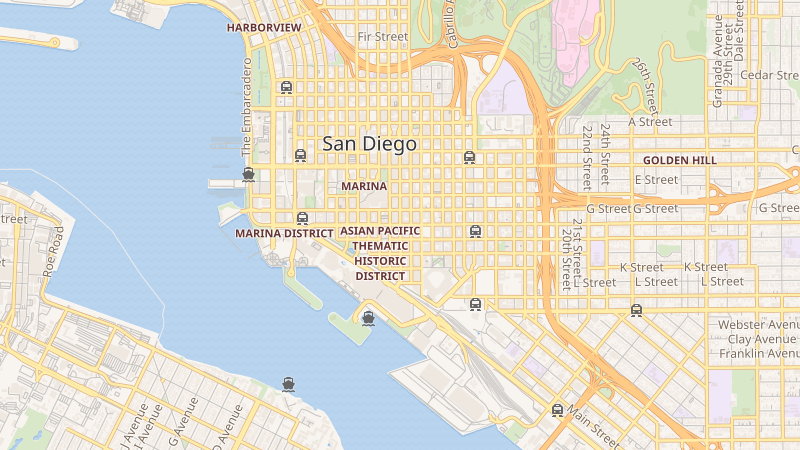
San Diego's multi-agency Human Trafficking Task Force ran 'Operation Iron Justice' from July 22nd through July 24th — deliberately timed to coincide with Comic-Con weekend — resulting in 27 arrests on solicitation-related charges and the recovery of nine trafficking victims. Of those nine, seven were adults and two were juveniles. One of the juveniles was a 16-year-old who had been reported missing from San Bernardino County.
Law enforcement agencies have long noted that major conventions create conditions traffickers attempt to exploit: concentrated demand, anonymity, high hotel occupancy, and large volumes of cash. Running a targeted operation during Comic-Con weekend, when an estimated 135,000 people were in the Gaslamp and Convention Center area, reflects a specific tactical judgment about when and where intervention is most likely to be effective.
The recovery of nine victims — including two minors — represents the core mission metric for the task force. The solicitation-related charges provide the prosecutorial hook, but advocates note that the victims' next steps depend heavily on the availability of specialized services including housing, legal assistance, and trauma care, resources that San Diego County's victim-service network has been managing under ongoing resource constraints.
SB 79 Reshapes San Diego Neighborhoods — But Will It Solve Affordability?


The City Council's May 21st ordinance implementing California's SB 79 transit-density law activated roughly a quarter of eligible areas on July 1st, allowing five- and six-story housing near qualifying transit stops in neighborhoods including North Park, Bay Park, Mission Valley, and Clairemont. The remaining areas phase in through 2031, with carve-outs for fire-hazard zones, historic districts, and what the ordinance calls low-resource zones.
The practical impact of the July 1st activation won't appear as construction cranes for a year or two — entitlement and permitting take time — but the legal landscape shifted meaningfully this summer. A property owner near a qualifying transit stop in North Park can now submit plans for something considerably taller than what was permissible six months ago.
Whether the policy actually delivers affordability relief, however, faces several structural challenges. Entitlement and permitting timelines in San Diego are notoriously slow, and neighborhood groups in established residential areas have the organizational capacity to delay or redesign projects into economic infeasibility. Units that do reach the market in transit-adjacent corridors are likely to be priced at market rates — potentially accelerating gentrification pressure on surrounding blocks rather than relieving it. And the entire transit-density framework depends on residents actually using transit: MTS is set to raise standard adult monthly pass prices from $72 to $85 on October 1st, then to $95 in 2027, and fare increases that suppress ridership would weaken the model's core justification. Key indicators to watch include permit application rates in July 1st-activated neighborhoods over the next 12 to 18 months, the income mix of approved units, and MTS ridership figures after the October fare hike.
ServiceNow Cuts 133 San Diego Jobs Despite Nearly $4 Billion Quarter

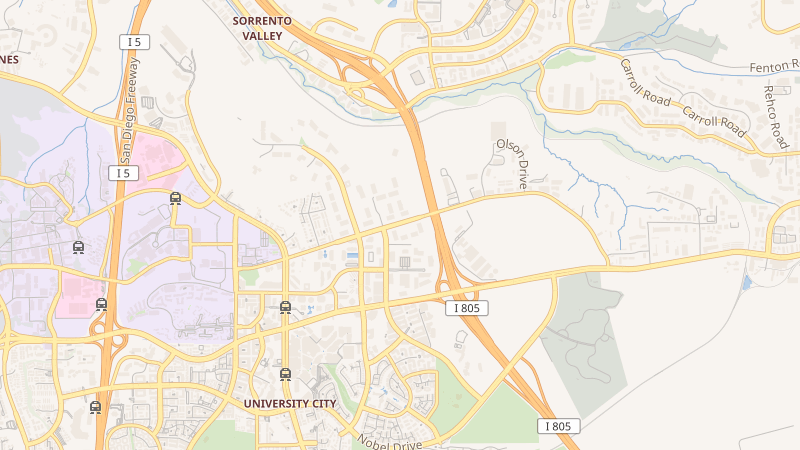
ServiceNow filed a WARN notice Tuesday, July 28th, confirming 133 job cuts at its San Diego office at 4801 Eastgate Mall, effective by September 28th. The announcement arrives against a striking backdrop: the company simultaneously reported $3.877 billion in second-quarter 2026 revenue — a 23% year-over-year increase — and $298 million in profit. This is not a company in financial distress.
The composition of the cuts is telling. More than half of the 133 positions are at the senior or director level. The functions hit hardest are customer success, support, and product success, which together account for 30 positions, while software quality engineering sees the single largest cut by job title with 10 positions eliminated. The concentration of reductions in customer-facing and quality-assurance roles at a profitable, fast-growing technology firm points toward AI-driven capability expansion reducing the headcount required to deliver those services — though ServiceNow has not characterized the layoffs in those terms.
At the senior and director level, the eliminated positions likely represent six-figure salaries, and the aggregate economic impact on the local workforce is not negligible even relative to the company's scale. The Eastgate area near UCSD has posted positive commercial real-estate absorption for two consecutive quarters; whether the cuts alter that submarket will depend on what happens with the vacated office space.
San Diego Home Prices Fall Behind Inflation as Inventory Doubles


The S&P Cotality Case-Shiller report released Tuesday shows San Diego's home price index rose just 0.94% annually through May — a figure that sounds like growth until set against the region's 3.8% inflation rate over the same period. In real purchasing-power terms, home prices have declined relative to the overall cost of living. Month-over-month, before seasonal adjustment, prices fell 0.1%, marking a second consecutive monthly decline during what is typically a seasonally stronger window.
Inventory has roughly doubled from its post-pandemic floor: active listings countywide stood at 8,221 in May, up sharply from 4,491 in 2023, though slightly below the 8,710 listed a year earlier. The market dynamics that produced instant full-price offers in 2021 and 2022 have genuinely shifted — but softening prices have not translated into meaningful affordability relief. Mortgage rates hit a 12-month peak of 6.85% last week before easing slightly to 6.76% on Tuesday, keeping monthly payments on the county's median-priced home out of reach for most residents.
On the rental side, vacancy is rising as new supply comes online, but asking rents countywide are still running between twenty-five hundred and twenty-seven hundred dollars a month — figures cited in current market reporting. The population of San Diegans who can comfortably qualify for a mortgage on the county median remains narrow, and there is no easy quadrant of this market for buyers, renters, or sellers.
La Mesa Approves 114-Unit Project Over Parking Objections; El Cajon and Santee Move Forward


La Mesa's City Council voted Wednesday night to approve a 114-unit downtown housing development over explicit resident objections about inadequate parking. The council applied state transit-density incentives — the same SB 79 framework reshaping neighborhoods across San Diego — citing La Mesa's proximity to trolley infrastructure as the qualifying factor. The vote illustrates a transit-first planning philosophy that is increasingly being deployed to override parking-centric objections at councils throughout the county.
The same council, in the same week, received a new SANDAG study on potential redevelopment options for La Mesa's downtown trolley station and ordered a six-month study into short-term rental regulation, citing Santee, El Cajon, and Lemon Grove as models with stronger existing rules. The city is simultaneously using transit infrastructure to justify higher density while studying the secondary effects of that density and commercial activity.
In El Cajon, the city confirmed this week it is proceeding with guardrail installation, radar speed signs, and other traffic-calming measures on Jamacha Road following months of resident advocacy after a series of crashes on that corridor. The announcement, made July 25th and 26th, represents a concrete infrastructure response to sustained community pressure through normal civic channels. In Santee, the city announced July 28th that its August 6th Summer Concerts installment will double as 'Salute to Service Night,' pairing a rockabilly-country performance by The Sea Monks with the San Diego County Sheriff's Office's National Night Out programming at Town Center Community Park East from 6:30 to 8 p.m. Also in the East County: San Miguel Fire & Rescue's new brush engine, Engine 18 — acquired through grants from the San Diego Regional Fire Foundation and the San Diego River Conservancy — is now operating out of the newly built Crest firehouse ahead of peak wildfire season, positioning new brush-capable apparatus directly east of Santee in the canyons and hillsides most vulnerable to fire.