Larry Millete Convicted of First-Degree Murder as San Diego Confronts a Week of High-Stakes Verdicts, Record Home Prices, and a $739 Million Federal Spending Question
A San Diego County jury on Thursday found Larry Millete guilty of first-degree murder in the disappearance of his wife Maya, closing a legal chapter more than five years in the making. The verdict anchors a news cycle that also features a federal government paying 340 percent over appraised value for a detention facility, a new all-time record for single-family home prices, and a California-first AI police dispatcher now fielding calls in El Cajon.
“the federal government paid a premium of $571 million over appraised value, or roughly 340 percent above appraisal”
How this was made Verified AI
Every Intellegix briefing is generated from that day's broadcast and run through automated checks before it publishes — with a human paged on any flag. Here is the trail for this edition.
Five Years, No Body, One Verdict: Millete Jury Finds Premeditation Proved

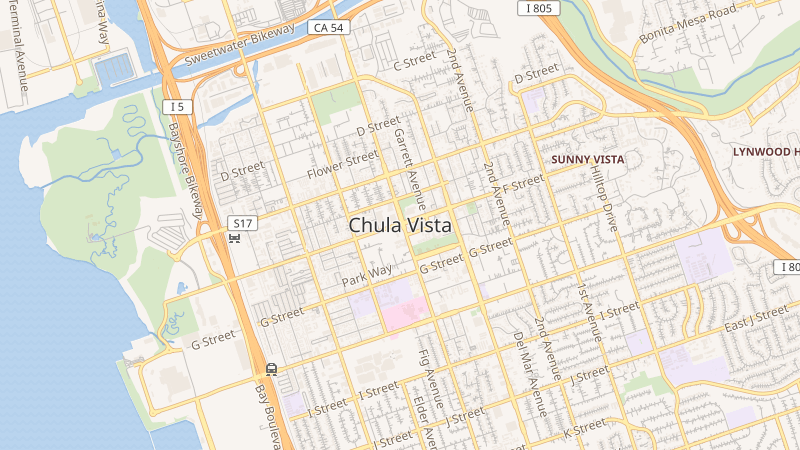
On July 9, 2026, a San Diego County jury returned a guilty verdict on first-degree murder against Larry Millete, 44, of Chula Vista — finding that the killing of his wife Maya, who vanished on January 7, 2021, was premeditated and deliberate. The conviction came despite the absence of a body, a crime scene, or a forensically established cause of death, making it one of the most closely watched circumstantial-evidence prosecutions in recent county history.
Prosecutors built their case over roughly five weeks of testimony, presenting 152 listed witnesses alongside communications records, behavioral patterns, and forensic data. Juror Number Three spoke publicly with ABC 10News immediately after the verdict, describing the deliberation process — a willingness to go on record that observers noted suggests the panel is confident in its conclusion.
Under California law, first-degree murder carries a sentence of up to 25 years to life in state prison. As of Friday morning, no sentencing date had been publicly announced; the judge will set that date and the court will track it. Millete is 44 years old.
The verdict carries weight well beyond the courtroom. Maya Millete's disappearance in early 2021 mobilized hundreds of volunteers who walked trails and fields across the South Bay searching for her. Her family organized, advocated, and endured years of pre-trial delays before Thursday's outcome. A conviction answers the legal question of what happened. It does not answer the physical one: Maya Millete has not been found.
Armed Robbery Spree Ends in Pre-Dawn Arrest; Camp Pendleton Gate Closes Without Explanation

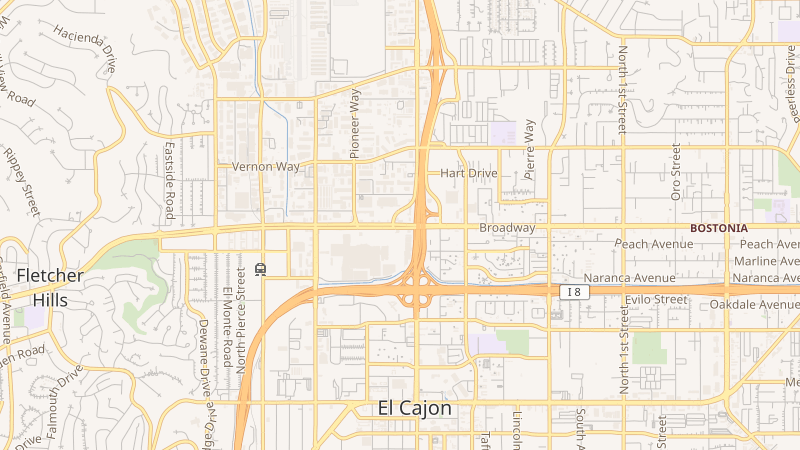
Hours after the Millete verdict, a separate public-safety story unfolded across the county. Anthony Caleb Johnson, 22, of Lakeside was arrested in the early morning hours of July 10 after a string of four armed robberies that occurred between approximately 2:00 and 3:00 a.m. The locations spanned Pacific Beach, Clairemont Drive, Clairemont Mesa Boulevard, and Fletcher Parkway in El Cajon — four distinct scenes in roughly sixty minutes.
Victims included individuals on the street and 7-Eleven clerks confronted at gunpoint. The arrest followed coordination between the San Diego Police Department and El Cajon Police Department, who used Automated License Plate Recognition technology — the same system credited with cracking a Hillcrest bar attack two weeks prior — to confirm Johnson's vehicle was present at all four scenes. He is booked in San Diego County Jail with arraignment scheduled for July 17th.
A separate and still-unexplained closure added to Friday morning's public-safety picture: Camp Pendleton's main gate is shut until further notice, with base officials confirming the closure but releasing no cause. Drivers traveling I-5 between Oceanside and San Clemente should use the Vandegrift and Harbor Drive exits and monitor Marine Corps Base Camp Pendleton public affairs for updates.
Civic Center JPA, Bike Land Deals, and an SB 79 Deadline Closing Fast
San Diego's Land Use and Housing Committee met Thursday and advanced two items with long-range implications for the city's physical landscape. The first was a relinquishment agreement between the City and Caltrans to transfer land at El Cajon Boulevard and Adams Avenue — the legal mechanism required to acquire the right-of-way footprint for the Central Avenue Bikeway. Mayor Todd Gloria has consistently backed bike-lane expansion, though a vocal constituency continues to question whether construction costs, lost traffic lanes, and ongoing maintenance are justified by ridership numbers, a tension that is expected to surface in November's elections.
The committee's second action was arguably more structurally significant: consideration of a Joint Powers Authority for Civic Center redevelopment. A JPA under California law allows two or more public agencies to jointly exercise powers they each independently hold, potentially enabling the City to bring in partners such as the County, a port district, or a transit agency to co-govern and co-fund a transformation of downtown San Diego's government campus. Thursday's committee stage is the beginning of that process, not an approval.
New public-comment rules also took effect at City Hall this week, including the previously reported two-minute limit on public testimony. Critically, the City Clerk did not publish full details of all rule changes in advance, meaning residents who plan to address the council at upcoming meetings should review updated procedures at sandiego.gov before arriving.
The county Board of Supervisors canceled its July 14th meeting for lack of sufficient agenda items, with the next session scheduled the following week. Supervisor Terra Lawson-Remer used the week to publicly criticize the federal purchase of the Otay Mesa Detention Center, characterizing it as, in her words, 'Trump's mass detention agenda getting bigger, more permanent, and more expensive.'
On state housing law: SANDAG's draft SB 79 transit-oriented development map — which would require the City of San Diego to permit buildings up to 85 feet, or roughly six stories, near 21 qualifying bus stops and 47 trolley stations — remains in public comment, with SANDAG spokesperson Stacy Garcia confirming finalization is weeks away and no board vote date set. The city faces a parallel deadline of July 31st to adopt its own Transit-Oriented Development Alternative Plan; if it misses that window, the state's maximum heights default in automatically.
Federal Government Paid $739 Million for a Facility Appraised at $168 Million
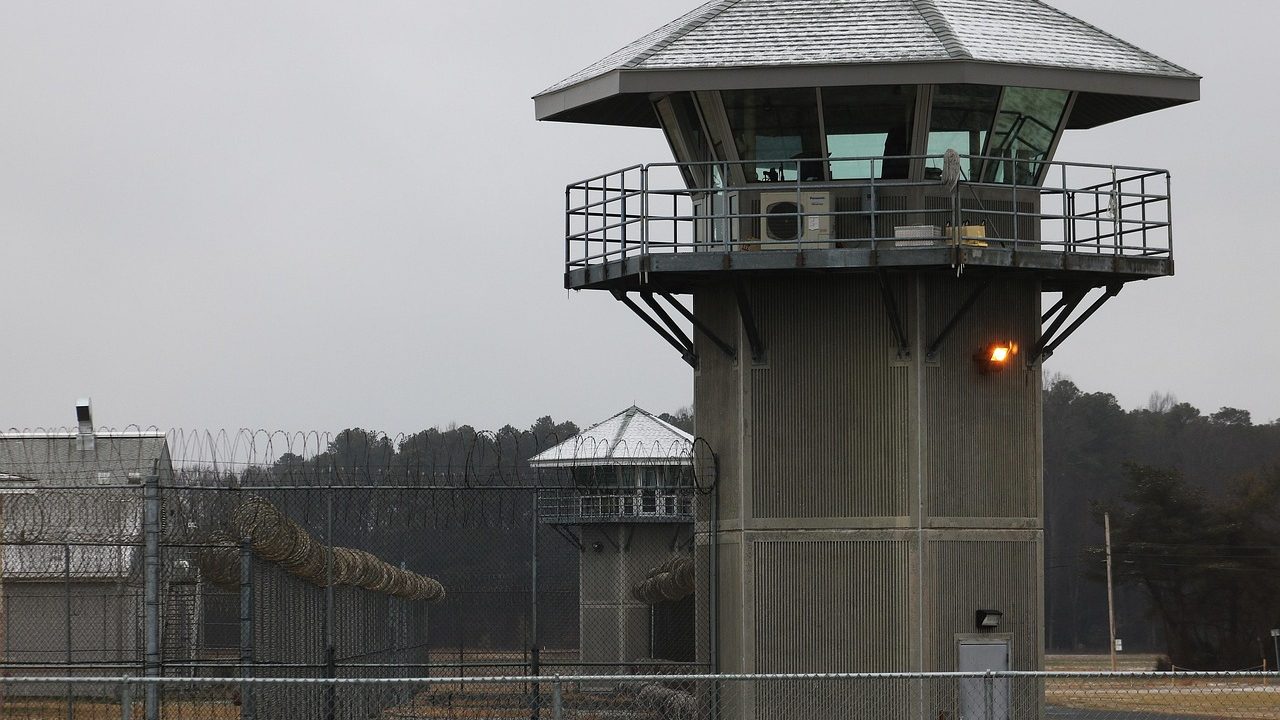
The federal government's purchase of the Otay Mesa Detention Center closed July 2nd at $739.2 million — part of a combined $1.47 billion deal with CoreCivic that also included the California City Detention Facility at $732.6 million. CoreCivic will continue operating Otay Mesa under its existing ICE contract through December 2029, with an option to extend five additional years. The 1,994-bed facility gives DHS direct ownership of one of the largest immigration detention sites on the Southern California border.
Records surfaced by NBC 7 reveal the facility was independently appraised at $168 million before the sale — meaning the federal government paid a premium of $571 million over appraised value, or roughly 340 percent above appraisal. CoreCivic expects approximately $1.1 billion in net proceeds after taxes and transaction costs from the combined two-facility deal.
The transaction also creates an unresolved accountability question. When CoreCivic owned the property, San Diego County had secured a federal judge's order granting county health inspectors access under a 2024 state law. Now that the federal government owns the facility outright, it is genuinely unclear whether those county inspection rights survive the transfer to DHS ownership. County officials have not yet received a definitive legal answer, leaving a meaningful oversight gap for a facility housing nearly 2,000 people.
On the residential side, San Diego County's median sold price for single-family detached homes hit $1,100,000 in June — a new record. Only 1,415 detached homes are actively listed countywide, and properties are averaging just 22 days on market. The attached-housing market tells a different story: condo and townhome prices are running below year-ago levels, offering some measure of breathing room. Commercial real estate is quietly stabilizing as well; San Diego posted its second consecutive quarter of positive net absorption in office space during Q2 2026, with the Eastgate submarket leading the recovery.
The San Diego City Council voted unanimously to create an Affordable Housing Preservation Fund, seeded with $8.5 million, aimed specifically at preventing existing low-rent apartments from converting to market rate as affordability covenants expire. A 2020 study by the San Diego Housing Commission projected more than 13,000 affordable units could lose protected status by 2040. The $8.5 million represents a stated commitment; critics note it amounts to less than $1,000 per at-risk unit if spread evenly across the projected pipeline.
El Cajon's AI Dispatcher, East County's $950 Million Water Project, and a Steakhouse Delay
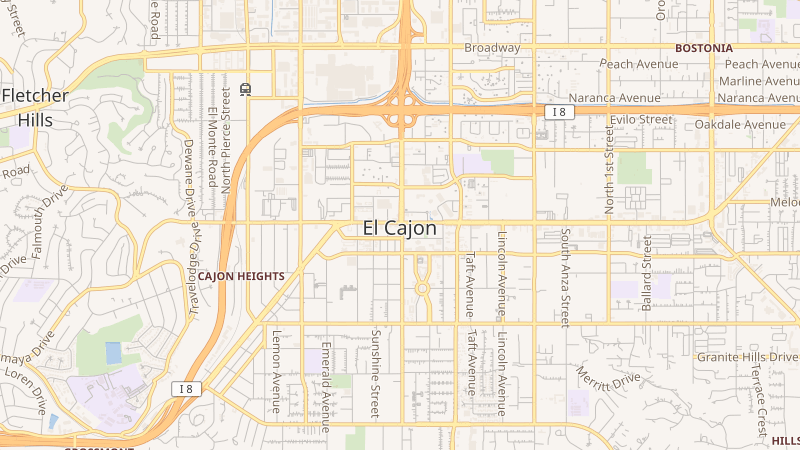
El Cajon became the first city in California to deploy an AI call-taking system when its police department went live with 'Ava' — built on Aurelian's platform — on July 1st. The system handles intake on non-emergency and business lines, creates call records, and routes to a live dispatcher, with every call still receiving human review. El Cajon fields roughly 180,000 calls per year, approximately 100,000 of which are non-emergency. Ava provides multilingual support in English, Spanish, and Arabic with no hold wait, at an annual cost of $74,000 — less than the fully-loaded salary of a single employee. Now nine days into operation, the system is being watched closely by municipal departments statewide.
The East County Advanced Water Purification Program — a $950 million-plus facility north of Santee Lakes — is in its final construction phase, targeting water delivery to customers in late 2026. Current work centers on installation of the final 3,500 feet of wastewater pipeline using horizontal directional drilling near Santee Lakes and the San Diego River, a method chosen specifically to avoid disturbing sensitive habitat. When online, the facility will supply purified potable water to Padre Dam, Helix, and Lakeside Water District customers — serving roughly 400,000 East County residents and substantially reducing the region's historic dependence on imported supply. Padre Dam's next board meeting is July 15th at 4 p.m. at 9300 Fanita Parkway.
Heritage Steakhouse, a 4,000-square-foot, 125-seat restaurant on the sixth floor of the Legacy Building at 200 Lantern Crest Way in Santee, has pushed its opening from June to August 2026. The restaurant, which has named Meredith Manée as executive chef and markets itself as a New York-style, USDA Prime, white-tablecloth concept with panoramic valley views, represents a dining format East County has not previously had.
Santee residents with Friday evening plans have two outdoor music options: the free Summer Concert Series runs 6:30 to 8:00 p.m. at Town Center Community Park East at 550 Park Center Drive, and Miranda Ramos performs country music at Santee Lakes, 9310 Fanita Parkway, from 5 to 7 p.m. With the Santee Community Center construction now in Phase 2 — active building construction — the YMCA footbridge near Town Center Community Park East remains closed and parking near the park is constrained. The city is asking concertgoers to carpool, bike, or walk; overflow parking is available at Santana High School, 9915 Magnolia Avenue.
San Ysidro Schools at the Edge, Phone Rules Now Law, and Mason Miller Heads to the All-Star Game

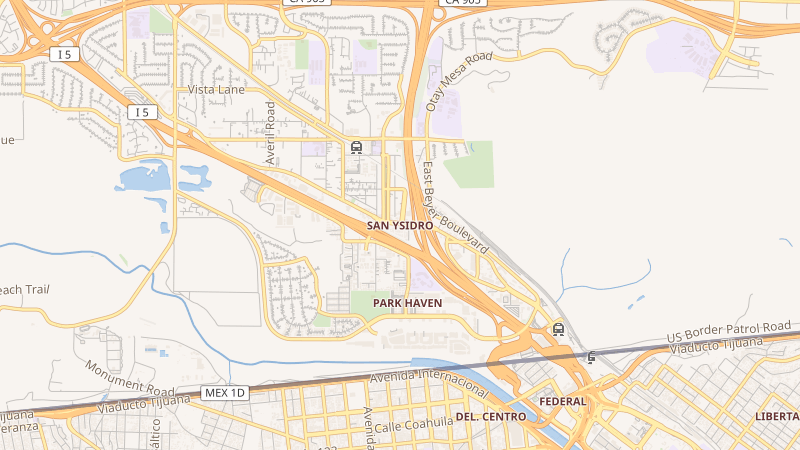
The San Ysidro School District is approaching the new school year in a precarious fiscal position. Placed under San Diego County fiscal supervision in January 2026 after projecting deficits of $2.2 million in 2026-27 escalating to over $4 million in subsequent years, the board approved a $4.8 million budget reduction plan in January. The district nonetheless remains under a negative interim certification — meaning it cannot confirm it will meet its financial obligations — because layoff resolutions have not been fully finalized. If the required cuts are not implemented before the school year begins, the district risks exhausting its general fund reserves and triggering direct state intervention. San Ysidro serves a predominantly low-income border community, and students there would feel any further fiscal deterioration most directly.
California's Phone-Free School Act, AB 3216, took effect July 1st, requiring every San Diego County school district, charter school, and county education office to have adopted policies limiting or prohibiting phone use during the school day. San Diego Unified was already compliant, having maintained restrictive phone policies for more than five years. Districts that had not finalized policies by July 1st are now technically out of compliance with state law; no countywide enforcement action has been announced, but the start of the school year in August is the implementation deadline that carries real consequences.
On the field, the Padres dropped a difficult game Thursday night as Arizona's Merrill Kelly held San Diego to a single run — a solo home run by Manny Machado — in a 3-1 Diamondbacks win that split the four-game series. Glenn Canning took the loss and now stands at 1-7 with a 6.71 ERA. The Padres fell to 45-46, back below .500. They open a series against the Toronto Blue Jays tonight at Petco Park at 6:40 p.m., with Shane Bieber starting at 0-1 and a 9.00 ERA.
The unambiguous bright spot on the roster is closer Mason Miller, the Padres' sole representative on the 2026 NL All-Star team. Named to the squad on July 4th, Miller carries an ERA reported between 0.78 and 0.98 depending on the source, 22 saves with zero blown saves, and a strikeout rate of 50 percent of batters faced — a historically dominant closer season. The All-Star Game is July 14th on FOX at 8 p.m. Eastern from Citizens Bank Park in Philadelphia. Miller is the first Padre to serve as the team's lone All-Star representative since Kirby Yates in 2019.
The unanimous City Council vote creating the Affordable Housing Preservation Fund deserves scrutiny alongside its celebration. At $8.5 million against a projected pipeline of more than 13,000 at-risk units, the fund amounts to less than $1,000 per unit if spread evenly — far short of the acquisition and renovation costs in a market where multifamily properties command premium prices. Key indicators to watch: the Housing Commission's first acquisition under the fund, the per-unit cost relative to market rate, and whether the fund receives recurring appropriations in subsequent city budgets or quietly fades after this initial seed.
Heat Warning Expires Tonight, Monsoon Moisture Arrives This Weekend
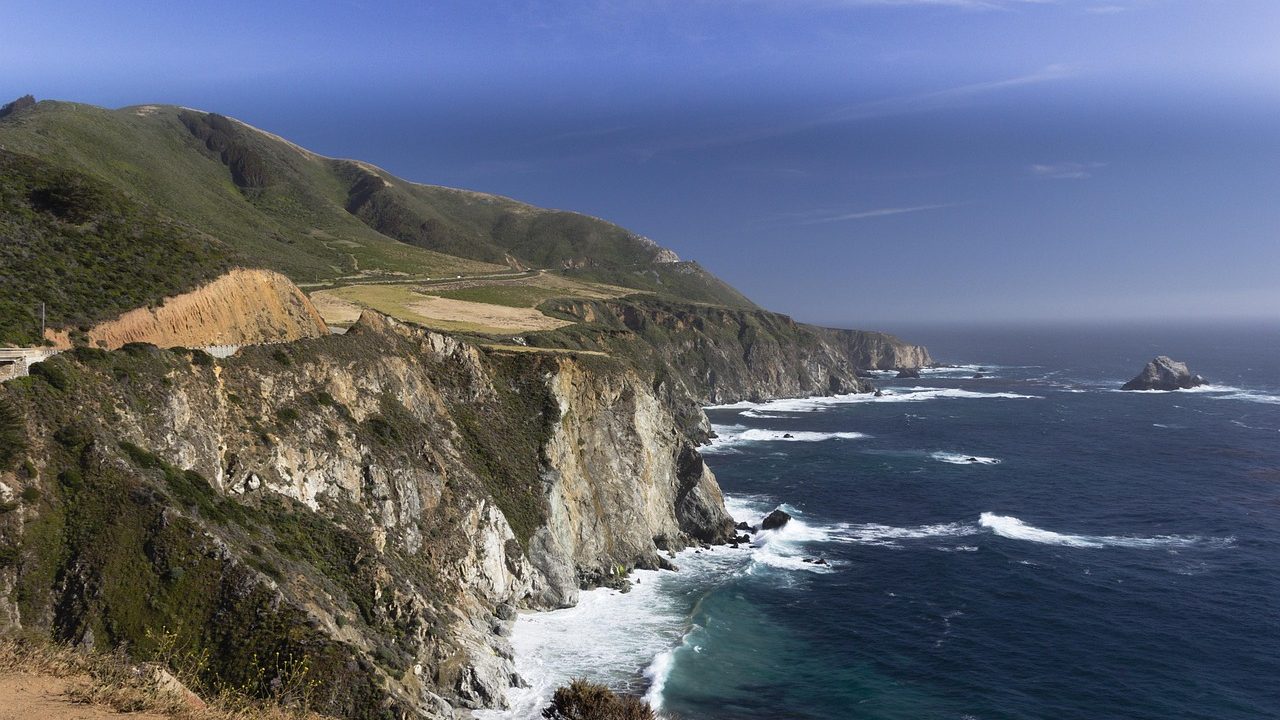
The Extreme Heat Warning for San Diego County's deserts and mountains — in effect since July 7th, with lower-desert highs near 115 degrees — expires tonight at 8:00 p.m. PDT. Inland valleys remain in the 90s through today before some cooling this weekend. At the coast, Friday's high reaches 74 with a low of 64; the marine layer is expected to clear by mid-morning. Air quality remains poor, and health officials advise anyone with asthma, heart conditions, or age-related vulnerability to limit outdoor exposure.
The larger weekend weather story is monsoonal moisture moving into the region. Humidity increases countywide Saturday and Sunday, with the highest probability of thunderstorms arriving Monday afternoon in the mountains and deserts and storm chances extending through midweek. Flash flooding and lightning risk are elevated for backcountry areas. Even coastal zones will feel the humidity shift in what forecasters describe as the classic San Diego summer monsoon pattern.
Beach-goers should note that astronomical high tides of 7.0 to 7.2 feet are forecast July 12th through 14th. Combined with a south swell generating 4-to-6-foot surf, coastal flooding is possible in low-lying beach areas and parking lots during evening high tides Saturday and Sunday.
Looking ahead on the calendar: Del Mar's summer racing season opens July 17th and runs through November 29th. On July 14th, Mason Miller takes the mound at the All-Star Game in Philadelphia — and the stories carrying forward from this week include Larry Millete's sentencing date once set, the closing public comment window on SANDAG's SB 79 map, the San Ysidro School District's fiscal picture before August, unresolved county inspection rights at the now-federally owned Otay Mesa facility, and the Santee November ballot campaign around a proposed 1 percent sales tax measure.