Missing Marine, a $9 Billion Budget, and a Cold Case Plea: San Diego's Sunday Briefing
A Navy recovery operation off the Southern California coast, a landmark county budget reshaping food security and mental health services, and a 27-year-old murder case moving toward trial defined a packed Sunday for San Diego County.
How this was made Verified AI
Every Intellegix briefing is generated from that day's broadcast and run through automated checks before it publishes — with a human paged on any flag. Here is the trail for this edition.
San Diego Wakes to a Packed Sunday
Sunday morning found San Diego County caught between the familiar comfort of marine layer over the coast and a series of stories far weightier than a mid-summer weekend usually brings. A Navy family awaited devastating news offshore, county supervisors' freshly adopted $9.16 billion budget prepared to take effect, and 45,000 baseball fans readied for a rubber match at Petco Park.
The day's agenda spanned a missing Marine's transition from rescue to recovery, two targeted social safety-net programs buried inside the county's new spending plan, a cold case plea in a 1999 Balboa Park murder, a sweeping biker enforcement operation whose full numbers are now public, a unanimous school board vote restricting student devices, and a pitching matchup that tilts — on paper — toward the home team.
Navy Shifts to Recovery After 43 Hours Searching for Missing Marine

The U.S. Navy formally transitioned from search-and-rescue to search-and-recovery operations for a Marine who went missing from the USS Anchorage, a move that carries grim and unambiguous meaning: the Navy no longer believes it will find the service member alive. The Marine disappeared at approximately 1:20 a.m. on Thursday, June 26th, during an integrated training exercise involving the 13th Marine Expeditionary Unit out of Camp Pendleton and the Makin Island Amphibious Ready Group off the Southern California coast.
After more than 43 hours of active rescue efforts, the Navy made the formal transition around 9 p.m. Friday night. NBC Los Angeles confirmed the recovery operation was still actively underway as of early Sunday morning. The Marine's identity has not been publicly released, standard practice until next of kin are notified.
The USS Anchorage is homeported in San Diego, meaning the ship's crew members live in the community and their families are present in the city. Questions about how a Marine goes missing from a vessel during a nighttime training exercise — not a combat deployment — will be answered through the Navy's ongoing investigation. What is known is that dozens of sailors and Marines, search aircraft, and support vessels spent nearly two full days attempting to locate the service member before the transition to recovery was declared.
County's $9.16 Billion Budget Targets Food Deserts, Elevates Mental Health

The San Diego County Board of Supervisors adopted a $9.16 billion budget on June 25th — a 6.1 percent increase over the prior year representing $522 million in additional spending — and two programs embedded in that adoption signal deliberate choices about which residents the county is prioritizing as federal support contracts. The budget takes effect Tuesday, July 1st.
The first program, the Safety Net Bridge Program championed by Supervisor Monica Montgomery Steppe, sets aside one million dollars to fund approximately 96 food distribution events throughout the fiscal year in partnership with Feeding San Diego and the San Diego Food Bank. The events are targeted at communities the county identifies as most exposed to federal H.R. 1 legislation's CalFresh cuts: El Cajon, Chula Vista, Oceanside, Kearny Mesa, and two Spring Valley locations. Distribution events must launch within 60 days of the budget's June 25th approval, meaning that clock is already running.
The scale of federal retrenchment driving that program is substantial. The county's own analysis estimated roughly 93,500 San Diego residents are at risk of losing or seeing reductions in CalFresh benefits. H.R. 1 also shifts 25 percent of CalFresh administrative costs to local governments beginning October 1st — an additional $15.8 million burden for the county — with the broader H.R. 1 impact on the county's first-year budget totaling $68.4 million.
The second major structural move in the budget is the elevation of Behavioral Health Services to its own standalone county department, separated from its previous home inside Health and Human Services. The new department carries a 12.4 percent funding increase to $1.4 billion — the largest single departmental funding increase in the entire budget — along with 31 new positions. Making behavioral health a standalone department creates its own director, its own reporting chain, and its own budget line subject to direct Board scrutiny year over year, a shift advocates have sought for years in California counties where mental health services have historically been administratively buried.
Cold Case Plea and Biker Operation Round Out Public Safety Week

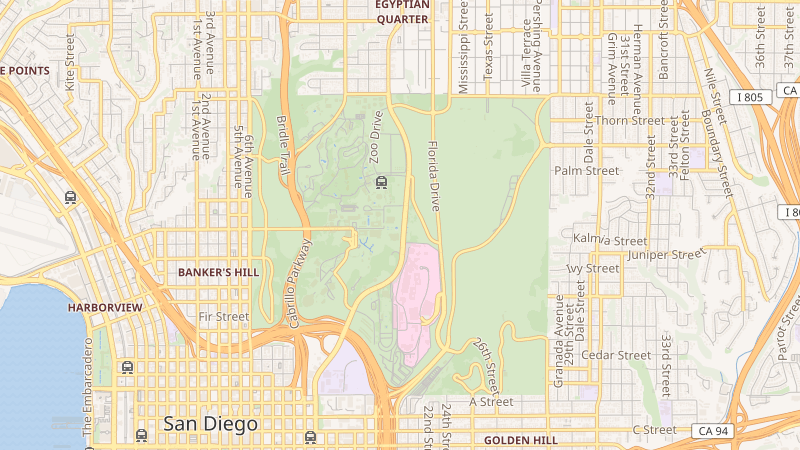
Christopher Creek, 52, entered a not-guilty plea at his June 25th arraignment in San Diego Superior Court for the 1999 strangulation murder of Diane Ayres in Balboa Park. Creek was extradited from Georgia on June 23rd, where he had been incarcerated at Dodge State Prison in Chester on an unrelated offense when a San Diego warrant caught up with him. He is currently held on no bail. If convicted of first-degree murder, he faces 25 years to life.
The prosecution's case rests on DNA evidence developed by the SDPD Crime Laboratory, which confirmed in October 2025 that Creek's DNA matched samples recovered from three distinct locations: Ayres' sock, a vaginal swab, and her left breast. The fact that those samples remained recoverable and matchable in 2025 from a 1999 crime scene reflects both the durability of the original evidence preservation and advances in forensic DNA technology. The not-guilty plea sets the case on a path toward trial, which the defense is expected to contest. Creek's arraignment closes a loop that Ayres' family has waited more than two and a half decades to see.
Separately, the full enforcement report from the May 29th and 30th Hells Angels Southrun operation was publicly released by the San Diego Police Department on June 22nd. More than 200 Hells Angels members entered San Diego County during the two-day period. Law enforcement recorded 140 police contacts, issued 64 citations, made four misdemeanor arrests and 20 felony arrests, and seized 14 firearms. Multiple subjects were found carrying loaded firearms, knives, and hammers. One subject fled at speeds exceeding 100 miles per hour through Lakeside and Alpine before being apprehended. The operation involved SDPD, the San Diego County Sheriff's Office, El Cajon Police Department, and the California Highway Patrol — a coordinated multi-agency mobilization that reflected advance intelligence on the event.
County Budget Line Items: Roads, Housing, and a Sushi Labor Lawsuit
Beyond the headline behavioral health and food security programs, the county's new budget allocates $268.7 million for road safety and maintenance — reflecting years of deferred investment in communities including Lakeside, Spring Valley, and the rural east — along with $93.1 million for affordable housing, $71.5 million for libraries, $84.5 million for fire and emergency medical services in unincorporated areas, and $25.6 million for watershed and ocean pollution protection.
On the labor enforcement front, the county's Office of Labor Standards and Enforcement filed a civil lawsuit on June 18th against six companies operating sushi counters inside grocery stores. The defendants are Ace Sushi Franchise Corp., Asiana Management Group, Advanced Fresh Concepts Franchise Corp., Advanced Fresh Concepts Corp., FujiSan Franchising Corp., and Fuji Food Products, Inc. The county alleges a 'pay-to-work franchise scheme' in which sushi chefs were classified as independent contractor franchisees rather than employees, stripping them of minimum wage guarantees, overtime pay, paid sick leave, and workers' compensation. The county says many workers logged 50 to 70 or more hours per week across multiple grocery store locations.
The lawsuit — the county's first major labor enforcement action of its kind — targets what the county characterizes as a $2.5 billion nationwide market. By framing the arrangement as a franchise scheme rather than simple wage theft, the county is advancing the more aggressive legal theory that the corporate structure itself was designed to obscure an employment relationship. The county is seeking unpaid wages, liquidated damages, restitution, civil penalties, and attorneys' fees in San Diego Superior Court. On a lighter commercial note, the national indoor pickleball franchise Picklr announced its first San Diego County location at 5830 El Camino Real in Carlsbad, a 36,300-square-foot facility with 10 courts scheduled to open in late August.
East County Quiet
No new public-record developments emerged from Santee or the broader East County on Sunday.
SDUSD's Screen-Time Ban Takes Effect August 10 — But Will It Move the Needle?

San Diego Unified School District's board unanimously approved the Learner-Centered Technology Use resolution at its June 23rd meeting, with specific implementation details now confirmed. Beginning August 10th — the first day of the 2026-27 school year — YouTube and all video-streaming platforms will be prohibited on one-to-one student devices unless a teacher specifically enables access for a defined learning objective. Non-instructional gaming platforms are banned from all district-issued devices. Computer carts will be removed entirely from Transitional Kindergarten classrooms. Students with IEPs or 504 plans are exempt from restrictions that would conflict with their accommodations.
Board President Richard Barrera described the initiative as gaining nationwide attention and framed August 10th as a first step in a longer, year-long collaborative process. Subsequent phases will examine age-appropriate device guidance, Chromebook screen-time limits outside school hours, and how artificial intelligence fits into classroom instruction.
The policy arrives against a grim fiscal backdrop. A June 12th report confirmed that every major school district in San Diego County is operating in deficit following mass layoffs, pay cuts, and campus closures in the 2025-26 school year, with deeper austerity projected ahead. The screen-time resolution costs relatively little to implement and gives the district something affirmative to announce to parents in a year dominated by cuts — including reductions to mental health clinicians.
Whether the policy will produce measurable academic improvement is a genuinely open question. The research on device restrictions in schools is less settled than the policy momentum implies, and a student with a personal phone in their pocket can redirect the same distracted behavior to a different screen the moment their district Chromebook is locked down. A more pointed challenge: the primary drivers of poor academic outcomes in San Diego Unified — class size pressures, teacher retention, and equity gaps that predate the device era — are not addressable by a YouTube ban. The signal to watch will be 2026-27 chronic absenteeism rates and spring 2027 standardized assessment scores in the grade bands most affected. Both are published publicly by the district. If those numbers improve and can be plausibly attributed to the device policy rather than other variables, the evidence will speak for itself.