Cold-Case Arrests, Drone Policing, and a Budget Under the Microscope: San Diego County Enters a Consequential Week
A Sunday-night homicide arrest in Spring Valley, weekend-wide civic demonstrations, and the launch of San Diego's FY 2027 budget implementation set the tone for a week in which the county's public-safety apparatus and governing institutions face simultaneous scrutiny.
“Showing up — in person or via written public comment — carries real leverage at this particular moment in the governing calendar.”
How this was made Verified AI
Every Intellegix briefing is generated from that day's broadcast and run through automated checks before it publishes — with a human paged on any flag. Here is the trail for this edition.
Two Arrested Months After Spring Valley Killing as Sheriff Signals Investigative Resolve

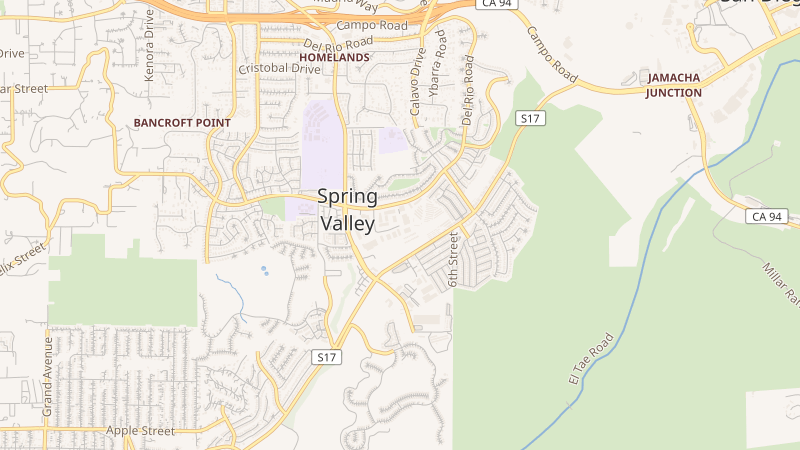
On June 12th, the San Diego County Sheriff's Department announced the arrest of two men in connection with a homicide that occurred in Spring Valley sometime in 2025. The agency has not yet released full case details in publicly posted materials, but the structure of the case fits what investigators describe as a delayed-arrest scenario — the crime occurs, evidence accumulates over months, and charges follow well after the initial incident.
Spring Valley, an unincorporated community of roughly 30,000 residents east of National City, falls under Sheriff jurisdiction rather than a city police department. That status means county investigators carry the full weight of homicide follow-up, and the months-long gap between the killing and the arrests had weighed on the neighborhood. The Sheriff's Department has recently emphasized publicizing how cases are cleared — not merely that they are — a pattern that reflects either strategic communications or a genuine transparency push, though the community outcome is the same: two individuals are in custody and facing charges.
The announcement also aligns with a broader departmental posture in which the Sheriff's office has sought to demonstrate that its investigative capacity is functioning across all of its jurisdictional territory, including the unincorporated communities that lack their own city police forces.
Sheriff Affirms Protest Rights as 'No Kings' Demonstrations Draw Crowds Countywide

The San Diego County Sheriff's Department issued a statement on June 12th addressing the 'No Kings' demonstrations that took place across the county over the weekend — part of a national wave of civic protests. The statement explicitly affirmed the public's right to free speech and assembly, language that law enforcement agencies select deliberately when characterizing large public gatherings.
Framing the weekend's events as a lawful exercise of rights, rather than a public-order challenge, signals how county leadership chose to position itself relative to the demonstrations. The decision to issue a proactive statement before any accusations of overreach had surfaced publicly suggests the gatherings were substantial in scale. No crowd estimates appear in the publicly posted materials, but the existence of a formal Sheriff's response functions as its own evidence of the weekend's scope.
Separately, search-and-rescue resources were deployed over the weekend for a missing-hiker operation near Poway, announced June 12th. The trails around Lake Poway and Black Mountain Open Space Park draw heavy foot traffic as summer heat builds inland, and as of Monday morning no confirmed resolution had appeared in the public record — a situation expected to develop through the day.
Budget Moves from Promises to Contracts as San Diego Enters FY 2027 Implementation

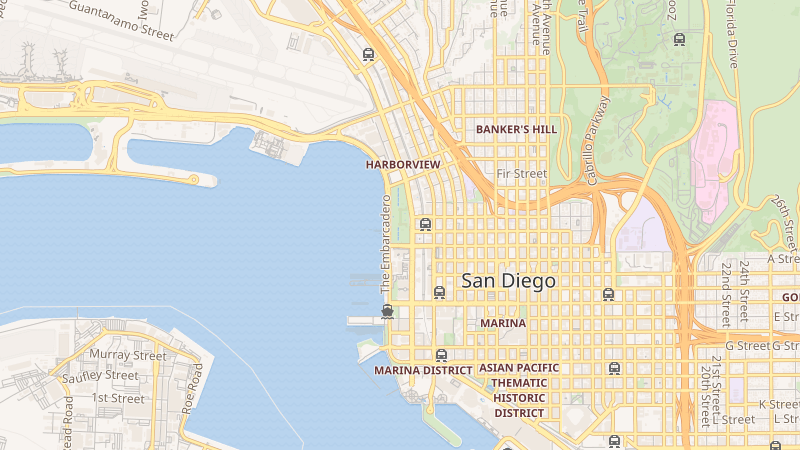
The San Diego City Council completed its final FY 2027 budget decisions on June 9th, the target date established after Mayor's May 25th 'The People's Business' update. With the fiscal year now underway, the city has entered the implementation phase — the stage when approved spending lines translate into construction contracts, staffing assignments, and service timelines rather than policy debate.
The roughly five-billion-dollar spending plan touches every major sector of city life: infrastructure maintenance, public safety staffing levels, lifeguard deployment, economic development grants, and climate resilience investments. For the construction sector in particular, capital improvement allocations in the budget represent a direct source of work for local contractors and suppliers navigating elevated materials costs and pressure from the ongoing housing production squeeze.
East County communities feel the budget's effects even where city limits do not reach. Spring Valley and other unincorporated areas depend directly on county appropriations — not a city government's — for roads, water infrastructure, and social services. County Board of Supervisors meetings, following a Tuesday-Wednesday schedule at 1600 Pacific Highway, continue to set those terms. The next legislative session is Tuesday, June 16th, with the agenda posted 72 hours in advance per county policy.
A community forum on the future of Vista Detention Facility, technically a Sheriff's event but carrying direct Board policy relevance, is also scheduled for Tuesday in Encinitas. Questions about whether to expand, renovate, repurpose, or close the facility carry implications for county finances, criminal justice reform, and communities adjacent to the jail.
From Senior Tai Chi to Contract Cycles: The Budget's Street-Level Signals

The economic ripple from San Diego's FY 2027 budget extends well beyond City Hall. Infrastructure commitments produce job activity in local communities; permitting and procurement processes either facilitate or slow private investment across the defense contracting, biotech, tourism, and real estate sectors that anchor the regional economy.
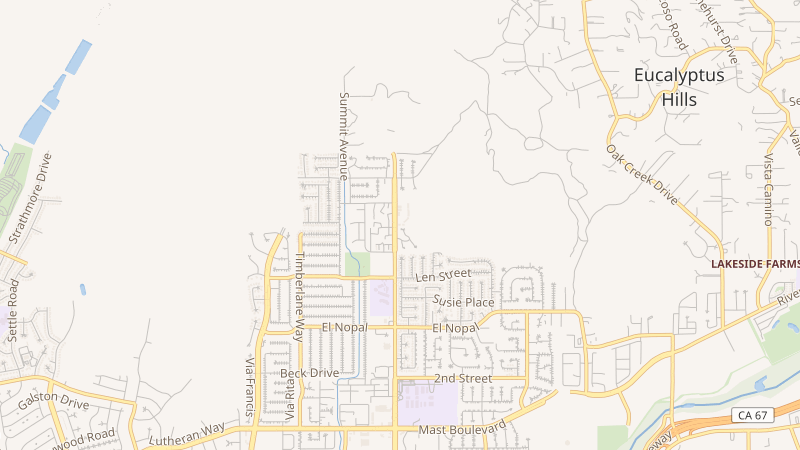
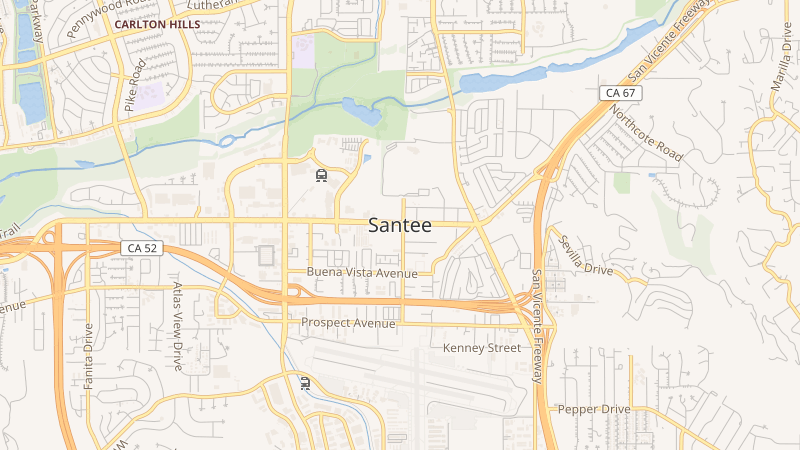
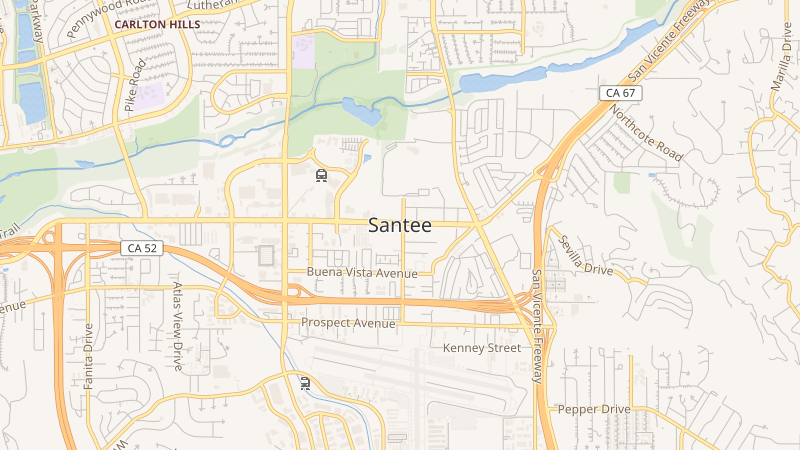
At the community programming level, Santee offers a modest but telling indicator: Tai Chi classes for seniors are running at City Hall — Building 8P at 10601 Magnolia Avenue — from 10:30 to 11:30 Monday morning, and an AARP Fraud Prevention event is scheduled for Wednesday, June 17th. Cities that sustain active senior programming through budget cycles signal that baseline service commitments remain intact. The fraud-prevention event carries particular practical weight given that elder financial fraud is one of the fastest-growing crime categories in California, according to the state Attorney General's office.
The budget's labor cost assumptions also bear watching. City employee contracts, especially for public safety — typically the largest single budget category — have multi-year terms, and new bargaining cycles are approaching. In San Diego's recent history, labor cost overruns have been a recurring source of budget pressure. Meanwhile, downtown commercial office vacancies remain elevated, raising questions about the property tax revenue trajectory built into the spending plan.
Drones, License Plate Readers, and Compliance Sweeps: East County's Technology-Driven Enforcement Moment

Three distinct law enforcement developments in East County this week raise questions that extend well beyond their individual outcomes. The first and most policy-laden is the June 10th arson arrest attributed to the Sheriff's drone program. Arson carries heightened stakes in communities like Lakeside, Alpine, and areas around Santee that sit in or near high fire-risk zones — making the arrest itself significant. But the Sheriff's decision to publicize the drone program's role is, in part, a public relations move intended to build support for continued investment in the technology.
Civil liberties organizations have documented that law enforcement drone programs in California have expanded rapidly without commensurate growth in public oversight. The Los Angeles Police Department's drone program faced substantial community pushback over oversight gaps in recent years. Residents and elected officials should be asking: what specific protocols govern when the Sheriff's drone program is activated, what data is retained, and who has oversight authority?
The June 9th carjacking case presents a parallel dynamic. Automated License Plate Reader cameras — mounted on light poles and patrol vehicles throughout the county — logged the suspect's plate and enabled a rapid location. The Electronic Frontier Foundation has documented that most ALPR systems retain vehicle-movement data for months or years, building a geographic profile that can be queried retroactively for any purpose. The specific use in this carjacking case was almost certainly appropriate; the broader question is who controls that aggregate data and under what conditions it can be accessed.
The third development, a June 10th compliance check in Spring Valley that produced three arrests, is more routine: officers verifying that individuals on probation or parole are meeting release conditions, with the arrests suggesting warrants or supervision violations. Taken together, the three stories describe a Sheriff's Department that is actively investing in both technology and traditional enforcement tools across East County. The question for residents is whether comparable investment exists in transparency mechanisms and community oversight — and whether forums equivalent to Tuesday's Vista Detention session are being held in Spring Valley, Lakeside, or Santee itself.
School Districts Operate in the Transparency Gap — and the Budget May Have One Too

Confirmed, finalized action summaries from Santee School District, Grossmont Union High School District, or Grossmont-Cuyamaca Community College District are not available in the verified public record as of Monday morning. That absence reflects a structural reality of school district governance: board decisions are made on scheduled dates, and official minutes are posted afterward, sometimes days later. The lag creates an opening for misinformation, making official agenda and minutes portals — not social media or informal channels — the authoritative sources for what any of these districts actually decided.
What can be stated with confidence is that June is a pivotal month regardless of specific board actions: summer school programs are launching, fall enrollment numbers are being finalized, academic-year staffing decisions are taking shape, and facilities maintenance is being scheduled for the window before students return. Families in Santee navigating the transition between the K-8 Santee School District and the high school-level Grossmont Union system are advised to be in contact with both district offices now — summer transitions are when enrollment and placement details fall through administrative cracks.
The 'What If We're Wrong?' question this week attaches to the FY 2027 budget. The case for confidence is genuine: San Diego's budget process is deliberative by the standards of comparable cities, reserve funds have been maintained responsibly, and the final vote does not appear to rely on extraordinary one-time revenues. But the revenue forecast rests on assumptions about property tax receipts, hotel taxes, and sales taxes that carry real uncertainty. Commercial real estate vacancies in downtown San Diego remain elevated, tourism spending nationally is showing signs of softening, and labor negotiations with public safety unions could push costs above projected levels.
Specific early-warning indicators are worth tracking: if monthly city financial reports — public documents — show hotel and sales tax receipts running more than five percent below forecast for two consecutive months, the revenue side is in stress. And if capital projects approved in the FY 2027 budget begin slipping to the following fiscal year by October, that signals the city is managing cash flow against a plan that is underperforming. Neither outcome is the base case; both are trackable and worth watching.
Mild Week Ahead as Civic Calendar Fills the Governance Gap
San Diego County's weather through Wednesday is seasonably mild: coastal highs in the low to upper 70s, overnight lows in the mid-to-upper 60s, and mostly sunny afternoons as June Gloom gives way to clearer skies. Inland communities — Santee, El Cajon, La Mesa — are expected to reach the low 80s during peak afternoon hours Tuesday. No significant weather events are forecast in the 48-hour window.
The civic calendar is more active than the weather suggests. Monday's Santee Seniors Tai Chi session at City Hall runs through 11:30 a.m. Tuesday brings the Sheriff's community forum on Vista Detention Facility in Encinitas, a substantive public input opportunity for anyone with views on county jail infrastructure and criminal justice programming. Wednesday carries the AARP Fraud Prevention event on Santee's city calendar; contact Santee City Hall for registration details. The next regular Santee City Council meeting is Wednesday, June 24th — nine days out — with public comment available to anyone who registers in advance.
The throughline of the week is that the county's most consequential decisions for the next twelve months are being made now, in the administrative quiet of early summer, exactly when public attention tends to drift. Board of Supervisors meetings, city budget implementation, school district transitions, and community forums on detention facility futures are unfolding simultaneously. Showing up — in person or via written public comment — carries real leverage at this particular moment in the governing calendar.