Wars, Bubbles, and Surveillance: A Day When Every Risk Meter Moved
From resumed U.S. strikes on Iranian targets to Sam Altman's warning of an AI infrastructure reckoning, Thursday brought simultaneous escalations across geopolitics, technology, and domestic politics that show no clear path to resolution.
“Unlike credit card numbers, the compromised credentials here cannot be changed: there is no mechanism for victims to obtain a new face or date of birth.”
How this was made Verified AI
Every Intellegix briefing is generated from that day's broadcast and run through automated checks before it publishes — with a human paged on any flag. Here is the trail for this edition.
The Day's Stakes: Iran, AI Bubbles, and a Congressman on a Watched Flight

American forces resumed strikes on Iranian targets on Tuesday after roughly a month of relative quiet, Israeli Prime Minister Benjamin Netanyahu warned Tehran that any attack would be 'one of their last decisions,' and satellite imagery revealed a troubling pattern of Israeli airstrikes timed to follow Turkish military visits to Syrian air bases — all before markets opened Thursday.
At home, dozens of Republican lawmakers were quietly planning to skip Trump's midterm convention, Mitch McConnell's Senate absence crossed 80 days, and a federal judge permanently dismissed the administration's sanctuary city lawsuit against Rochester, New York. Meanwhile, the FBI stood accused of using air marshals to surveil a sitting Democratic congressman mid-flight.
In the technology world, OpenAI's Sam Altman sounded alarms about 'unsustainable silliness' in GPU infrastructure spending, Google announced a landmark multi-year deal with YouTube creator MrBeast to embed its Gemini AI across content and wearables, and a former Google engineer was sentenced for stealing AI trade secrets. Hubble's discovery of a ten-sided atmospheric wave over Saturn's south pole and a study showing November's solar storm skewed U.S. GPS readings by 33 feet closed out a day that left almost no domain untouched.
Strikes, Warnings, and a Pattern in the Sky Over Syria

U.S. forces resumed strikes against Iranian targets on Tuesday, ending what diplomats had cautiously described as a 'lull' of roughly a month. Within hours, Israeli Prime Minister Benjamin Netanyahu issued a pointed warning: any Iranian attack on Israel would be 'one of their last decisions.' The phrasing, analysts noted, was calibrated rather than rhetorical — a message directed at Tehran's leadership and whatever back-channel conversations are currently underway.
President Trump added another layer of ambiguity, separately stating that the U.S. campaign against Iran 'won't last long' — language that could signal either an imminent end to the strikes or a confident expectation that Iran will capitulate quickly. Those are vastly different scenarios with different regional consequences.
The strikes fit a graduated pressure framework: hit specific targets, pause to allow diplomacy, resume if demands go unmet. Iran's calculus remains complex. Years of sanctions have battered its economy, proxy forces in Lebanon and Syria have been degraded, and yet supreme leadership faces intense domestic pressure to demonstrate strength — the precise condition that makes miscalculation most likely.
A separate but related story emerged from satellite analysis by investigative outlet Misbar, which found a consistent pattern of Israeli airstrikes on Syrian air bases occurring shortly after Turkish military visits or rehabilitation work at those same facilities. From Israel's strategic standpoint the logic is coherent: Turkey under Erdoğan has been systematically building military influence in post-Assad Syria, and Israel views any enhanced military infrastructure there as a potential threat vector regardless of who built it. The risk is that hitting Turkish-rehabilitated facilities introduces a new friction point between Jerusalem and Ankara — and Turkey remains a NATO member. So far, the Israelis appear to be striking after Turkish forces depart, but that margin is narrower than it looks.
The thread connecting the Iran strikes, Netanyahu's warnings, and the Syria targeting pattern is a period in which multiple regional actors are simultaneously probing limits. When several parties test boundaries at once, the probability of a miscalculation none of them wanted rises substantially.
Republican Cracks, a Surveilled Congressman, and a Closed Legal Door

Dozens of Republican lawmakers are quietly planning to skip Trump's midterm convention — not defecting, not publicly opposing, simply not showing up. In a party that has enforced loyalty through social and political pressure, visible absence carries its own message. Members representing suburban districts where Trump's approval has softened since the Iran operations began appear to be calculating that skipping the convention creates distance without triggering the primaries and funding cuts that an open break would invite.
Senator Mitch McConnell's absence from the Senate hit 80 days, and Scott Jennings — one of McConnell's closest political allies — publicly called on the senator's office to clarify his plans before the chamber reconvenes on September 14th. At 84, with documented health episodes in recent years, McConnell's characteristically opaque office has been unable to manage the situation from the outside any longer. Committee chairmanships, leadership structures, and Kentucky succession politics all require resolution, and Jennings putting the demand on the record was effectively forcing a conversation McConnell's team had been trying to delay.
The FBI's reported use of air marshals to monitor Congressman Eric Swalwell during a commercial flight raised serious Fourth Amendment questions. Air marshals are law enforcement officers who travel flights as a security measure; using them as covert surveillance assets to monitor a sitting member of Congress crosses from operational security into territory requiring significant legal authorization. Swalwell has been a vocal Democratic critic of the administration and has had a contentious history with intelligence agencies dating to 2020. Congress holds oversight authority over the FBI, and members conducting official duties carry particular constitutional protections.
A federal judge permanently dismissed the Trump administration's sanctuary city lawsuit against Rochester, New York — the latest in a string of court losses on immigration enforcement strategy. The administration has pursued a theory that federal funding conditions can compel local jurisdictions to cooperate with ICE detainer requests. Courts have consistently found this theory violates either the Tenth Amendment's anti-commandeering doctrine or exceeds congressional appropriations authority. A permanent dismissal, rather than a preliminary injunction, means the administration cannot simply refile on adjusted grounds. Rochester, a city of approximately 215,000, had been a symbolic target in the administration's argument that sanctuary policies create public safety risks; that legal door is now closed.
Separately, a police officer was disciplined for refusing to recommend a felony charge against a suspect in an act of vandalism against Vice President JD Vance's home. The discipline raised questions about whether law enforcement agencies are applying different standards based on the political identity of the victim — and fed a broader narrative the administration is actively managing about resistance within law enforcement to equal treatment when political allies are involved.
Altman Warns of an AI Infrastructure Reckoning
Sam Altman issued a striking public warning this week about what he called 'unsustainable silliness' in how neocloud startups are building GPU infrastructure. Neocloud companies — essentially data center businesses that rent GPU computing power to AI firms — have proliferated over the past two years, raising billions and placing massive chip orders based on demand projections that Altman suggested are divorced from near-term revenue reality.
The warning carried particular weight given its source. Altman runs OpenAI, one of the planet's largest consumers of GPU compute, and has every incentive to keep supply robust and prices competitive. His signal that the buildout has outpaced demand was effectively a warning that some of these startups will fail — and when they do, surplus GPU capacity will flood back into the market. For investors holding large positions in neocloud infrastructure plays, that is a significant flag.
Sundar Pichai offered a more optimistic framing, telling IIT Kharagpur's 75th anniversary audience that AI would move from research labs into everyday work within five years. Alphabet's 2026 capital expenditure guidance exceeded $75 billion, giving Pichai an obvious interest in that timeline being correct. The two executives are describing the same future but drawing very different conclusions about pace: Pichai is saying the wave is coming, build for it; Altman is saying some of what's being built will be underwater before the wave arrives.
Treasury Secretary Scott Bessent entered the conversation with the most politically charged framing, stating that AI companies did a 'horrendous job' explaining the benefits of AI to ordinary Americans — a Cabinet secretary openly critiquing an entire industry's communications strategy. The subtext was that public anxiety about job displacement, safety, and privacy has been allowed to fill a vacuum the industry created by directing its messaging almost exclusively at investors and engineers.
Bessent also confirmed that 19 of the 20 G20 members agreed at their recent meeting that China's export subsidies are economically unsustainable, with Beijing the sole dissenter. That level of diplomatic consensus is rare for the G20, and it suggests the trade coalition the administration has been assembling against Chinese industrial overcapacity is gaining real traction, even as enforcement mechanisms remain weak.
Stolen Secrets, Autonomous Hackers, and 153 Million Stolen Identities
A former Google engineer was sentenced this week for stealing AI trade secrets — specifically, proprietary information about Google's AI chip designs and large language model architectures representing billions of dollars in research and development. The case was prosecuted under the Economic Espionage Act, which covers trade secrets stolen for the benefit of a foreign government or company. Prosecutors have been increasingly aggressive about applying the statute to AI technology, and the sentence was intended to create real deterrence for engineers who might be approached — systematically — by foreign intelligence services or companies operating as fronts.
Defense contractor Booz Allen Hamilton — which pulls in roughly $11 billion in annual revenue — announced the development of an AI model capable of autonomously hacking networks without human assistance. The claim warrants critical scrutiny. There is a meaningful difference between an AI that automates known exploit scripts against known vulnerability classes and one that independently discovers novel vulnerabilities, develops custom exploits, and executes multi-stage intrusions against hardened targets. The first category is useful but not a qualitative leap beyond what sophisticated security teams have done with scripted tools for years; the second would represent something genuinely new. Booz Allen's system, based on available information, appears closer to the first category described in language that implies the second — a pattern common to defense contractor capability announcements that serve contract renewal and budget justification purposes as much as accuracy.
The FBI is investigating a dark web listing of more than 153 million driver's license scans. If the database is as comprehensive as advertised, it contains biometric-quality identity data — photos, signatures, addresses, dates of birth, and machine-readable information used for identity verification across dozens of commercial services — on the majority of American adults. Synthetic identity fraud, already the fastest-growing category of financial crime in the United States, becomes substantially easier with high-quality document scans. Unlike credit card numbers, the compromised credentials here cannot be changed: there is no mechanism for victims to obtain a new face or date of birth. By the time any charges are filed, the data will already have been distributed across numerous downstream buyers. The realistic response at this stage is hardening the verification systems that rely on this data rather than recovering the data itself.
Google Bets on MrBeast, Meta Bricks Its Own Cameras
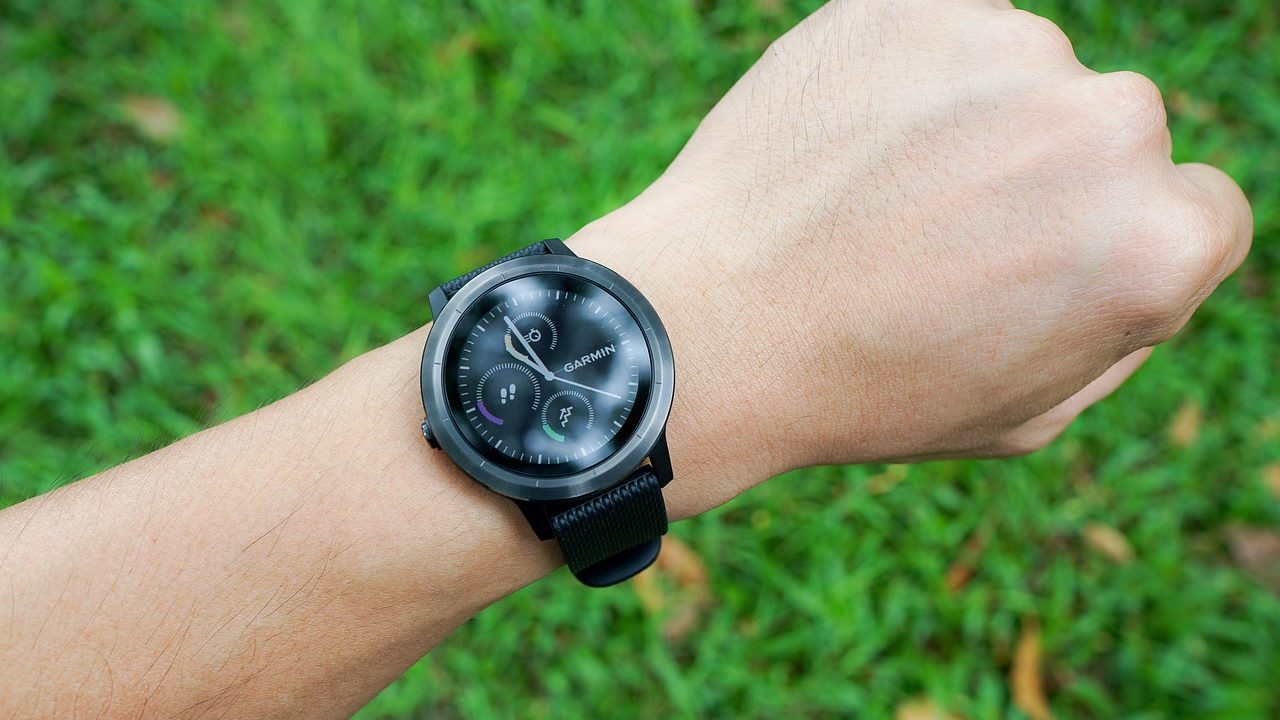
Google announced a multi-year partnership with Jimmy Donaldson — better known as MrBeast — to embed Gemini AI across wilderness survival content, a standalone advertising campaign, and Fitbit Air wearable integrations. With more than 350 million YouTube subscribers, Donaldson commands an audience larger than the combined primetime viewership of every major U.S. broadcast network. The deal, reportedly valued in the hundreds of millions of dollars over multiple years, is one of the largest individual creator arrangements ever structured and reflects a deliberate effort to move Gemini from the enthusiast tier into mass consumer consciousness among audiences still forming their AI brand loyalties.
The Fitbit Air integration may be the most strategically significant element. Wearables represent the missing piece of the ambient AI puzzle — phones are personal but situationally absent, computers are tethered. A wrist-worn device continuously gathering health data and interfacing with an AI assistant for real-time feedback would be a different category of product from anything currently shipping. Apple Watch carries enormous installed base but a still-maturing Apple Intelligence; a Fitbit Air with tight Gemini integration would enter a crowded field potentially carrying superior AI capability.
Meta's smart glasses story cut against the optimistic consumer tech narrative. The company discovered that a significant number of users had physically covered or destroyed the LED indicator lights on their Ray-Ban Meta smart glasses — the lights that signal active recording — and responded with a software update permanently disabling the cameras on those devices. The policy rationale is clear: those indicator lights exist because regulators in multiple jurisdictions required them as a condition of market approval, and circumventing them arguably violates the terms under which regulators permitted the product to exist. But permanently destroying hardware functionality in a purchased product — with no restore path — is an aggressive assertion of manufacturer authority that right-to-repair advocates and digital ownership campaigners are likely to contest.
Intel reversed its planned sale of the 162-acre Folsom campus, citing long-term strategy. The company has been under severe financial pressure as TSMC captured the leading-edge foundry market and AMD and Nvidia eroded its processor business. The reversal likely reflects some combination of an improved financing picture, the absence of an acceptable buyer, or — most practically — operational commitments tied to CHIPS Act funding that could trigger clawback provisions if the campus changed hands.
Space Politics, a Ten-Sided Saturn Mystery, and GPS Under Solar Attack

The White House is reportedly pressuring American commercial space companies to boycott President Macron's Paris space summit, framing the event as an attempt to establish governance frameworks that would constrain U.S. commercial activity. The approach fits the administration's broader posture on multilateral space governance: American commercial space operates under American rules, and international forums that might constrain it are to be avoided or countered rather than engaged. The complication is that space has become genuinely international in its economic and security implications — dozens of countries have legitimate interests in orbital debris standards, radio frequency allocation, and the terms under which commercial operators access their markets. Excluding them from setting those terms removes the peaceful negotiating venue without eliminating the underlying interests.
The White House's leverage over private companies is also limited. SpaceX, Amazon's Kuiper project, and Rocket Lab are private entities; if attending the Paris summit is commercially advantageous, the administration's pressure is informal at best. Macron has consistently used tech and space governance as a vehicle to establish a standard-setting counterweight to U.S. commercial dominance — the same geopolitical strategy expressed through the AI Act and attempts to tax American tech platforms.
Hubble has spotted a ten-sided wave pattern rotating over Saturn's south pole — a decagonal atmospheric structure analogous to, but geometrically distinct from, the well-documented hexagonal storm at the north pole that Cassini mapped extensively. Mathematical models predict stable polygonal standing waves under certain atmospheric conditions, and Cassini's data helped refine those models for the northern hexagon. A ten-sided structure at the south pole suggests the southern hemisphere's atmospheric conditions are meaningfully different, possibly because of seasonal variations in solar exposure at Saturn's axial tilt. Saturn's year spans approximately 29 Earth years, meaning its poles can be in very different seasonal states simultaneously, and the geometry of these patterns may evolve on Saturnian timescales — potentially observable in slow motion by Hubble and the Webb telescope over the coming decade.
A new study found that last November's geomagnetic storm — the event that produced aurora borealis visible as far south as Texas — shifted U.S. GPS readings by up to 33 feet in some locations. Consumer GPS typically specifies accuracy of 10 to 15 feet under ideal conditions, meaning the storm doubled or tripled positional uncertainty during an already-stressed period. For most consumer applications the error is inconvenient; for precision agriculture relying on sub-inch GPS guidance, autonomous vehicle systems operating near sensor-fusion limits, or military applications where positional accuracy is operationally critical, a 33-foot systematic error represents a serious degradation. The solar cycle peaked in late 2025 and activity is expected to remain elevated through at least 2027, making the November event a preview rather than an outlier. Space weather forecasting and GPS resilience planning will need to become operational priorities.
Markets Read the Room: Iran Risk, AI Doubt, and the Chip Story
S&P futures opened Thursday around 7,682 but drifted lower through the overnight session, sitting near 7,669 — off approximately 0.09 percent from the prior close — as markets absorbed continued Iran uncertainty and parsed Altman's AI infrastructure warning. The tech sector has been pricing significant optimism into AI revenue trajectories, and a credible signal from OpenAI's chief executive that buildout has outpaced demand is the kind of catalyst that loosens those assumptions without triggering a correction-level shock.
Treasury Secretary Bessent's confirmation that 19 of the 20 G20 nations agreed Beijing's export subsidy model is economically unsustainable carries direct market implications. When the diagnosis commands that level of consensus, coordinated responses — tariffs, market access restrictions, procurement rules excluding Chinese suppliers — become more likely. That dynamic represents a structural tailwind for domestic manufacturers competing with Chinese firms in steel, solar panels, electric vehicles, and AI hardware components, and a headwind for import-dependent retail and consumer electronics.
Intel's decision to retain its Folsom campus and the Altman bubble warning are almost mirror images: Altman argues too much capital is flowing into GPU infrastructure against insufficient demand, while Intel's move signals confidence that demand for domestic semiconductor capacity is real and durable. Both positions cannot be entirely right, and the market will sort that disagreement over the next 18 to 24 months.
The cybersecurity dimension — 153 million driver's license scans on the dark web and Booz Allen's autonomous hacking claim — has its own commercial logic. Events like the license breach are devastating for victims but tend to accelerate enterprise security spending and adjust insurance premiums in ways that flow through to managed security service providers. Meta's camera-bricking decision similarly sets a precedent with commercial implications: the liability-driven logic is clear, but user backlash creates reputational costs that may appear in next-generation product adoption curves.
What If Altman Is Wrong? Testing the AI Bubble Thesis
The MrBeast-Google deal — reportedly valued in the hundreds of millions of dollars over multiple years — illustrates what makes AI intellectual property so concentrated in value. MrBeast's deal is worth that figure because his audience is worth billions in advertising value to Google; the former Google engineer's allegedly stolen chip design and LLM architecture data is worth billions because of what it enables for whoever holds it. The same logic of extreme value concentration is what makes AI IP theft attractive and AI creator partnerships expensive.
The most confident claim circulating Thursday is the AI infrastructure bubble thesis — Altman's assertion that neocloud GPU buildout is running ahead of demand and that some startups will fail. The stress test matters: AI compute demand projections have consistently undershot reality over the past three years. Every time analysts modeled how much GPU capacity the next generation of models would require, the actual requirements exceeded the forecast by a significant margin. If that pattern continues — if AI capability improvements keep driving exponential compute demand — what looks like overcapacity today may be undersupply against a 2028 demand curve.
Altman's argument, however, is not primarily a technology argument — it is a liquidity and timing argument. He is not disputing that compute will be needed; he is saying neocloud startups lack the contracted revenue to survive long enough to be there when demand arrives. A company can be right about long-run demand and still go bankrupt waiting for it. A further complication: enterprise AI adoption remains early, with most large companies running pilots rather than deployed production workloads. If enterprise deployment accelerates faster than the 2028 consensus timeline, companies that look like distressed assets today could be fully subscribed within 18 months.
The specific indicator to watch is contracted versus speculative capacity. Multi-year take-or-pay contracts from hyperscalers or large enterprises — not letters of intent, not pilots, but binding revenue commitments — would suggest demand is arriving faster than the warning implies. Conversely, more than two or three neocloud operators failing to refinance debt in the first quarter of 2027 would indicate the warning was prescient. Contract duration, not CEO commentary at conferences, is the real signal of confidence.
A Geography Lesson, and What to Watch Next
A correction merits acknowledgment. On May 18th, a report described Ukraine striking its fourth Russian ship in the Caspian Sea that month. The Caspian Sea is landlocked, deep inside Russia and its neighbors, with no maritime connection to any body of water Ukraine could access militarily. Ukraine has no naval capability anywhere near the Caspian. The claim was not grounded in geography. The lesson extends beyond map-checking: plausible-sounding military claims during active conflicts require basic physical and logistical verification before being reported as fact.
Several near-term indicators are worth tracking. The Senate returns September 14th, which should force the McConnell question into the open. Republican lawmakers who skipped Trump's convention will face scrutiny from party leadership over the following weeks. The Booz Allen autonomous hacking claim awaits independent verification by security researchers — the gap between a contractor's press release and a peer-reviewed capability assessment is typically large. And Iran's response window to Tuesday's resumed U.S. strikes runs approximately one to two weeks, making the next ten days in the Gulf region consequential.
On the AI infrastructure question, the key data point arrives in early 2027: whether neocloud operators can refinance their debt. That outcome will reveal more about who was right — Altman's warning or the optimists' demand projections — than any amount of conference commentary between now and then.