Energy Infrastructure Under Fire, Iran in Flux, and an AI Content Crisis: Wednesday's Global Briefing
Two German power substations were struck in a single day, Russian missiles continued targeting Ukrainian energy sites, and Treasury Secretary Scott Bessent declared Iran's economy weeks from collapse — a week in which geopolitical risk and financial markets collided across five continents.

“The simultaneity is what distinguishes this from opportunistic crime.”
How this was made Verified AI
Every Intellegix briefing is generated from that day's broadcast and run through automated checks before it publishes — with a human paged on any flag. Here is the trail for this edition.
From Bergheim to Brandenburg: Germany's Substation Attacks Signal a New Phase of Hybrid Warfare
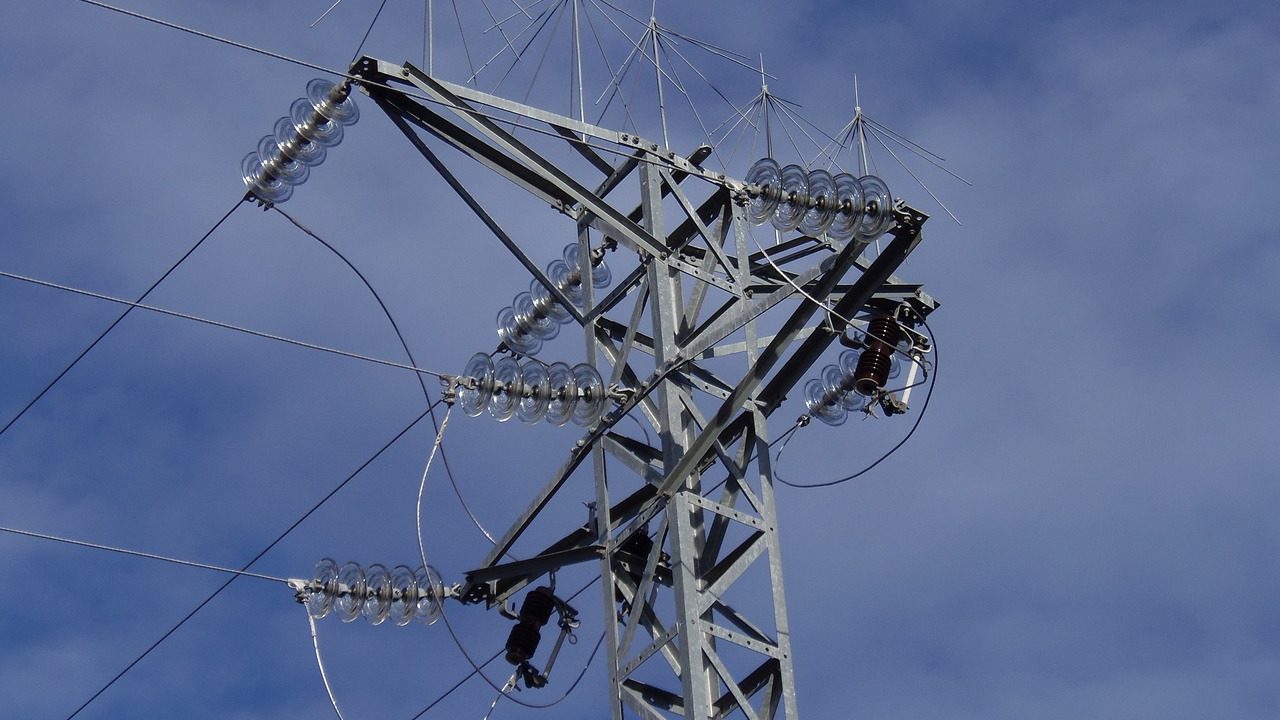
On Tuesday, two separate electrical substations in Germany were struck within hours of each other — one near Bergheim in western Germany hit with what police describe as rockets, a second in Brandenburg targeted through deliberate vandalism. German authorities labeled both incidents sabotage and began escalating their response under the official category of hybrid threats, signaling that Berlin is moving toward treating such attacks as acts of aggression even when direct attribution in real time remains difficult.
The simultaneity is what distinguishes this from opportunistic crime. Substations are spread across wide geographic areas, often in semi-rural locations, and a single successful attack can cascade into outages affecting tens of thousands of people — making them high-value, difficult-to-defend targets. Germany's grid remains under structural stress following the energy restructuring that came after Nord Stream gas flows ended in 2022, compounding the vulnerability.
The Bergheim rocket attack in particular represents an escalation in lethality beyond what European security analysts had previously tracked under the so-called gray zone campaign — a documented strategy of destabilizing NATO member infrastructure below the threshold that would trigger a formal Article 5 collective-defense response. Previous incidents, including Baltic undersea cable disruptions in late 2024 and railway sabotage in northern Germany, involved lower-capability methods.
The formal hybrid-threat framing from Berlin carries implications for NATO's collective response posture. The alliance has wrestled for years with how to handle attacks designed to stay just below Article 5's conventional-warfare threshold. If Germany moves toward formally attributing such strikes to a state actor — as intelligence services are reportedly inclined to do — it could force a renegotiation of what constitutes an 'attack' triggering collective defense obligations. The incident also lands in a week when Russian missile strikes on Ukrainian power infrastructure and U.S.-Iran tensions are simultaneously pressuring European energy markets, making Germany's grid not merely a domestic security story but a node in a continent-wide energy battlefield.
Energy as a Battlefield: Putin Strikes Ukrainian Grid While Zelenskyy Warns Airlines and Reveals Washington Deal
Vladimir Putin ordered fresh strikes on Ukrainian energy sites this week, with the Kremlin labeling President Volodymyr Zelenskyy's government 'terrorists' — a designation analysts described as a legal and diplomatic positioning move designed to delegitimize any Western negotiation framework that includes Kyiv as a party. Military analysts characterized the campaign as entering its fourth sustained wave, a grinding technical arms race fought in transformers and high-voltage lines in which each reconstruction of Ukraine's partially rebuilt grid informs both sides' next moves.
Zelenskyy made two striking disclosures in recent days. First, he confirmed publicly that Ukraine had paused its own strikes on Moscow at the explicit request of the United States — a deliberate surfacing of the coordination, widely interpreted as a signal to Washington that Ukraine's restraint carries political cost and should generate reciprocal concessions in weapons or financing. Second, he warned international airlines and their insurers that Ukrainian drone saturation is making Russian airspace genuinely dangerous, with Russian airports having faced repeated operational disruptions this summer.
The aviation warning carries concrete financial stakes. If Russian airspace becomes effectively uninsurable — as Lloyd's of London market underwriters consider risk — European-to-Asian air traffic would face permanent rerouting adding three to four hours to many routes and billions of dollars annually in additional fuel costs, amounting to a sustained economic sanction Ukraine is imposing through drone strategy rather than diplomacy.
Reporting by The Economist added a dimension to the diplomatic calculus: Putin has privately expressed fear, according to their sources, that a settlement short of securing the full Donbas region would carry severe domestic political consequences — with the word reportedly used being that he fears being 'hanged.' If accurate, the implication is that any diplomatic framework asking Russia to concede territory faces a structural barrier that Western pressure alone may not overcome, leading some analysts to argue the path to settlement runs through making the military status quo unsustainable for Russia rather than offering face-saving exits.
Bessent's Bombshells: Iran 'Weeks from Collapse,' Hormuz Called 'Worthless,' and a Regime Showing Fractures
Treasury Secretary Scott Bessent arrived at the G20 Finance Ministerial in Asheville, North Carolina, with two claims that immediately reverberated through energy markets. He asserted that Iran's economy could collapse 'within weeks' under expanded sanctions, pressing G20 partners to join what Treasury is calling 'Operation Economic Outcast.' He also declared the Strait of Hormuz 'worthless,' claiming pipelines would bypass it within two years.
The Hormuz claim drew immediate scrutiny from the maritime industry. Approximately twenty percent of the world's oil transits the thirty-three-mile strait, with flows from Saudi Arabia, Kuwait, Iraq, the UAE, and Iran itself all passing through. Existing bypass infrastructure — including Saudi Arabia's East-West Pipeline to Yanbu — handles roughly five million barrels per day at full capacity, against a total Hormuz flow of roughly twenty-one million barrels per day. Bessent offered no specifics on which pipelines, routes, construction timelines, or financing mechanisms would close that gap in two years, leading analysts to characterize the statement as either an undisclosed reference to specific projects or a confidence-projection move aimed at Iran's negotiating psychology rather than an accurate logistics description.
The collapse timeline faces similar scrutiny. Iran has operated under sanctions in various configurations since 1979, developing institutional workarounds including Chinese purchases of discounted oil, intermediary networks in the UAE, and cryptocurrency mechanisms. For a weeks-long collapse timeline to hold, Treasury would need to have already identified and blocked those alternative channels — a claim Bessent did not substantiate at Asheville, where Iran's rial is reportedly at historic lows and inflation is running above sixty percent.
The domestic picture inside Iran added texture to the debate. Reports this week indicated various factions within Iran's power structure are openly defying Supreme Leader Khamenei, prompting Trump to declare the regime 'in total disarray.' Analysts cautioned, however, that external military and economic pressure has historically tended to unify Iranian factions around the supreme leader rather than fracture them, and that the Revolutionary Guards' institutional interests remain aligned with regime survival. Whether the current economic deterioration reaches a threshold that breaks that historical pattern remains the central unanswered question.
Eighty Generals Gone: Hegseth's Purge Reshapes the Officer Corps as Army Secretary Departs
Defense Secretary Pete Hegseth pulled additional Army officers from the two-star promotion list this week, extending a removal campaign that has now eliminated more than eighty generals and admirals from the promotion pipeline since the administration took office. Army Secretary Dan Driscoll resigned Monday — the most senior civilian departure from the Pentagon under Hegseth — in a move that signals either a policy dispute or an environment that insiders found untenable, given that political appointees at that level do not typically resign mid-tenure.
The scale is historically significant. The United States military maintains roughly forty active-duty four-star generals and admirals at any given time, and the two-star level is where officers who have already demonstrated exceptional performance are vetted for senior command. Removing more than eighty from the promotion pathway over approximately eighteen months constitutes a structural reshaping of the senior officer corps, not a routine personnel action. The administration's stated rationale has included removing officers associated with DEI programs, those who testified before Congress in ways the administration found unfavorable, and others deemed insufficiently aligned with the commander-in-chief's priorities.
Military historians have raised a longer-term institutional concern: what happens to an organization's learning capacity when the officers with the most accumulated operational experience are removed from the decision-making pipeline during a period when multiple conflicts are active? The generals affected are not junior officers but individuals with twenty-five to thirty years of knowledge in combined arms operations, coalition warfare, and strategic planning.
Former service chiefs from both parties have commented publicly on the developments with concern, though civilian control of the military — including authority over promotions — is foundational to the American constitutional order. The House this week is scheduled to vote on a constitutional amendment that would explicitly cap the Supreme Court at nine justices, a measure that faces long odds but serves both parties' positioning needs: Republicans can put Democrats on record opposing the cap, while Democrats can argue that court-packing anxiety is itself the political point. Neither side expects passage.
Two Democrats Break Ranks in 210-208 Vote as Party Pivots to 'Masculinity Messaging' for Midterms
Jared Golden of Maine and Marie Gluesenkamp Perez of Washington — both Democrats representing districts that Donald Trump carried in 2024 — crossed the aisle on a procedural vote Tuesday, providing the margin that rescued Speaker Mike Johnson's legislative agenda in a 210-208 tally that blindsided Democratic leadership. Procedural votes carry outsized significance in the House because they set the rules governing what reaches the floor and how legislation can be amended; by crossing on procedure, the two members enabled an agenda their districts are more sympathetic to than the broader Democratic base.
Leadership's reaction was described as surprise bordering on fury, though it had limited recourse. Threatening primary challenges from the left against members in Trump-won constituencies is not a credible deterrent — the left is not the winning coalition in those districts, and both Golden and Gluesenkamp Perez are in the caucus precisely because their presence is mathematically necessary. The episode illustrated the structural tension between national party discipline and the electoral survival calculus of members from competitive seats.
That same geographic and demographic tension is driving a separate strategic shift. Democratic operatives, modeling the 2026 midterm environment against 2024 results, have identified a significant erosion of support among non-college-educated men and younger men more broadly. The reported response is a deliberate reframing of policy positions around themes of strength, self-reliance, and what strategists are calling 'working-class masculinity' — a pivot whose practical implementation, whether in candidate imagery, trade rhetoric, or vocational-training policy, remains to be defined.
Strategists acknowledged the execution risk: messaging that lacks connection to genuine policy positions reads as costume rather than conviction, and opposition research is well-positioned to exploit inauthenticity. The Golden and Gluesenkamp Perez episode, paradoxically, offers a template for what cross-aisle credibility can look like in practice — members who vote their district even at the cost of party discipline. Whether the broader party can replicate that without equivalent ideological authenticity remains the open question heading into a midterm cycle still fourteen months away.
Markets Rattled by Bond Sell-Off, Shein's IPO Stumbles, and a Nuclear Energy Contract Falls Through

Asian equity markets fell sharply overnight, and S&P futures were sitting at approximately 7,625 — down roughly eighteen points from the prior session — when data was pulled Wednesday morning. The sell-off reflects a confluence of pressures: rising oil prices driven by U.S.-Iran hostilities, surging bond yields across four continents, and a broad flight from risk assets into cash positions not held at this scale since the rate uncertainty of 2023. Analysts noted that simultaneous yield surges across U.S., European, and emerging-market sovereign debt signal a repricing of the cost of government borrowing globally, a structural development with consequences for every country financing a deficit.
Shein's Hong Kong IPO continued to struggle through its second day of trading, extending a decline that began at launch. The early performance reflected investor skepticism about the regulatory environment for Chinese-adjacent consumer platforms and concerns about the premium at which shares were priced — a difficult combination for one of the most anticipated listings Hong Kong had seen in years.
The cancellation of a Meta-backed nuclear project sent shares of small modular reactor developer Oklo lower after a grid operator pulled the deal. The episode underscored the persistent regulatory and infrastructure barriers facing a category of energy technology that large tech companies had been counting on to satisfy the voracious clean-power demands of artificial intelligence data centers. The antitrust dimension of that demand is drawing regulatory attention: if a single tech company were to lock up power purchase agreements in ways that structurally excluded competitors from data center markets, legal experts note that conduct — rather than mere size — is what draws scrutiny under the Sherman Antitrust Act of 1890, as established in precedents including United States v. Microsoft in 2001.
Against that backdrop, Baidu's chief financial officer offered data suggesting AI monetization is progressing faster than skeptics anticipated. GPU investment payback timelines have shortened from five or six years to two or three years, the company reported, with AI revenue now accounting for more than half of total sales and margins on AI products reportedly approaching search-level profitability — a figure that, in operating terms, implies margins in the forty to fifty percent range. If sustained, that trajectory would substantively challenge the argument that AI's commercialization problem remains unsolved.
Microsoft's 'Doom Loop' Warning Puts AI Content Quality at the Center of the Industry's Next Battle

Mustafa Suleyman, the Microsoft executive overseeing its Copilot products, used the phrase 'doom loop' this week to describe a specific and growing problem: AI systems generate content, that content gets indexed and scraped from the web, and future AI systems are then trained on it — producing a degrading feedback loop of synthetic material that loses its connection to original human observation and knowledge. The phenomenon has a technical name in the research literature: model collapse, referring to documented cases in which models trained on AI-generated data produce outputs with less precision and diversity than those trained on human-generated material.
The significance of Suleyman's public warning lies in its source. He is not an outside critic but the executive responsible for one of the most widely deployed AI assistants in the world. Using that language at the product leadership level signals that model collapse is being treated as a genuine operational risk at Microsoft, not merely an academic concern. It also implies that securing access to high-quality human-generated training data has become a competitive priority — one that favors companies that locked in data agreements early or that hold proprietary sources over those that did not.
The business implications extend across the sector. Microsoft has its OpenAI relationship, and OpenAI holds agreements with a range of publishers. Google has both a vast indexed corpus and ongoing content licensing negotiations. Smaller players and open-source models competing without equivalent agreements face a structural disadvantage that compounds over time if Suleyman's concern proves accurate — a challenge that would also affect user trust if consumers begin perceiving AI-generated content as reliably less accurate and less specific than human-produced alternatives.
The doom loop warning sits in deliberate tension with Baidu's margin improvement data reported in the same week. Both things, analysts noted, can be true simultaneously: AI is generating meaningful commercial revenue at improving margins in the near term, while the long-run quality trajectory of the underlying models faces structural challenges from degrading training data. That tension — between short-term monetization success and long-term model sustainability — is expected to shape AI investment conversations through the next twelve to twenty-four months.
Alpha Centauri by 2029 — and Why the Iran Collapse Narrative Deserves Pressure-Testing

A nonprofit organization unveiled a plan this week to place a spacecraft on course for Alpha Centauri with a launch target of 2029. The star system sits 4.37 light-years from Earth; at the speed of the fastest spacecraft ever launched — the Parker Solar Probe, which reached approximately 430,000 miles per hour at its closest solar approach — a journey to Alpha Centauri would require roughly 6,500 years. The 2029 date almost certainly refers to launch rather than arrival: proposals using laser sail technology, such as those associated with the Breakthrough Starshot initiative, envision a gram-scale probe accelerated to approximately twenty percent of the speed of light, which would still require around twenty years of transit time and gigawatts of laser power concentrated on a precise point — engineering challenges that remain substantial.
Even so, the ambition carries practical value. Interstellar probe projects have historically generated spinoff advances in materials science, laser engineering, and miniaturized sensors well before achieving their primary scientific objectives, and the proposal has drawn engagement from serious physicists working in the field.
The second half of this segment addresses a different kind of precision: the dominant narrative in policy circles this week holds that Iran's regime is on the verge of economic collapse, with Treasury Secretary Bessent citing a weeks-long timeline and President Trump declaring 'total disarray.' A rigorous examination of the counterarguments is warranted. Iran has maintained one of the world's most sophisticated sanctions-evasion networks since 1979 — ghost tanker fleets, oil-for-goods swap agreements with China, financial intermediaries in Oman and Turkey — and for a weeks-to-collapse timeline to hold, all of those channels would need to have been simultaneously disrupted, a claim Bessent offered without specific supporting evidence at Asheville.
On the factionalism question, the history of the Islamic Republic offers a cautionary counterpoint: external pressure has repeatedly unified Iranian factions around regime survival rather than fracturing them, as seen in the suppression of reform movements in 1999, 2009, and 2019. The Revolutionary Guards' institutional interests remain aligned with the regime, and civilian factional defiance of Khamenei does not automatically translate into political change if the military-security apparatus stays cohesive. The most concrete leading indicator to watch, analysts suggested, is China's monthly crude import data from Iranian sources: if those figures remain above one million barrels per day in September and October, the sanctions bypass is holding and the collapse timeline is not tracking. Conversely, a major Revolutionary Guard show-of-force event — a military exercise, domestic crackdown, or demonstrable missile strike — would signal that the disarray narrative was overstated.