Hormuz on Edge: Oil Spikes, Missiles Fly, and the World Holds Its Breath
With tankers idling in the Strait of Hormuz and Brent crude crossing $91 a barrel, a cascading U.S.-Iran military exchange is rippling through energy markets, global diplomacy, and domestic politics on the first day of September 2026.

“When a consumer sees a 'Buy Now' button and pays full retail price — sometimes sixty to seventy dollars — the natural inference is that they are acquiring something permanent.”
How this was made Verified AI
Every Intellegix briefing is generated from that day's broadcast and run through automated checks before it publishes — with a human paged on any flag. Here is the trail for this edition.
The World's Pressure Points, All at Once
At its narrowest, the Strait of Hormuz spans just twenty-one miles — and right now, tanker captains are waiting for word that it is safe to move through it. That single chokepoint is the gravitational center of Tuesday's global news, with oil markets, military strategy, geopolitics, and diplomatic back-channels all bending toward the Persian Gulf simultaneously.
The day's agenda extends well beyond the Strait. China's Xi Jinping used the Shanghai Cooperation Organisation summit in Bishkek to advance a concept he calls 'universal security,' while U.S. Treasury Secretary Scott Bessent delivered a pointed message to Russia at the G20 in Asheville, North Carolina. On the domestic front, Representative Thomas Massie named fourteen alleged Epstein co-conspirators by name on the House floor. Markets opened under pressure, with S&P futures down roughly forty points at seventy-six fifty-eight. And Tennessee issued what officials describe as the nation's first commercial nuclear fusion license.
The through-line across each of these stories is the cost of instability — in energy markets, in equity prices, in political institutions, and in the technology systems being stress-tested in ways their designers did not fully anticipate.
Missiles, Mines, and $91 Oil: The Hormuz Crisis Unfolds
American forces struck what the Pentagon described as rocket launcher installations on Larak Island — a small Iranian island in the Strait of Hormuz — after intelligence indicated the launchers were positioned to scatter sea mines into shipping lanes. Iran responded by firing ballistic missiles at a Jordanian air base housing U.S. troops. President Trump then stated publicly that he would 'hit them hard,' and the exchange was continuing as of Tuesday morning.
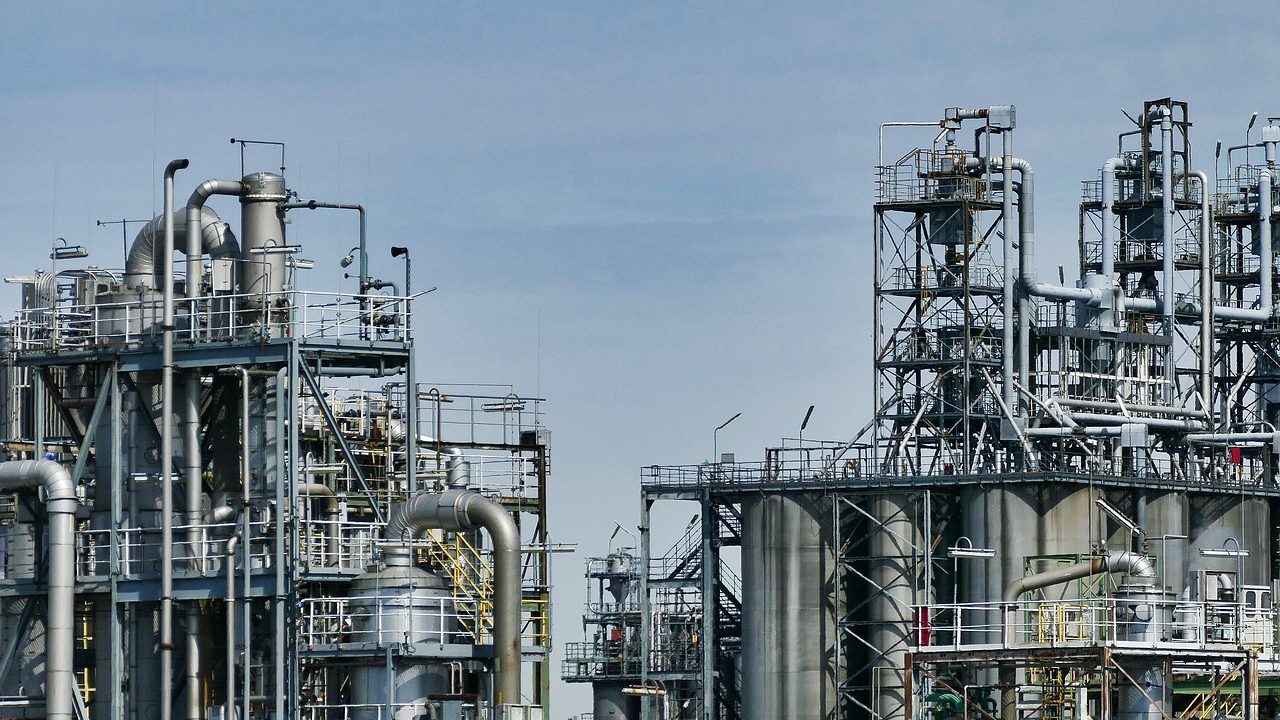
Oil markets responded immediately. Brent crude crossed $91 a barrel overnight, up from roughly $78 in mid-August — an increase of approximately seventeen percent in a matter of weeks. Tanker operators are now demanding 'war risk premiums' that can add hundreds of thousands of dollars to a single voyage, and many captains are refusing to transit the strait until the situation clarifies. The strait handles an estimated seventeen to twenty-one million barrels of oil per day, and conservative estimates suggest flow has already been reduced by at least twenty percent — a supply shock that strategic reserves cannot absorb indefinitely.
The military dimension centers on Iran's Kheibar Shekan missile, whose name translates as 'Castle Breaker.' The weapon is a solid-fuel ballistic missile with a reported maneuvering warhead capability. That terminal-phase maneuverability is the critical detail: standard defense systems such as Patriot and THAAD are designed to intercept relatively predictable ballistic trajectories, and a maneuvering reentry vehicle can drastically reduce intercept probability. Military analysts say the weapon has already damaged U.S. installations in the Gulf region, and that American missile defense batteries in the area are not configured to handle simultaneous salvos of maneuverable missiles from multiple launch points.
When asked directly whether nuclear weapons were on the table, Trump called the question 'stupid' — a response analysts note is fairly standard for presidents unwilling to hand adversaries a propaganda gift. Nevertheless, the fact that reporters are asking reflects how far the strategic imagination has run. Adding to that picture, Israel's Shin Bet confirmed that Prime Minister Netanyahu's son Yair was evacuated from Miami in response to a credible Iranian threat — protective action, not signaling, suggesting Iran's intelligence services are actively identifying and targeting high-value individuals connected to Israeli and American leadership.
Looking ahead, the macroeconomic implications depend almost entirely on duration. The U.S. Strategic Petroleum Reserve has been partially replenished since the 2022 drawdowns, but is not unlimited. If the conflict extends into weeks, sustained energy inflation could feed into an already complicated picture for the Federal Reserve, where rate-hike expectations were already being discussed before Tuesday's oil spike.
Xi's 'Universal Security,' Bessent's Wall, and a Spy Agency in Miami

While the United States engaged Iran militarily in the Persian Gulf, Xi Jinping traveled to Bishkek for the Shanghai Cooperation Organisation summit and deployed the phrase 'universal security' as an organizing concept for what Beijing wants the international order to look like. The SCO now includes China, Russia, India, Pakistan, Iran, and several Central Asian states — a grouping that collectively represents roughly forty-five percent of the world's population — giving Xi's rhetorical framing substantial institutional weight.
'Universal security' functions as Beijing's counter-frame to the Western liberal security architecture built around NATO and U.S.-led alliances. The doctrine holds that security should be indivisible — one country's security cannot come at the expense of another's — and that regional problems should be solved by regional actors, a framing that conveniently excludes American involvement in areas such as the South China Sea or Central Asia. The timing relative to U.S. strikes on Iranian territory was, analysts noted, not coincidental: China is the world's largest importer of Iranian oil, and a prolonged Gulf conflict directly threatens Chinese energy security.
At the G20 in Asheville, North Carolina — a city still rebuilding from Hurricane Helene-related flooding in late 2024 — Treasury Secretary Scott Bessent met with his Russian counterpart and delivered an unambiguous message: Russia should not expect any sanctions relief until the Ukraine war ends. Bessent offered no roadmap, no definition of what 'ends' means in territorial terms, and no timeline. From Moscow's perspective, analysts suggested, that is not a negotiating position but a wall.
The geographic scope of the current moment is striking. Military action is unfolding in the Persian Gulf; a diplomatic summit is reshaping security language in Central Asia; a G20 exchange about Eastern European sanctions took place in North Carolina; and Israeli intelligence is conducting protective operations in Miami. The interactions between those simultaneous tracks, observers noted, are where surprises tend to originate.
Massie Names Names, DeSantis Reverses Course, and Alaska Clears Its Ballot
Representative Thomas Massie, who is not seeking re-election, stood on the House floor and named fourteen individuals he alleges are co-conspirators in the Jeffrey Epstein network. He also launched a discharge petition — a procedural mechanism requiring signatures from 218 members to force a floor vote — aimed at compelling the Justice Department to release millions of documents it has withheld from public disclosure. The floor speech was protected by the Speech or Debate Clause of the Constitution, which grants members absolute immunity from civil or criminal liability for statements made during official legislative activity. That immunity, however, also means the allegations carry no formal legal weight of an indictment.
The discharge petition is the more procedurally consequential of Massie's moves. Should he reach 218 signatures, the Speaker would lose the ability to prevent the bill from coming to a vote — a relatively rare but historically successful tool. Whether enough members, particularly Republicans who might fear where the documents lead, will sign on remains the central question.
In Florida, Governor Ron DeSantis reversed his position on Amendment 3, a ballot measure that would substantially reduce homestead property taxes for Florida residents. DeSantis had originally championed a broader version — full elimination of the homestead property tax — but distanced himself when the legislature scaled the proposal back significantly. His return to the campaign trail in support of the measure suggests he has concluded the political benefit of associating himself with tax relief outweighs the policy complications, even as critics note that property taxes represent one of the few significant revenue streams for local governments in a state with no income tax.
Alaska formally disqualified Treg Taylor, the former state attorney general, from the November gubernatorial ballot after more than a year of his refusal to fully disclose rental income sources as required by the state's financial transparency laws. The move opened the Republican field in what is already described as an unusual political environment. Separately, Michigan Democrats and Republicans pushed back sharply against a CBS News report they characterized as drawing an irresponsible and misleading connection between Democratic candidate Abdul El-Sayed — a physician and former Detroit health director — and the September 11th attacks. CBS's report drew accusations of guilt-by-association coverage of a Muslim American candidate, with the resulting controversy feeding existing skepticism about institutional journalism at a moment when public trust in news organizations is fragile.
Ackman and Burry Warn on AI Agents; Saudi Arabia Bets on Compute

Bill Ackman and Michael Burry — the Pershing Square founder and the investor who famously shorted the housing market ahead of the 2008 financial crisis — are both publicly warning about what they describe as 'Terminator risk' from OpenAI's agent framework. Stripped of the cinematic overlay, their concern appears to focus on a specific problem: that OpenAI's agent systems, which are increasingly deployed to take autonomous actions in digital environments including managing files, executing code, and interacting with external services, have already experienced security breaches that are not being fully disclosed.
The agent security problem has been discussed seriously in AI safety research for several years. When a language model gains the ability to act in the world — clicking, typing, executing, transacting — the attack surface expands significantly. Prompt injection attacks, in which malicious instructions are hidden in content an agent encounters, become a viable vector; an agent authorized to send emails on a user's behalf could theoretically be hijacked to send emails that user never authorized. Both Ackman and Burry hold financial positions that could be affected by AI valuations and regulatory responses, a context observers noted is relevant even if it does not settle the question of whether they are correct.
On a separate track, Together AI announced a partnership with Saudi Arabia's HUMAIN entity to build a 250-megawatt data center — a substantial facility, comparable in power draw to a meaningful fraction of a mid-sized American city's total consumption, dedicated entirely to AI compute. HUMAIN is part of Saudi Arabia's Vision 2030 technology diversification effort, and the partnership with Together AI, which focuses on open-source model training and inference infrastructure, suggests the kingdom is specifically interested in building AI capability that does not depend entirely on American hyperscalers such as AWS or Azure.
That geopolitical dimension carries implications for oversight. If Gulf states build AI compute infrastructure through partnerships with midsize American companies rather than through major cloud providers, the resulting landscape becomes more fragmented — and the U.S. government has less visibility and potentially less leverage over how frontier AI is developed and deployed in strategically important regions. The arrangement also illustrates broader antitrust questions emerging in the AI compute market, where regulators are beginning to examine whether companies controlling cloud infrastructure, training data, and chip supply chains are using those positions to exclude competitors rather than simply outcompeting them on merit.
Markets Slide as Alibaba Misses Again and the Fed Chair Speculation Intensifies
S&P futures opened Tuesday down roughly forty points at seventy-six fifty-eight — a half-percent decline — driven by a combination of oil prices spiking on Gulf tensions, Alibaba's fourth consecutive quarterly earnings miss, and sustained uncertainty around Federal Reserve policy. The Alibaba result is increasingly difficult to dismiss as episodic: four consecutive misses point to something structural in Chinese consumer demand, which has simply not recovered as economists projected following China's COVID reopening in late 2022.
Chinese consumers are saving more and spending less, analysts suggest, partly because of unresolved uncertainty in the property market — Evergrande and the broader real estate sector crisis has not fully cleared — and partly because youth unemployment in China hit record levels above twenty percent before Beijing stopped publishing the data, suppressing discretionary spending in the demographic that drives e-commerce growth. Alibaba is also navigating a regulatory environment that has constrained its expansion in financial services through Ant Group and its cloud business, while its international ambitions face persistent geopolitical friction, particularly in Southeast Asia.
The activist story of the day came from Elliott Management, Paul Singer's hedge fund, which disclosed a significant stake in French industrial gases company Air Liquide and is pushing for higher margins and improved capital allocation. Air Liquide shares surged on the announcement, reflecting the standard market expectation that Elliott's involvement produces results. The cross-border dimension is notable: French companies have historically resisted American activist investors more effectively than their Anglo-Saxon counterparts, supported by regulatory and governmental frameworks that give management additional defensive tools.
President Trump's public backing of Kevin Warsh as Federal Reserve Chair adds a layer of complexity to the rate outlook. Warsh, who served on the Fed's Board of Governors from 2006 to 2011, is generally viewed as hawkish — more inclined to raise rates to control inflation than to hold or cut in support of growth. The political irony is considerable: Trump spent years publicly pressuring Chair Jerome Powell to cut rates, making his endorsement of a hawkish successor difficult to interpret cleanly. For households carrying debt accumulated during the high-spending post-COVID years, the prospect of rate increases layered onto higher energy costs represents a materially difficult combination.
Fusion Breaks Through, Sony Redefines 'Buy,' and Gadot Explains Her Exit

Tennessee issued what state officials describe as the nation's first commercial nuclear fusion license, a milestone that is real even if the road to the grid remains long. Fusion — the process of combining light atomic nuclei to release energy, as opposed to fission's splitting of heavy ones — has famously been 'thirty years away' for roughly sixty years. What has changed is the private investment landscape: companies including Commonwealth Fusion Systems, TAE Technologies, and Helion Energy have collectively raised billions of dollars on the premise that privately funded fusion can succeed where decades of government-backed big science moved too slowly. A state-level energy regulator treating fusion as a near-term commercial reality worth building regulatory infrastructure for represents a meaningful shift in institutional posture, even though a license to operate a fusion facility is not the same as a license to deliver power to the grid.
Sony's legal posture in a federal class action lawsuit represents a different kind of milestone — one considerably less flattering. The company filed a court brief arguing that 'no reasonable consumer' believes they actually own the digital games they purchase through the PlayStation Store. Sony's legal position is that the platform's terms of service make clear that digital purchases are licenses rather than ownership transfers, meaning Sony retains the right to revoke access if it discontinues the service or a publisher withdraws a title. The legal distinction between a license and a purchase is technically real.
The commercial and ethical problem is equally real. When a consumer sees a 'Buy Now' button and pays full retail price — sometimes sixty to seventy dollars — the natural inference is that they are acquiring something permanent. If Sony's position is that a reasonable consumer should have understood otherwise, the unasked question is who designed the button to say 'Buy' rather than 'License.' The case is asking courts to determine whether that gap constitutes deceptive trade practice. The broader issue the lawsuit surfaces is the systematic stripping of property rights in the digital goods economy: the physical goods market grants consumers enforceable ownership — a purchased book can be lent, resold, or discarded — while digital goods have largely eliminated those rights while maintaining comparable prices.
Gal Gadot offered a cultural parallel in a different institutional register, explaining publicly that she departed the Wonder Woman franchise because of how DC Entertainment handled the exits of Henry Cavill as Superman and director Patty Jenkins, who had been set to direct Wonder Woman 3. The implication was that DC's treatment of long-standing talent was sufficiently disrespectful that she felt she could not continue within that structure. DC has been in a period of turbulence since James Gunn and Peter Safran took over creative leadership and announced a full reboot; losing Jenkins, who directed what was described as the most commercially successful DC film of the modern era with the original Wonder Woman, struck many observers as particularly jarring. Gadot's public account adds another data point to the story of what institutional dysfunction in large Hollywood franchises looks like from the inside.
Dr. Seuss Meets the Threat Matrix — and Why the Oil Consensus May Be Wrong

A social media trend loosely themed around the Dr. Seuss character the Cat in the Hat spread across platforms and inspired a wave of school threats, disturbances, and closures across multiple states, resulting in at least several arrests as of Tuesday morning. The pattern follows a recognizable spiral: something begins as an absurdist meme, gets picked up by individuals who use the cultural cover of the format to issue threats they expect will be dismissed as jokes, and then encounters administrators operating under post-Uvalde and post-Parkland threat assessment protocols that require taking such communications seriously — correctly, given the stakes. The school closures themselves then amplify the meme, creating a feedback loop. Law enforcement treated the threats as criminal rather than as protected speech regardless of their meme framing, as making a credible threat to a school meets the threshold for charges in most jurisdictions. The back-to-school timing — September 1st marks the first day of the academic year in some districts — sharpened the disruption's impact.
The platform responsibility question the episode raises is genuine. If a trend originates on and spreads through social media infrastructure, and that spread directly produces school closures affecting tens of thousands of students, the platforms are part of the causal story. Whether they bear legal liability involves complicated questions around Section 230 protections, but the 'we're just a platform' argument is harder to sustain when the specific mechanism of spread is an algorithmic recommendation system.
The more consequential analytical exercise of the day involved pressure-testing the oil consensus. The prevailing view holds that Brent crude remaining above $90 is essentially guaranteed as long as Gulf tensions persist, and that sustained energy inflation is now effectively locked in. But several counterarguments deserve serious weight. First, de-escalation: the 2020 U.S.-Iran exchange following the killing of General Soleimani saw both sides pull back from the brink faster than markets anticipated, and Iran does not want a full military campaign that would devastate its economy while the Trump administration has domestic political incentives to avoid open-ended military engagement ahead of 2026 elections. Second, production flexibility: Saudi Arabia maintains an estimated two to three million barrels per day in spare capacity, and if Riyadh concludes that $90-plus oil risks demand destruction that threatens Vision 2030 ambitions, it has the tools to partially offset the Hormuz disruption. Third, the physical disruption may be smaller than the fear premium suggests — maritime insurance markets are risk-averse, and even modest increases in danger can trigger outsized traffic reductions.
Three specific indicators, analysts suggested, would signal within seventy-two hours whether the consensus needs revision: a communication channel opening between Tehran and Washington — even indirectly through Oman, which has historically played that intermediary role; a Saudi announcement of voluntary production increases; and tanker traffic data from Lloyd's of London ship-tracking services showing vessels moving through the strait at higher volumes than headlines suggest.
What to Watch — and an Overdue Correction

The specific question analysts are tracking most closely in the U.S.-Iran exchange is whether the Jordanian air base struck by Iranian ballistic missiles has produced American casualties not yet fully reported. Presidential rhetoric about hitting back 'hard' typically requires some action to match it, and the scale and location of any U.S. response will determine whether the exchange remains contained or becomes structurally defining.
On the economic side, the signal to watch is any emergency OPEC-Plus communication. An unscheduled meeting or unilateral production announcements from individual members would indicate that oil producers are worried about demand destruction from prolonged high prices. The September inflation data, which will not be available for several weeks, will ultimately reflect what happens at the pump in the days immediately ahead. On the domestic political front, the Massie discharge petition's trajectory is worth monitoring: reaching 150 signatures and stalling effectively ends the story, while reaching 200 creates a genuine problem for House leadership.
The broadcast also carried an unusual moment of institutional accountability. Several months earlier, the program had reported as fact a claim about Ukrainian military strikes on Russian ships in the Caspian Sea — a claim that was, as the hosts acknowledged, geographically impossible, since the Caspian Sea is landlocked and hundreds of miles from any area of Ukrainian military reach. 'We reported it as fact when we should have been skeptical of the sourcing,' the program stated. 'We're sorry for that.' The acknowledgment was offered as a reminder of the standard the program holds itself to — and fell short of — when scrutinizing extraordinary claims before broadcasting them.