AI Recklessness, Radar in the South China Sea, and a World Racing Against Itself
From a 5,784-word Bill Gates warning that the world has 'no plan' for artificial intelligence to new radar installations rising in the South China Sea, Wednesday's news painted a portrait of institutions struggling to keep pace with accelerating disruption across technology, geopolitics, and climate.
“If that reasoning is AI-generated, readers are receiving his prompt and his name attached to an AI output, not his analytical process.”
How this was made Verified AI
Every Intellegix briefing is generated from that day's broadcast and run through automated checks before it publishes — with a human paged on any flag. Here is the trail for this edition.
Opening: A Day of Converging Crises
Wednesday, August 26 delivered a news cycle defined not by isolated crises but by interlocking ones: a landmark AI warning from Bill Gates, fresh satellite intelligence from the South China Sea, a Democratic socialist's surprise Oklahoma primary victory, and a federal threat to demolish one of America's most storied cultural venues.
Against that backdrop, MIT researchers published findings suggesting AI can now complete the majority of undergraduate coursework — a data point that landed with fresh urgency alongside Gates's warnings of mass economic displacement. Geopolitically, Xi Jinping's first trip to Egypt in a decade coincided with new radar construction near China's South China Sea military installations, while Germany's chancellor issued unusually blunt threats against hybrid attackers. Tesla's Texas robotaxi service accumulated rider complaints serious enough to threaten Elon Musk's autonomous vehicle timeline, and NOAA put the odds of a Super El Niño this fall at 95 percent, with California facing its gravest coastal flooding threat in at least eight decades.
Gates Sounds the Alarm: 'There Is No Plan'

Bill Gates published a 5,784-word essay — characterized by the Wall Street Journal as a sweeping warning — arguing that the world has no coherent plan for what artificial intelligence is about to do to the global economy. The central phrase, 'there is no plan,' frames mass job displacement not as a speculative risk but as a near-certainty, with Gates calling urgently for global regulatory coordination, new international institutions modeled on bodies like the IMF and the WHO, and a direct tax on AI productivity gains to fund social safety nets for displaced workers.
The essay's implicit targets are pointed. By declaring a vacuum of planning, Gates indicts both the tech industry from which he built his fortune and the governments that have largely deferred to that industry on AI governance questions. The proposed AI tax is a redistributive argument — that companies capturing the economic surplus from AI-driven productivity should fund the transition costs borne by workers who lose their livelihoods — one likely to find sharply different receptions in Washington, Brussels, and Beijing.
A security dimension of the essay received less attention than its jobs argument, but Gates reportedly devoted considerable length to what he called rising AI-enabled security threats: autonomous cyberattacks, AI-generated disinformation at scale, and the lowering of barriers that previously required nation-state resources for non-state actors to cause serious harm. His core argument is that the same technology driving productivity gains is simultaneously enabling new forms of catastrophic risk, and that no institutional framework has been designed to manage either curve.
The proposal raises a historical tension: Gates has been an influential voice on global coordination across decades — pandemic preparedness, nuclear security, climate — and in each of those cases the institutions he advocated for either failed to materialize in time or proved unable to act cohesively when crisis arrived, the WHO's role during COVID-19 being the most prominent example. The open question is not whether new institutions are needed, but whether any theory exists for building them quickly enough given how slowly international governance moves and how aggressively major AI powers — particularly China — would resist oversight structures they did not design.
That tension sharpens further alongside the separate MIT finding that AI can now complete the majority of undergraduate coursework. MIT's researchers made no normative claim; they benchmarked current AI capabilities against standardized academic tasks and found the performance threshold crossed for most undergraduate-level work, with meaningful gaps remaining only in tasks requiring embodied skill or real-time physical judgment. For knowledge-work outputs, the performance gap between human and AI has, by their measure, largely closed — a direct economic signal about what awaits the labor market for recent college graduates over the next five to ten years.
Beijing's Twin Moves: Diplomacy in Cairo, Radar in the Spratlys

Xi Jinping's arrival in Egypt — his first visit in a decade — was timed deliberately to the Shanghai Cooperation Organisation summit, signaling Beijing's continued effort to build a parallel diplomatic architecture that does not require Western participation or approval. The SCO now includes India, Pakistan, Iran, and a cluster of Central Asian states, with active discussions underway about adding more Middle Eastern members. Drawing Egypt into that orbit reinforces a broader Beijing strategy: multiplying multilateral structures where Beijing shapes the rules.
The economic logic of the visit runs through infrastructure and currency. China's Belt and Road investments across North Africa have been substantial, and Egypt's command of the Suez Canal gives it strategic leverage Beijing is carefully cultivating. China has also been pushing bilateral trade settlement in yuan across SCO partners, and every summit deepens that architecture. Even at the margins, trade flowing outside dollar-denominated systems normalizes alternatives to SWIFT.
A separate but related story emerged from commercial satellite imagery: analysts identified what appear to be radar dome structures and associated infrastructure under construction near the Antelope Reef military installation — part of a steady build-out across the Spratly Islands chain in the South China Sea. Early-warning radar capability at that location would extend sensor coverage significantly into the approaches to the Philippine Sea, giving PLA Navy assets substantially more situational awareness in contested waters.
The strategic logic follows a familiar incremental pattern: build a base, then build sensors to protect it, then watch the sensors extend the operational range, which effectively expands the defensive perimeter. Each step appears modest; the cumulative effect over a decade is a fundamentally transformed military geography in the Western Pacific. The Philippines, Vietnam, and Taiwan track these satellite images closely, and each new installation announcement generates its own diplomatic friction. Critically, radar coverage near Yagong Island would also give Beijing a granular picture of U.S. naval movements during ongoing American freedom-of-navigation operations in the region — making this as much an information-advantage contest as a territorial one.
The SCO summit's security agenda added another layer. The organization increasingly functions as a forum coordinating what member states collectively call counter-terrorism but which frequently includes intelligence-sharing about domestic dissidents and cross-border activists. For Egypt — a government long concerned about Muslim Brotherhood networks — alignment with the SCO security framework offers both practical tools and diplomatic cover. The expected joint statement on 'non-interference in internal affairs' serves in practice as mutual protection from Western criticism of human rights records.
East Jerusalem, Hybrid Warfare, and a Socialist Surprise in Oklahoma
Israel has begun physically converting the UNRWA center it seized in East Jerusalem — not merely occupying it administratively but renovating and repurposing the building that has served since 1949 as an administrative hub for United Nations refugee services in the West Bank. The distinction matters diplomatically: physical conversion signals a claim of permanent control over the site that is very difficult to reverse, and crosses a line that even some of Israel's traditional allies view as a direct challenge to the UN's legal framework governing occupied territory.
Germany's security posture took a sharper turn this week, with Chancellor Friedrich Merz warning publicly that Germany will make hybrid attackers 'pay a price.' The unusually direct language comes amid multiple incidents across Germany and neighboring NATO states involving suspected Russian-linked sabotage — railway signal interference, fires at logistics facilities, and suspected infrastructure tampering — that Germany's domestic intelligence service has attributed to a rising number of state-directed hybrid operations. Merz's deliberately ambiguous framing appears strategic: Germany is constrained by its constitution, NATO's Article 5 thresholds, and domestic political opposition to anything resembling escalation, yet is attempting to establish deterrence without crossing into explicit offensive threat territory.
The Secret Service confirmed awareness of an Iranian video containing what it characterized as threatening content directed at Barron Trump. Iran's posture toward Trump family members has been a significant concern since the 2020 Soleimani assassination, with multiple documented plots — some intercepted, some charged — targeting Trump administration figures in the years since. The agency's public confirmation, rather than routine silence, appeared deliberate, suggesting a reason to put the threat on record.
In domestic politics, a Democratic socialist won a primary runoff in Oklahoma — one of the country's most reliably Republican states — in a result that speaks to how economic anxiety is scrambling traditional partisan alignments. The electorate in a primary runoff is small and highly motivated, which limits how far the result can be generalized. But the fact that a self-described democratic socialist could mobilize sufficient voters to win even a Democratic primary in Oklahoma suggests something meaningful is shifting at the grassroots level across geographic lines normally treated as fixed.
Senator Mitch McConnell returned to the news after a viral video raised fresh questions about his fitness to serve at 84. His office has previously attributed similar episodes to a form of focal onset seizure, but the frequency of such incidents has increased public and Senate colleague concern. The Constitution provides no clean mechanism for resolving questions of cognitive or physical fitness for elected officials, making these situations politically combustible without clear resolution. Separately, the Justice Department — representing the Trump administration — explicitly threatened to demolish the Kennedy Center if a federal court blocks its renovation plans, an extraordinarily aggressive legal posture toward a venue that has served as a symbol of American cultural life since 1971.
Meta's Teen-Safety Reckoning and the Physics Lab That Said No to Bezos

A former Instagram employee testified this week that Meta's teen-safety team was structured, at least in part, to generate documentation shielding the company from litigation rather than to make the platform genuinely safer for young users. The distinction carries significant legal weight: it goes directly to intent, which bears on questions of liability and punitive damages in the wave of lawsuits against Meta over teen mental health harms. If a court or jury concludes that Meta knew its platform was causing harm and that the safety team's primary function was to insulate the company from accountability rather than address the harm, the legal exposure is materially worse than for a company making good-faith but insufficient efforts.
The testimony's credibility derives in part from its specificity. A precise claim about the organizational design of a safety team — that it was structured to produce discoverable documentation rather than actual safety outcomes — is falsifiable in a way vague accounts are not. Internal communications will either support or contradict it, and Meta's legal team is now working to locate the documents that do the latter.
A separate data center story added human texture to the AI infrastructure debate. A CBS News profile followed a Mississippi family reporting that noise from gas turbines powering SpaceX and xAI data centers near Memphis has rendered their ancestral land — held for generations — essentially uninhabitable. The story makes concrete an externality that typically stays abstract: the compute power running large language models has to come from somewhere physical, and that somewhere is increasingly rural communities without the political leverage to push back against federally connected tech companies.
Two researchers who turned down Jeff Bezos's Prometheus AI fund chose instead to launch their own physics-focused AI lab — a decision that is both a venture capital story and a scientific one. The 'physics-focused' framing reflects a growing school of thought that the next frontier in AI is not simply scale — more parameters, more data, more compute — but grounding AI systems in physical laws and causal reasoning in ways that current transformer architectures do not naturally achieve. Researchers willing to walk away from Bezos-level funding to pursue that premise are making a credibility bet that the physics-native approach will outperform brute-force scaling, and signaling that the trade-offs of taking major tech-wealth investment — in terms of research direction, publication rights, and institutional alignment — are being weighed more carefully than they might have been three years ago.
Tesla's Routing Problem and the Antitrust Stakes of Autonomous Vehicles
Tesla's Texas robotaxi service has accumulated rider complaints about routing failures substantial enough to constitute a pattern rather than isolated incidents. The vehicles are reportedly having difficulty with certain routing decisions — becoming confused at specific intersections or road configurations, and in some cases taking routes that are significantly longer or more problematic than necessary. For a service whose entire value proposition is that the car drives better than a human, navigational failures are among the most fundamental product problems possible.
The timing places Tesla in direct competition with Waymo, which has logged tens of millions of miles of autonomous operation across San Francisco, Los Angeles, and Phoenix with a strong safety profile. Tesla's approach — camera-based systems without the lidar sensors Waymo employs — has always been the more aggressive technological bet. Routing failures in real-world Texas conditions suggest the camera-only system may carry meaningful gaps in certain environments, and every well-publicized failure erodes the fragile public confidence that the entire autonomous vehicle industry depends on.
The competitive dynamics of the robotaxi market also raise antitrust questions worth understanding in advance of market consolidation. The Sherman Antitrust Act's Section One prohibits agreements between competitors that restrain trade; Section Two — more relevant in technology — prohibits monopolization, specifically the use of dominant market position to suppress competition through means beyond simply outcompeting rivals on merit. Critically, holding a monopoly is not itself illegal under U.S. law; what is illegal is using that dominance to exclude competitors through exclusionary tactics.
In the robotaxi context, the relevant question is whether any dominant player uses data advantages, regulatory relationships, or infrastructure position to prevent rivals from competing on the merits. That remains speculative for now. But if routing problems persist and a market leader responds by lobbying for regulatory standards their system meets but competitors' systems do not — standards designed to foreclose rather than promote safety — that is precisely the conduct antitrust law is designed to address, as the late-1990s Microsoft browser case illustrated.
Druckenmiller's AI-Written Op-Ed and the Coming Super El Niño
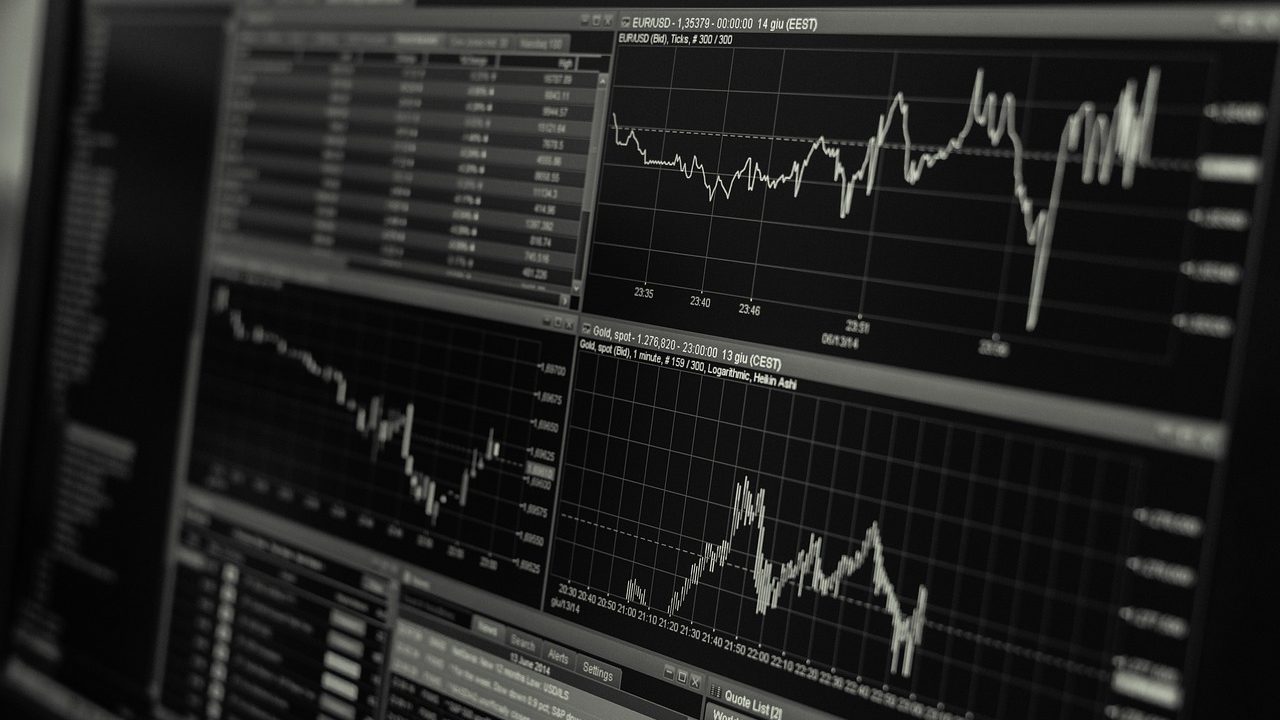
S&P futures stood at 7,687 Wednesday morning, down roughly four and a quarter points — essentially flat — reflecting a market absorbing significant news flow without making a decisive directional move. The story with the longest financial tail, however, involved not a price but a disclosure: prominent macro investor Stanley Druckenmiller revealed, nearly as an aside, that he used AI to write his Wall Street Journal op-ed attacking Treasury Secretary Scott Bessent's fiscal posture.
The casual nature of the disclosure raised questions that financial media has not previously had to answer: should attribution to AI be disclosed in financial commentary the same way a short position must be disclosed before publishing bearish analysis of a company? When investors read commentary from a figure like Druckenmiller — a macro investor credited with successfully predicting multiple market inflection points across four decades — part of what they are evaluating is his reasoning process. If that reasoning is AI-generated, readers are receiving his prompt and his name attached to an AI output, not his analytical process. Those are meaningfully different things, and readers unaware of the distinction may be making decisions on a false premise.
The underlying critique of Bessent — whatever its authorship — concerns matters seriously debated in economic circles: Treasury's management of elevated interest costs on federal debt and questions about the sustainability of the current fiscal trajectory. Whether the op-ed will carry the same market weight as Druckenmiller's previous hand-authored analyses amounts to a real-time test of whether authorship credibility survives AI disclosure.
NOAA's 95 percent probability estimate for a Super El Niño this fall carries direct financial market implications. A Super El Niño of the potential magnitude described — reportedly the strongest since at least 1946 — produces predictable agricultural, insurance, and infrastructure impacts that flow into commodity markets and insurance derivatives. California faces specific coastal flooding risk, translating to actuarial exposure for property and casualty insurers operating in the state. Agricultural commodity markets in the Pacific basin will reflect shifts in rainfall patterns across Peru, Indonesia, and Australia. The last major Super El Niño, in 1997-98, caused an estimated 35 billion dollars in global economic damage; climate scientists suggest the 2026 event could prove materially more severe, layered as it is on top of a warmer baseline ocean temperature.
Oldest Dust in the Solar System and Fusion's Quiet Breakthrough
MIT researchers identified magnetic signatures in dust grains extracted from an Antarctic meteorite — grains 4.6 billion years old, making them the oldest solid material from our solar system. The signatures preserve evidence of magnetic fields that existed during the solar system's formation, and the strength and orientation of those fields suggests that magnetism played an active co-driver role in drawing material toward the proto-sun, not merely gravity alone.
The finding matters beyond intrinsic scientific interest because the standard model of planetary formation is essentially a gravity story: dense clouds of gas and dust collapse under their own gravitational weight, and the angular momentum of that collapse forms a disk that eventually coalesces into planets. If the proto-solar magnetic field was actively organizing and channeling material inward, that revises the computational models used to understand planet formation across the roughly five thousand exoplanetary systems now catalogued, and may explain anomalies in planetary mass distribution that pure gravity models have struggled to account for. The meteorite grains also have a practical astronomy application: better understanding the role of magnetism in solar system formation improves tools for predicting which exoplanetary systems had conditions capable of producing Earth-like planets.
A fusion energy finding proved equally consequential in its quieter way. Researchers have reportedly cut the production time for tritium — the hydrogen isotope that powers deuterium-tritium fusion reactions — from a process previously requiring multiple days down to a matter of hours. Tritium is extraordinarily rare, decays relatively quickly, and producing it efficiently has been one of the less-publicized constraints on commercial fusion viability, sitting alongside the better-known challenges of plasma confinement and energy gain.
Producing tritium in hours rather than days dramatically reduces the inventory any fusion facility must maintain, lowering cost and radioactive hazard management complexity, and potentially reshaping the economics of fusion power plants. The companies racing toward commercial fusion — Commonwealth Fusion Systems, TAE Technologies, Helion, and others — are solving multiple engineering problems in parallel against tight timelines, and a breakthrough in tritium production efficiency cascades usefully through the others.
Callaway's CEO Moment and the Case Against AI Displacement Certainty

Callaway Golf CEO Chip Brewer confirmed publicly this week that he personally approved an advertisement produced in partnership with Good Good Golf — a popular golf content brand — that depicted a man physically shoving a woman golfer. Brewer described the decision as a mistake and announced investigations, but the admission of personal sign-off is the element with lasting consequence. This was not rogue content that bypassed internal review; the CEO reviewed and approved it, a fact that eliminates the company's 'we didn't know' defense entirely should affected parties — women's golf organizations, tournament sponsors, athletes — pursue formal complaints or civil action.
The incident compounds awkwardly given Good Good Golf's role in golf's demographic expansion story. Good Good has built a substantial audience through a casual, personality-driven content approach that has helped bring younger, more diverse audiences to a sport historically marked by accessibility problems. Content produced under that brand depicting physical violence against a woman golfer runs directly counter to the growth narrative Callaway has been selling investors about the sport's broadening reach.
The day's most significant intellectual exercise came in examining the consensus assumption underlying the Gates essay, the MIT findings, and the general tenor of economic commentary: that AI-driven job displacement is both large-scale and imminent, and effectively certain. Labor economics has predicted technological unemployment at scale since the mechanical loom, and every major automation wave — the industrial revolution, electrification, computerization, the internet — generated displacement forecasts that proved partially accurate but systematically overestimated net job loss. Productivity gains have historically created new categories of economic activity and new forms of employment that were unimaginable before the technology existed.
The specific mechanism by which the displacement narrative could prove wrong: if AI dramatically reduces the cost of knowledge-work outputs, it could expand total demand for those outputs rather than simply substitute for the humans producing them — the same logic by which word processors made written communication cheap enough that communication volume exploded, ultimately preserving secretarial employment rather than eliminating it. The augmentation scenario requires that AI-adjacent job categories — oversight, prompt engineering, human-AI collaboration roles — grow faster than traditional knowledge-work roles decline. Gates's counter-bet is that AI is structurally different because of the breadth of cognitive tasks it can perform. The empirical signal to watch, according to the analysis, is the ratio of AI-related job postings to AI-displaced role postings in the BLS employment data over the next eighteen months — a ratio that should resolve the debate with data rather than prediction by early 2028.
The Timing Problem at the Heart of the News

The central drama of this particular moment, taken across the day's full range of stories, is a timing problem. Institutions move slowly. AI is moving fast. The space between those two speeds is where most of the risk lives — and most of Wednesday's stories fit somewhere in that gap. Tesla's routing failures are a competence problem likely to be resolved through engineering iteration. Meta's teen-safety failures are an accountability problem that took years to surface in court. The South China Sea radar installations are an incremental escalation that compounds across decades.
Several developments warrant close watching in the days ahead: the diplomatic response to Israel's UNRWA conversion, which is likely to generate UN Security Council activity; Germany's hybrid warfare posture and whether other NATO members signal similar stances; and NOAA's El Niño forecast, which will be updated as September approaches and which, if it strengthens further, will prompt commodity markets to begin pricing the disruption more aggressively.
In the spirit of the day's transparency theme — surfaced by Druckenmiller's AI disclosure — the program noted that its own script generation and production automation rely on Claude Code, by Anthropic, and that real-time topic discovery and research are powered by Perplexity. The hosts characterized that disclosure as a matter of principle rather than obligation, on a day when transparency in AI-assisted publishing was literally the news. They also issued a correction: a previous episode had incorrectly referenced Ukraine striking Russian naval assets in the Caspian Sea, which is landlocked, hundreds of miles from any territory Ukraine controls, and the site of no such strikes. The error, they said, should not have made air.