Iran Conflict Enters Day Nine: Casualties, Missile Threats, and a Fracturing Consensus
Three American service members are dead, gasoline has crossed four dollars a gallon, and the State Department has issued a global travel warning — all as the United States continues military strikes against Iran and markets, alliances, and domestic politics strain under the pressure.

How this was made Verified AI
Every Intellegix briefing is generated from that day's broadcast and run through automated checks before it publishes — with a human paged on any flag. Here is the trail for this edition.
A Monday Defined by War, Prices, and Cascading Crises

Nine days into a U.S. military campaign against Iran, the ripple effects are visible across nearly every dimension of American life: at the gas pump, in diplomatic cables, in domestic politics, and in the technology boardrooms where a parallel ideological war over artificial intelligence is playing out. The morning of Monday, July 20, 2026, arrives with confirmed American combat deaths, a globally elevated travel risk, and S&P futures holding at 7,521 — up a modest 0.32 percent — suggesting markets are, for now, betting on containment.
Secretary of State Marco Rubio confirmed three U.S. service member deaths while simultaneously calling for allied help defending the Strait of Hormuz and leaving the door open to diplomacy. Bank of America's CEO reported consumers are still spending five to six percent more year-over-year, even as inflation anxiety mounts. And in the technology sector, OpenAI's policy chief compared open-weight artificial intelligence to communism, igniting a fierce public counterattack from prominent venture capitalists. The day's agenda is crowded, but the Iran conflict is the thread connecting almost all of it.
Nine Days of Strikes, Three Deaths, and an Off-Ramp That May Be Closing
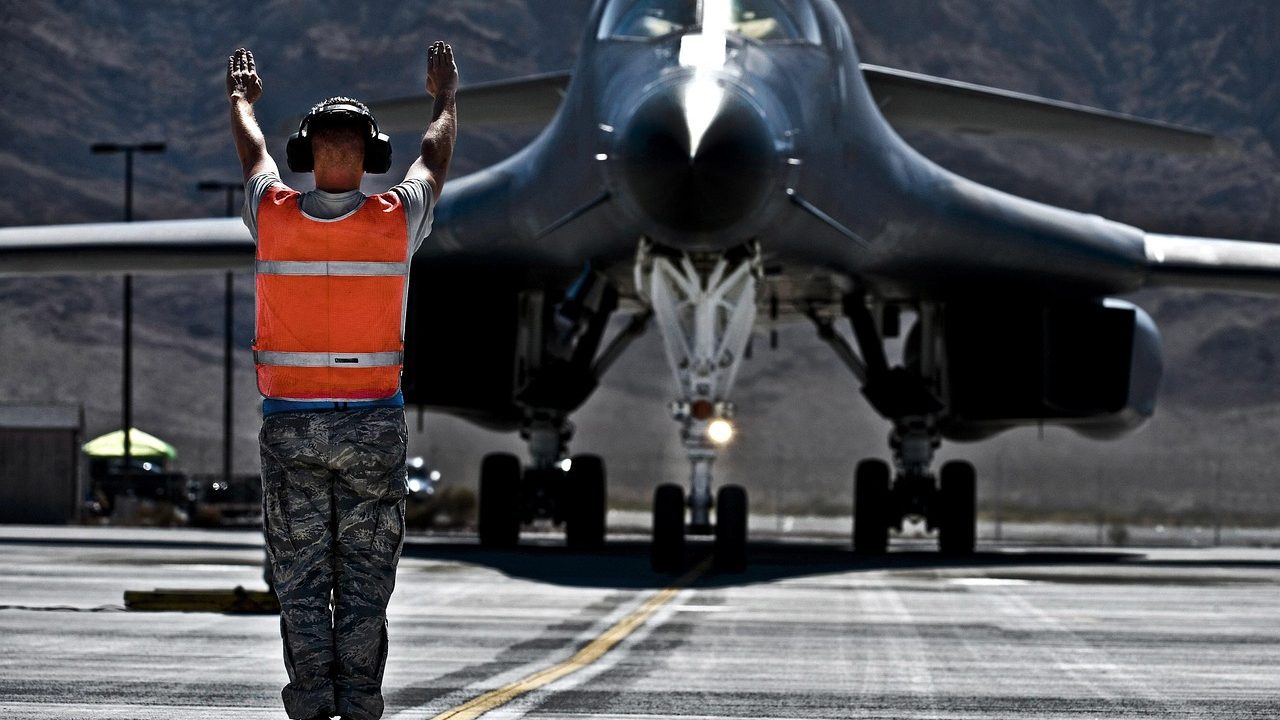
The United States began striking Iran nine days ago, targeting military command centers, air defense systems, and missile production and storage sites. Secretary of State Marco Rubio confirmed Monday that three U.S. service members have died — the first acknowledged American combat fatalities of the conflict — while maintaining that Washington remains open to diplomacy. That combination of continued military operations and diplomatic overture reflects an administration calculation that sustained pressure can force Iran to negotiate without triggering a full regional war. Whether that calculation holds is, in Rubio's own framing, the central question of the week.
The diplomatic picture is deteriorating rapidly. Iran's Supreme Leader Ayatollah Khamenei called Trump's signature on what has been described as an interim deal 'worthless and invalid,' and Iranian negotiators say Tehran is suspending its commitments. Whatever off-ramp the administration believed it had purchased may be collapsing in real time. Compounding the pressure, U.S. officials confirmed over the weekend that Iran is actively adapting its missile systems to bypass American air defense platforms — through guidance system modifications, lower-altitude flight profiles, and potential decoy integration. If accurate, the current U.S. force protection posture in the region has a closing window.
Iran has also floated a potential ground incursion into Kuwait specifically targeting U.S. military installations, including Camp Arifjan and Ali Al Salem Air Base, facilities central to American power projection in the Gulf. Officials described the signal as partly posturing, partly genuine contingency planning, but either way it is forcing Pentagon defensive repositioning. Meanwhile, an earlier intelligence finding that the security breach enabling Ayatollah Khamenei's death has reportedly not been closed adds another layer of instability to Iranian decision-making — a leadership council that is simultaneously grieving and paranoid, capable of either extreme caution or extreme escalation.
Four-Dollar Gas, Fractured Alliances, and the China Calculation

U.S. average gasoline prices crossed four dollars a gallon this weekend, directly attributed to the Iran conflict's disruption of oil supply flows. The threshold carries psychological weight for American consumers even if it falls short of historic demand-destruction levels, and the administration has clearly taken notice: Trump aides have reportedly been moderating the president's references to Jimmy Carter as the parallels between rising gas prices, a Middle East military engagement, and inflation anxiety grow tighter. The Carter comparison is politically charged but analytically imprecise — the 1979 crisis happened to Carter, while the current conflict is a U.S.-initiated campaign — though political perception, as analysts note, operates on vibes as much as specifics.
Rubio confirmed Monday that Xi Jinping's planned September visit to the United States remains on track, even as Trump has recently accused China of election interference — a notable act of diplomatic compartmentalization. Separately, a CIA probe into UAE-China ties over AI technology access has yielded what amounts to a leverage-and-reward framework: the UAE's cooperation with U.S. intelligence on the China angle reportedly helped unlock broader American semiconductor access for Gulf allies, offering a window into how chip access policy actually operates in practice.
On the NATO and Ukraine front, a significant delivery gap has emerged in the alliance's 140-billion-euro Ukraine aid pledge. Only about 10 billion of the 70 billion euros pledged for 2026 had actually arrived by the end of April, according to tracking data. Six EU member states are simultaneously demanding exemptions from the bloc's 21st Russia sanctions package, which faces a final vote Wednesday. Russia has reportedly been firing more missiles in July than it can produce monthly — a sustainability problem that analysts say makes the current moment strategically important to press, which renders the delivery shortfall more consequential. The State Department's global Category 1 travel advisory, the first issued at that level since the early months of the COVID pandemic, reflects how U.S. officials are assessing the risk of Iranian or Iranian-proxy retaliation against American citizens abroad.
War Deaths Crack Republican Unity as Midterm Battle Lines Form
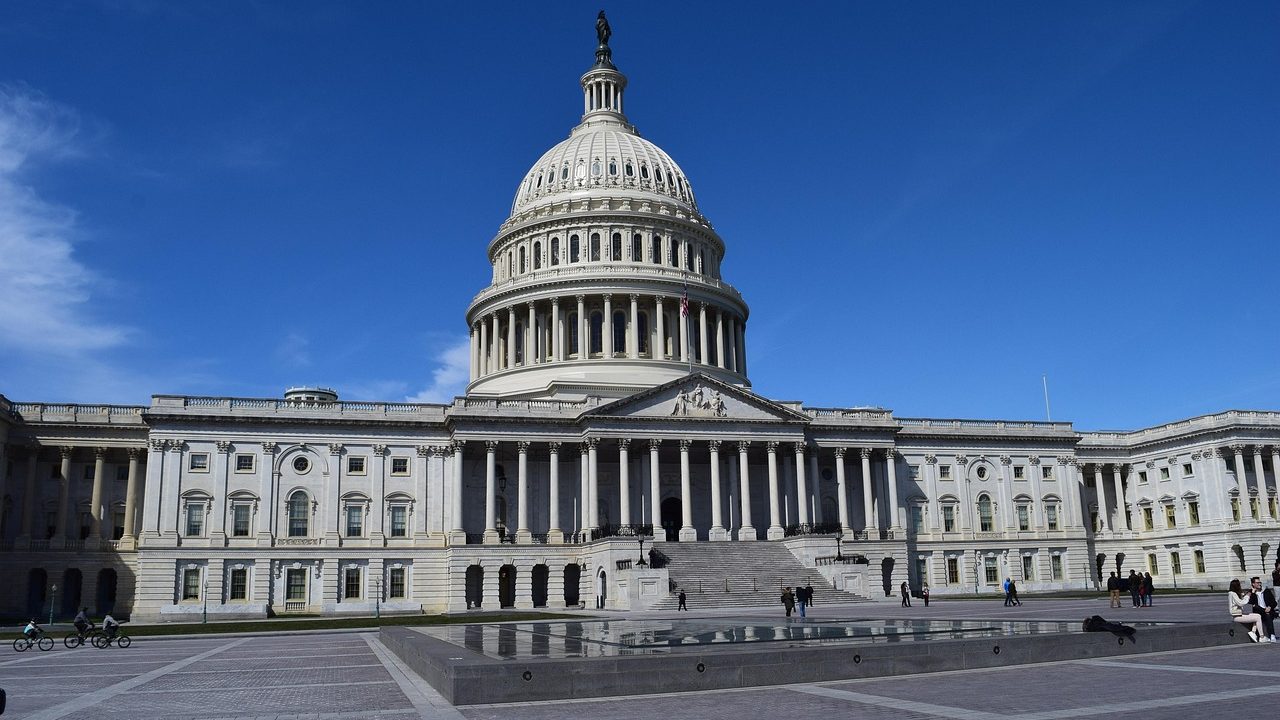
The deaths of three U.S. service members have exposed fractures inside the Republican Party that were already under strain. Representative Marjorie Taylor Greene — among the administration's most reliable congressional allies — went on record attacking Defense Secretary Pete Hegseth directly over the casualties, a break that signals the anti-war strand within the MAGA coalition is reaching its limit. Senator Mark Warner went further, accusing Trump of planning to interfere in the midterm elections, framing his argument around a New York Times report that the FBI has been directed to stop investigating confrontations between ICE agents and civilians — an environment Warner characterized as using federal enforcement as a tool for political imagery and voter intimidation.
The 2026 midterm landscape is taking shape around sharply divergent strategies. The Republican Party's internal assessment, according to weekend reporting, is that its best-case scenario is a negative-partisanship play — banking on voters disliking Democrats more than Republicans. Speaker Johnson is in Iowa and Nebraska defending an extremely thin House majority. Pennsylvania Governor Josh Shapiro is running what analysts describe as both a 2026 midterm and a 2028 presidential audition, with 27 field offices, nearly 100 organizers, and four targeted swing congressional districts under his 'Rise Up' campaign.
A Reuters analysis finding just 129 noncitizen voting cases in the United States since 1996 — most attributed to confusion or administrative error rather than intentional fraud — directly challenges claims the administration has repeatedly used to justify voter registration requirements and investigations. Energy Secretary Chris Wright, meanwhile, stated on ABC's 'This Week' that Joe Biden won the 2020 election, a notable admission from a cabinet official serving an administration whose leader has spent six years claiming the opposite. MyPillow CEO Mike Lindell, who has been positioning for a gubernatorial run, was found not to be registered to vote in the state he seeks to govern — a detail with particular resonance given his years of election integrity advocacy.
Open-Source AI Becomes a Battlefield — With Antitrust Implications

A philosophical and economic war is breaking out inside the artificial intelligence industry with stakes that extend well beyond tech company market share. OpenAI's policy chief published arguments this week characterizing open-weight AI — models whose underlying weights are made publicly available for anyone to run or modify — as a path toward, in the direct phrasing used, 'communism.' The framing is that open-weight models undermine the ability of American companies to maintain competitive economic advantages over adversaries, particularly China. The immediate counterargument came from investor Chamath Palihapitiya, backed publicly by Jack Dorsey, who argued the opposite: that restricting open-source AI would create a massive cost asymmetry where American companies pay premium prices for proprietary access while foreign competitors run open-weight models for near-zero cost.
Both sides are using American competitiveness as their framing and reaching opposite conclusions — which points toward a deeper antitrust dimension. The Sherman Act of 1890 prohibits monopolization and agreements that restrain trade, but having large market share is not itself illegal under U.S. law; what matters is whether exclusionary conduct was used to achieve or maintain dominance. Palihapitiya's argument maps onto this framework: he is essentially contending that OpenAI lobbying for open-weight restrictions constitutes an attempt to use regulatory capture as an exclusionary tool — paying hardware stores, in effect, not to stock competing mousetraps. The EU is grappling with the same dynamic in its AI Act implementation, and Google has separately pushed back against EU Android AI rules that the bloc argues are needed to prevent the company from leveraging its Android dominance to foreclose AI competition.
Moonshot AI's Kimi K3 model illustrates the physical constraint underlying all of this competition: the Chinese lab had to halt new signups because demand exceeded its GPU compute capacity. Morgan Stanley projected that Micron could achieve gross margins approaching 90 percent on high-bandwidth memory by 2027, underpinned by 16 supply contracts with floor pricing — a position that reflects the acute supply-demand tightness in the chips that make AI run. AI chip startup Etched is reportedly seeking a 20-billion-dollar valuation for application-specific integrated circuits optimized for transformer-based AI inference, and Nouriel Roubini argued publicly that AI-driven labor displacement will eventually force governments toward universal basic income or what he called 'socialism' — a structural claim that Hyundai's manufacturing workers are already living in practice as four-hour daily strikes began Monday over the planned deployment of Boston Dynamics' Atlas humanoid robots.
Rockets, Robots, Wildfires, and a Plane Boeing Chose to Scrap
SpaceX's Starship Flight 13 slipped past its July 20 target date after an earlier scrub on July 16 over engine failures, with Elon Musk publicly contradicting his own company's announced timeline on social media — an unusual communications breakdown at a launch program. SpaceX shares have fallen roughly 45 percent from their post-IPO high, and Musk took the notable step of publicly warning short sellers on social media over the weekend, a move that analysts noted as unusual for someone who typically projects confidence and suggestive of real financial pressure.
A large number of wildfires are burning across Oregon and Washington following a lightning siege this weekend — thousands of strikes from monsoon-fueled storms — with smoke from those fires and many additional fires in Canada creating hazardous air quality across multiple U.S. cities. Trump raised the issue directly with Canadian Prime Minister Carney at the World Cup final, and Ontario Premier Doug Ford escalated by challenging Trump to drop softwood lumber tariffs as a condition of Canadian forest management cooperation — effectively positioning Canadian firefighting capacity as a tradeable commodity in the ongoing tariff dispute.
Boeing dismantled an unflown 777X aircraft — a plane that was built but never operated — rather than pay the costs of reworking it to meet current specifications. The decision to abandon an entire airframe rather than invest in modifications signals that Boeing's cash position and internal cost controls are under pressure severe enough that even sunk costs are being written off. Apple, meanwhile, is piloting an AI transcription system at Genius Bar locations that records and summarizes customer service interactions; retail workers have reportedly raised concerns that the transcripts will be used for performance evaluation, extending a form of passive monitoring already documented in warehouse and call center environments into Apple's culture-driven retail workforce.
Markets Hold Steady as Consumer Spending and Chip Margins Surprise Upward

S&P futures trading at 7,521 Monday morning — up roughly 23 points — represent a notable act of collective calm given the day's geopolitical backdrop. The relative equity stability suggests institutional investors are pricing in a contained Iran conflict rather than a regional war, and they are drawing some reassurance from consumer spending data. Bank of America CEO Brian Moynihan reported on CBS this weekend that the bank's 70 million customers are spending roughly five to six percent more year-over-year, while carefully framing the dynamic as consumers spending more despite feeling squeezed by 'affordability strain' — a bifurcation that could accelerate sharply if gas prices remain elevated.
Morgan Stanley's projection that Micron could achieve gross margins approaching 90 percent on high-bandwidth memory by 2027 is the most striking single piece of financial analysis circulating Monday morning, placing a chip manufacturer in a profitability category typically associated with pure software companies. The structural underpinning is 16 supply contracts with floor pricing that significantly reduce demand uncertainty, though analysts note that accelerating U.S.-China tech decoupling poses a geopolitical risk to that contract base. Samsung Biologics bid 1.8 billion dollars — a 40 percent premium, and South Korea's largest biopharma deal on record — for Swiss peptide manufacturer PolyPeptide Group, explicitly positioning itself to capture manufacturing share as demand for GLP-1 receptor agonists, the active components of drugs like Ozempic and Wegovy, continues expanding.
The Wall Street Journal's investigation into insider betting ties to Trump White House figures is a story with structural implications beyond its specific allegations. Prediction market platforms — which captured 27 percent of all legal U.S. sports betting volume during the World Cup, up from nine percent at the start of 2026 — have grown large enough that trading on non-public government information through those platforms now constitutes a genuine insider trading risk that existing securities law may not cleanly cover, creating a regulatory gap that authorities will need to address. Trump Media reached a confidential settlement with Orlando and ARC Global resolving litigation from the company's 2024 SPAC merger, including a Delaware court finding of breach of contract — a cleanup item that is nonetheless a necessary prerequisite for any future capital raise.
Outbreaks, World Cup Diplomacy, and Why the Iran Consensus Deserves Challenge
A Legionnaires' disease outbreak on New York City's Upper East Side has killed three people on three consecutive days, with officials reporting that new case rates are declining — the key indicator that containment efforts may be working. Legionnaires' spreads through water systems rather than person to person, directing investigators toward specific buildings in the affected neighborhood. The declining new-case rate is described as genuinely reassuring if it holds through the week. Separately, the FDA announced that a previous finding of cyclospora contamination in Taylor Farms produce was a laboratory false positive, reversing a finding that had triggered significant supply chain disruptions — an outcome officials characterized as the food safety testing system working as intended.
The World Cup final, hosted in the United States, provided an unusual venue for cross-border diplomacy: Trump used his attendance to raise wildfire smoke issues with Canadian Prime Minister Carney, even as Ontario Premier Ford publicly linked Canadian forest management cooperation to tariff relief. Prediction market platforms captured 27 percent of all legal U.S. sports betting volume during the tournament, up from nine percent at the year's start — a tripling of market share in roughly six months that traditional sportsbooks, which built significant legislative infrastructure to reach their current position, are expected to contest aggressively. The Mets are under MLB investigation for allegedly using AI to make real-time pitch-calling decisions from the dugout, which would violate the league's limits on electronic sign communication; the team claimed full compliance without denying the use of AI tools. On a historical footnote, Vice President Vance and his wife welcomed a new child — the first born to a sitting Vice President in 156 years, the last being Thomas Hendricks in 1870.
The dominant analytical consensus holds that Iran's position is deteriorating and that the U.S. military campaign is achieving its pressure objectives — citing Iran's missile expenditure rate exceeding monthly production, leadership instability following Khamenei's death, and halting diplomatic signals suggesting Tehran wants an exit. But that consensus deserves serious scrutiny. Iran's elevated missile firing rate could reflect a deliberate strategy of exhausting U.S. Patriot interceptor inventories rather than desperation, given that Washington faces its own production constraints on interceptor missiles. The historical precedent after the 2020 Soleimani assassination suggests Iranian decision-making became more opaque and more risk-tolerant, not more accommodating, after a leadership shock — and leadership vacuums in revolutionary systems often empower hardliners rather than moderates. The administration's pressure model also appears to require Iran to negotiate while under active attack, something Khamenei has explicitly refused. Three concrete signals in the coming two weeks would indicate the consensus is wrong: Iranian ground-force positioning near Kuwait, a Pentagon emergency request for Patriot interceptor resupply appropriations, or the replacement of Iranian diplomatic negotiators by Islamic Revolutionary Guard Corps figures at the table.