Two American Troops Dead, Iran Strikes Allied Bases, and a Week That Tests Every Pillar of Global Order
Iran has killed two U.S. service members in Jordan and launched its seventeenth documented strike operation against American-allied bases in Kuwait, even as Russia bombards Kyiv, semiconductor stocks enter bear market territory, and the Trump administration tentatively agrees to let Saudi Arabia enrich uranium without standard nonproliferation safeguards.

“when every meeting is recorded, analyzed, and potentially indexed against performance reviews, the dynamics of workplace communication change fundamentally, replacing candor with performance.”
How this was made Verified AI
Every Intellegix briefing is generated from that day's broadcast and run through automated checks before it publishes — with a human paged on any flag. Here is the trail for this edition.
A Morning That Demands Attention

Two American troops are dead from direct Iranian fire. The Pentagon is rushing F-16s and F-35s to the Middle East. Iran is warning its regional allies to prepare for wider conflict, and Supreme Leader Khamenei has called Trump's diplomatic signature 'worthless.' Simultaneously, Russia has struck Kyiv with a major ballistic missile barrage while Ukraine reports Moscow may be planning a 500,000-troop mobilization.
On the domestic front, Trump has tentatively agreed to let Saudi Arabia enrich uranium without standard nonproliferation safeguards — a decision with consequences that could echo for decades. Senator Ted Cruz is pushing a term limits constitutional amendment as Mitch McConnell's hospitalization enters its second month, and national security experts are warning the administration may be laying groundwork for military action against Cuba.
Markets are absorbing the pressure: the semiconductor index has entered bear market territory, down more than 20 percent, driven by fears over China's Kimi K3 AI model. Big Tech AI debt is approaching 570 billion dollars, and bond investor demand is softening. Meanwhile, one in three American workers now report that AI bots have recorded their workplace meetings — a figure that reflects how rapidly the technology has reshaped daily life.
Severe storms are hammering the New York tri-state area with flash floods on the day of the World Cup final, NORAD jets were scrambled over the city, and Michigan has shut down schools and courts due to wildfire smoke. Science, at least, offers one moment of wonder: researchers have finally identified the dinosaur-killing asteroid as an extraordinarily rare CO chondrite, a finding sixty-six million years in the making.
Iran Kills Americans, Strikes Allied Bases, and Edges Toward Wider War

Iran has killed two U.S. service members in Jordan, crossing a threshold that removes any remaining ambiguity about the nature of the conflict. Within hours, Iran launched what it designated the seventeenth phase of 'Operation Saegheh' — a name meaning 'thunderbolt' in Farsi — targeting Camp Udairi and Ali Al Salem Air Base in Kuwait. Kuwait's air defense systems intercepted the missile and drone attacks. The operation's phase numbering signals a sustained, structured campaign rather than improvised retaliation.
The Pentagon's response has been equally deliberate. F-16s and F-35s are being rushed to the region, with the stealth-capable F-35s particularly significant: their deployment indicates the United States is assembling assets suited to contested airspace and potential offensive strikes, not merely defensive posture. Iran, meanwhile, has instructed Hezbollah and other regional allies — including Houthi forces in Yemen, Shia militia groups in Iraq, and Syrian-based factions — to prepare for wider conflict, activating a network spanning at least five countries.
Khamenei's public statement declaring Trump's signature 'worthless' — a reference to a reported Memorandum of Understanding from recent nuclear negotiations — and his warning of 'unforgettable lessons' amounted to the supreme leader publicly burning a diplomatic off-ramp while ordering military escalation. Complicating the picture, Iran's hardline faction is simultaneously accusing the country's leadership of staging what they are calling a 'soft coup' amid Khamenei's extended absence from public view. The combination of external military escalation and unresolved internal authority is precisely the environment in which miscalculations occur.
Senator Rand Paul has proposed an alternative approach: a sanctions trade offering Iran economic relief in exchange for physically removing its enriched uranium stockpile from the country. Paul's argument is that military pressure alone cannot achieve denuclearization as long as the program can theoretically be restarted. The proposal is drawing little traction in the current political environment. Separately, national security experts are arguing, per Foreign Policy analysis, that the administration may be using Iranian drone activity as pretext for potential military action against Cuba — fitting, analysts say, a pattern of using one genuine crisis to construct legal and political rationale for action in a separate theater.
A central analytical question is whether Iran's campaign reflects coherent strategic intent from a unified leadership, or whether it is institutional momentum — an operational program continuing because no single authority has the power or will to halt it. If strikes pause for more than 72 hours without a formal ceasefire, that would suggest some internal Iranian brake is being applied. If Hezbollah activates in Lebanon within 48 hours, it confirms coordinated escalation and moves the situation into an entirely different phase.
Russia Hammers Kyiv as Ukraine Weighs Its Largest Command Shake-Up in Years
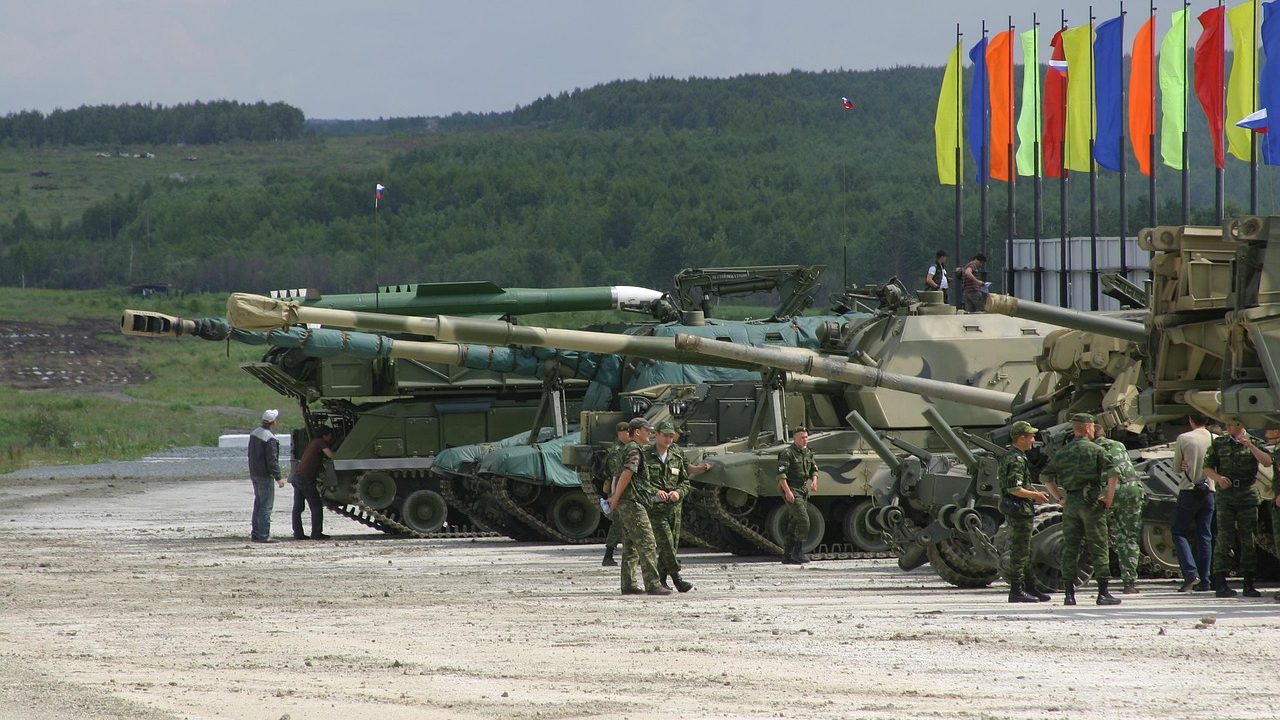
Russia struck Kyiv this weekend with a major ballistic missile barrage of the kind designed to overwhelm air defense systems through sheer volume rather than precision — a systematic assault on the Ukrainian capital's resilience. The attack comes as Ukraine reports Russia is planning a 500,000-troop mobilization, which would be the largest Russian military call-up since World War II, dwarfing even the roughly 300,000-reservist mobilization of September 2022 that severely strained Russia's social and economic fabric.
The mobilization planning is unfolding against a backdrop of domestic vulnerability. Putin's approval rating has simultaneously hit a wartime low, and Russia is reportedly gripping through a fuel crisis driven by Ukrainian drone strikes on refinery capacity, sanctions-related supply chain disruptions, and the consumption demands of a wartime economy. That combination — declining public support, economic strain, and massive military mobilization — historically suggests a leadership that believes it needs a decisive military breakthrough before domestic conditions deteriorate further.
On the Ukrainian side, the Financial Times is reporting that President Zelenskyy is gathering his military commanders this weekend to seriously weigh replacing General Syrskyi as commander-in-chief. Syrskyi took command in early 2024 following the dismissal of Zaluzhnyi and has faced persistent criticism over tactical decisions, particularly around the Pokrovsk corridor and manpower management. The military logic would normally counsel against command changes under active pressure; that Zelenskyy is reportedly considering it anyway suggests either a fundamental breakdown in confidence or political pressure from swelling domestic protests that cannot be absorbed through wartime solidarity appeals alone.
The 500,000-troop figure originates from Ukrainian military intelligence — a source with genuine insight into Russian planning through intercepted communications, but also with strong incentives to frame Russian capabilities in ways that support continued Western military aid. Both things are simultaneously true, and good-faith analysis requires holding both.
Saudi Uranium Deal, Term Limits Push, and the Senate's Fracture Lines
The single most consequential foreign policy decision to emerge from the Trump White House this week is the tentative agreement to allow Saudi Arabia to enrich uranium without the safeguards that have governed nuclear technology transfers for decades. Under the standard 123 Agreement framework established by the Atomic Energy Act — what nonproliferation experts call the 'gold standard' — recipient countries agree not to enrich uranium or reprocess plutonium domestically. The United Arab Emirates and South Korea accepted those terms. Saudi Arabia has explicitly refused them, and Crown Prince Mohammed bin Salman has openly stated that if Iran acquires a nuclear weapon, Saudi Arabia will pursue one as well.
The administration's apparent rationale is preventing Saudi Arabia from turning to China or Russia for nuclear assistance. But the nonproliferation community is alarmed: a Saudi enrichment exception would be even more destabilizing than the 2008 India nuclear deal — which permanently weakened the NPT as a universal standard — because it is occurring simultaneously with active Iranian nuclear tensions and ongoing military conflict in the same region.
On the domestic political front, Senator Ted Cruz has authored a term limits constitutional amendment explicitly timed to Senator Mitch McConnell's hospitalization, now entering its second month. Cruz's proposal would limit senators to two six-year terms and House members to three two-year terms. The measure has drawn expressions of support from across the ideological spectrum — including Alexandria Ocasio-Cortez and Ron DeSantis — reflecting broad public appetite for accountability reform. The practical pathway, however, is extremely narrow: constitutional amendments require two-thirds majorities in both chambers and ratification by 38 states.
Senator Lisa Murkowski has broken with Trump over the SAVE Act, which would require documentary proof of citizenship to register to vote. Her objection is practical and specific: in rural Alaska, obtaining and presenting required documentation could cost voters more than a thousand dollars in travel and administrative expenses, effectively disenfranchising Indigenous constituents for whom birth certificates and passports are genuinely difficult to obtain. Her defection, joining a small number of other Republican senators, is contributing to the legislation's declining odds of passage before the August recess.
Two other stories round out the domestic picture. The Wall Street Journal is reporting that Congresswoman Luna allegedly told an associate in advance that Trump would select JD Vance as his running mate, enabling a winning Polymarket bet — an allegation now under CFTC investigation that highlights the regulatory gray areas surrounding political prediction markets. Separately, MyPillow CEO Mike Lindell, whom Trump has endorsed for Minnesota governor, has been found to be registered to vote in Texas, not Minnesota — a notable irony for a figure whose public identity is built on election integrity.
AI Watches Every Meeting, Autonomous Weapons Bill Advances, and the 2029 Encryption Deadline

One in three American workers now report that AI bots have recorded their workplace meetings, according to a new survey. The figure reflects how rapidly AI-powered recording and transcription has moved from novelty to near-ubiquitous presence in roughly two years — often arriving without explicit employee consent, embedded in calendar invites. The implications extend beyond privacy: when every meeting is recorded, analyzed, and potentially indexed against performance reviews, the dynamics of workplace communication change fundamentally, replacing candor with performance.
The legal framework governing AI meeting surveillance is almost entirely absent. Most states still regulate workplace recording under consent laws written for audio recordings in the early 2000s. Whether clicking 'join meeting' on a platform displaying a recording notice constitutes informed consent for AI analysis, transcription storage, and potential use in employment decisions remains genuinely unsettled law.
A bipartisan bill — the Human Authority over Autonomous Weapons Act — is moving through Congress and would codify into federal law the existing Pentagon policy requiring human approval for any lethal strike. The measure has both Republican and Democratic co-sponsors, reflecting shared unease about autonomous weapons systems — drones, missiles, and ground robots — that are now genuinely capable of engaging targets without human confirmation. Defense technology advocates counter that requiring human approval creates a speed asymmetry against adversaries whose systems can engage in milliseconds; the bill's proponents respond that the decision to kill cannot be delegated to an algorithm regardless of tactical efficiency.
A Google executive is warning that AI-driven cybersecurity threats require organizations to transition to quantum-safe encryption standards by 2029. The concern is that quantum computers, accelerated by AI-optimized development, will be capable of breaking current RSA and elliptic curve encryption within that timeframe. If critical infrastructure, financial systems, and military communications are not migrated to post-quantum cryptography before that window closes, the vulnerability exposure would be enormous.
The AI chip market produced its own significant story: Etched, a startup building chips dedicated specifically to transformer inference rather than general-purpose GPU computation, is seeking a twenty-billion-dollar valuation, according to the Wall Street Journal. The company's architectural bet is that transformer models will dominate AI for the foreseeable future, and that purpose-built silicon can deliver radically better efficiency for running large language models than Nvidia's general-purpose approach. A twenty-billion-dollar valuation without significant revenue is a direct wager on that architectural permanence.
Eggers Confronts OpenAI, Alphabet Faces Earnings Pressure, and Netflix Buys Affleck's AI Startup

Sam Altman invited novelist Dave Eggers — co-founder of 826 Valencia and one of America's most prominent literary figures — to speak directly to OpenAI staff, and Eggers did not soften his message. He told employees that ChatGPT is harmful to writing and to human creative development. The fact of the invitation is itself revealing: it either reflects a genuine organizational commitment to engaging hard criticism, a performative gesture that changes nothing structurally, or Altman working through unresolved doubts in public.
Eggers' core argument, as reported, centers not primarily on copyright or economic harm but on the developmental role of struggle in learning to write. The process of searching for the right word, failing at a paragraph, and returning to it — developing a writer's instinct through thousands of hours of practice — is, in Eggers' view, what produces genuine writers. Outsourcing that process to an AI produces people who receive outputs without developing the cognitive and emotional capacities that make authentic creation possible. The argument is philosophical and difficult to empirically test, which is part of why it generates such sustained debate.
OpenAI simultaneously faced a product execution failure of its own. The company redesigned its ChatGPT desktop app to merge ChatGPT, Codex, and a new Work agent into a single interface — and the redesign buried the conversation history that users had relied on. Backlash was swift enough that OpenAI pushed a corrective update restoring easy access to prior chats within days. For a company whose value proposition is frictionless AI interaction, shipping a redesign that made basic functionality harder to find represents a significant quality control failure.
Alphabet faces its own reckoning in earnings this week. Gemini Ultra's release schedule has slipped multiple times, and Google's AI Overview search integration generated substantial controversy over accuracy. Alphabet has committed to more than 75 billion dollars in capital expenditure in 2026, the majority directed at AI infrastructure. Investors will be dissecting the Q2 results in two directions: traditional ad revenue performance, which drives roughly 75 percent of revenue and has been surprisingly resilient, and evidence that the massive capital spend is generating returns on the promised timeline.
Netflix has agreed to acquire Ben Affleck's AI startup, Artists Equity, for 587 million dollars. The company has been developing AI tools designed to streamline pre-production, script analysis, and post-production workflows for film and television. The strategic logic is defensible: Netflix spends roughly 17 billion dollars annually on content production, and owning the production AI toolchain rather than licensing it could yield returns on the acquisition cost relatively quickly if the tools compress timelines and reduce costs at scale.
Markets Reel, the Fed Goes Silent, and Palantir's CEO Names AI Inequality as America's Biggest Problem

S&P futures are down more than one percent, trading at 7,497 after closing near 7,578 on Thursday, as markets absorb simultaneous shocks: active military conflict in the Middle East, semiconductor stocks in bear market territory, and a critical earnings week ahead. The semiconductor bear market has a concrete structural story behind it: China's Moonshot AI released Kimi K3, a model that independent benchmarks place in competitive territory with leading American AI systems. The selloff was severe enough to push the broader semiconductor index down more than 20 percent from its recent peak — the technical definition of a bear market.
The investor logic is direct. Nvidia's extraordinary valuation — and by extension the entire chip sector's — rests on the assumption that frontier AI development requires massive, sustained compute investment that only American chip companies can supply at scale. If Chinese AI companies can build competitive models more efficiently using domestically produced chips and algorithmic improvements, the long-term revenue growth assumptions embedded in current chip stock prices are undermined. Big Tech AI debt has reached approximately 570 billion dollars, with the major hyperscalers financing their infrastructure buildout partly through bond issuance. Bond investor demand is now softening, signaling that fixed income markets are beginning to question whether the cash flows to service that debt are materializing on schedule.
The Federal Reserve adds another layer of complexity. Kevin Warsh, who replaced Jerome Powell as chairman, has eliminated forward guidance from his policy communications, no longer telegraphing where interest rates are heading months in advance. The stated rationale is that forward guidance distorted asset pricing. The practical effect is that Wall Street firms are now building AI chatbots specifically to parse Warsh's sparse public statements for hints of policy direction. Economist Richard Koo is warning that if the Fed shrinks its 6.7-trillion-dollar portfolio — as Warsh has signaled — the resulting bond supply would steepen the yield curve, directly raising long-term borrowing costs and conflicting with the administration's stated goal of lowering rates for homebuyers, businesses, and the federal government itself.
Goldman Sachs is recommending shorting the British pound, a trade driven by dollar strength from the U.S. economy's relative resilience and elevated interest rates, combined with the UK's ongoing fiscal pressures and slower growth trajectory. The H-1B cap for FY2027 has closed after filling all 85,000 slots under a new wage-based selection system prioritizing higher-paid positions — a signal that demand for highly skilled technical workers remains intense even as AI capabilities expand.
Palantir CEO Alex Karp offered what may be the week's most candid elite admission. Karp said explicitly that AI could make him twenty times richer while average workers' salaries merely double, calling this divergence a 'complete decoupling' and 'the biggest problem in this country.' The statement comes from the CEO of a company that has extracted enormous value from government AI contracts — making it either a genuine conscience moment, a calculated positioning, or both simultaneously. Indeed's chief economist reinforces the bifurcation picture from another direction, warning of a six-million-worker shortage by 2032 in healthcare, construction, and logistics — precisely the sectors AI is least capable of replacing at scale — while knowledge work faces intensifying displacement.
The Rarest Asteroid, a Space Force Expansion, and Why Adolescents Forget

Researchers have finally identified the type of asteroid responsible for the Chicxulub impact sixty-six million years ago — the event that ended the Cretaceous period and eliminated roughly 75 percent of Earth's species, including non-avian dinosaurs. Using nickel isotope analysis of the ancient clay layer preserved at the Cretaceous-Paleogene boundary, scientists have determined the impactor was a CO chondrite. CO chondrites represent less than one percent of all meteorites found on Earth, making them among the rarest classes of space rock in the solar system. The identification required reading the chemical fingerprint of an asteroid from trace materials preserved in sedimentary clay for 66 million years.
The finding resolves a decades-long debate among impact scientists about the Chicxulub impactor's composition and provides new understanding of where in the solar system it likely originated — CO chondrites are thought to form in the outer regions of the asteroid belt. It may also improve risk models for assessing different asteroid populations.
The Space Force has tripled the ceiling on its NSSL Phase 3 Lane 1 launch contracts, expanding from roughly 5.6 billion dollars to 17 billion dollars, with the additional 11.4 billion covering seven launch providers including SpaceX, United Launch Alliance, and Blue Origin, along with several newer entrants. The expansion reflects Pentagon recognition that military satellite launch demand — for surveillance, communications, and missile defense — is growing substantially faster than original projections. With F-35s deploying to the Middle East and multi-front threats being managed simultaneously, the ability to rapidly task and retask reconnaissance satellites is a direct combat multiplier.
Neuroscience produced a finding with broad implications: researchers studying mice found that protective structures in a key memory region — perineuronal nets in the hippocampus — thin and diminish during late adolescence before rebuilding. This temporary structural window makes earlier memories harder to retrieve and may help explain childhood amnesia, the near-universal inability to recall memories from before age three or four. If the perineuronal net thinning during adolescence is a normal developmental phase, it suggests a potential mechanism window during which certain early trauma memories become more accessible — with possible implications for psychiatric treatment of PTSD rooted in childhood experiences.
Michigan has shut down concerts, courts, and schools due to wildfire smoke — a Great Lakes state not historically associated with such events. The closures reflect both the increasing frequency of large fires in the western United States and Canada, and atmospheric transport patterns that carry smoke thousands of miles eastward. Flash flooding, tornado watches, and ground stops at all three New York-area airports on the day of the World Cup final — with NORAD jets also scrambled over the city due to an airspace incursion — illustrate how climate-driven precipitation intensification has made the New York metropolitan area vulnerable to disruptions that once affected only specific low-lying neighborhoods.
World Cup Final, the Tates' Arrest, a Supreme Court in Crisis, and the Case for Epistemic Humility

The 2026 World Cup final — jointly hosted by the United States, Canada, and Mexico — is scheduled for New York, and its arrival has coincided with extraordinary security and weather disruptions. NORAD jets scrambled over the city in response to an airspace incursion near the stadium perimeter, while severe storms caused ground stops at JFK, LaGuardia, and Newark, creating significant disruption for arriving fans. The tournament has been a genuinely significant moment in American soccer's development, with American teams and fans more engaged than at any prior World Cup on American soil.
Andrew and Tristan Tate were arrested in Miami by U.S. Marshals. The Tate brothers have been subject to active legal proceedings in Romania, including human trafficking and rape allegations, and their detention suggests U.S. law enforcement is coordinating with international partners. Their legal team has consistently argued the proceedings are politically motivated. Beyond the individuals, the arrest of a figure with hundreds of millions of followers — who built that following through controversy, misogyny packaged as self-improvement, and anti-establishment posturing — will immediately be transformed into a martyrdom narrative within certain online communities, a dynamic that matters for understanding the current information environment.
Will Ferrell's 'The Hawk' has hit number one on Netflix despite reviews averaging around 22 percent on Rotten Tomatoes, illustrating how streaming platform dynamics have completely decoupled from critical reception as a predictor of audience behavior. New York City Mayor Zohran Mamdani, meanwhile, has walked back his campaign pledge to arrest Israeli Prime Minister Netanyahu — an inevitable retreat once his law department informed him that the city's police department has no authority to execute international arrest warrants and that a mayor cannot write his own foreign policy. The reversal, however politically costly, was unavoidable.
A poll showing that nearly 49 percent of Americans believe the Supreme Court rules based on politics rather than law carries perhaps the longest institutional shadow of any figure in this week's news. The Court's authority rests entirely on public acceptance of its decisions as legitimate, not merely legally binding. When half the country believes the institution is politically captured, the foundations of constitutional governance become genuinely fragile.
The week's analysis closes with a warranted exercise in epistemic humility. The near-consensus view holds that Iran's escalation campaign reflects coherent strategic intent driving toward a forced crisis with the United States. But an alternative hypothesis deserves serious consideration: what if the decision-making being attributed to unified Iranian strategic leadership is actually the output of a fragmented command structure with no single authority capable of ordering the operation halted? An adversary whose attacks emerge from institutional inertia without coherent political direction is, in some ways, more dangerous than a rational actor escalating toward a specific negotiated outcome — because there is no clear decision-maker to reach or deter. Khamenei's public dismissal of Trump's signature may be face-saving rhetoric for a domestic audience rather than a binding operational directive, and back-channel communications may be more substantive than the public posturing implies. The next 72 hours of operational tempo will be the most reliable signal available.