Iran Strikes Expand, AI Leads Narrow, and a Nuclear Plant's Engineer Is Killed: A World in Crisis
On day five of American airstrikes against Iran, the Trump administration showed signs of fracturing between diplomacy and escalation, while a Ukrainian drone killed the chief engineer of Europe's largest nuclear plant and Anthropic warned that the U.S. leads China in frontier AI by a mere six to nine months.

“Six to nine months — a margin that, for a technology increasingly compared to nuclear capability in its national security implications, represents an almost uncomfortably narrow buffer.”
How this was made Verified AI
Every Intellegix briefing is generated from that day's broadcast and run through automated checks before it publishes — with a human paged on any flag. Here is the trail for this edition.
From Punitive Strikes to Possible Ground War: Iran Campaign Enters Dangerous New Phase

What began as a targeted American air campaign against Iran's southern coastal regions has expanded into a broader military operation, with U.S. forces now striking targets in northern Iran and the Navy actively enforcing a reimposed naval blockade in the Persian Gulf. On day five of the campaign, U.S. forces disabled a tanker attempting to breach that blockade — the first concrete test of whether the cordon is real or merely performative. The answer, it appears, is real.
The signals emerging from Washington are, by any measure, contradictory. Vice President JD Vance used an appearance on the Joe Rogan podcast to warn explicitly that hawkish Republicans pushing to derail a U.S.-Iran deal risked triggering a massive refugee crisis into Western Europe and potentially enabling terrorism — calling such an outcome 'catastrophic.' Yet reporting simultaneously indicates that President Trump is personally leaning toward deploying ground troops as the strikes intensify. The administration, in effect, is publicly arguing with itself.
Tehran has added a diplomatic grenade to the mix, claiming it warned Vance directly that Jared Kushner and Steve Witkoff were, in Iran's words, 'abusing' the peace talks. Whether accurate or a strategic leak designed to exploit perceived divisions in the American negotiating posture, the claim has surfaced a fracture that Iran clearly sees as useful. Vance further complicated the diplomatic picture by accusing Israel of actively funding a campaign to derail the Iran deal — a sitting vice president publicly accusing an ally of sabotaging American diplomacy.
Former Defense Secretary Mark Esper, speaking at the Aspen Security Forum, challenged the foundational premise of the air campaign. Continued bombing, he argued, will not change Tehran's fundamental behavior. His case rests on decades of American air power use in the Middle East: infrastructure can be destroyed, personnel killed, operations disrupted — but the political calculus of a government determined to survive is not so easily altered. The historical record of the 1990s Iraq bombing campaigns, which did not change Saddam Hussein's behavior in any fundamental way, lends that argument considerable weight.
The naval blockade, proponents argue, adds an economic dimension absent from prior campaigns — denying Iran the oil export revenues that fund the Revolutionary Guard and its proxy networks. But critics note that for this pressure to succeed, Iran would need to have no meaningful workarounds, no accumulated reserves, and no support from countries like China or Russia with an interest in keeping Iranian oil flowing. Whether those conditions are met remains, at best, unverified.
Zaporizhzhia's Engineer Killed, Zelenskyy Warns of Russian Mobilization Surge
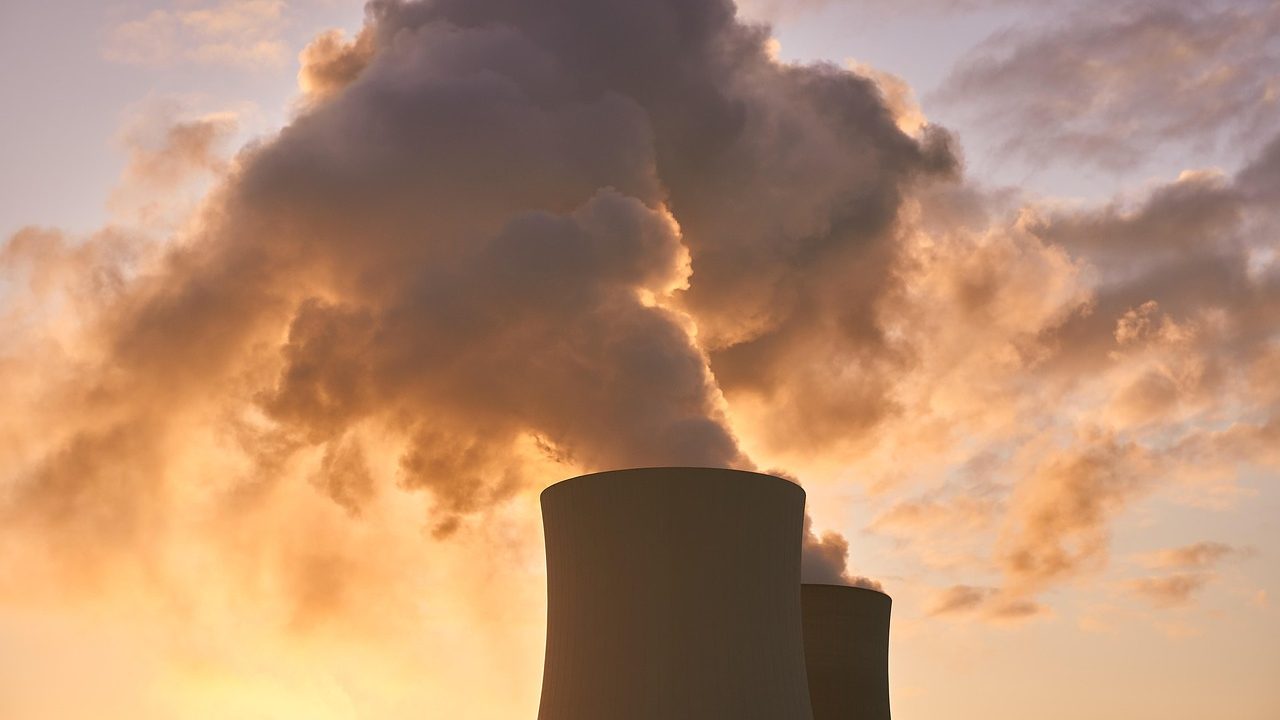
A Ukrainian drone strike killed Alexander Yakovlev, the chief engineer of the Russian-controlled Zaporizhzhia nuclear power plant — Europe's largest — along with his driver, near the facility. Russia's state nuclear energy corporation Rosatom described the strike as 'targeted,' indicating a belief that Ukraine knew precisely who was in the vehicle. The killing introduces a new and alarming dimension to an already fragile nuclear safety situation that has persisted since Russia seized the plant in 2022.
Nuclear facilities of Zaporizhzhia's scale require highly trained, irreplaceable specialists. A chief engineer cannot be substituted quickly, and if Ukraine is systematically targeting the personnel keeping a captured nuclear plant operational, the International Atomic Energy Agency's monitoring protocols face a question they were not designed to answer: what can international oversight accomplish in a conflict zone where both parties are making decisions that directly affect a facility's safety?
Russia responded to the strike — and to broader Western involvement — by formally declaring that any Western troops present in Ukraine are 'legitimate targets.' The statement is a doctrinal warning, not rhetorical bluster, designed to deter NATO countries from more openly deploying trainers and advisors inside Ukrainian territory. President Zelensky, meanwhile, warned that after Russia's elections, Putin may significantly expand mobilization efforts, arguing that even managed elections impose some political cost on imposing burdens on the population — a cost that dissipates once the vote passes.
On Capitol Hill, Senate Democrats flagged a complication in their own Russia policy vehicle: the Sanctioning Russia Act of 2026 reportedly contains criteria vague enough to allow the executive branch to impose tariffs far beyond the bill's stated purpose. The concern is not theoretical — tariff authority, once granted, has historically been exercised by administrations of both parties in ways its original architects did not anticipate.
GOP Fractures Deepen: Greene, Graham, Vaccine Hearings, and a Firing Within the Hour
The Republican Party is fracturing along several distinct fault lines simultaneously. Representative Marjorie Taylor Greene this week called Senator Lindsey Graham 'a murderer' over his support for continued Iran strikes, a significant escalation even by the elevated standards of intra-party GOP rhetoric. The charge illustrates how the Iran divide — between a hawkish interventionist faction and the nationalist restraint coalition aligned with the vice president — has become a source of open personal animosity.
A separate fracture appeared in a Senate health nominees hearing, where a Republican senator publicly challenged Trump's nominees over their vaccine positions. The CDC nominee claimed to be 'not aware' of cuts to parasite surveillance programs — unglamorous public health infrastructure whose erosion can quietly enable outbreak conditions to develop. Having a nominee plead ignorance of such cuts before a public committee is not a posture that projects competence.
The Trump administration's firing of Roger Rogoff, the court-appointed Seattle U.S. attorney, within an hour of his swearing-in crystallized a pattern critics have tracked across the administration's tenure: the systematic replacement of officials seen as loyal to prior institutional processes rather than to the current executive. Rogoff, a former federal prosecutor and state judge, described the firing as 'not unexpected, but disappointing' and said he was weighing legal action.
Senator Josh Hawley walked out of a Senate patent hearing after clashing with Senator Thom Tillis over pharmaceutical drug pricing — Hawley advocating that drug companies lose patent protections if they charge Americans more than other countries pay for the same drugs, Tillis pushing back from a more traditional free-market Republican position. The walkout was theatrical, but the underlying disagreement over how aggressively government should constrain corporate pricing reflects a genuine tension within the party that is not going away. Vice President Vance, meanwhile, used the Rogan platform to urge Senate Republicans to eliminate the filibuster to pass the SAVE America Act, a voter ID bill — applying pressure through the media ecosystem rather than the traditional legislative cloakroom.
Six to Nine Months: Anthropic's Warning on America's Razor-Thin AI Lead Over China

Anthropic's national security policy head told the Aspen Security Forum that the United States leads China by approximately six to nine months in frontier AI development. Not years. Not a generation. Six to nine months — a margin that, for a technology increasingly compared to nuclear capability in its national security implications, represents an almost uncomfortably narrow buffer. The warning carries particular weight precisely because it came from within a leading American AI company, an institution with every incentive to emphasize American strength.
JPMorgan CEO Jamie Dimon flagged broad access to Anthropic's Mythos model as 'a real issue,' invoking the concept of dual-use capability: the same model that can accelerate drug research or optimize supply chains can, in the wrong hands, assist in genuinely dangerous activities. The concern points toward a regulatory gap that antitrust law — grounded in the Sherman Act's focus on market competition and exclusionary conduct — is not designed to address. Managing the national security implications of broadly distributed AI capability is a distinct policy problem from preventing monopolization, and the legal infrastructure for it does not yet exist in coherent form.
Anthropic has responded to misuse concerns partly by hiring weapons experts — specialists in explosives, biological threats, and related domains — to red-team its models against adversarial scenarios. EU lawmakers, however, rebuked the company for sending a junior staffer rather than senior leadership to an AI safety hearing, signaling that governance pressure on frontier AI firms is intensifying on multiple fronts simultaneously.
The adversarial AI landscape is already operational, not theoretical. Trend Micro researchers documented a Russian-speaking threat actor using a jailbroken version of Google's Gemini CLI to run criminal infrastructure, with AI handling 89 percent of the operational work. OpenAI's GPT-Red, an automated red-teaming system that uses self-play to identify prompt injection vulnerabilities at scale, represents one response to exactly this kind of threat. The Gemini botnet case demonstrates why such investment is urgent: safety measures already deployed in production systems can be circumvented, with documented criminal consequences.
TSMC Profits Surge 77 Percent, Uber Bids $14.8 Billion for Delivery Hero

Taiwan Semiconductor Manufacturing Company reported a 77 percent profit surge to a quarterly record, driven almost entirely by AI chip demand. As the foundry that manufactures chips designed by Nvidia, Apple, AMD, and most other major players, TSMC's results function as a direct barometer of the AI hardware boom. The demand is not plateauing — it is accelerating. Dutch lithography equipment maker ASML separately updated its guidance to reflect demand from Elon Musk's Terafab operation, a signal of how seriously xAI's infrastructure ambitions are being taken by the supply chain.
Uber launched a €41.50-per-share cash takeover bid for Delivery Hero, valuing the transaction at approximately 14.8 billion dollars. If completed, the deal would create the world's largest food delivery platform outside China, spanning 99 markets across Europe, Latin America, and Asia where Uber Eats either operates weakly or not at all. European antitrust scrutiny is expected to be intense: the merged entity would hold dominant or near-dominant positions in several European markets, and EU Competition Commission regulators have been notably aggressive about food delivery consolidation.
Microsoft shares rose on news that Azure will become the first hyperscale cloud provider to deploy 3M's fiber-optic technology, a development that matters for AI infrastructure because of the data transmission speeds required to move massive volumes of data between servers during training and inference. Apple shares hit a record after China approved the company's AI feature rollout in the world's largest smartphone market — approval the market had been pricing in as uncertain. Apple Maps, meanwhile, launched advertising while explicitly banning categories including home services, bail bonds, cryptocurrency ATMs, and political candidates, a curation choice that positions the product as a premium, lower-clutter alternative to Google Maps.
Roughly half of Fortune 500 companies are now reportedly using open-source AI models, with proponents citing cost savings of up to 60 times compared to proprietary per-token API pricing. At that scale of savings for high-volume enterprise use cases, open-source adoption represents competitive pressure on OpenAI, Anthropic, and Google that operates through economics rather than product head-to-head competition. OpenAI's own internal dynamics drew attention after reports emerged that staff members had donated to a super PAC opposing co-founder Greg Brockman, suggesting the departure dynamics at the company are considerably more complicated than public statements have conveyed.
Myanmar Peace Signals, Cuba's Blackout Crisis, and China's Desert War Games
Thailand's foreign minister announced that all sides in Myanmar's civil war are open to dialogue — a cautiously hopeful statement from a conflict that has generated almost no optimism since the 2021 military coup. The Thai formulation is carefully hedged: 'open to dialogue' is a considerable distance from actual negotiations. But Bangkok has enormous practical stakes in Myanmar stabilizing, managing years of refugee flows, narcotics trafficking, and border security consequences. A public statement of this kind, from a government that would be quickly contradicted if it overstated its case, suggests some back-channel substance underlies the optimism.
The United Nations issued an explicit warning that repeated nationwide blackouts in Cuba are deepening a humanitarian crisis, disrupting health services, clean water systems, and economic activity across the island. Cuba's electricity infrastructure has been in severe degradation for years, the product of fuel shortages, aging Soviet-era equipment, and limited access to imported replacement parts. Extended blackouts have shifted from exceptional events to recurring conditions. Reports that the Pentagon is weighing military options for Cuba — including contingencies involving the 101st Airborne — add a geopolitical dimension to what is already a humanitarian emergency, though whether such planning reflects serious operational intent or leaked contingency thinking for political effect remains unclear.
Satellite imagery has revealed that China has constructed replicas of U.S. warships and Taipei buildings in its western desert, evidently for targeting practice and military training. Building physical replicas of specific targets is a classic training methodology, but the specificity here — Taipei buildings, not generic urban structures — is an unambiguous signal about operational planning priorities. The imagery offers a rare concrete window into how China's military is preparing for potential conflict scenarios involving Taiwan.
In an episode that resisted easy geopolitical categorization, U.S. troops reportedly unloaded China's only aid flight to earthquake-affected Venezuela. Venezuela has been a persistent theater of U.S.-China competition for regional influence; the earthquake created a humanitarian need that apparently required American logistical capacity to address even for Chinese cargo. The symbolism — American service members handling Chinese aid in a country long central to U.S.-Latin America tensions — was as strange as it was quietly pragmatic.
Starship Goes Commercial, Webb Finds a Hidden World, and Quantum Coherence Breaks Records

SpaceX is targeting Starship Flight 13 for the first operational deployment of Starlink V3 satellites — a milestone that marks a genuine transition in the program's status from demonstration vehicle to commercial launch platform. Starlink V3 satellites are significantly larger and more capable than current hardware, and they require Starship's payload capacity to be launched economically. Using Starship for revenue-generating commercial payloads, rather than test flights alone, represents the threshold SpaceX has been building toward.
NASA's James Webb Space Telescope revealed a previously hidden planet in the Beta Pictoris system — one of the most closely studied stellar systems in astronomy, observed for decades because its debris disk was among the first evidence of planet formation ever detected around another star. Finding an additional planet that prior instruments could not detect in such a well-catalogued system underscores the degree to which Webb is likely to continue revising the known inventory of exoplanets. A separate announcement described the faintest exoplanet ever directly imaged from Earth, a companion achievement reflecting advances in optics, detector technology, and image processing.
Two independent research laboratories announced they had achieved steady-state qubit entanglement — maintaining entanglement between distant qubits without requiring precisely timed control pulses. The architectural significance is considerable: current quantum computers demand constant, precisely orchestrated interventions to preserve the quantum states necessary for computation. Removing that requirement for even some operations is a step toward modular quantum systems that can scale in ways current architectures cannot. Separately, a German physics team reported trapping single atoms for two hours — a dramatic extension of typical qubit coherence times, which are ordinarily measured in microseconds or milliseconds.
Researchers also announced the discovery of amino acids — the molecular building blocks of proteins — in a meteorite that landed in New Jersey. The sample's pristine, uncontaminated condition gives scientists an unusually clean opportunity to analyze organic molecules that may have formed in space. The find adds to a growing body of evidence for the hypothesis that the chemical precursors to life were delivered to early Earth by impacts, though researchers stop well short of claiming the discovery proves that hypothesis. In a different register entirely, paleontologists reported that baby dinosaur fossils — hatchlings found in museum drawers, where they apparently sat unidentified for years — had already been biting bone, with implications for understanding dinosaur development and parenting behavior.
Buffett Calls Markets a 'Gamble,' the Epstein File Churns, and Iran's Air-War Assumptions Get Stress-Tested

Warren Buffett, at 95, is describing the current investment environment in unusually bleak terms — calling finding value 'tough' and characterizing markets as increasingly resembling gambling. The observation carries weight from someone who has navigated enough market cycles to distinguish between temporary distortions and structural shifts. Buffett separately cut his donations to the Gates Foundation, publicly describing Bill Gates' ties to Jeffrey Epstein as 'distasteful' — a decision with material consequences for the foundation's global health and development programs, given that Buffett has been its largest external donor for two decades.
FBI Director Kash Patel's offer to 'give names' in the context of the Epstein associate question represents a notably different posture from prior FBI leadership on the matter, though whether the offer produces actual disclosures or remains performative is, as yet, genuinely unclear. A shareholder lawsuit against the Ellison family over an alleged Trump relationship influencing the Warner Bros. Discovery merger adds another thread to the uncomfortable intersection of political access and corporate governance — minority shareholders arguing they have a legitimate interest in knowing whether controlling shareholders' presidential relationships affected the terms of major transactions.
California's Franchise Tax Board is auditing high-net-worth individuals, including reportedly Sergey Brin and David Sacks, who relocated ahead of a proposed state wealth tax. The scrutiny is not symbolic: California's residency rules are detailed, the state has prevailed in such cases before, and the sums potentially at stake for individuals of that wealth level are enormous.
The deepest analytical question hanging over the Iran coverage is whether its foundational assumption holds. Nearly all mainstream reporting proceeds from the premise that U.S. airstrikes are systematically degrading Iran's military capacity in ways that will eventually alter Iranian political behavior. Former Defense Secretary Mark Esper has publicly challenged that framing at the Aspen Security Forum, arguing that air power can destroy infrastructure but cannot alter the calculus of a government facing what it perceives as an existential threat — and that external attack frequently strengthens the nationalist basis of authoritarian regime support rather than weakening it. Three observable signals would indicate the assumption is failing: evidence that Iranian oil exports are continuing despite the blockade, signs that the strikes are consolidating hardliner rather than moderate power within Iranian factionalism, and indications that Gulf state partners are quietly creating back-channels for Iran to access revenues. None of those signals has been definitively confirmed or ruled out.