War, Markets, and Discovery: A World in Flux on July 14, 2026
From Iranian drone sightings in Cuba to a first-ever interstellar sugar detection, Tuesday delivered a cascade of crises and breakthroughs that tested every corner of the global order. Seven in ten Americans now expect the U.S.-Iran confrontation to grind on indefinitely, even as markets, Congress, and the scientific community grapple with upheavals of their own.

“a flood of AI-generated content may paradoxically reduce collective capacity to navigate reality.”
How this was made Verified AI
Every Intellegix briefing is generated from that day's broadcast and run through automated checks before it publishes — with a human paged on any flag. Here is the trail for this edition.
A Nation Braced for the Long Haul
Seventy-nine percent of Americans believe the U.S.-Iran conflict will drag on for a prolonged period, according to a new Reuters/Ipsos poll — a figure that cuts across partisan lines and reflects a public absorbing the weight of a ceasefire that has already collapsed. U.S. forces have struck 140 Iranian targets, President Trump has publicly stated he will 'likely' strike Iran's major nuclear facility at Pickaxe Mountain, and the administration is contending with reports of Iranian drones reportedly spotted in Cuba.
Against that backdrop, markets opened the day with S&P futures sitting around 7,558, a CPI inflation report landing before the close, and the 30-year yield punching above five percent. Domestically, Trump is scheduled to deliver a primetime address Thursday presenting what he calls declassified intelligence about foreign interference in the 2020 election, while an ICE killing in Maine and the gutting of the Election Assistance Commission have added to an already turbulent political environment.
The week also brought genuine scientific excitement: the FAA cleared SpaceX Starship for Flight 13, the Hubble Space Telescope identified the first stellar-mass black hole inside Omega Centauri, and astronomers detected the first true sugar in interstellar space. The breadth and intensity of Tuesday's developments underscored a world moving simultaneously on every front.
Pickaxe Mountain and the Limits of Maximum Pressure

President Trump's signal that a strike on Pickaxe Mountain — Iran's major nuclear facility buried in the Zagros mountain range — is likely has sharpened the strategic stakes of a confrontation already defined by 140 U.S. strikes on Iranian targets. Defense analysts note that some chambers of the facility are estimated to sit as far as 300 meters underground, a depth that exceeds the penetrating capability of most conventional bunker-busting munitions. The U.S. GBU-57 Massive Ordnance Penetrator is designed for deep-hardened targets and can penetrate roughly 60 meters of reinforced concrete, but 300 meters presents a qualitatively different challenge, and whether any strike would neutralize Iran's nuclear capability or merely delay it by a few years remains genuinely contested.
Trump separately claimed that Supreme Leader Ali Khamenei is 'ninety percent gone' — an extraordinary assertion that has not been independently verified and which the Iranian government has not confirmed. Regional mediators, reportedly including Qatar and Oman, remain engaged in efforts to prevent full escalation. The U.S. ambassador's public characterization of Tehran's leadership as 'crazy' has drawn attention as a rhetorical choice that effectively forecloses certain categories of negotiated off-ramp, since rational actors can negotiate while irrational ones, by definition, cannot be trusted at the table.
The reported presence of Iranian drones in Cuba has added a Cold War-inflected dimension to the conflict. Iran's Shahed-series drones — long-range, relatively inexpensive, and increasingly capable — have been exported to Russia for use in Ukraine, and any drone presence in the Western Hemisphere would represent asymmetric deterrence logic: forcing the American public to feel geographic proximity to a conflict it has thus far watched from a distance. Trump warned the U.S. would 'take care of' the situation, though sourcing on the Cuba reports remains thin.
A parallel accountability crisis is mounting on Capitol Hill. Democratic senators have given the Pentagon one week to release findings from a completed investigation into a U.S. missile strike that killed more than 175 people at an Iranian girls' school. The investigation is reportedly finished, but its findings have not been made public — a gap creating pressure even from some members broadly supportive of the military campaign. International law principles of distinction and proportionality require that strikes discriminate between military and civilian targets; a 175-person civilian death toll from a single strike carries substantial political and legal exposure regardless of the intelligence that preceded it.
Saudi Arabia's emergence as the top buyer in Taiwan's rapidly expanding drone industry illustrates how the Iran conflict is reshaping defense procurement across the broader Middle East. Taiwan's drone sector has grown on the back of lessons drawn from Ukraine, and Saudi Arabia — watching Iran's drone capabilities with alarm — is building a diversified supply chain independent of U.S. and European manufacturers. Taiwan is a surprising but strategically logical beneficiary of a war it is not fighting.
Five-Percent Yields, AI Inflation, and Nvidia's Uncomfortable Milestone
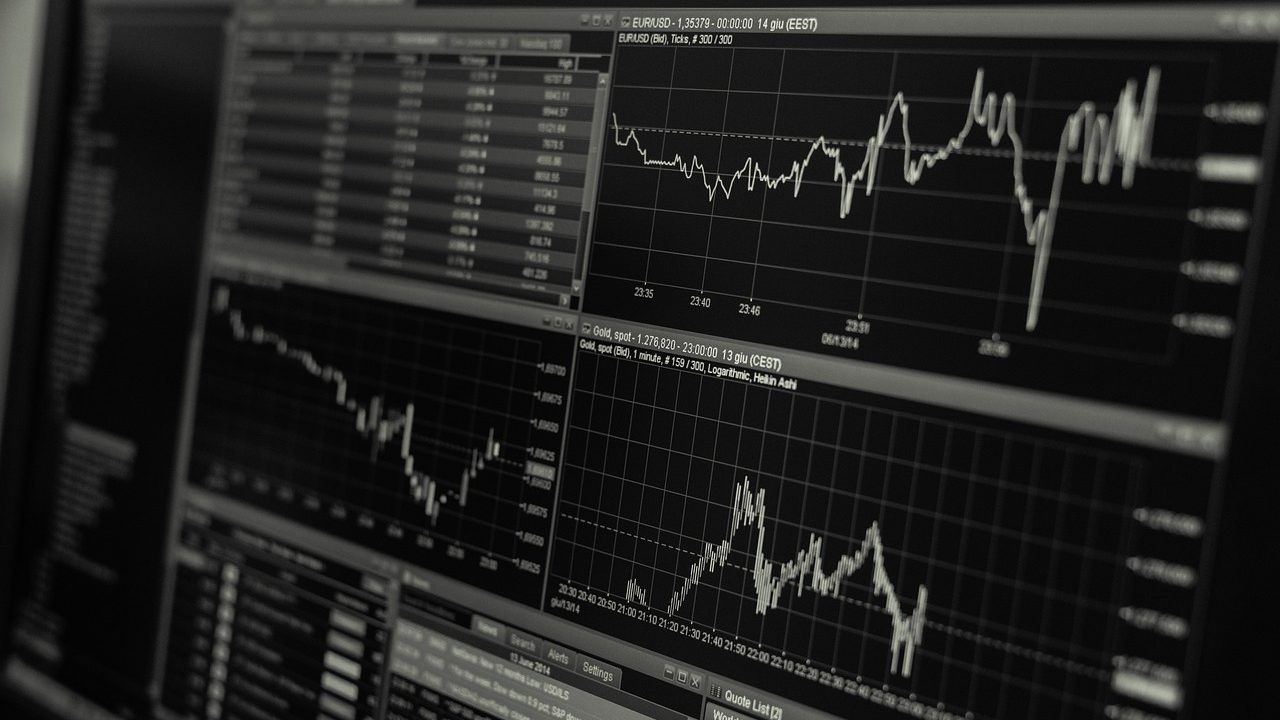
Markets are navigating a confluence of pressures that a surface-calm S&P futures reading of roughly 7,558 does not fully capture. The CPI report landing Tuesday is expected to show headline inflation running above the Federal Reserve's two-percent target, driven partly by energy prices elevated by Middle East conflict and partly by what Goldman Sachs is flagging as a new structural inflation source: the AI buildout itself. Economists now estimate roughly 700 billion dollars in data center spending is flowing through the economy this year, pushing up prices for specialized electronics components, electricity, and skilled labor — a dynamic Microsoft, Google, Meta, and Amazon have all flagged in recent earnings calls.
Kevin Warsh, the Fed chair installed by Trump after Jerome Powell's removal, faces congressional testimony under genuine constraint. He must signal enough hawkishness to maintain anti-inflation credibility — particularly with the 30-year yield now above five percent — without triggering a bond market selloff at a moment of elevated geopolitical risk. The five-percent threshold on the 30-year is the number analysts are anchoring to: at that level, long-dated government bonds begin competing seriously with equities for institutional capital, and pension funds with the option of five-percent risk-free returns have materially less incentive to hold stocks trading at elevated multiples.
Nvidia's situation is perhaps the most striking market anomaly of the week. The company just posted record revenue, yet its valuation multiple has hit a multiyear low — a signal that investors are beginning to apply meaningful skepticism to the sustainability of AI chip spending. The question the market is pricing is whether hyperscalers will enter a digestion period, slowing GPU purchases to absorb capacity already acquired. Vanda Research data shows retail investors are already rotating profits from the Magnificent Seven into newer AI and space listings, including SpaceX's public listing vehicle.
Apple, by contrast, has added roughly 600 billion dollars in market cap since late June — a gain of approximately fifteen percent — on a thesis almost inverse to the AI infrastructure trade. Apple's iOS 27, which just entered public beta with a substantially overhauled Siri built on tighter integration with on-device Apple silicon, positions the company as an AI beneficiary on the software side without the capital expenditure profile of a hyperscaler. In a market anxious about AI spending sustainability, that relative position reads as safety.
Goldman Sachs's warning about 'brutal' conditions in the AI bond market reflects a feedback loop worth tracking: companies financing AI infrastructure through corporate bonds face higher yields than eighteen months ago, raising the return hurdle for every new data center project. A facility that made financial sense at 4.5-percent financing costs looks materially less compelling at six percent — a dynamic that could eventually slow the very buildout driving some of the inflation now pressuring those same yields.
Primetime Politics: Election Integrity, ICE, and the Machinery of Power
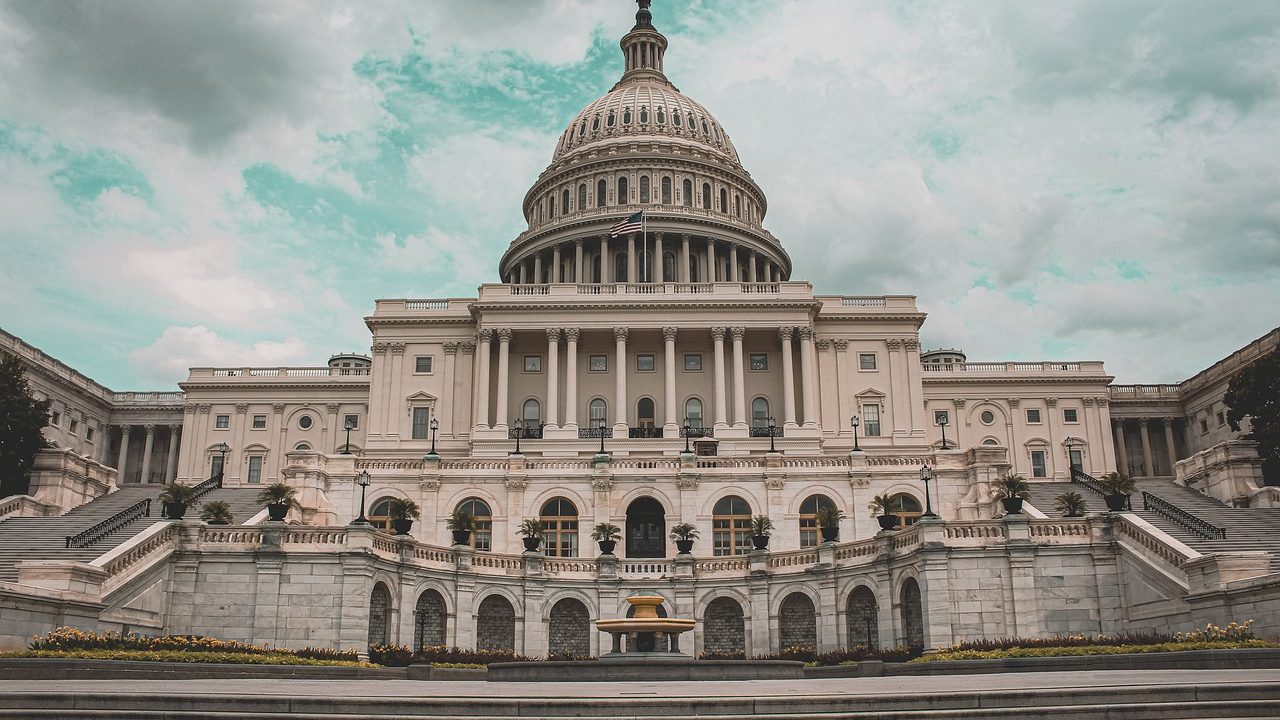
President Trump is scheduled to deliver a primetime address Thursday night that, according to reporting from CNBC and Reuters, will center on declassified intelligence about foreign interference in the 2020 election. The address arrives after the administration gutted the Election Assistance Commission — the independent federal body overseeing election administration — and after the Department of Justice sent letters threatening prosecution of state officials who resist federal pressure on voter roll management. The sequencing is deliberate: dismantling institutional referees, centralizing federal authority over voter infrastructure, and then presenting a declassified narrative in an information environment where those checks have already been weakened.
Mitch McConnell's announcement that a fall and a bout of pneumonia will keep him from the Senate adds complexity to a GOP majority already operating with minimal margin. McConnell is 84, and his extended absence makes near-unanimous Republican votes — already difficult in the current legislative environment — harder still, particularly as unresolved fiscal debates and the Iran conflict generate ongoing legislative demand. Separately, the confirmation hearing for Todd Blanche — Trump's former personal attorney — is generating sharp pushback centered on press freedom concerns, with civil liberties groups characterizing his involvement in certain DOJ actions as pressure on news organizations.
The House voted unanimously to ban foreign money in U.S. ballot measures — a moment of bipartisan consensus that is genuinely rare in the current chamber. The measure addresses what both parties apparently agree is a real vulnerability: foreign entities funding state ballot initiatives to shape domestic American policy. Whether the Senate takes up the legislation remains an open question.
In Maine, a 26-year-old Colombian man was shot and killed by ICE agents who, according to Senator Angus King, were not executing a warrant for him — he was not the intended target. King stated that Homeland Security Secretary Mullin confirmed this account. The accountability question — what legal and institutional recourse exists when immigration enforcement kills the wrong person — has no clear answer yet, and the case sits alongside Trump's cuts to two Utah national monuments by roughly ninety percent and a study finding that 1.7 billion dollars in National Guard deployments produced no measurable reduction in crime.
Dark money is flooding the Minnesota Senate primary at a scale that suggests both national parties view the seat as a potential swing in the next cycle. The Democratic Socialists of America, meanwhile, saw its leadership narrowly vote to block a membership referendum on a 2028 presidential endorsement — an internal fracture that reflects genuine uncertainty about whether to commit early to the emerging generation of democratic socialist candidates, including Zohran Mamdani, whom Trump separately targeted in a video calling for Mamdani's and Bernie Sanders's arrest.
The Distillation Wars: AI's Intellectual Property Reckoning
Microsoft CEO Satya Nadella drew a sharp line this week, calling AI labs 'hypocritical' for opposing model distillation — the practice of training a smaller model on the outputs of a larger one — given that those same labs built their foundational systems on massive datasets of publicly available text, including copyrighted material and human-authored code, without compensation or consent. The argument crystallizes a tension that has been building across the industry: labs that built on the commons now seek to prevent others from building on their outputs.
Nadella also invoked what he called the 'Reverse Information Paradox,' echoing a critique from Palantir CEO Alex Karp — the argument that AI systems are generating so much output that the ability to extract genuine signal from the noise is becoming harder, not easier. Both CEOs, deeply embedded in AI development from different vantage points, are raising an epistemological concern: a flood of AI-generated content may paradoxically reduce collective capacity to navigate reality.
Nous Research's Hermes agent platform is on track to raise at least 75 million dollars at a 1.5 billion dollar valuation, roughly fifteen months after a one-billion-dollar Series A. Hermes is built on open-source foundations, and the step-up in valuation challenges the assumption that open models cannot support high-value commercial businesses. The thesis is that open-source model infrastructure plus proprietary agent services and tooling can command premium valuations in the enterprise market.
MIT researchers have developed a Gaussian probing technique capable of detecting AI models fine-tuned on child sexual abuse material with 100-percent accuracy, analyzing internal model representations rather than generating any harmful outputs in the process. The breakthrough matters because the proliferation of fine-tuning tools has allowed bad actors to specialize base models for harmful purposes, and prior detection methods faced the constraint of requiring illegal material to be generated. MIT's approach eliminates that constraint entirely.
A serious developer security incident emerged around xAI's Grok Build command-line interface, which researchers found was uploading full code repositories — including API keys, database credentials, and private configuration files — to xAI's cloud infrastructure without clear disclosure to users. Developers trust CLI tools to operate locally by default; silent exfiltration of secrets to a third-party server represents a fundamental breach of that expectation, with potential exposure for any developer who ran the tool on a production codebase.
Chips, Search, and the Enterprise Software Rally

Apple's iOS 27 entered public beta this week with the headline feature being an overhauled Siri built on a substantially different architecture, with tighter integration with on-device Apple silicon and a more capable context window. The release signals Apple is ready for real-world stress testing of a product that has been widely considered a poor competitor to the new generation of AI-native assistants. Meanwhile, Google announced that the Pixel 11 will feature the first 2-nanometer smartphone chip before Apple's iPhone 17 cycle — a claimed milestone for Google's hardware ambitions, even though Pixel holds roughly three to four percent of U.S. Android shipments.
OnePlus has officially exited U.S. and European markets — a departure driven less by competitive defeat than by sustained U.S. government pressure related to supply chain concerns and Qualcomm patent litigation affecting parent company OPPO. The exit consolidates premium Android further toward Samsung and Google in Western markets and opens space for smaller players like Nothing.
San Francisco police drone surveillance feeds were found to be publicly discoverable on the open web without authentication — raising two distinct problems. The exposed feeds revealed law enforcement operational patterns to anyone who found the streams, potentially including targets of surveillance. They also eliminated any audit trail of who accessed the footage, a significant accountability gap for a department that has been expanding its drone program to cover traffic monitoring, crowd surveillance, and crime scene documentation.
Google search traffic grew four percent in June despite what the company itself acknowledges are explosive gains by AI-native rivals including Perplexity and ChatGPT search. The data point complicates the dominant disruption narrative: search behavior appears stickier than predicted, partly because Google's own AI Overviews feature is retaining users who might otherwise defect. Salesforce, Workday, and PagerDuty all rallied on AI optimism, driven by a thesis that AI agents — the next generation beyond chatbots — will drive enterprise workflow automation, and all three companies sit at the integration points those agents will need to access.
Meta's automated AI advertising tools are generating complaints from brands reporting that the system is distorting product images — faces rendered slightly wrong, text garbled, brand guidelines violated in subtle but noticeable ways. Advertisers rarely antagonize Meta publicly given how much revenue flows through its platform, making the decision to complain openly a signal of how seriously affected brands view the integrity of their visual assets.
Russia's Gasoline Crisis, China's Rocket Race, and a $3.2 Billion Question
Russian President Putin has threatened to respond 'several times more powerfully' to Ukraine's deepening strikes after what has been described as a record-setting Ukrainian drone campaign generated a nationwide gasoline crisis inside Russia. Fuel shortages visible to ordinary citizens represent a qualitatively different kind of domestic pressure than battlefield losses in Ukraine — people notice rationing and price spikes in ways they may not notice territorial shifts hundreds of miles away. Russian state polling continues to show majority support for the military operation, but independent researchers tracking social media sentiment and regional economic indicators paint a different picture.
A Morgan Stanley analysis has identified China's rocket program as the top threat to SpaceX's commercial launch dominance. China achieved its first successful recovery of an orbital rocket booster using a net-capture system — technically distinct from SpaceX's propulsive landing approach — and Morgan Stanley is telling clients that the competitive threat to SpaceX is more credible than it was eighteen months ago. The net-capture approach catches the returning booster in a large mechanical cradle rather than landing it on legs, and China's progress on reusability has closed the gap faster than most Western analysts anticipated.
The Saudi-UAE rift is forcing Wall Street banks to choose sides in what analysts describe as a three-trillion-dollar regional rivalry. Goldman Sachs, JPMorgan, and peers have cultivated deep relationships with both Saudi Arabia's Public Investment Fund and Abu Dhabi's sovereign wealth funds, which together deployed an estimated 119 billion dollars in global investments in 2025. As Riyadh and Abu Dhabi increasingly compete across tourism, AI investment, financial services, and arms procurement, being the trusted strategic advisor to both sides simultaneously is becoming untenable.
The Pentagon has invested 25 million dollars in ReElement, a rare earths startup with a novel processing technology designed to reduce U.S. dependence on Chinese refining capacity. China controls roughly 85 percent of global rare earth processing — elements essential for electric motors, defense systems, and AI hardware — and the Defense Department has been seeking to address that supply chain vulnerability since at least 2019. Twenty-five million dollars is a signal of intent, not a solution, but it is a bet being placed publicly.
A Washington Post analysis found that companies linked to Donald Trump Jr. and Eric Trump received more than 3.2 billion dollars in federal contracts since their father took office. The figure is striking enough to ensure the story will recur in congressional testimony, campaign advertising, and legal proceedings; the White House had not responded publicly to the analysis as of Tuesday morning.
Starship Cleared, Black Holes Found, and an 80-Year Physics Problem Solved
The FAA has cleared SpaceX Starship for Flight 13 after completing its mishap investigation, a regulatory milestone that came relatively quickly and suggests the agency found the previous anomaly understood and corrective actions in place. Starship stands 123 meters tall — roughly the height of a 40-story building — and Flight 13 is expected to attempt additional milestones in both upper-stage reentry and the booster catch mechanism SpaceX calls 'Mechazilla.' Once regulatory clearance is in hand, SpaceX typically moves quickly; a launch window announcement within weeks is realistic.
The Hubble Space Telescope has detected the first stellar-mass black hole inside Omega Centauri, the Milky Way's largest globular cluster, which contains roughly ten million stars packed into a sphere about 150 light years across. Stellar-mass black holes — formed when individual massive stars collapse — are far harder to find than the supermassive variety because they are smaller and do not shine. Hubble identified this one by detecting its gravitational influence on nearby stars, a technique requiring extraordinary precision given the cluster's density.
Astronomers have identified the first true sugar in interstellar space: erythrulose, a four-carbon sugar that contributes to the chemical signature of raspberries, detected in a molecular cloud near the center of the Milky Way. The discovery matters for astrobiology because sugars are RNA building blocks, and finding complex organic molecules distributed through the interstellar medium suggests that the chemical precursors to life are far more widely available across the galaxy than previously understood. It does not confirm life elsewhere — but it confirms the ingredients are present.
NYU researchers have resolved the Feynman Sprinkler problem, an experimental puzzle that Richard Feynman posed in the 1940s and that physics textbooks have been hedging on for roughly 80 years. The question — whether a reverse-running sprinkler sucking in water rotates in the opposite direction from normal, stays still, or rotates the same way — was answered by building specially engineered 'silly sprinklers' that isolated the relevant fluid dynamics. The team found the answer depends critically on flow rate: the backward sprinkler rotates in the opposite direction at low flow rates and stagnates at high ones.
Penn State researchers have developed paint-on skin electrodes — conductive inks applied directly to skin that dry into flexible, conformable sensors measuring heart rate, muscle activity, and neural signals. The key advantage over wearable devices is the elimination of motion artifact: the gap between a wearable and the skin surface picks up noise when the body moves, a problem that disappears when the electrode is bonded directly to the skin. A separate theoretical physics proposal connected dark matter to a hidden spatial dimension, suggesting that particles leaking into an extra dimension could produce the gravitational signatures currently attributed to dark matter — a hypothesis the paper frames as falsifiable through precise cosmological observation.
Cyclospora, Heat Domes, and a Stress Test of the Iran Strategy

A cyclospora parasitic outbreak has surpassed 3,000 confirmed cases across Michigan and Ohio, with lettuce identified as the likely source. Cyclospora cayetanensis causes cyclosporiasis — watery diarrhea, fatigue, and nausea that can persist for weeks if untreated — and is not always included in standard stool screens, meaning actual infection counts are likely several times the confirmed figure. The outbreak is running in parallel with a separate California grapevine recall from Costco, where Santa Clara County officials are going door-to-door to collect plants over concerns about an invasive pest that could threaten California's $45 billion wine industry.
A heat dome affecting more than 100 million Americans is raising public health alarms that tend to be underreported because heat deaths are diffuse rather than dramatic. Extreme heat kills more Americans annually than floods, hurricanes, and tornadoes combined, and the mortality risk falls disproportionately on elderly people, outdoor workers, and low-income households without air conditioning. The Michigan sign-stealing lawsuit — a former coach alleging the program's leadership covered up the scheme that predated Michigan's 2023 national championship — is meanwhile raising uncomfortable questions about whether the title was won under fraudulent conditions, with legal weight derived from the fact that the plaintiff is a former insider willing to testify under penalty of perjury.
Mike Rowe's comments about America being 'untethered from work,' offered in the context of the Pentagon's push to address skilled trades shortages, touch a genuine economic gap. The Associated Builders and Contractors estimates a shortage of roughly 500,000 construction workers this year alone, with similar gaps in electrical, plumbing, HVAC, and welding. The Pentagon's involvement signals recognition that military maintenance and construction needs are running into the same labor shortage affecting the civilian economy.
The 'What If We're Wrong?' analysis of the Iran strategy centers on a core assumption worth stress-testing: that maximum pressure combined with American military superiority will produce a favorable outcome — regime change or a nuclear deal — faster than a prolonged conventional conflict. The historical record of maximum pressure campaigns against Iran is mixed at best. The Islamic Republic survived the Iran-Iraq War, the 2009 Green Revolution, and the 2020 assassination of Qasem Soleimani. Iranian governance does not depend on a single leader; the Islamic Revolutionary Guard Corps, the Guardian Council, and the Assembly of Experts are institutions with their own survival mechanisms, and removing Khamenei — if Trump's unverified claim is accurate — could elevate a more hardline faction rather than collapse the system.
Two additional assumptions deserve scrutiny. First, the IAEA's last comprehensive assessment before escalation suggested Iran had achieved sufficient uranium enrichment knowledge that destroying physical facilities would delay rather than eliminate the program — the human capital and dispersed knowledge base would survive a strike on Pickaxe Mountain. Second, the 79 percent of Americans expecting a prolonged conflict are not uniformly demanding escalation. If domestic polling support for continued strikes falls below 50 percent among Republicans — a threshold to watch — the political foundation for the current strategy would be eroding faster than the administration anticipates.
What to Watch Next: Deadlines, Data, and a Launch Window
Thursday's primetime presidential address is the next major domestic political event. The key variables to watch are how the administration frames its 'declassified' 2020 election intelligence, which claims it chooses to make publicly and which it withholds, and — critically — the congressional reaction from Republicans who have been quietly uncomfortable with some of the administration's election-related actions. Warsh's Fed testimony Tuesday will set rate expectations through the summer; any signal of openness to cuts before inflation is clearly subdued will draw a sharp bond market response.
On the Iran front, the Pentagon's one-week deadline for releasing the school strike investigation findings expires in seven days. Whether the administration complies, seeks an extension, or