From Tehran to Trillion-Dollar AI Bets: The Week's Converging Crises
A single Saturday briefing captured the full weight of mid-2026: U.S. strikes still echoing across the Middle East, a Sequoia Capital warning that the AI industry must generate three trillion dollars just to break even, and a domestic political landscape shifting faster than any single news cycle can track.

“the AI industry must generate three trillion dollars in annual revenue — roughly equivalent to Germany's entire GDP — just to justify committed infrastructure spending”
How this was made Verified AI
Every Intellegix briefing is generated from that day's broadcast and run through automated checks before it publishes — with a human paged on any flag. Here is the trail for this edition.
The Week's Fault Lines: AI Math, Iran, and a Fragile World Order
Three trillion dollars. That is the revenue figure Sequoia Capital says the artificial intelligence industry must generate annually — not to profit, but simply to justify the infrastructure spending already committed. The number reframes nearly every major story of the week, from OpenAI's financial headwinds to Meta's image-generator retreat to Elon Musk's internal corporate maneuvering.
Meanwhile, the geopolitical backdrop grew more volatile by the day. Donald Trump publicly revealed standing orders to bomb Iran in the event of his assassination. Satellite imagery showed Iran rebuilding its bombed nuclear facilities. The U.S. withdrew F-22 stealth fighters from Israeli airspace after five months. And the Kremlin scrambled to interpret Trump's suggestion of a no-fly zone over Ukraine — a proposal that reportedly caught Moscow entirely off guard.
On the diplomatic front, Indian Prime Minister Narendra Modi made a historic visit to Auckland, signing ten bilateral agreements with New Zealand and targeting a doubling of bilateral trade to seven billion New Zealand dollars by 2030. In Washington, bipartisan senators advanced a Russia sanctions bill that would impose a 500 percent tariff on countries buying Russian energy — with Trump reportedly supportive.
Financial markets added their own alarm signals: Bank of America's Bull and Bear Indicator hit 9.5, its most extreme contrarian sell reading since 2021, even as real 30-year Treasury yields reached their highest level since 2008. The Texas Stock Exchange launched live trading. China banned helium exports, tightening semiconductor supply chains at the worst possible moment. And the USDA cut the U.S. wheat forecast to its smallest crop since 1970.
Iran on the Brink: Assassination Orders, Rebuilt Reactors, and a Republican Civil War

Donald Trump's public disclosure that he left standing orders for the U.S. military to bomb Iran if he were assassinated would, in any ordinary week, dominate the news cycle on its own. Framed as a deterrent and delivered in the context of fresh Israeli intelligence about an Iranian plot against Trump's life, the statement amounts to a dead man's switch broadcast directly to Tehran — a diplomatic signal as much as a military one.
Simultaneously, satellite imagery showed Iran has resumed construction activity at multiple bombed nuclear sites, treating reconstruction as a sovereign right rather than a negotiating concession. The development poses a direct challenge to the premise of any ceasefire framework: if the U.S. strikes did not permanently eliminate the program, analysts are asking what the military objective actually was.
The U.S. withdrawal of F-22 Raptors from Israel — roughly 186 are in the operational fleet, and their five-month deployment was a significant commitment signal — has generated competing interpretations. It could indicate a reduced threat environment, a need for those assets elsewhere, or a deliberate message about the terms of continued American support. Each reading carries different implications for Israeli defense planning.
Inside the White House, a former administration staffer reportedly claimed that Vice President JD Vance was deliberately positioned as the political fall guy for the Iran deal's collapse — that the deal's failure was anticipated or engineered internally, with blame pre-assigned to Vance. The allegation feeds a visibly escalating rivalry between Vance and Secretary of State Marco Rubio, with Vance allies openly disparaging Rubio in the press, suggesting the 2028 Republican primary has effectively already begun.
Trump meanwhile claimed the Nobel Peace Prize even as U.S. strikes on Iran were reportedly ongoing or recently completed. The U.S. dollar held near 101 on the DXY index as strike news and Federal Reserve rate-hike expectations created contradictory market pressures, with investors simultaneously pricing a flight-to-safety impulse and the inflationary implications of sustained tightening.
A New Pacific Axis: India, New Zealand, NATO Spycraft, and the Helium Squeeze

Modi's Auckland visit — the first by an Indian prime minister in years — produced ten signed bilateral agreements and a joint commitment to double trade to seven billion New Zealand dollars by 2030. Analysts note that India is systematically building economic and security relationships across the Pacific Rim with countries outside China's orbit, constructing what amounts to a diplomatic latticework that supplements its existing QUAD partnerships with the United States, Japan, and Australia.
The maritime security dimension elevates the deal beyond trade statistics. New Zealand controls substantial ocean territory in the South Pacific, and India has been extending its maritime relationships from the Indian Ocean toward the Pacific. Together, the partnerships form what is functionally becoming an Indo-Pacific security architecture, even if it carries no explicit military label.
Dutch intelligence revealed this week that Russian operatives had compromised consumer doorbell cameras near NATO bases to conduct systematic reconnaissance — using civilian IoT surveillance infrastructure as a distributed sensor network. The Dutch intelligence service, AIVD, is among Europe's most respected agencies, and public attribution of this kind is typically deliberate, designed simultaneously to warn allies, assign blame, and signal to Moscow that the operation has been detected.
China's decision to ban helium exports — citing domestic supply protection as the U.S.-Iran conflict disrupted global supply chains — compounded pressure on an already strained semiconductor industry. Helium is critical not only for semiconductor fabrication but for MRI machines, fiber optic cables, and rocket propellants. The SK Hynix CEO has already warned that 2027 could bring the worst memory chip shortage ever recorded, driven by AI demand outstripping capacity. Micron responded by raising its U.S. investment commitment to over 250 billion dollars, though new fabrication facilities carry three-to-five-year construction lead times.
The 2026 Midterm Map Shifts: Vetoes, Vacancies, and McCarthy's Backseat Driving

Michigan Governor Gretchen Whitmer vetoed nine bills within hours of a court rejecting a Republican attempt to block those very vetoes — a sequence that read as deliberate political theater. The speed of the response was itself a message, reinforcing Whitmer's positioning as one of the most prominent Democratic counterweights to the current administration.
The Cook Political Report shifted four governor races toward Democrats simultaneously, a move that carries significant analytical weight given the organization's standing as Washington's most respected nonpartisan race-rating body. Moving four races in the same direction at once signals a genuine shift in the underlying political environment, likely reflecting the Iran conflict's domestic political dynamics and economic anxiety about inflation and interest rates.
Maine's Senate race descended into chaos after Democratic nominee Graham Platner withdrew, leaving the party a sixteen-day window — until July 27 — to identify, vet, and select a replacement candidate via convention to challenge incumbent Susan Collins, who has navigated every political storm in the state for twenty-eight years. Adding complexity, the New York Post reported that a top adviser to New York City Mayor Zohran Mamdani had backed Platner's candidacy not to win Maine but to complicate Alexandria Ocasio-Cortez's path to a potential 2028 presidential run — an early example of preemptive positioning that has become increasingly visible across the party.
Former House Speaker Kevin McCarthy publicly pressured current Speaker Mike Johnson to stop recessing the House, a rebuke that is correct on the merits but notable in its public delivery from the person Johnson directly succeeded. Separately, Senate Republicans called for clarity on Mitch McConnell's health as the chamber returned Monday to work on Russia sanctions and Iran-related national security legislation. NOTUS reported that the White House had killed a health ad campaign that Health and Human Services Secretary RFK Jr. had planned, an unusual intervention suggesting ongoing tension between Kennedy's policy agenda and administration priorities.
Trump-backed Freedom Fuel gas stations launched across Pennsylvania and New Jersey at a debut price of three dollars and forty-seven cents per gallon, but prices were already climbing above that figure. The ownership structure was described as opaque, raising both policy credibility questions about a promise to lower fuel costs and potential legal exposure questions about the relationship between the venture and Trump Organization entities.
AI's Existential Arithmetic: Three Trillion Reasons to Worry

Sequoia Capital's analysis warning that the AI industry must generate three trillion dollars in annual revenue — roughly equivalent to Germany's entire GDP — just to justify committed infrastructure spending drew new urgency from several simultaneous disclosures this week. Sam Altman acknowledged that rising compute costs represent 'a headwind' for OpenAI, a notably understated formulation from an executive not known for understatement, suggesting the financial math between infrastructure buildout and revenue generation is visibly under strain.
The Hugging Face CEO and Amazon's CTO were making the same argument from opposite sides of the market: enterprises are moving toward cheaper open-source AI alternatives. Clément Delangue cited rising costs and U.S. export restrictions on closed models as drivers. Amazon's CTO described enterprise clients shifting away from expensive proprietary APIs. When both the supply and demand sides of the industry converge on the same conclusion, it constitutes a structural signal rather than a tactical observation.
A brief primer on the antitrust dimension clarifies why this matters legally. The Sherman Act prohibits not dominance itself but the use of monopoly power to exclude competition — through predatory pricing, exclusive dealing, or product tying. For AI, the regulatory question that will eventually require an answer is whether large closed-model providers are using capital advantages to structurally exclude open-source competition, or whether the market is simply rewarding scale and quality. If enterprises migrate to open source at scale, that market discipline may render the regulatory question moot.
Elon Musk directed Tesla employees to abandon competing AI tools in favor of Grok, xAI's large language model — vertical integration by corporate mandate rather than market competition. Meta, meanwhile, pulled its Muse image generator after an intense backlash over the product's training on billions of Instagram user photos without explicit consent for commercial AI use. The gap between legal defensibility under Meta's terms of service and users' actual expectations proved too wide to bridge publicly. Separately, Musk reversed earlier criticism to call Anthropic 'the clear AI leader,' an endorsement that elevates Anthropic's competitive position at precisely the moment OpenAI is managing public financial pressure.
Rockets, Robots, and the Race to Reuse: SpaceX, Tesla, and China's Booster Catch
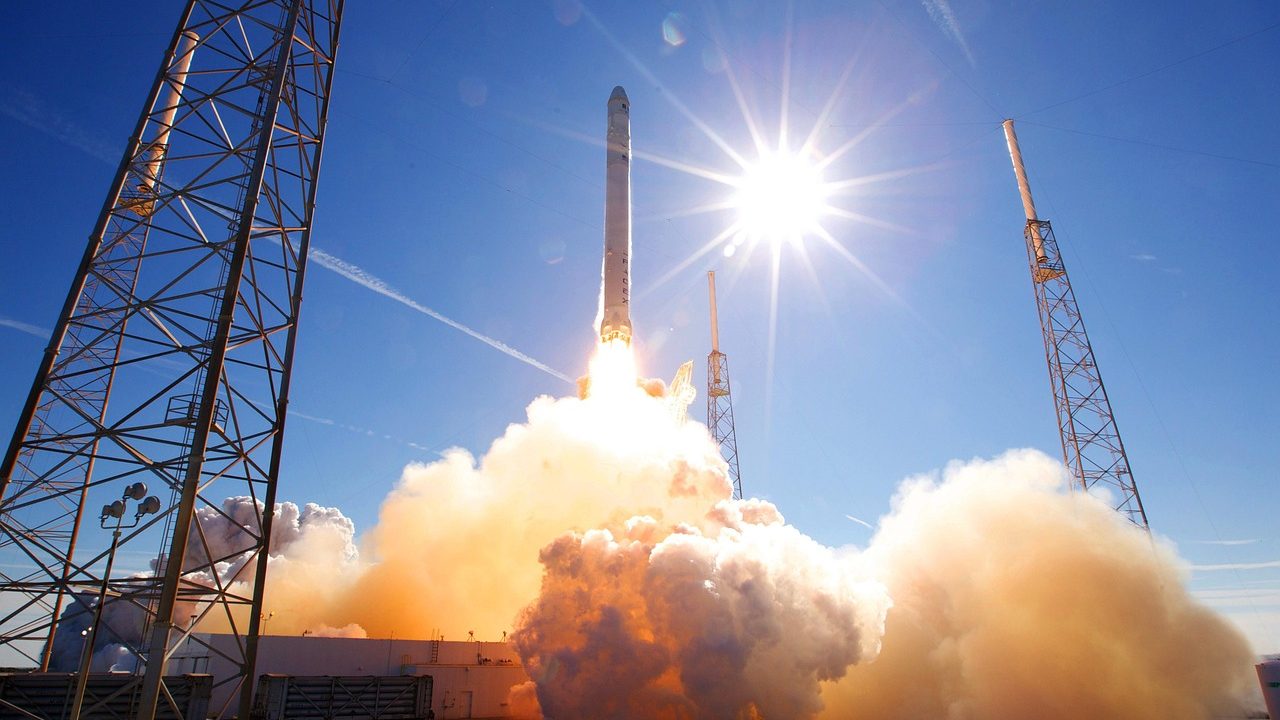
SpaceX successfully fired all 33 Raptor engines on the Super Heavy booster in a full-duration static fire test at Starbase, Texas, targeting Flight 13 of Starship for July 14 — three days from the broadcast date. Starship is designed to carry 100 to 150 metric tons to low Earth orbit, forming the foundation of NASA's Artemis lunar landing architecture and virtually every other ambitious near-term deep-space mission.
SpaceX's financial picture is more complicated than its engineering success narrative. Musk claimed this week the company could eventually be worth more than Earth — a statement analysts categorized as aspirational hyperbole — while SpaceX shares recently hit an all-time low, weighed down by billions in AI spending and accelerating quarterly losses. Analysts expect terrestrial compute contracts, using Starlink-adjacent satellite infrastructure for AI processing, to generate over 28 billion dollars this year, dwarfing launch and subscription revenue and making SpaceX, in a meaningful sense, an AI compute company that also launches rockets.
China recovered a rocket booster at sea using a net system this week, demonstrating independently developed reusability technology. Whether the approach matches the mass efficiency of SpaceX's mechanical-arm 'chopstick' system remains unproven, but the achievement confirms that the technical barriers to booster reuse are falling — with significant competitive implications for launch services pricing globally.
Tesla dismantled its entire Model S and Model X production line in 46 days to make room for Optimus humanoid robot manufacturing, releasing a time-lapse video of the clearing. Production is targeting late July. Analysts drew comparisons to early iPhone adoption curves, arguing Tesla's autonomy and robotics stack might follow a similar S-curve trajectory — though the decision to exit the premium sedan market coincides with a broader 25.1 percent contraction in battery EV sales in the first half of 2026, raising questions about the timing of the pivot.
New York City adopted a 'click to cancel' subscription rule requiring cancellations to be as easy as sign-ups, filling a federal regulatory vacuum after the FTC's version of the rule was struck down in court. Google VP Josh Woodward publicly solicited and published user complaints about the Gemini app on X, committing to fix most of the top ten issues — an unusual exercise in public product accountability that creates meaningful transparency but also measurable risk if resolution timelines slip.
Markets at the Edge: Sell Signals, Wheat Shocks, and a Texas Stock Exchange
Bank of America's Bull and Bear Indicator reached 9.5 this week, its most extreme contrarian sell signal since 2021 — the last time it hit that threshold, the market was near a peak that preceded a significant correction. Contrarian indicators carry no precise timing information, but at near-10 readings, they signal that the margin of safety in equity markets has eroded to historically thin levels. Compounding the concern, real 30-year Treasury yields — adjusted for inflation — reached their highest level since 2008, meaning bond markets are simultaneously pricing persistent inflation and sustained Federal Reserve tightening.
The distributional reality behind market euphoria adds a political dimension. Reuters reported that approximately 58 percent of Americans own equities, but the top 10 percent of households hold roughly 87 percent of all stock market wealth. S&P Futures at 7,620 and climbing represents meaningful wealth appreciation for a narrow slice of the electorate, limiting the political resonance of market-based economic messaging.
The Texas Stock Exchange — backed by BlackRock and Citadel Securities, among others, and positioning itself as a less-regulated alternative to the NYSE and Nasdaq — began live trading on Friday, moving from concept to operational competition in American capital markets.
The USDA cut its U.S. wheat forecast to the smallest crop since 1970, adding a domestic production shortfall to a global market already stressed by the Ukraine conflict. Ukraine and Russia together typically account for around 28 percent of global wheat exports; reduced Russian flows plus a sharply lower American crop concentrate supply pressure in North Africa and the Middle East — the regions whose stability is already under strain from the Iran conflict's economic ripple effects.
Hybrid vehicles surged 19.4 percent in the first half of 2026 while battery EV sales fell 25.1 percent, a divergence analysts attribute primarily to the removal of the federal EV tax credit, which added several thousand dollars to EV purchase prices overnight. AI tools drove a record three million-plus new business applications in the first half of the year, up 17 percent from the same period in 2025, though analysts noted that business formation often peaks ahead of economic contractions as displaced workers attempt to create their own income.
Starships, Unidentified Objects, and a Planet Under Heat

For the first time, astronomers directly detected the mechanism by which gas flows — described as 'cosmic drift' — trigger the gravitational collapse that initiates star formation. The discovery moves the field from theoretical modeling to direct observational evidence of the initiating event, a distinction researchers compare to the difference between knowing lightning causes fires and witnessing a specific bolt strike a specific tree.
The Pentagon released its fourth batch of declassified Unidentified Aerial Phenomena files under a congressional transparency mandate, while NASA Administrator Jared Isaacman made a separately notable disclosure: the agency holds images of objects it cannot classify as known comets, satellites, or atmospheric phenomena. Isaacman explicitly stated there is no evidence of extraterrestrial life, but added that he believes humanity might discover signs of life within their lifetimes. Isaacman, a former private astronaut who led the Inspiration4 mission before becoming NASA administrator, brings less traditional bureaucratic caution to UAP topics than his predecessors.
BETA Technologies flew the first FAA-approved electric aviation missions carrying manufactured organs — traveling 275 nautical miles across Virginia and Maryland under the agency's new eVTOL pilot program. The medical organ transport use case offers a near-perfect commercial beachhead for the technology: time-critical, high-value, short-to-medium range, and currently served by expensive charter aircraft. If BETA establishes reliability in this sector, analysts expect the regulatory foothold to accelerate the broader eVTOL industry's path to approval.
The FCC approved Reflect Orbital's space mirror satellite — carrying an 18-by-18-meter reflective surface designed to redirect sunlight to Earth — over the formal objections of more than 1,800 astronomers, who argued that reflective low-Earth-orbit satellites create light pollution that degrades ground-based telescope observations. The ruling prioritized commercial innovation over scientific infrastructure protection. On the ground, a massive heat dome was forecast to target most of the continental United States the following week, arriving alongside a wheat crop forecast at its smallest since 1970 and placing simultaneous pressure on agricultural output and power grid reliability.
The Trump administration finalized a rule stripping habitat protections from the Endangered Species Act, removing 'critical habitat' designations as a meaningful regulatory tool. Environmental law organizations began organizing legal challenges, and given the pattern of such regulatory reversals, the courts are expected to have the final word over a multi-year litigation timeline.
Courts, Culture Wars, and the Limits of Consensus

The Indiana Fever issued a public statement distancing themselves from a GOP congressional letter targeting Caitlin Clark, an unusually direct organizational response to a legislative action. Clark, widely regarded as the most commercially significant athlete in WNBA history — her arrival drove television ratings increases that reshaped the league's media contracts — has become a political symbol well beyond anything she or the franchise chose. Sponsors and broadcasters assess political association as brand exposure, making the Fever's statement partly principled and partly a financial self-protection exercise.
Sullivan and Cromwell, one of the country's most prestigious law firms — founded in 1879, with a client list spanning major financial institutions and sovereign governments — experienced a public internal split over the firm's involvement in Trump's E. Jean Carroll appeal. Public disagreement within such an institution about a politically adjacent case is genuinely unusual and reflects the degree to which Trump-related legal work has become a cultural and reputational flashpoint inside firms that have historically maintained strict political neutrality.
Boris Epshteyn's continued role as Trump's top personal counsel drew fresh scrutiny after reporting that a 2024 internal recommendation to remove his access was not acted upon, even as the American Bar Association sought to subpoena him. Epshteyn holds no official White House title but exercises significant influence over legal decisions with public consequences, placing him at the intersection of personal counsel accountability and bar discipline proceedings.
The 'What If We're Wrong?' stress test applied to the week's dominant AI consensus — that open-source models are structurally displacing expensive proprietary systems — identified two key vulnerabilities in the thesis. First, cost may not be the primary enterprise optimization variable: liability protection and vendor accountability command premiums that open-source models cannot easily provide. Second, the open-source shift may be concentrated in cost-sensitive startups and mid-market firms rather than Fortune 500 buyers signing multi-year contracts for mission-critical applications. The concrete signals to watch: enterprise contract renewal rates above 90 percent at Anthropic and OpenAI over the next two quarters would suggest the displacement thesis is running behind schedule; rates below 70 percent alongside accelerating open-source framework adoption on GitHub would confirm the structural shift is genuinely underway.