Ceasefire Collapses, NATO Fractures, and AI Markets Reel: A World in Simultaneous Crisis
A single overnight stretch saw the U.S.-Iran ceasefire declared dead, Ukrainian drones strike Russian industrial targets across multiple fronts, and global equity futures slide as two compounding crises rattled markets on Wednesday, July 8, 2026.
How this was made Verified AI
Every Intellegix briefing is generated from that day's broadcast and run through automated checks before it publishes — with a human paged on any flag. Here is the trail for this edition.
Iran Ceasefire Detonated as NATO Summit Exposes Deep Alliance Rifts
The preliminary U.S.-Iran ceasefire is over. President Trump declared it finished at NATO's summit in Ankara — the alliance's first gathering in Turkey in decades — as reports emerged that American and Iranian forces had already exchanged strikes through the night. The escalation outpaced even the most pessimistic analyst forecasts from two weeks prior.
Trump's conduct at the summit unsettled allies on multiple fronts. He singled out Spain for trade punishment over what he characterized as insufficient defense commitments — a move that reads partly as geopolitical retaliation against Prime Minister Sánchez, one of the more vocal European critics of Trump's Iran policy. The alliance held together its communiqué language, but private conversations among European foreign ministers were reportedly tense.
The sharpest scrutiny falls on CNN reporting that U.S. commanders proceeded with a strike on a location that turned out to be a school, overriding intelligence warnings that had flagged civilian risk. The pattern raises immediate questions about current rules of engagement governing U.S. military action in Iran, and whether Congress retains meaningful visibility into those rules as the War Powers clock runs.
The summit also produced a striking transatlantic divide over Ukraine. Finland's President Alexander Stubb told reporters that Ukraine has 'already won the war,' a framing echoed by Sweden's prime minister — both arguing Russia has been degraded beyond strategic recovery and that any settlement should reflect Ukrainian gains. Trump, by contrast, said the war would be settled 'soon,' language that historically signals his preference for a deal both sides can declare victory, potentially a very different end state than what European leaders are describing.
The Energy Information Administration's projection that global oil output will recover to pre-war levels by year-end already looks strained following the ceasefire's collapse. Iranian crude represents a meaningful share of global supply when sanctions are not fully enforced, and markets are clearly skeptical of the EIA's timeline.
Ukraine Strikes Russian Chips and Refineries, Declaring Itself Unbound on Deep Strikes

Ukrainian drones executed a broad overnight campaign against Russian territory, hitting refineries, tankers, a microchip production facility, and an explosives factory in a single coordinated operation. The breadth of targeting — spanning energy infrastructure, industrial production, and semiconductor manufacturing — reflects a deliberate strategic logic aimed at degrading Russia's capacity to sustain its war economy.
The microchip plant strike carries particular significance. Russia has been working to build domestic semiconductor capacity since Western sanctions took hold in 2022, and destroying that capacity directly extends the effective reach of the sanctions regime. It is not merely a military strike but an act of industrial warfare targeting the guidance systems and communications equipment on which modern combat depends.
Ukraine simultaneously announced it no longer considers itself bound by any approval requirement for deep strikes on Russian territory — a formal declaration of something already happening in practice as Western allies gradually loosened restrictions on weapons use. Stating it explicitly changes the diplomatic landscape, signaling that Ukraine regards itself as having received a de facto green light even without explicit Western authorization.
The declaration complicates the settlement picture being sketched at NATO's Ankara summit. Russia cannot plausibly accept a peace agreement that leaves Ukraine with long-range strike capability pointed at its industrial heartland; Ukraine cannot accept terms that leave Russia in occupation of Ukrainian territory. The gap between those positions remains enormous despite the optimistic language from both Trump and European leaders.
U.S.-Canada charges against 37 individuals in Operation Hard Ball added a further dimension to the Russia-linked threat environment. The charges targeted three transnational criminal networks connected to the 2023 assassination of Sikh leader Hardeep Singh Nijjar in British Columbia, with the networks reportedly carrying overlapping ties to Russian intelligence operations targeting diaspora communities in North America — a reminder that the conflict extends well beyond Ukraine's borders.
DOJ Erases Epstein Financial Red Flags as Domestic Politics Grows More Turbulent

The Department of Justice has reportedly and quietly removed bank fraud alerts from Jeffrey Epstein's files. According to the report, Suspicious Activity Reports filed by TD Bank and Charles Schwab on an Epstein-owned offshore bank were taken down and reissued blank — effectively erasing documented financial red flags from the record. Suspicious Activity Reports are legal documents generated through mandatory anti-money laundering processes; their modification raises questions about potential obstruction of an ongoing or future investigation.
Ohio Democrats are accusing Vivek Ramaswamy of concealing $509,000 in spending from his gubernatorial campaign filings. Ramaswamy is attempting to convert his national MAGA profile into statewide electoral success in Ohio, and any finance irregularities risk defining his campaign before it reaches full stride.
The DOJ separately threatened to prosecute election officials over noncitizen voting — conduct already illegal under federal law. The more consequential effect may be the chilling impact on legitimate voters with documentation questions rather than any prosecutions themselves. Meanwhile, the White House called the 'irony' of the Balogun birthright citizenship case 'asinine' as litigation over Trump's earlier executive order on the subject continues through the courts without a final Supreme Court ruling.
Justices Barrett and Kagan are scheduled to testify before Congress on July 14th — the first such joint appearance in seven years. How both justices navigate the tension between legislative accountability and judicial independence will signal where the Court sees its institutional boundaries at a particularly fraught political moment.
The Eleventh Circuit struck down Florida's Stop WOKE Act on First Amendment grounds, finding it violated the compelled speech doctrine by restricting what corporations and other institutions could teach about race and gender. The reasoning will be cited in challenges to analogous legislation across Republican-controlled states. Separately, Tony Brown was disqualified from the July 28th Georgia special election to complete the late Representative David Scott's term in the 13th District, narrowing the field to five candidates in a majority-Black, reliably Democratic seat where special-election dynamics can produce surprises.
Chinese AI Captures Enterprise Market Share as U.S. Rivals Face Valuation Questions

Chinese AI models are now powering more than 30% of U.S. enterprise traffic, according to new data, making the notion that Chinese AI competition is theoretical definitively obsolete. Investment firm Quantum Strategy is actively advising clients to exit Magnificent Seven technology holdings and buy Chinese AI equities instead, citing a cost differential that CNBC reporting puts at up to 90% cheaper than comparable offerings from OpenAI and Anthropic. When a CFO sees a 90% cost reduction with comparable output quality, that is not a complicated procurement decision.
The antitrust framework governing this competition is widely misunderstood. The Sherman Antitrust Act prohibits anticompetitive agreements and monopolization through exclusionary conduct — not large market share itself. The relevant market definition, whether drawn as large language models, AI assistants, enterprise software, or information technology broadly, determines whether any company appears dominant. Those legal boundaries will become increasingly contested as AI market concentration intensifies.
OpenAI cleared federal review for Thursday's public launch of GPT-5.6 — itself a notable marker that a federal review process for major AI model releases now exists. But prediction markets now favor Anthropic over OpenAI in the AI IPO race, reflecting investor doubts about OpenAI's governance structure, its for-profit conversion process, and the legal shadow from the Musk lawsuit, which was referred to mediation after Musk lost his $150 billion claim while residual disputes remain.
SpaceXAI and Cursor are jointly releasing a developer-focused model on Wednesday. Cursor has built an extraordinarily loyal following among software engineers, and SpaceXAI bringing compute resources to bear on a best-in-class coding tool represents a direct competitive challenge to GitHub Copilot and the coding variants of Claude and GPT-4. Perplexity separately announced a partnership with Nvidia's new Vera CPU — designed specifically for inference at scale — for AI agent workloads.
A new study of seven popular generative AI tools found materially different answers to identical personal finance questions, with variation correlating with user demographics — meaning the systems effectively dispensed different advice based on perceived characteristics of who was asking. For tools being used by millions for actual financial decisions, that reliability and fairness failure is precisely the kind of finding that draws SEC and CFPB scrutiny.
Markets Under Pressure: Iran, AI Chips, Bond Signals, and Record Beef Prices
S&P futures opened Wednesday down 64 points at 7,487, a decline of approximately 0.85%, driven by the convergence of Iran escalation and an AI chip selloff. The chip selloff reflects both a valuation correction after extraordinary gains and a direct response to evidence that enterprise AI spend is migrating toward cheaper Chinese alternatives — a shift that compresses the revenue trajectory for U.S. AI chip demand.
Gold's three-year bull market has officially ended after a 150% rally that carried prices from roughly $1,800 to above $4,500 per ounce. The structural drivers — central bank accumulation, inflation hedging, geopolitical risk premium, and de-dollarization moves by emerging market central banks — have not necessarily reversed; the market may simply have priced in more than fundamentals could sustain at the margin. Michael Burry's public dispute with Trump over short selling provides a contextual backdrop, with Burry having maintained bearish equity positioning even as the administration celebrated record stock prices.
The bond market is flashing an anomalous signal: real yields — Treasury yields adjusted for inflation expectations — are rising even as inflation expectations cool. Normally those two move together. Real yields rising independently of inflation expectations suggests the market is demanding a higher return on U.S. debt for reasons beyond inflation, pointing to concerns about fiscal sustainability or a risk premium on U.S. creditworthiness. Given current federal spending trajectories and geopolitical expenditures, that reading is not implausible.
JPMorgan analysts called a potential Tesla-SpaceX merger 'coherent' while warning of 'major hurdles,' with one analyst putting merger odds above 80%. The coherence case rests on Starlink providing connectivity infrastructure and Tesla supplying ground-based energy and transportation networks, forming a vertically integrated tech-infrastructure company. Jeremy Grantham countered with a 90% probability of SpaceX stock crashing, arguing its private market valuation reflects the kind of speculative excess he has identified in previous asset bubbles. Alibaba posted its biggest single-day gain of 2026 in Hong Kong, driven by accelerating cloud revenue and a legal victory.
The USDA called Walmart, Kroger, and Albertsons ahead of July 4th to discuss beef prices with the U.S. cattle herd at a 75-year low. Food prices remain one of the most viscerally felt economic indicators for American households. On housing, foreclosures have hit a seven-year high with median foreclosed homes selling at 27% below estimated value, while 12.5 million student loan borrowers are on track to default by year-end — together describing a balance sheet crisis for a significant share of American households. A housing bill is set to become law after Trump's deadline to act expired without a veto.
Grid Stress, Covert Cameras, and a Supply Chain Breach at Apple's Indian Partner
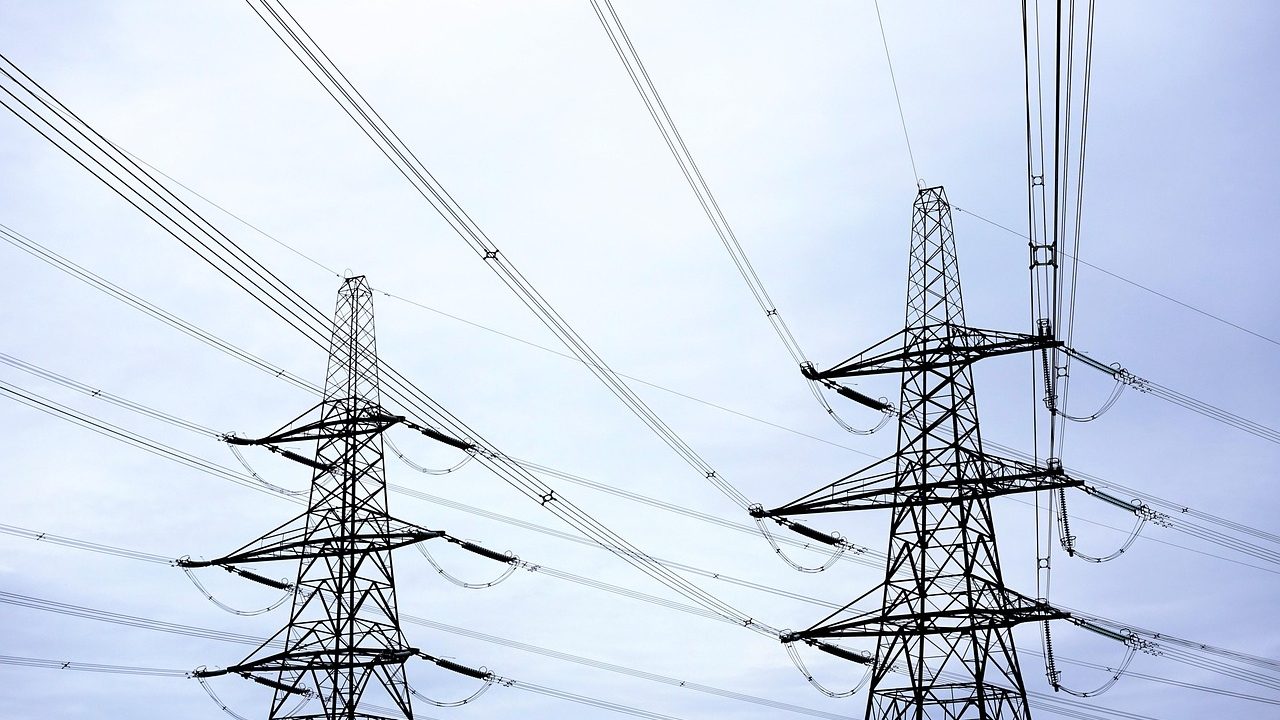
A heat wave forcing grid operators to push data centers onto backup power illustrated an escalating tension in American infrastructure. Data centers consumed roughly 4% of U.S. electricity in 2025; projections for 2030 range from 8 to 12% depending on the pace of AI deployment. The AI boom has dramatically accelerated data center build-out in regions whose grid infrastructure was not designed for that load, and the backup power orders during peak heat represent a preview of recurring stress events until that gap closes.
Meta updated firmware for its Ray-Ban smart glasses to disable the camera entirely if the recording indicator light is tampered with — a reactive fix to concerns that emerged after it became clear determined users could modify the light to enable covert recording. The response arrived well after the initial public concern, raising the broader question of whether consumer wearable cameras require regulatory frameworks with mandatory safeguards rather than reliance on manufacturer self-regulation.
India has opened a probe into how specifications for the iPhone 18 Pro leaked from a Tata Electronics manufacturing facility. Tata has been producing iPhones in India as a central element of Apple's supply chain diversification away from China. The breach is significant on three counts: it pressures Tata's security practices at a critical moment in Apple-India relations, raises the possibility of industrial espionage, and arrives precisely as Apple is working to demonstrate that Indian manufacturing can serve as a trusted alternative to Chinese production.
The Allen & Co. Sun Valley Conference brought Tim Cook, Jeff Bezos, Mark Zuckerberg, Sam Altman, and other technology and media leaders together in Idaho, with an agenda reportedly centered on AI and industry consolidation. The informal deal-making environment of this gathering has historically preceded major media and technology transactions in the twelve months following the conference. The Treasury Department separately scrapped the plan to place Harriet Tubman on the $20 bill, keeping Andrew Jackson on the currency and reversing an initiative that had been announced under Obama, delayed in Trump's first term, and revived under Biden.
Pacific's Last Tropical Glacier Has Months Left, as Nuclear Cubesat Reaches Orbit

The World Meteorological Organization has announced the Puncak Jaya glacier in Papua, Indonesia — the last tropical glacier in the Pacific region — may vanish by early 2027. The timeline is a concrete, measurable prediction with a specific date attached, making it a natural experiment that will either confirm or challenge the climate models. It also represents the permanent loss of a scientific reference point for understanding long-term climate variability in the tropics.
The practical consequences extend beyond data. Tropical glaciers function as natural reservoirs, releasing meltwater during dry seasons. Communities downstream in Papua have depended on that cycle for freshwater timing. The glacier's disappearance eliminates that seasonal regulation permanently — a supply chain disruption for water in one of the world's most remote and least-resourced regions.
City Labs launched its BOHR cubesat aboard SpaceX's Transporter-17 rideshare flight from Vandenberg on Tuesday, testing tritium-based battery technology in orbit. Tritium, a hydrogen isotope, produces low-level, consistent energy through radioactive decay and could solve one of the most persistent constraints in small satellite design: power availability during eclipse periods when solar panels go dark. If the technology validates, it could dramatically expand the capability and operational lifetimes of the small commercial satellites that have democratized orbital access.
A UMass Amherst and MIT Sea Grant research team confirmed reproducing Manila clam colonies in Massachusetts waters, completing the invasive species' establishment on every major coastline in the Northern Hemisphere. For New England's shellfish industry — dependent on oysters, native clams, and mussels — a competing invasive species capable of reproducing in those waters creates real pressure on the native populations underpinning the regional economy.
A Turkish cave study has overturned prevailing assumptions about Neanderthal-human coexistence, showing both species hunting the same prey, using the same tools, and collecting the same shells in the same location over a period spanning roughly 30,000 years. That duration is not a brief overlap but multi-generational coexistence producing genuine cultural convergence, raising serious questions about the speed and mechanism of Neanderthal extinction and suggesting far more extensive cultural exchange between the species than previously credited.
What If the AI Job Displacement Narrative Is Simply Wrong?

The technology sector has shed more than 119,000 jobs in 2026 alone, CEO warnings about AI's labor market impact have circulated widely, and productivity gains from AI tools in coding, legal work, and data analysis are measurable and real. The confident claim that AI will cause significant, rapid displacement of white-collar work has accumulated considerable supporting evidence. But the case deserves serious stress-testing.
Start with the 119,000 layoffs. How many are attributable specifically to AI substitution versus the broader correction after technology companies massively over-hired during the 2020-2022 pandemic stimulus period? The two-year headcount normalization was predictable on its own terms, without AI as a causal factor. The layoffs may reflect mean reversion more than machine replacement.
Then consider the CEO reversal. Sam Altman, Mark Zuckerberg, and Mustafa Suleyman — figures who warned loudly about AI-driven job displacement as recently as a year ago — are now publicly emphasizing augmentation over replacement. One reading is that they were wrong in their original predictions. Another is that the reversal is strategic: facing congressional scrutiny and public backlash, 'augmentation, not replacement' is a safer political message. If the reversal is tactical rather than substantive, the original forecast may still be tracking toward reality.
The strongest counterargument to displacement is historical. Labor markets have absorbed major technological transitions without producing the mass unemployment that analysts predicted each time. ATMs did not eliminate bank tellers — banks opened more branches with different teller functions. Word processors did not eliminate secretaries — they expanded the population of people capable of producing documents. The Luddite fallacy has been empirically wrong in every major industrial transition since the original Luddites.
What would make AI genuinely different? The key assumption would be that AI's scope and learning curve are broad enough that human complementarity disappears. Previous automation replaced specific physical tasks while humans retained advantage in judgment, communication, and adaptability. If AI closes those cognitive gaps simultaneously rather than sequentially, the complementarity argument weakens substantially. The concrete signal to watch: aggregate hours worked in professional services — legal, accounting, consulting, software development — over the next 18 months. If employment in those sectors falls more than 5% by Q1 2027 even as GDP in those sectors grows, the displacement case becomes much harder to dismiss. The Bureau of Labor Statistics publishes quarterly data on both measures.