Khamenei's Death, NATO Under Fire, and AI's Hidden Energy Bill: A World in Simultaneous Stress
Supreme Leader Khamenei's funeral drew millions to the streets of Tehran as hardliners demanded revenge, while ten Japan-linked supertankers threaded the Strait of Hormuz with 12 million barrels of crude — a single day's juxtaposition that captured a world straining across every major system at once.
How this was made Verified AI
Every Intellegix briefing is generated from that day's broadcast and run through automated checks before it publishes — with a human paged on any flag. Here is the trail for this edition.
Power Vacuum in Tehran Sends Shockwaves Through Global Markets and Shipping Lanes

Iran's Supreme Leader Khamenei — who held the role for more than three decades and ran every major Iranian state institution through his office — is dead, his funeral procession moving through a Tehran lined with millions of mourners as the country's airspace remains shut down. Military commanders have made loud, public promises of revenge, but analysts note that Iranian hardliners have issued similar demands before, most notably after the killing of Qasem Soleimani in 2020, only for the actual response to be calibrated, telegraphed in advance, and designed to allow face-saving rather than escalation. The critical question now is whether whoever consolidates power in the coming weeks possesses the political sophistication to thread that needle again, or whether genuine grief, nationalist fervor, and factional competition push toward something more reckless.
The economic ripple effects are already measurable. Bloomberg Economics published a projection Monday that the Iran conflict will keep global interest rates up to half a percentage point above pre-conflict baselines through 2028 — a figure that translates, on a 30-year U.S. mortgage, to roughly $90 to $100 more per month on a $400,000 loan. Multiplied across every government carrying debt and every household borrowing at elevated central bank rates, the effect amounts to a structural tax on economic activity that compounds over time.
The Hormuz convoy illustrated precisely why the energy dimension of the conflict commands such attention. Ten Japan-linked ships, including six supertankers carrying 12 million barrels of crude oil, moved through the Strait simultaneously in one of the largest coordinated convoy movements since the crisis began. The decision by major Japanese shipping interests to move in such a large, synchronized group signals a perceived risk environment in which insurance costs alone begin distorting global trade. A cargo ship attacked off the Yemen coast over the weekend added another layer: Houthi forces, maintaining their connection to Iran's regional network, continue to threaten commercial shipping through the Red Sea, stacking that risk on top of the Hormuz premium.
A sanctions angle complicates the diplomatic picture further. Data published recently showed that sanctioned nations moved $100 billion in cryptocurrency in 2025 — an eightfold increase — reflecting how quickly Iran and other sanctioned states have developed alternative financial infrastructure that insulates them from traditional pressure. Against that backdrop, Iran's reported offer to provide Europe with air conditioners in exchange for sanctions relief reads as a signal that pragmatic factions still exist within the government alongside the hardliners demanding revenge — a duality that will define the crisis's trajectory over the next two to three weeks.
Russia Strikes Kyiv as NATO Convenes in Ankara, U.S. Troop Withdrawal Rattles Baltic Allies

Russia launched a large-scale missile barrage on Kyiv in the hours before NATO summit leaders arrived in Ankara on Monday — the second major attack on the Ukrainian capital in less than a week — damaging residential buildings and leaving residents trapped under rubble. The timing was widely read as a deliberate message from Moscow: the summit cannot stop this. The choice of Ankara as the host city is itself a geopolitical statement, reflecting Turkey's two-year effort to position itself as indispensable alliance infrastructure by mediating in the Black Sea grain corridor, maintaining independent dialogue with Russia, supplying Ukraine with drones, and selling air defense systems regionally — never entirely predictable, always essential.
Ukraine's own strike operations provided important context for how the war is evolving beneath the diplomatic noise. Over 500 Ukrainian drones struck the Yaroslavl oil refinery and blacked out Crimea overnight — a qualitatively significant operation given that Yaroslavl lies hundreds of kilometers inside Russian territory. Ukraine's demonstrated ability to project disruptive force that deep into Russian infrastructure both showcases the leverage Kyiv would bring to any ceasefire negotiation and complicates the terms of any settlement.
The withdrawal of nearly all U.S. troops from Estonia — announced while NATO leaders were literally convening — sent an extraordinarily mixed signal to Baltic governments that have been the alliance's most hawkish voices on Russia for years. Trip-wire forces matter in deterrence calculations because their presence signals that any incursion would immediately produce American casualties; removing them shifts that calculus without eliminating the Article 5 commitment on paper. Estonia, Latvia, and Lithuania share a historical experience of Soviet occupation that gives them a threat perception Western European members do not always match with equal urgency.
France's defense posture created complications from a different direction. Paris pushed hard to exclude the United Kingdom from the EU's joint defense fund as a post-Brexit assertion of European autonomy, a strategy that has reportedly backfired and cost France billions as the fund struggled without the industrial base and political coherence British participation would have provided. The episode illustrates a recurring tension: geopolitical principle and practical security interest do not always point in the same direction.
July Fourth Fault Lines: Riots, a Nationalist March, and a Paralyzed Congress
Newport Beach, one of the wealthiest coastal communities in the United States, saw crowds riot on Saturday night despite what authorities described as months of enhanced safety preparations — more than 100 people arrested, fireworks used as weapons against police officers, grocery stores looted. The disconnect between resources deployed and outcome suggests the social dynamics driving such incidents are not primarily resource problems. Separately, a Delta Air Lines aircraft on final approach to Chicago Midway was struck by a firework, a development alarming less for the immediate harm caused than for what it represents: the normalization of behavior that, a decade ago, would have been considered genuinely shocking near a major commercial airport.
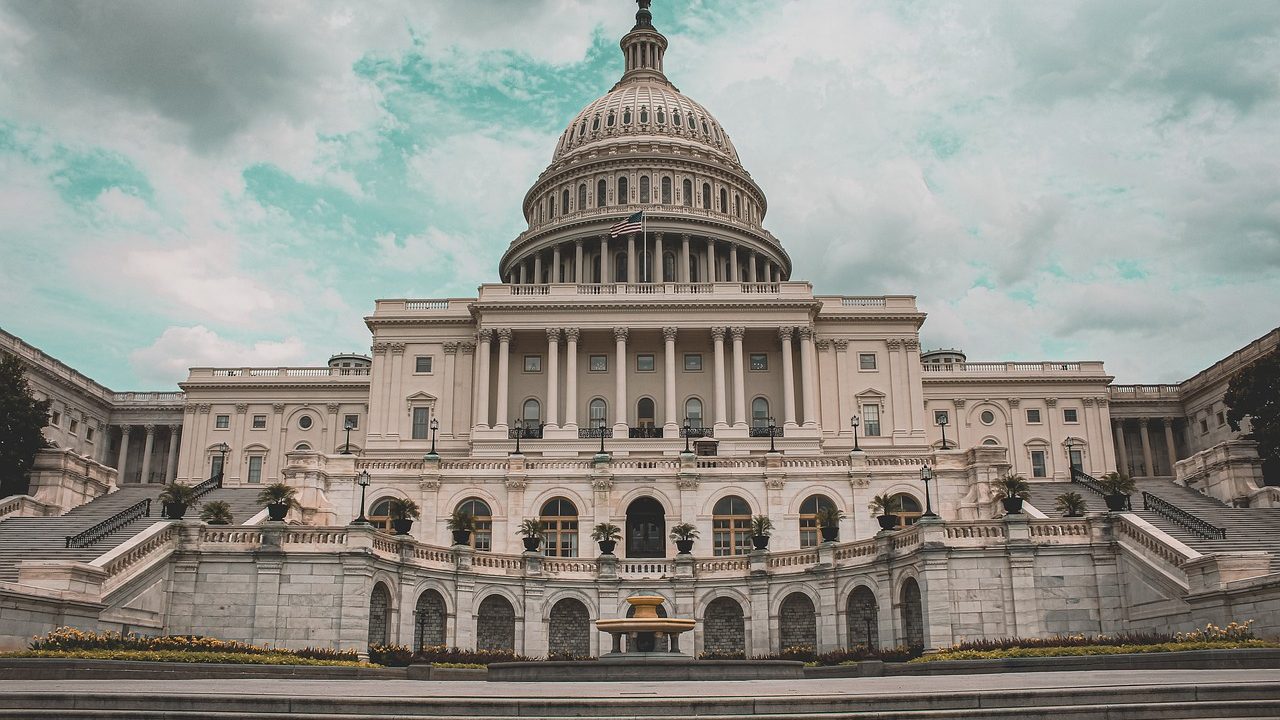
The most politically charged moment of the holiday came when the white nationalist group Patriot Front marched through Washington on America's 250th birthday, a staging designed to maximize symbolic impact. Interior Secretary Burgum declined to condemn the group, characterizing the march as 'messy democracy' and declining to recommend that President Trump do so either — a response that drew immediate criticism. The distinction between protected free speech and the symbolic endorsement implied by a cabinet secretary's benign framing of a white supremacist demonstration became a focal point for a broader debate about where the current administration draws lines.
The White House's July Fourth report branding Smithsonian leaders 'radical activists' extended the same pattern, systematically contesting the curatorial frameworks of institutions including the National Museum of African American History and Culture and the National Museum of the American Indian. The administration has been repositioning the terms under which America narrates its own history, and the language deployed against museum curators is the political instrument for that repositioning.
On Capitol Hill, Speaker Johnson is attempting to characterize Representative Anna Paulina Luna's floor blockade over the SAVE America Act as a minor rift — even calling Luna 'a team player' while she is literally blocking legislative business. The practical consequence is that budget decisions affecting clean energy policy, defense spending, and a range of other priorities remain stalled. President Trump amplified a Dallas Federal Reserve working paper linking unauthorized immigration to roughly 30 percent of home-price growth and 20 percent of rent increases between 2021 and 2024 — research that remains contested among economists — as a data-driven framing for immigration restriction, a move critics described as institutional laundering of identity politics.
AI's Energy Reckoning: Agentic Systems Consume Far More Power Than Chatbots

The United Kingdom invoked the word 'Hiroshima' at the opening of UN AI governance talks to describe the potential threat posed by advanced AI systems — a deliberate historical analogy evoking civilizational-scale harm that arrives faster than governance structures can respond and cannot be recalled once released. Whether that analogy is apt or hyperbolic, the fact that a G7 government is deploying it in formal UN proceedings signals a meaningful shift in political risk assessment. Simultaneously, reports indicate that OpenAI's broad release of GPT-5.6 is contingent on a White House call scheduled for Tuesday, July 7th — suggesting the U.S. government has inserted itself into commercial AI release timelines in a way that goes beyond the voluntary safety commitments companies made under earlier frameworks.
A study from KAIST, South Korea's leading science and technology university, produced the week's most striking AI data point: AI agents — systems that take actions, browse the web, write and execute code, and manage multi-step tasks — consume 136.5 times more energy per comparable task than standard chatbot interactions. Every major technology company is racing to deploy agentic AI because that is where the commercial value lies, but if energy costs scale according to the KAIST findings, the data center buildout required is not more of the same — it is qualitatively different in magnitude.
That finding runs directly into the investment thesis challenged by Jefferies, whose analysts warned that markets are beginning to question whether the AI infrastructure buildout is generating returns at a pace that justifies the spend. Projections cited this week suggest AI spending could surpass the U.S. defense budget — roughly $850 billion — by 2027. Closing the unit economics requires not just that the technology functions but that it generates productivity gains flowing through to corporate earnings within the timeframe equity investors require. Nvidia's flagship AI rack reportedly being delayed to 2028 adds another variable: a gap in the upgrade cycle that could slow enterprise capacity expansion and create openings for competitors.
Citi CEO Jane Fraser characterized the AI moment in banking as two simultaneous races — one defensive, automating operations to avoid structural cost disadvantages, and one speculative, developing AI-native financial products that do not yet exist. Both require massive capital investment, making banking one of the sectors most exposed to the capex debate. Tencent's progress integrating AI agents into WeChat — highlighted by JPMorgan and credited with driving the company's share price — offered a competitive benchmark: WeChat's billion-plus active users and super-app architecture give any successful agent integration network effects that Western competitors building from scratch would find difficult to match.
Huawei Rewrites the Chip Playbook While Samsung Eyes an 18-Fold Profit Surge

Huawei's publication of mass production data validating the Tau Scaling Law — using its Kirin 2026 chip — represents the first real-world production verification of an alternative to traditional transistor miniaturization. Moore's Law, the decades-long reliable prediction that transistors would shrink on a predictable schedule, has been slowing as physical limits make miniaturization increasingly expensive. Huawei's Tau Scaling Law proposes an alternative: improve chip performance by optimizing the entire system architecture — memory bandwidth, interconnect efficiency, computational organization — rather than simply shrinking transistors. Cut off from TSMC's most advanced process nodes by U.S. export restrictions, Huawei effectively turned a constraint into a research direction, and the mass production data suggests the approach is working at commercial scale.
Apple's reported lobbying for access to CXMT — a Chinese DRAM manufacturer on the U.S. Entity List — is, according to Bank of America analysis, primarily a negotiating tactic rather than a genuine supply chain pivot. By credibly threatening to source memory from a blacklisted Chinese supplier, Apple gains leverage over Samsung, SK Hynix, and Micron — which together supply roughly 95 percent of global DRAM — to extract better pricing. It is a classic monopsony maneuver: a buyer large enough to manipulate supplier behavior through the credible threat of switching, even without ever switching. The concentration of the global DRAM market among three suppliers is precisely what gives Apple that leverage, and it is also what draws antitrust scrutiny to the sector.
Samsung's second-quarter earnings, due Tuesday, are expected to show operating profit of approximately 85 trillion won — analysts project roughly an 18-fold increase year-over-year, driven almost entirely by surging memory chip prices as AI infrastructure buildout requires enormous quantities of high-bandwidth memory. The question hanging over the report is whether Samsung can maintain production discipline or whether forward guidance will be dampened by the AI investment jitters Jefferies flagged. Overlaying all of it is a geopolitical risk: Samsung's most advanced production is concentrated in South Korea, a country within China's projected military reach, and Huawei's Tau Law advances underline Beijing's active effort to reduce dependence on that production base.
Markets Flash Excess Warnings as Clean Energy Costs Rise and Microsoft's Tax Routing Surfaces
Bank of America issued a speculative excess warning for equities Monday, with S&P Futures trading around 7,560 — a level reflecting substantial optimism about AI-driven earnings growth. BofA characterized speculative positioning as having reached extreme levels, creating conditions for what the bank called a 'snapback' when sentiment shifts. The historical pattern the bank invoked is that speculative excess tends to resolve quickly and painfully rather than slowly and manageably. Alphabet shares climbing after CNBC's Jim Cramer named it a top 2026 pick illustrated the sentiment-driven dynamic BofA is flagging: retail participation in equity markets is currently elevated, and prices moving on media recommendations — even for a company with genuinely strong fundamentals — is a symptom of momentum outpacing analysis.
The expiration of U.S. clean energy tax credits from the Inflation Reduction Act is beginning to show up in project economics. Developers who planned solar, wind, and battery storage projects under one cost structure now face higher capital costs, which will either render projects uneconomic or push expenses through to consumers as higher electricity bills. The USTR's three-day Section 301 forced labor tariff hearings opened Tuesday, covering 60 economies, with a final decision expected before July 24th. The expedited timeline means new tariffs affecting electronics, textiles, and solar supply chains could land within weeks.
Tesla's internal policy capping employee AI spending at $200 per week — while explicitly exempting Elon Musk's xAI products from the cap — embeds a strategic competitive preference directly into expense policy. Employees can use xAI's Grok without spending limits while competitor tools face manager-approval requirements above the threshold. The policy steers employees toward xAI's platform with obvious implications for that company's enterprise adoption numbers.
A new EU mandatory country-by-country disclosure report showed Microsoft routing roughly 40 percent of its global profits through Ireland, where the company employs approximately 3 percent of its staff and pays roughly 12 percent tax. Microsoft is defending the practice, but the disclosure puts a precise number on financial engineering long understood only in general terms — exactly the kind of concrete data point that European regulators and U.S. tax reform advocates can cite in legislative arguments. The EU's mandatory disclosure rules are functioning as their architects intended.
Lunar Race Narrows to Months, Heat Wave Kills 25, and Multilingual Brains Age Slower
NASA Administrator Jared Isaacman — a commercial spaceflight veteran rather than a career government official — warned publicly that the margin between U.S. and Chinese crewed moon landings may be only months apart, an escalation in rhetoric that presumably draws on intelligence assessments as well as the public record of China's advancing lunar program. A Chinese crewed landing before the United States would carry symbolic weight with real political consequences, particularly in the race to establish presence near the lunar south pole, where water ice deposits make long-term habitation feasible. China's test of a ballistic missile from a submarine in the South Pacific over the weekend served as a parallel reminder that its strategic capabilities are advancing on multiple fronts simultaneously.
The European Space Agency's Euclid telescope discovered the oldest quasars ever observed — extraordinarily luminous galactic cores powered by supermassive black holes, seen at the earliest epochs of the universe. The discovery provides cosmologists with direct evidence of how the first massive structures formed in the wake of the Big Bang, and suggests Euclid's survey capabilities are exceeding pre-launch performance estimates.
A heat wave killed at least 25 people across the eastern United States over the Fourth of July weekend. Colorado is managing four active wildfires burning more than 160,000 acres combined, with mandatory evacuations near Leadville for the Willow Fire; Governor Newsom deployed California firefighting resources to assist in what has become routine interstate mutual aid as fire seasons expand in scope and duration. One quietly significant development from the heat wave: electric school buses parked for the summer fed power back into local grids through vehicle-to-grid technology during peak demand periods, a practical realization of distributed grid storage that energy researchers have advocated for years.
A neuroscience study presented at a research forum found that each additional language a person speaks is linked to measurable slower brain aging, with multilingual brains appearing up to 13 years younger than monolingual ones on relevant neural markers. The proposed mechanism is cognitive reserve — the brain's resilience to damage — which multilingualism appears to build through the constant exercise of maintaining and switching between distinct linguistic systems. The researchers reportedly controlled for several confounding variables including education and socioeconomic status, and the association held. If the findings replicate, the implications for education policy and public health investment in language instruction are substantial.
What If the AI Spending Supercycle Stalls? The Assumptions Nobody Is Questioning
LeBron James was spotted with a Cleveland Cavaliers executive as his free agency decision approaches, with the basketball world parsing the encounter for signals about whether a second Cleveland stint — at age 41, with legacy rather than championships as the primary consideration — is imminent. The NCAA president called the abandonment of the college sports reform bill 'a mistake,' reflecting ongoing chaos over NIL deals, transfer portal dynamics, and whether student athletes should receive direct revenue sharing. President Trump reportedly phoned FIFA President Infantino directly to request a review of U.S. men's national team striker Folarin Balogun's red card suspension before FIFA reversed the decision on Sunday — an intervention that would generate outrage in nearly any other context, but one where the jointly hosted World Cup gives Trump a domestic political stake in U.S. team performance.
The most confident consensus view in Monday's news — that AI capital expenditure is on a clear structural path to surpass the U.S. defense budget of roughly $850 billion by 2027 — rests on assumptions that deserve scrutiny. The bull case is grounded in announced capital commitments from Microsoft, Google, Amazon, Meta, and sovereign wealth fund-backed infrastructure projects: these are expenditure announcements, not intentions, made by companies whose competitive positions depend on not falling behind in AI infrastructure capacity.
The bear case probes three embedded assumptions. First, that announced commitments translate into actual deployed spend on schedule. Second, that revenue models justifying the spend materialize within the timeframe CFOs require to sustain authorization — if measured productivity gains over the next 12 to 18 months come in below threshold, pullbacks could follow not because AI underperforms but because the monetization timeline exceeds the capital deployment timeline. Third, that energy infrastructure can support the required power consumption — the KAIST finding that AI agents consume 136.5 times more power than standard chatbots creates a potential bottleneck not fully priced into infrastructure plans, since power capacity can take three to five years to permit and build.
Two specific indicators were identified as signals to watch: quarterly guidance from Microsoft Azure and Google Cloud in the second half of 2026 — AI workload revenue growth below 30 percent year-over-year would suggest enterprise adoption is slower than infrastructure projections assumed — and energy utility approval timelines for data center capacity. If those indicators hold above threshold, the consensus was right and the skeptics contrarian for their own sake. The honest assessment is that both the bull and bear cases rest on genuinely uncertain assumptions, and matching the U.S. defense budget with private corporate technology spending would represent something the global economy has not seen in any previous technology cycle.