War, Succession, and Sweltering Heat: America's Most Fraught Fourth of July in Years
On a Fourth of July marked by 106-degree temperatures, a Ukrainian battlefield in flux, and a succession crisis in Tehran, the United States celebrated its 250th year amid a cascade of geopolitical, technological, and institutional pressures. From a Kremlin front-line display to AI drones rewriting the rules of modern warfare, the holiday offered little in the way of calm.
“A drone that operates on onboard AI guidance with no control antenna renders that entire defensive layer ineffective.”
How this was made Verified AI
Every Intellegix briefing is generated from that day's broadcast and run through automated checks before it publishes — with a human paged on any flag. Here is the trail for this edition.
Putin's Stage-Managed Visit Signals No Let-Up as Drone War Enters a New Phase
Vladimir Putin made a rare visit to a command post near the front lines in the Donbas on Friday, appearing in military fatigues alongside senior commanders and ordering continued mass strikes while explicitly threatening to expand operations northward into regions of Ukraine currently beyond Russian-occupied territory. The appearance, recorded and distributed through Russian state media, was a carefully calibrated message: that Putin is personally directing the war, sees no reason to negotiate, and has not exhausted his territorial ambitions.
The visit's timing was deliberate. Diplomatic backchannels on Ukraine remain quietly active, and Putin's front-line staging served as a public rebuttal to any suggestion that Western pressure is nudging Moscow toward a ceasefire framework. Ukrainian officials, for their part, disputed Russian claims of capturing the strategically important city of Kostiantynivka in the Donetsk region — a town that sits on supply routes feeding Ukrainian positions across a wide stretch of eastern Ukraine. Russia's state media announced the capture with fanfare; Ukrainian military officials said Russian forces had entered certain neighborhoods but had not seized the city. Independent verification of such claims typically requires 48 to 72 hours.
The more alarming development may be technological. Russia has begun mass-deploying what it calls the Molniya drone — an AI-guided autonomous attack system that operates entirely without a control antenna. For most of the past two years, Ukraine's most effective defense against Russian drones has been electronic warfare jamming: disrupt the control signal, and the drone loses guidance. A drone that operates on onboard AI guidance with no control antenna renders that entire defensive layer ineffective. Ukraine's own response has been a dramatic escalation of deep strikes inside Russian territory; Ukrainian officials claim deep drone strikes inside Russia surged 1,150 percent compared to the same period in 2025, a trajectory corroborated by Russian media reports of strikes on oil refineries, ammunition depots, and airfields hundreds of kilometers from the border.
Poland introduced an unexpected friction point into the alliance picture, with Warsaw accusing Kyiv of withholding drone technology Ukraine had promised to share as part of bilateral defense cooperation. That Poland — one of Ukraine's most steadfast supporters — is raising this publicly underscores how even the closest partnerships encounter pressure when proprietary military technology is at stake. On the accountability front, the Netherlands formally agreed to permanently host the Special Tribunal for the Crime of Aggression against Ukraine, a court designed to prosecute Russia's top political and military leadership for the decision to launch the invasion. Dutch Prime Minister Jetten finalized the agreement; President Zelenskyy called it historic. Enforcement against a sitting Russian president remains a distant prospect, but legal scholars note that the tribunal's primary near-term effect may be constraining — senior Russian officials knowing that a permanent international body could prosecute them changes the calculus around international travel and eventual exposure to non-Russian jurisdiction.
Khamenei's Funeral, Assassination Bounties, and a Nuclear Deal Hanging in the Balance
The death of Ayatollah Khamenei has set off one of the most consequential succession moments in Iranian political history, and the events of the past week resist easy interpretation. Funeral processions began Friday, drawing delegations from more than 100 countries to Tehran. Iran's military chief used the occasion to deliver a vow of revenge against the United States and Israel — a predictable ritual of Iranian state funerals, though one with real implications for whoever consolidates power next.
Simultaneously, an active US-Iran nuclear negotiation has been proceeding with enough apparent progress that France withdrew its Charles de Gaulle aircraft carrier from the Persian Gulf — a significant diplomatic signal, given that carrier battle groups are not repositioned casually from high-tension theaters. Analysts noted that the US economy formally avoided what had been called a potential 'wartime recession' scenario partly because the Iran talks eased oil supply concerns and reduced the geopolitical risk premium embedded in energy markets.
The contradiction between deal progress and bellicose state rhetoric was thrown into sharp relief by a state-organized rally near Tehran that launched what was described as a gold collection campaign, reportedly offering 100 kilograms of gold as a bounty for anyone who kills either President Trump or Israeli Prime Minister Netanyahu. This was not a fringe action — it was state-organized and occurred within sight of the funeral processions. The coexistence of active nuclear diplomacy with explicit, state-sanctioned assassination incitement reflects the internal incoherence of Iranian governance during a succession period, with different power centers transmitting completely different signals at once.
Iran's economic pressure is visible in the oil markets. Iranian crude sitting on tankers at sea has topped 58 million barrels as buyers back away — a figure representing roughly 20 days of Iran's entire oil production capacity sitting idle. Secondary sanctions risk makes purchasing Iranian oil financially dangerous for most international buyers, and deal uncertainty makes long-term purchasing commitments unattractive. That pressure provides the Iranian negotiating team with strong incentives to reach agreement even as hardliners perform defiance. In a separate but related diplomatic development, Colombian President Gustavo Petro formally asked the Trump administration to remove him from US sanctions lists — a significant gesture from a leader who built his political identity on anti-US posturing, reflecting the economic pressure that the current administration's aggressive use of economic tools is generating across Latin America.
Diamond Gifts, Intelligence Purges, and a Fired General's July 4th Warning
The Antwerp World Diamond Centre gifted President Trump a ring containing 321 diamonds after Belgium secured essentially zero-tariff access to the US market — a transaction that crystallizes the ethics concerns surrounding the transactional character of current US trade policy. The gift's monetary value was not publicly specified, but 321 diamonds suggests it is not modest. The legal and ethical question, as with antitrust enforcement, is not simply whether something valuable was received, but whether a demonstrable quid pro quo exists: did Belgium receive favorable tariff treatment because of the gift, or would it have received that treatment regardless? That causal chain is notoriously difficult to establish, even as the optics remain damaging.
A separate transparency problem emerged with leaked State Department cables reportedly showing Secretary of State Rubio directing US embassies to actively work against allowing a UN debate on the Cuba embargo. The US has long opposed the annual UN General Assembly votes on the embargo — Cuba wins those votes by large margins every year — but ordering embassies to block debate rather than simply vote against a resolution represents a more aggressive posture toward suppressing multilateral discussion of the policy.
The intelligence community is experiencing continued turbulence. Acting Director of National Intelligence Pulte fired dozens more intelligence officials this week, part of a series of waves of dismissals since the administration took office. Against that backdrop, former Joint Chiefs Chairman General CQ Brown published an essay in Foreign Affairs, timed deliberately for the eve of July 4th, warning explicitly against using the military for domestic political purposes and arguing that politically charged missions erode both combat readiness and public trust in the military as an institution. Brown's choice to publish in Foreign Affairs on July 4th rather than through quieter channels was deliberate — a public institutional argument from the nation's formerly highest-ranking military officer.
A DHS Inspector General report added another dimension to the institutional accountability picture, finding that the Secret Service missed 102 separate warnings before the assassination attempt against President Trump at Butler, Pennsylvania — equipment failures, communication breakdowns, and a gunman whose presence had been flagged multiple times before he opened fire. That specific number suggests systemic failure rather than a single lapse. In California, the FBI reportedly had an informant making secret recordings within Newsom's close advisers; Newsom responded by proposing legislation that would make pre-certification seizure of election materials a felony in California, framing it as election protection against federal interference and delivering the proposal in a pre-recorded July 4th speech — positioning that maps cleanly onto a prospective 2028 Democratic presidential primary lane.
AI Governance at a Crossroads: Industry Builds Safety Frameworks as Washington Steps Back

Two stories published within days of each other define the current state of AI governance. Anthropic, in collaboration with Amazon, Microsoft, and Google, released a new jailbreak severity framework that rates AI security vulnerabilities on a five-tier scale from informational to critical — a shared industry standard for communicating how dangerous a particular exploit is, modeled on the Common Vulnerability Scoring System used in cybersecurity. The same week, a departing Trump administration AI adviser told the Financial Times explicitly that there will be no FDA-style regulatory oversight of AI under this administration.
The administration's argument is that AI moves too fast for traditional regulatory frameworks and that heavy-handed oversight would drive innovation offshore — primarily to China. The counterargument points to social media platforms in the 2010s as a precedent: deployed at scale without meaningful safety evaluation, with downstream social consequences still being reckoned with today. The question of whether AI's potential harms more closely resemble social media's gradual erosion of public epistemics or pharmaceutical failures with measurable mortality timelines shapes what kind of oversight would be appropriate — and the administration has answered that question by removing itself from the equation.
Peter Thiel's accusation that the Pope is 'working for Chinese Communists' on AI illuminates the ideological fault lines in the debate. Thiel has argued that religious and progressive institutions' cautionary approaches to AI governance serve Chinese strategic interests by slowing American development. The Vatican's position — that AI raises moral concerns requiring international governance frameworks — is characterized by Thiel as geopolitical collaboration with Beijing. These are genuinely incompatible worldviews about what AI development should optimize for.
The applied science story receiving less attention than it deserves is Alibaba's Elements Claw agent, which screened 2.4 million crystal structures autonomously and identified four novel superconducting compounds subsequently verified in laboratory experiments. Human researchers cannot match that pace through manual literature review and experimental iteration. Superconductors have profound implications for energy transmission, computing, and transportation. ByteDance's separate research finding that AI agents follow predictable learning curves over long tasks — characterizing where capability accelerates, plateaus, and where errors compound — provides both a roadmap for improving systems and a basis for realistic performance expectations. Midjourney, meanwhile, is asking a court to compel film studios to disclose their own AI use in productions, a litigation strategy that could complicate studios' standing as plaintiffs in copyright cases against AI image generators — intersecting with the release of 'Young Washington,' which disclosed using AI in exactly 100 visual effects shots, a voluntary transparency move notable in itself.
Big Oil Profits Surge, Chip Stocks Slide, and Satellite Internet Rattles Telecom Giants
S&P Futures were trading at 7,557 on a shortened July 4th session, up roughly a third of a percent — surface calm obscuring meaningful sector rotations. Beneath the index level, two of the semiconductor sector's prominent names were under significant pressure. Broadcom has dropped approximately 25 percent from its early June record high after reports emerged that a key AI customer — widely understood to be one of the major technology companies — is developing its own custom chip rather than continuing to purchase Broadcom's components. The vertical integration risk has always shadowed the picks-and-shovels AI infrastructure thesis: when your customers are trillion-dollar technology companies with enormous engineering capacity, their decision to build in-house is a credible and accelerating threat.
Micron dropped 15 percent over two days, with active litigation and a short position taken by investor Michael Burry — who famously shorted the housing market before 2008 — drawing attention to the stock. Burry's calls command disproportionate market attention given his track record, though not all of his positions have proven correct, and the litigation risk is likely the more concrete near-term factor. US stock funds recorded their largest outflows in three months, and Bank of America issued a correction warning, suggesting institutional investors are increasing caution heading into the second half of 2026.
AT&T and Verizon are each heading toward their worst week in years, driven by SpaceX's expanding satellite internet footprint. The traditional telecom model rests on the assumption that wireline and cellular infrastructure hold geographic reach advantages over satellite — an assumption that is eroding faster than the carriers' capital allocation plans anticipated as Starlink accelerates subscriber additions and pushes deeper into enterprise and government contracts.
Big Oil occupies an unusual political position this July 4th. Exxon and Chevron are each expected to more than triple their first-quarter earnings in upcoming reports — the strongest sector profit performance since 2022 — while President Trump publicly demands that oil companies lower gas prices. The administration has delivered expanded drilling access and reduced regulation; the companies have delivered record profits rather than lower consumer prices. Iran's 58-million-barrel floating crude stockpile is directly relevant: if a US-Iran nuclear deal materializes and those barrels re-enter global markets, oil prices move meaningfully downward — which is what Trump says he wants, but which would simultaneously compress the profit margins he has politically protected. Marianne Lake's departure from JPMorgan with a reported $50 million package after being passed over for the CEO role she was widely expected to receive marks the exit of one of the most respected executives in banking. A New York court ruling that remote workers who relocated out of the state during the pandemic still owe New York income tax — based on where their employer is headquartered rather than where they physically worked — carries significant financial implications for potentially hundreds of thousands of workers, and other high-tax states are watching the legal theory closely.
Atlas Goes Mass-Market, Tesla Expands Robotaxis to Miami, and a Quantum Limit Is Confirmed

Boston Dynamics announced a fifth-generation Atlas humanoid robot engineered for mass production — a transition from impressive research platform to industrial tool that the company intends to manufacture through Hyundai's production infrastructure at a target rate of 30,000 units per year. Previous Atlas generations demonstrated extraordinary dynamic capability but were expensive, parts-intensive, and unsuitable for commercial deployment at scale. The new generation features dramatically fewer components and incorporates sensor technology that allows the robot to perceive touch through color, enabling it to grasp irregularly shaped objects and distinguish between firm and fragile items — capabilities trivially easy for humans and historically very difficult for robots. A 30,000-unit annual production run does not immediately dominate the market, but it establishes the production infrastructure and learning curve from which scaling follows, putting humanoid robotics on what analysts describe as a three-to-five year deployment timeline for manufacturing and warehousing environments.
Tesla expanded its autonomous robotaxi service to Miami — the third market after Texas and California, and the first expansion beyond those initial proving grounds. Miami presents genuinely challenging driving conditions: intense rain, complex mixed-traffic patterns, and demanding road behavior. Strong performance there would represent a meaningful data point for expansion into other complex urban environments.
A quantum physics result confirmed something theorists had long predicted but not directly observed: a fundamental trade-off between spatial and temporal precision at the quantum scale, measurable at individual tunneling electrons at attosecond timescales. An attosecond is one quintillionth of a second. The practical significance is not immediate computing breakthroughs but experimental confirmation of a theoretical limit that constrains how precisely quantum devices can simultaneously know where something is and when it's there — understanding limits being the prerequisite for engineering around them.
The reporting that Jeff Bezos moved from a figure Trump characterized as an enemy to an ally as Blue Origin's government contracts surged offers a portrait of how political alignment with the current administration functions in practice. Blue Origin secured significant NASA and Defense contracts during the period since Bezos moderated his public posture toward Trump. Whether the contracts drove the relationship change or the relationship drove the contracts is difficult to untangle — and probably both directions are true simultaneously — but the dynamic illustrates that in the current political economy, a CEO's political positioning is not separate from business strategy. It is part of it.
Heat Wave Rewrites the Holiday as Grid Infrastructure Buckles Across the Northeast
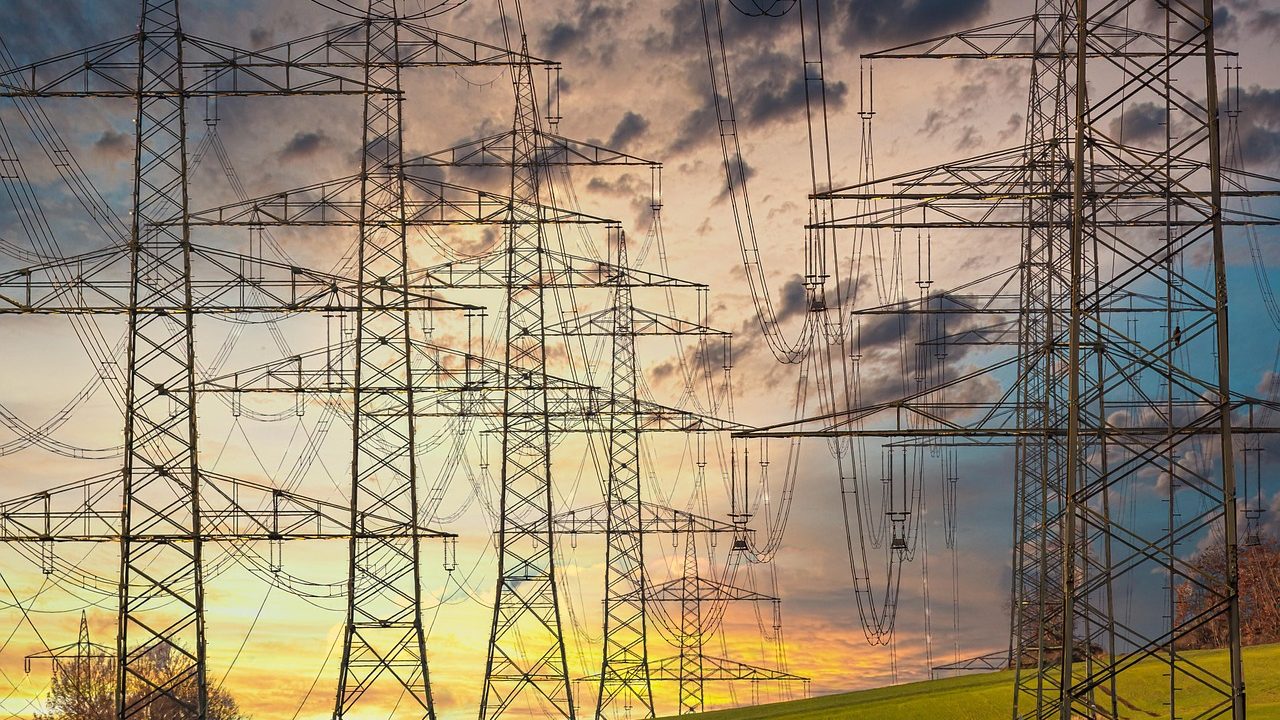
The heat wave physically reshaped July 4th for tens of millions of Americans. More than 22,000 Con Edison customers in the New York City area remained without power as temperatures topped 105 degrees. Philadelphia canceled its Independence Day parade outright. More than 100 people were sickened in Pennsylvania, and an event in Berks County where thousands gathered to see the historic Union Pacific Big Boy steam locomotive at 106-degree heat was declared a mass casualty incident. The Chicago region was simultaneously hit by 80-mile-per-hour storm winds. The American holiday weekend was being unmade by weather.
Scientists from the World Weather Attribution group formally assessed the event and concluded it was 'virtually impossible' without climate change — meaning the background warming from greenhouse gas accumulation made temperatures of this magnitude achievable during this event in a way the pre-industrial climate baseline would not have permitted. Attribution science has grown markedly more precise over the past decade, moving from characterizations of climate change 'loading the dice' toward extreme weather to specific probability statements about individual events.
Infrastructure stress effects cascaded in ways the grid was not designed to absorb simultaneously. In New Hampshire, heat knocked out transformers at a nuclear plant site — an irony given that nuclear power is central to many decarbonization plans for its reliable baseload generation, but extreme heat creates operational challenges for plants that depend on water cooling. The broader Northeast corridor electrical grid was not engineered for continuous above-100-degree temperatures during peak cooling demand periods.
A counterpoint to the crisis narrative arrived in the form of electric school buses feeding power back to the grid through vehicle-to-grid technology during peak demand periods. Idle in summer, a standard electric school bus carries a battery pack in the range of 120 to 220 kilowatt-hours; a fleet of 100 buses can collectively discharge several megawatt-hours during a demand spike. The technology does not resolve the grid capacity problem, but it demonstrates how distributed battery storage embedded in the transportation fleet could become a meaningful grid resource as electrification scales. NASA, separately, launched a robotic spacecraft to boost the orbit of the Swift space telescope — a 22-year-old observatory studying gamma-ray bursts that would otherwise reenter the atmosphere and burn up — in what the agency described as the first attempt at this kind of operational life extension for an observatory.
Dormant Bitcoin, AI Film Disclosure, and Why the Infrastructure Thesis Could Break
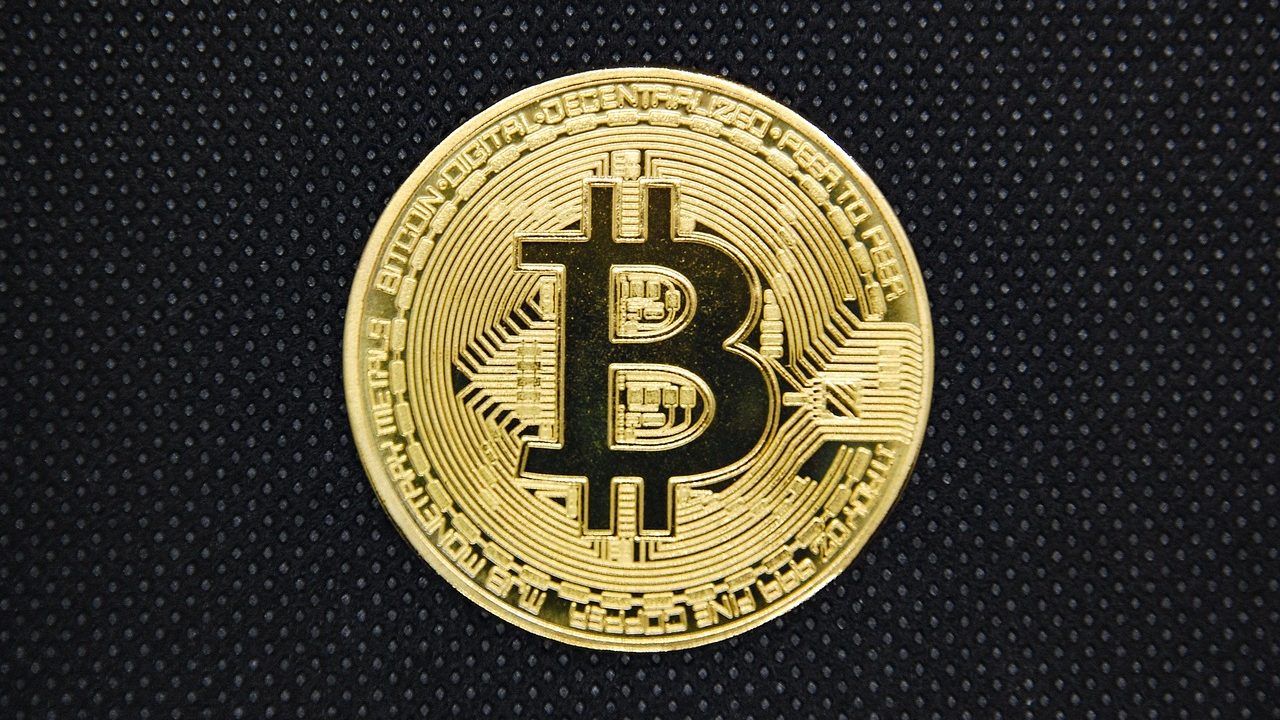
Twelve AI models applying a Bayesian probabilistic framework collectively estimated that the probability of Satoshi Nakamoto's approximately 1.1 million dormant Bitcoin ever being moved is under 5 percent. At current prices, that Bitcoin is worth somewhere in the range of 100 to 110 billion dollars — an essentially unclaimed fortune untouched since 2010. The models considered scenarios including key loss, Satoshi's death, voluntary inaction, and deliberate philosophical commitment to never spending the coins. The result reflects the collective weight of those scenarios rather than a definitive answer, but stands as a striking exercise in probabilistic reasoning applied to one of finance's enduring mysteries.
The biographical film 'Young Washington,' released on the Fourth of July, became the first major theatrical release to voluntarily disclose using AI in exactly 100 production shots. The creative team's choice to count and disclose rather than obscure is a bet that transparency is better commercial positioning than ambiguity — a bet whose success depends on whether general audiences care, with early evidence described as mixed.
The week's most consequential analytical exercise concerns the thesis that AI infrastructure stocks — the companies supplying the semiconductor and data center layer of AI — will outperform the AI application layer for the foreseeable future. UBS formally endorsed the thesis this week, and market consensus has been building behind it for 18 months. The historical analogy is the California Gold Rush: the sellers of picks and shovels made reliable money while individual prospectors faced variable outcomes. Several developments this week, however, stress-test that logic. AI model efficiency is reportedly improving — Anthropic's Claude and similar models are achieving equivalent performance with meaningfully fewer parameters than earlier generations. If that efficiency trajectory continues, the amount of hardware required per unit of AI output could decline dramatically, flattening the demand curve that infrastructure investors are pricing in.
The customer vertical integration threat compounds the risk. Google has its TPUs, Amazon has Trainium, Microsoft has co-developed custom silicon. If hyperscalers increasingly build their own chips, the picks-and-shovels providers face the prospect of their best customers becoming their competitors. A third risk — that current GPU-based transformer architectures are not the dominant computing paradigm for the next five years — is underweighted in most infrastructure investment theses. Computing paradigms do shift, and the emergence of neuromorphic or optical computing approaches could depreciate current infrastructure investments faster than expected. The concrete signal to watch: any major language model lab announcing a meaningful capability improvement achieved with significantly less compute than the prior generation. If two or three consecutive quarters show hyperscaler capital expenditure on AI infrastructure flattening rather than growing, the thesis warrants serious reexamination.