America's 250th Birthday Eve: AI Espionage, NATO Pledges, and an FBI Surge Into 2020 Election Files Crowd a Turbulent July 4th
On the eve of America's 250th Independence Day, a collision of technology cold-war allegations, alliance diplomacy, domestic legal battles, and market tremors produced one of the most densely packed news cycles of 2026. From a bilateral AI espionage standoff between Alibaba and Anthropic to an FBI deployment of 260 analysts to probe the 2020 election in Georgia, institutions across every sector showed signs of acute strain.
“Sending 260 analysts to a single county investigation of that vintage raises pointed questions about resource allocation and about the line between legitimate law enforcement and political pressure exercised through investigative process.”
How this was made Verified AI
Every Intellegix briefing is generated from that day's broadcast and run through automated checks before it publishes — with a human paged on any flag. Here is the trail for this edition.
Spy Claims and Counter-Claims: Alibaba Bans Claude Code as AI Cold War Turns Corporate

Alibaba announced it will bar all staff from using Claude Code — Anthropic's AI coding assistant — effective July 10th, citing an alleged backdoor that the company's security team claims secretly flagged users with China-linked accounts or network signatures. Anthropic has countered with accusations that Alibaba engaged in large-scale theft of its model weights, turning what might have appeared a one-sided security complaint into a bilateral corporate espionage allegation.
The precise nature of the alleged backdoor remains contested. Based on reporting from The Next Web, what Alibaba's security team appears to have identified is telemetry behavior it believes was sending user metadata to Anthropic's servers in ways not disclosed in the terms of service. Whether that constitutes a backdoor in the classical sense — unauthorized remote access — or simply undisclosed data collection is a critical legal and technical distinction: the former is potential espionage, the latter aggressive but different.
Anthropic's counterclaim about model weight theft carries its own enormous stakes. If Alibaba-affiliated researchers were systematically extracting Claude's neural network parameters through repeated queries, that would represent intellectual property theft potentially worth billions of dollars — the first time such a bilateral allegation has played out publicly between an American AI lab and a Chinese technology giant.
The timing amplifies the story's geopolitical weight. The ban arrives days before the Ankara NATO summit, where US-China technology competition is expected to be at least an undercurrent. Beijing has been encouraging domestic firms to reduce dependence on American AI tools for over two years; Alibaba framing the ban as a security decision rather than a political one gives that broader decoupling narrative a corporate face. A competitive motive is also plainly visible — Alibaba's own Qwen large language model series stands to gain engineering adoption at Claude's expense.
Elsewhere in the AI industry, Meta's superintelligence chief Alexandr Wang told employees that the company's forthcoming Watermelon model — the actual internal code name — uses ten times the compute of its predecessor and is reportedly matching OpenAI's GPT-5.5 on major benchmarks. If accurate, that would mean three genuine frontier competitors exist: OpenAI, Anthropic, and Meta, with Google's Gemini and Alibaba's Qwen occupying the next tier. Voice synthesis company ElevenLabs, meanwhile, is reportedly exploring a 22 billion dollar valuation in an employee share sale, a figure that suggests the market views AI-generated audio as durable platform infrastructure rather than a passing feature.
Alliance Under Pressure: A 70 Billion Euro Ukraine Pledge and the Fault Lines Heading Into Ankara

NATO allies are eyeing a 70 billion euro collective pledge for Ukraine ahead of the Ankara summit, a figure that requires context: the United States alone provided roughly 175 billion dollars in Ukraine aid between 2022 and 2025, meaning the new multilateral commitment, spread across 32 member states, varies enormously by individual contribution. The summit's host city itself carries meaning — Turkey purchased the Russian S-400 missile system, maintained trade relations with Russia throughout the war, and President Erdogan has periodically served as an intermediary, making Ankara's role as summit host a projection of Turkish leverage within the alliance.
A public rift within the US foreign policy apparatus has added awkwardness to the run-up. Defense Secretary Pete Hegseth had reportedly been pushing for further cuts to American troop deployments in Europe beyond reductions already announced this year. Secretary of State Rubio intervened and had those proposals pulled back ahead of the summit. The fact that the disagreement surfaced in leaks suggests genuine internal division over US commitment levels — a signal European capitals are likely to factor into their own accelerating defense industrial investments regardless of what the summit communiqué ultimately says.
Reports that gasoline has run out in a major Russian port city — the Novorossiysk area is believed to be the location, though Russian state media has not confirmed — add a logistics dimension to the strategic picture. Russia's domestic refinery capacity has been under sustained Ukrainian drone attack for over a year, and shortages reaching priority port distribution nodes suggest the cumulative pressure of export revenue losses, refinery damage, and ruble depreciation is straining the system in ways not fully anticipated 18 months ago.
An anonymous actor wagering 400 thousand dollars on Putin losing power in 2026 — with a potential payout of roughly 2.5 million dollars on a prediction market — drew attention, though such a position represents a modest sum for any serious geopolitical player. More consequential as a market signal is oil's drop to four-month lows as Hormuz flows recover from disruption caused by the Iran conflict earlier this spring. Tucker Carlson, in a Columbia Journalism Review interview, said he has not spoken to Trump since 'the Iran war began' — the first confirmation from a prominent Trump-adjacent figure of material US involvement in the conflict.
The most explosive geopolitical allegation of the morning came from The New York Times, reporting that American officials were genuinely concerned Israel had plans to assassinate Iran's foreign minister and parliament speaker during spring ceasefire talks. If accurate, the account suggests Washington and Jerusalem were operating under sharply divergent assumptions during negotiations the US was actively backing. Lebanon's President Aoun is publicly defending the US-brokered framework with Israel, while Hezbollah and Iran have rejected its terms outright — a split that leaves the political resolution of the conflict far from complete. Separately, the Justice Department sent a letter to the International Criminal Court formally rejecting its jurisdiction over American citizens and declaring non-cooperation with any ICC investigations, a deliberate written signal at a moment when the court has been examining conduct related to the Iran conflict.
Institutions Under Stress: Shield Laws, the FBI's Atlanta Surge, and a Vice President's Rebuke of the Court

The Supreme Court declined to intervene in the case of Catherine Herridge, a former Fox News and CBS reporter facing an 800-dollar-a-day civil contempt fine for refusing to identify the confidential source behind a 2017 national security story. There is no federal shield law protecting journalists in federal proceedings, leaving Herridge exposed to escalating fines — nearly 300 thousand dollars annually — designed to compel compliance. The Court's refusal to create a federal evidentiary privilege for journalists, even with a conservative supermajority that includes justices from administrations that publicly champion press freedom, is a clear statement of where the institution stands.
The most resource-intensive domestic story is FBI Director Kash Patel's memo directing 260 analysts — drawn from field offices across the country — to surge support for an investigation of the 2020 presidential election in Fulton County, Georgia. The deployment is happening nearly six years after the events in question. For scale: the FBI's entire organized crime division numbers roughly 300 agents nationwide. Sending 260 analysts to a single county investigation of that vintage raises pointed questions about resource allocation and about the line between legitimate law enforcement and political pressure exercised through investigative process.
In Congress, Senator Thom Tillis declared the SAVE America Act dead, killed by internal Republican divisions — a pattern consistent with a majority large enough for messaging legislation but narrow enough that factional disagreements can defeat substantive bills. On the Democratic side, a representative identified as Kiros is vowing to block Hakeem Jeffries from the speakership over PAC money disputes, and Democratic Socialists of America leaders are publicly warning the party establishment after a string of primary upsets, signaling that the progressive insurgency reshaping the party since 2016 continues to produce electoral results.
Vice President Vance publicly called Justice Amy Coney Barrett's vote on the birthright citizenship case 'a mistake' — Barrett was the deciding sixth vote in a 6-3 ruling striking down the president's executive order. A sitting vice president directly criticizing a Supreme Court justice appointed by the current administration, for ruling against that administration, is unusual and represents public executive branch pressure on the judiciary. The White House statement signals it does not regard the birthright citizenship question as settled.
Two procedural stories round out the day's domestic legal landscape. The Justice Department accidentally sent the sealed Jack Smith report to defense lawyers — materials kept from public view by court order — raising complex questions about whether the seal can be maintained if those materials have already been distributed. And reporting indicates the administration is deploying federal regulatory power to shape the 2026 midterm environment, including a USPS mail-voting rule change that Democratic governors are now formally challenging, arguing the rule change disproportionately disadvantages their voters.
The Fed's AI Bet, Microsoft's OS Ambitions, and the Antitrust Question Nobody Is Asking Yet
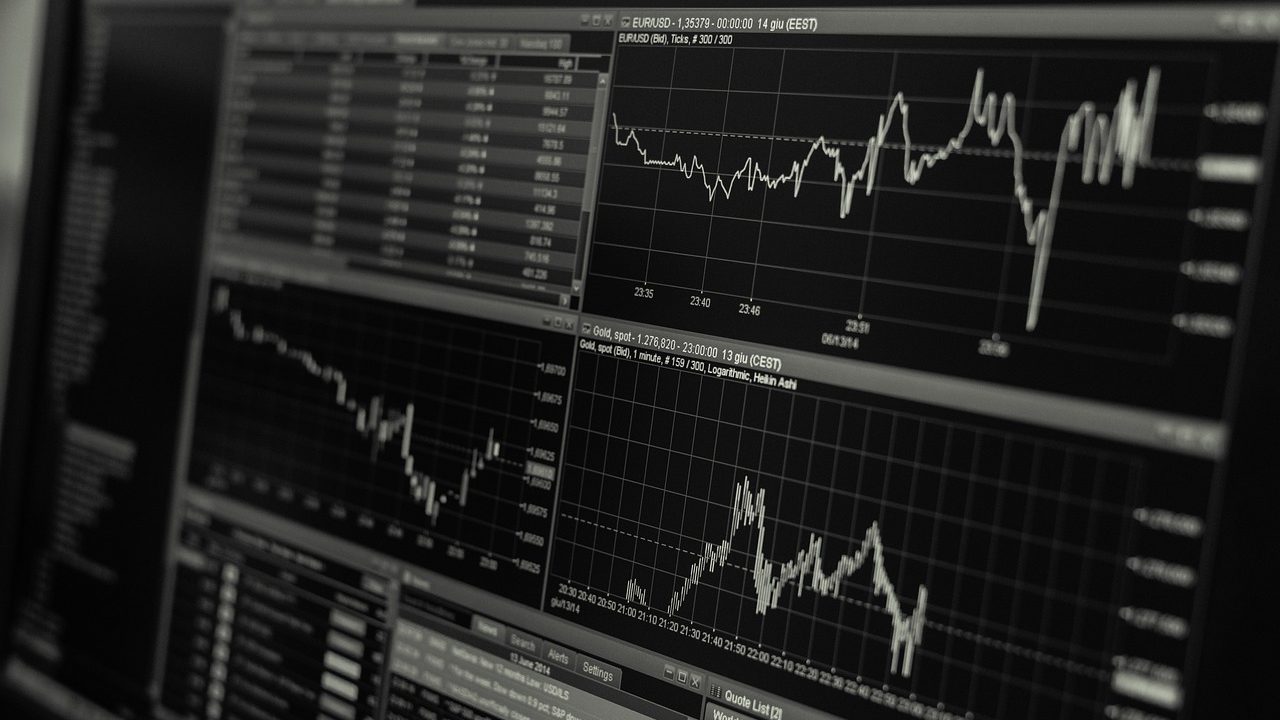
Federal Reserve Chair Kevin Warsh, who replaced Jerome Powell earlier this year, called artificial intelligence a 'transformative force' and said the United States will be 'a big winner' from AI-driven productivity growth. The bullish macro call from the central bank's top official implies the Fed under Warsh may be more willing to tolerate above-trend growth without reflexively raising rates — if AI is genuinely lifting output per worker, the economy can grow faster without triggering inflation. President Trump simultaneously called the existing Fed board 'hostile' toward Warsh in a CNBC interview, an unusual public alignment between a president and his own nominee against the broader institution.
Trump also commented on AI regulation in the same interview, saying the sector needs 'some guardrails, but as little as possible,' framing minimal oversight as necessary to staying ahead of China. The argument papers over domestic risks including labor displacement, financial market manipulation — illustrated vividly by today's Spotify prediction-market fraud — and the potential for AI systems to concentrate power among a small number of firms.
Microsoft's moves illustrate that power-concentration risk in concrete terms. The company announced a 2.5 billion dollar subsidiary dedicated to helping corporations deploy AI systems — not a model development play, since that is covered through the OpenAI partnership, but an enterprise integration and professional services layer where much of the long-term revenue is expected to flow. A separately leaked video showing a prototype 'Copilot OS' — an operating system with AI agents natively integrated rather than added as a feature — reveals the longer game: making every Windows enterprise contract an AI deployment contract, a vertical integration strategy that antitrust regulators will eventually need to examine.
The basic Sherman Act framework for that examination, as analysts note, turns on the distinction between market share and anticompetitive conduct. Being large is not illegal; using dominance to foreclose competition is. OpenAI, Anthropic, and Meta currently hold high market share in a new market, which is not automatically a legal problem. It becomes one if they use that position to prevent competitors from accessing the market on equal terms — the same standard the DOJ is applying to Google's search pre-installation agreements. Robinhood's CEO claiming AI agents will match human traders attracted attention as a bullish pitch, but observers note that professional trading advantages derive not only from execution speed but from information quality and scale — advantages AI agents democratize only partially.
Tech giants are also openly funding research into AI consciousness — a topic that might seem philosophical but carries regulatory implications. If AI systems were determined to hold some form of moral status, existing frameworks for intellectual property, liability, and data ownership would require substantial revision. The public nature of that research funding suggests major companies want to lead the regulatory conversation when it arrives rather than respond to it.
Magnificent Seven Wobbles, a Memory Chip Selloff, and a Private Credit Squeeze
S&P futures were trading at 7,552 with a modest 0.32 percent gain on Friday, heading into a holiday-shortened session. Asian stocks rallied overnight after Thursday's US payrolls report came in significantly below expectations — a weak jobs number functioning as good news for equities by reducing the probability of Federal Reserve rate increases. Seoul's Kospi was the standout gainer after a sharp selloff the previous session.
Goldman Sachs flagged a potential rotation away from the Magnificent Seven — Apple, Microsoft, Nvidia, Alphabet, Amazon, Meta, and Tesla — which have driven an outsized share of S&P 500 returns over three years. Institutional investors are reportedly reallocating toward sectors that underperformed during the AI euphoria period: healthcare, industrials, energy, and consumer staples. The rotation narrative has been predicted prematurely before, making it difficult to judge whether this iteration represents a genuine shift.
Apple's day was particularly contradictory. The stock rallied on reports of expanded iPhone production plans and chip talks with China, while simultaneously a separate story emerged about the company negotiating to purchase memory chips from two Chinese firms — CXMT and YMTC — that are on US government blacklists. Those talks triggered a semiconductor selloff across Asian markets, wiping out a reported 290 billion dollars in value from SK Hynix and Samsung. The timing was brutal for SK Hynix, which was preparing for its 29 billion dollar Nasdaq ADR debut within days of the selloff; the company has been one of the primary beneficiaries of the AI memory chip boom through its high-bandwidth memory chips used in Nvidia GPU systems.
Michael Burry, who called the 2008 housing crash, has added Micron to his AI-related short positions. His apparent thesis, inferred from 13-F filings, is that memory chip demand forecasts rest on AI capital expenditure projections that will not materialize at the expected scale or timeline. He has been building these positions for several quarters and has been early — which in short selling often means wrong until spectacularly right.
The private credit market is flashing a warning sign that is receiving less attention than it warrants. In Q2 2026, private credit fund investors requested redemptions totaling 15.6 billion dollars and received back less than six billion — a 62 percent shortfall. Investors who believed they could exit positions are discovering the asset class is significantly less liquid than assumed. A colorful footnote arrived from Delaware, where a magistrate ordered JPMorgan to continue paying the legal fees of Charlie Javice — founder of student financial aid startup Frank, convicted of fraud in connection with JPMorgan's 175 million dollar acquisition — and to pay interest on amounts the bank had withheld. SpaceX faces a technically complex setup on July 7th, when the post-IPO analyst quiet period expires simultaneously with Nasdaq-100 index inclusion, creating automatic passive fund buying at the same moment Wall Street publishes its first formal research on the company's valuation.
Freedom Fuel, Firearms Conflicts, and the F-150's Forty-Year Reign Ends

President Trump's 'Freedom Fuel' initiative brought price cuts to 25 Philadelphia-area gas stations Friday, as the administration publicly pressured retailers to pass along falling oil costs to consumers ahead of the July 4th weekend. Amazon Prime simultaneously offered a 50-cent-per-gallon discount at more than 7,500 BP and Amoco stations — a private loyalty subsidy landing in the same political space as presidential jawboning, though through an entirely different mechanism. The underlying commodity has dropped to four-month lows as oil flows through the Strait of Hormuz recover from the disruption caused by the Iran conflict, meaning market forces were already moving in the administration's favor regardless of the public pressure campaign.
The ATF's proposal to allow home delivery of firearms has drawn scrutiny because Donald Trump Jr. reportedly holds a stake in GrabAGun, a major online gun retailer that would directly benefit from the rule change. Current federal law requires gun transfers to go through a licensed dealer in the buyer's state; expanding home delivery would require either broadening who can conduct background checks or altering the background check requirements themselves. The overlap between the proposed rule and the financial interests of the first family makes evaluating the policy on its substantive merits considerably more difficult.
Trump's comments in the CNBC interview questioning whether capital gains taxes should apply to Bitcoin transactions generated significant attention in the cryptocurrency community. The IRS currently treats cryptocurrency as property, making every transaction a taxable event. Eliminating capital gains treatment for Bitcoin would remove a primary friction point for everyday adoption, though it remained unclear whether the remarks represented a formal policy signal or interview improvisation.
The Ninth Circuit upheld a Southern California ban on natural gas appliances in new construction in a 2-1 ruling, with the split suggesting the legal question is genuinely contested. The dissent presumably argues the local regulations are preempted by federal natural gas law — a question the Supreme Court may eventually weigh in on as California municipalities continue pushing toward building electrification.
Perhaps the most quietly significant domestic story of the day: the Honda CR-V overtook the Ford F-150 as America's top-selling vehicle in the first half of 2026, ending the F-150's run of more than 40 consecutive years at the top of the sales chart. The shift reflects changing buyer demographics, fuel prices, urban-suburban population balance, and reliability records. Though Honda is a Japanese company, significant CR-V production occurs at US plants. The White House separately announced the opening of 171 square miles of previously protected fishing grounds on Georges Bank — protected areas whose closure was based on stock-recovery assessments that, ecologists note, do not expire with a change of administration.
AI Cracks a Decade-Old Physics Proof, Autonomous Drones Enter War Games, and Coral Reefs Rewrite Themselves

A Nobel laureate working with an AI system has solved a physics problem that had remained open for more than a decade, according to reporting Friday. Full technical details were not yet available, but the significance lies in the collaboration model: a human expert at the frontier of the field using AI not as a search or writing tool but as a mathematical reasoning partner capable of exploring proof spaces that human cognition alone could not efficiently traverse. Researchers who have argued that AI benchmark performance does not capture genuine scientific contribution now have a different kind of evidence to contend with — an independently verifiable solution to a real, published, peer-reviewed open problem.
Researchers at Kyushu University have published a framework challenging the assumptions underlying tests of quantum gravity — the long-sought reconciliation of quantum mechanics and general relativity. Questioning how the field would even detect progress in that space is philosophically significant in the way that the Michelson-Morley experiment was significant: sometimes the most important scientific result is demonstrating that the prior framework was wrong.
UC Berkeley researchers have upended a century of reef ecology with a finding that algae parasitized coral cells to form reefs — rather than the long-assumed mutualistic symbiosis between the two organisms. Coral reefs cover less than 0.2 percent of the ocean floor but support roughly 25 percent of all marine species. If the biological relationship is parasitic rather than cooperative, conservation and reef restoration interventions designed around the mutualism assumption need to be reconsidered from the ground up.
The Boeing MQ-28 Ghost Bat autonomous combat drone flew alongside F-15EX fighters during the Valiant Shield 2026 exercise over the Philippine Sea, marking the first time an autonomous combat aircraft participated in a multinational military exercise. The geographic location — adjacent to the Taiwan Strait and South China Sea — makes the test a deliberate deterrence signal: these systems are operationally deployable, not merely developmental, and the demonstration is visible to potential adversaries in the most contested maritime theater.
On the climate front, Central Park recorded 100 degrees Fahrenheit on Thursday for the first time since 2012, sending the Northeast into the July 4th holiday weekend under a heat dome. Texas is separately urging the FDA to authorize ivermectin in livestock feed to combat a screwworm infestation — a sign of compounding biological pressure on agricultural systems already stressed by physical infrastructure strain. Behind Meta's Hyperion data center, autonomous robots are reportedly constructing a solar farm to power the facility, a closed loop in which AI enables the infrastructure that enables AI — and one whose economic significance lies in whether robotic construction can meaningfully compress the cost and timeline of renewable energy deployment.
Streaming Charts as Derivatives, Carlson's Third-Party Gambit, and What the Fed's AI Optimism Gets Wrong
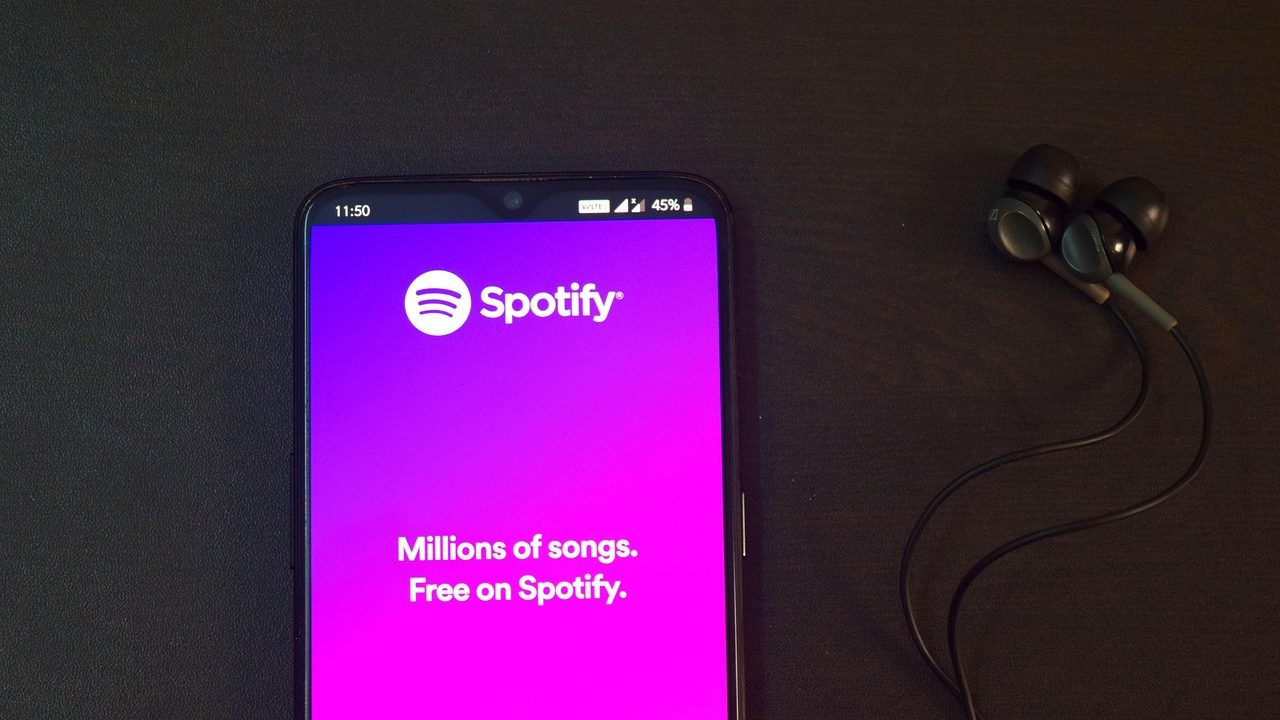
Spotify removed 500 thousand fake streams tied to a scheme built around the prediction market platform Kalshi. A bot network artificially streamed a song called 'Earrings' by Malcolm Todd to the top of Spotify's US chart; a 3 million dollar prediction market contract was structured to pay out based on whether that song reached number one. It did — because of the bots. The case illustrates a regulatory gap: traditional securities law covers manipulation of stocks and commodities, not of cultural metrics being used as prediction market underlying assets. The CFTC has jurisdiction over some prediction markets, but the framework is underdeveloped relative to the current scale of platforms like Kalshi and Polymarket.
Tucker Carlson told the Columbia Journalism Review — an unusual venue that itself signals a repositioning — that he has not spoken to President Trump since the Iran war began and that the United States is 'a one-party state.' He vowed to help build a third party. The historical base rate is not encouraging: Ross Perot won 19 percent of the popular vote in 1992 and zero electoral votes. Structural barriers including ballot access laws, first-past-the-post voting, and the spoiler effect have repeatedly suppressed third-party movements. Carlson retains genuine audience reach and fundraising capacity, though whether his current estrangement from Trump represents a durable political identity or a personal grievance that might resolve is an open question.
President Trump's financial disclosure revealed roughly 120 thousand dollars in sports tickets, including 15 thousand dollars in FIFA tickets from FIFA president Gianni Infantino. Trump is scheduled to present the World Cup trophy on July 19th. Gifts to US presidents from foreign officials and heads of international organizations are subject to specific disclosure and handling requirements; whether Infantino qualifies as a 'foreign official' under those rules is a legal question, but the optics of a president receiving tickets from the head of an organization whose events he is personally involved with are straightforward.
Public health reporting Friday indicated that federal health program cuts over the past 18 months have meaningfully degraded preparedness infrastructure — the kind of investment whose absence only becomes visible during an emergency. The screwworm outbreak in Texas serves as a small preview of what underfunded agricultural biosecurity systems look like under stress.
The episode's What If We're Wrong segment trained its skepticism on Fed Chair Warsh's thesis that AI will drive sustained, broadly distributed US productivity growth. The optimistic historical parallel is electrification in the 1920s, which did eventually lift aggregate productivity — but the diffusion of electricity took roughly 30 years to show up in productivity statistics. AI may move faster, but speed of capability improvement does not guarantee speed of institutional adaptation. Critically, the AI compute stack is currently dominated by Nvidia at the chip layer, a handful of cloud providers at the infrastructure layer, and three or four labs at the model layer. If productivity gains from AI accrue primarily to those firms and their shareholders, aggregate GDP growth may not translate into broad wage growth. The recommended indicator to watch: Bureau of Labor Statistics nonfarm productivity releases. If two consecutive quarters show below 1.5 percent productivity growth by mid-2027 despite significant AI investment, that would signal the productivity transmission is not working as Warsh and market bulls expect. Investment figures show what people are betting on; productivity figures show whether the bet is paying off.