Wildfires, War, and Compute Wars: The Forces Reshaping a Dangerous World
Three firefighters died battling a zero-percent-contained wildfire on the Colorado-Utah border as Iran struck Bahrain, a US-Iran ceasefire visibly unraveled, and the AI industry's infrastructure crunch sent shockwaves from Silicon Valley to consumer electronics shelves.
How this was made Verified AI
Every Intellegix briefing is generated from that day's broadcast and run through automated checks before it publishes — with a human paged on any flag. Here is the trail for this edition.
Before Anything Else: Three Firefighters Dead in Colorado
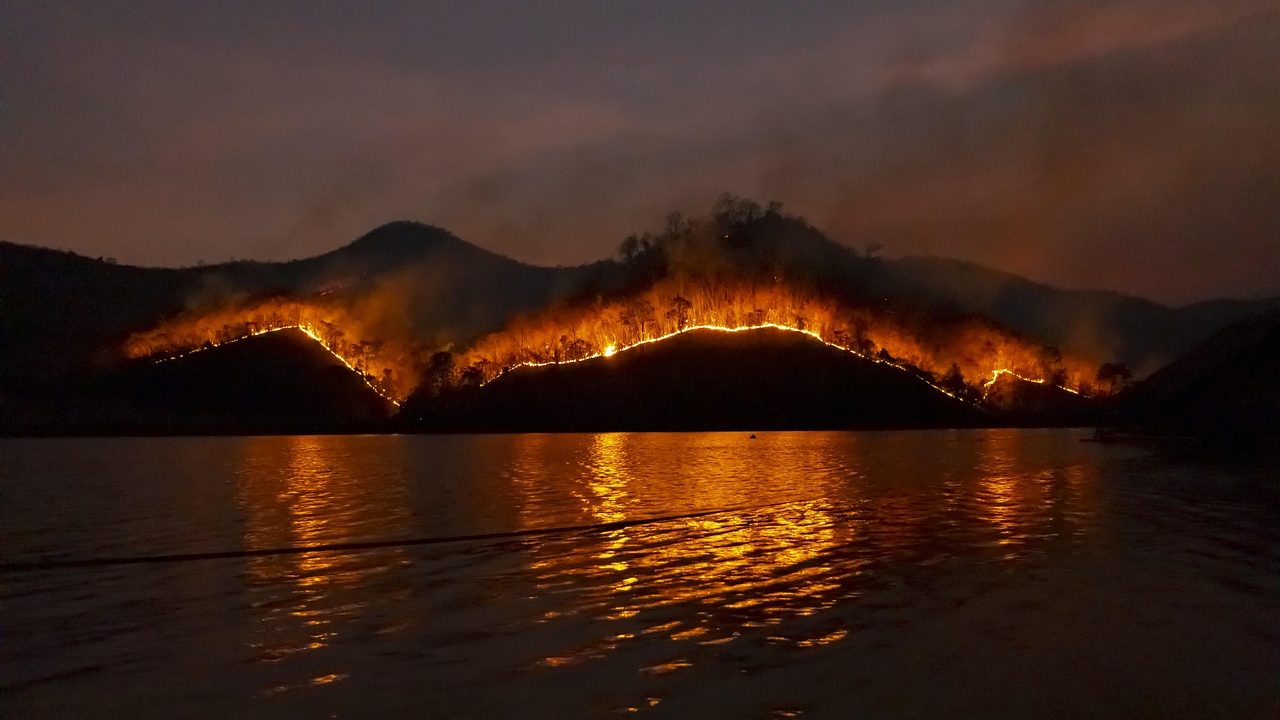
The deadliest wildfire event in the United States this year opened Sunday's news cycle not with geopolitics or market data, but with grief. Three firefighters were killed and two more hospitalized with burn injuries as the Snyder Fire burned 28,000 acres along the Colorado-Utah border with zero percent containment as of early Sunday morning.
Colorado Governor Jared Polis declared a disaster emergency and activated the National Guard — procedurally the right step, unlocking state resources and expediting contracting for additional air tankers and hand crews, while positioning Colorado to request federal major disaster designation if conditions deteriorate. But declarations cannot conjure water in an arid landscape or calm a wind-driven fire.
Zero percent containment on a fire of that scale signals that crews have been unable to establish any meaningful perimeter, a condition that points to extreme wind and fuel-load conditions. The terrain along the Colorado-Utah border — high elevation, dry canyon country, strong afternoon updrafts — is notoriously difficult for aerial suppression. When three firefighters die in a single incident, it almost always indicates an unexpected wind shift that cuts off escape routes, or a burnover in which fire overtakes a crew faster than they can deploy fire shelters.
The broader context is what fire managers have long warned about: the Western United States has accumulated an enormous wildfire debt from decades of suppression policy that allowed fuel loads to build across millions of acres. With July, August, and September — historically the peak months for large fire activity in Colorado and Utah — still ahead, the Snyder Fire could grow substantially before containment lines are established. Residents in Garfield and Mesa counties in Colorado and Grand County in Utah were urged to follow local emergency management directions.
Gulf on the Brink: Iran Strikes Bahrain as Ceasefire Fractures

The Strait of Hormuz ceasefire is fracturing in multiple directions simultaneously. Iran struck Bahrain, a commercial tanker was hit in the Strait, the US and Iran traded airstrikes, and the Islamic Revolutionary Guard Corps publicly denied the existence of a US military communication hotline — a statement that, if accurate, means there is no reliable de-escalation mechanism in place.
The Bahrain strike is particularly alarming. Bahrain hosts the US Navy's Fifth Fleet headquarters, and striking Bahraini territory is qualitatively different from hitting a tanker in international waters — it crosses into the territory of a formal US defense partner. The degree of damage and Iran's stated justification will determine the American response; any strike near Fifth Fleet infrastructure would dramatically alter the escalation calculus.
The economics frame the pressure on policymakers most acutely. The Strait of Hormuz carries approximately twenty percent of the world's oil and about eighteen percent of global liquefied natural gas. When tankers are hit, insurance rates spike, shipping companies reroute, and the premium on Gulf crude widens almost immediately. Saudi Aramco's resumption of Gulf oil exports suggests Riyadh has calculated that the risk-reward still favors moving oil now — possibly because Riyadh is watching the ceasefire deteriorate and wants to bank revenue before conditions close the window again.
Iran's Assembly of Experts — the clerical body with constitutional authority over the Supreme Leader's succession — has issued a warning to nuclear negotiators not to cross what it called Khamenei's red lines. When the Assembly of Experts weighs in publicly on negotiations, it typically signals hardliner concern that diplomats are moving too far toward compromise. The IRGC's hotline denial compounds that signal, appearing designed to undercut any diplomatic track the Foreign Ministry might be pursuing and assert that the IRGC controls the kinetic response.
Bolivia added a cautionary economic coda to the weekend's instability. The country's central bank set a new exchange rate of 9.73 bolivianos per dollar — a thirty percent devaluation — after ending a fifteen-year fixed peg, an acknowledgment that the foreign exchange reserves required to maintain it had been exhausted. The IMF's outgoing chief economist has warned that the global economy has fewer shock absorbers than at any point in the last decade. Bolivia's weekend illustrated what running out of them looks like in practice: import costs rising almost immediately, dollar-denominated debt becoming more expensive to service, and household-level pain preceding any macroeconomic stabilization.
Ukraine's Contradictory War: Peace Overtures and Maximum Pressure
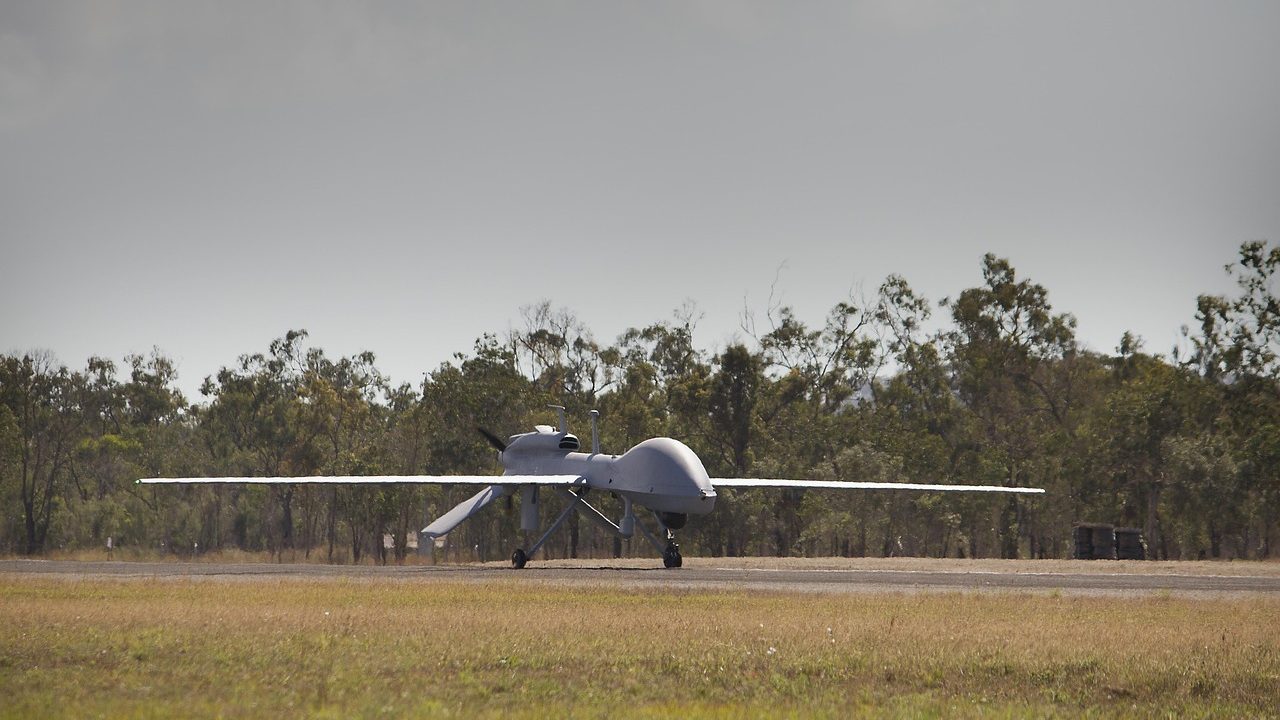
President Volodymyr Zelensky has declared that ending the war is possible and called on Russia to negotiate — his biggest stated diplomatic push since the early months of the conflict. The timing is jarring: Ukraine simultaneously launched drone barrages striking targets across a dozen Russian regions, while Russia fired an reported 1,400 drones at Ukraine in a single week. This is maximum-pressure diplomacy, with both sides attempting to negotiate from demonstrated military capability rather than mutual exhaustion.
Zelensky has cited intelligence indicating that Russian administrators in occupied Crimea are privately acknowledging they cannot cope with Ukraine's strikes, specifically describing a deepening fuel and logistics crisis on the peninsula. If accurate, Ukraine's long-range strike campaign may be achieving a goal it has pursued for two years: making the occupation of Crimea operationally costly enough that it becomes a liability for Moscow rather than an asset.
Against that backdrop, the Pentagon allowed $910 million in previously authorized Ukraine military aid to expire without disbursement. Military aid packages carry legal expiration mechanisms, and choosing not to disburse before a deadline is a choice, not a clerical error. The timing — while Zelensky is making diplomatic overtures — sends a mixed signal from Washington. If the White House is simultaneously trying to pressure Russia through Ukraine's military capability and applying pressure on Zelensky to negotiate, allowing aid to expire is one lever available to it.
A separate but telling data point emerged from Russian domestic social media: a soldier's viral mutiny threat rose to the level of a formal Kremlin response, suggesting the clip circulated widely enough that ignoring it was not viable. Russian authorities are clearly monitoring for signs of dissent within the military, and when something penetrates broadly enough to require official comment, it suggests the underlying sentiment has traction — a dynamic that carries particular weight in light of the Prigozhin precedent.
Russian hackers have also been linked to a $2.5 billion cyberattack on Jaguar Land Rover. For context, JLR's total annual revenue typically runs around £22 to £23 billion, making a $2.5 billion impact a substantial single-year exposure. Such attacks serve multiple purposes — generating economic disruption in Western economies, extracting intellectual property around EV and autonomous vehicle technology, and providing diplomatic leverage. The attribution to Russian actors, if confirmed, represents another data point in a pattern of hybrid warfare running in parallel with the conventional conflict.
The Compute Crunch: GPU Scarcity, Chinese Rivals, and a Decade-Low in Cash Flow

The AI infrastructure industry faces a defining tension: demand for compute is growing faster than supply, prices are rising in ways that compress margins across the ecosystem, and a Chinese competitor has entered the frontier model market at a price point that challenges the economics of the entire Western AI build-out. Google has capped Meta's access to Gemini AI compute amid what sources describe as a genuine infrastructure crunch — not a commercial dispute, but physical scarcity. When one of the largest AI developers in the world tells one of its largest customers it cannot honor current demand, it reveals where the capacity constraints actually lie.
The financial signal is stark. Hyperscaler free cash flow has hit a decade low while aggregate AI infrastructure spending has crossed $700 billion. Those two facts together describe companies spending at a pace that outstrips their ability to generate cash — not because the business is failing, but because the capital requirements of maintaining competitive position are simply enormous. Elon Musk has described what he called the biggest chip price surge he has ever seen, and Apple has raised Mac and iPad prices by up to $500, citing soaring memory costs from the AI data center build-out. The infrastructure investment is not an abstraction; it is showing up in the price of consumer devices.
SpaceX's data center business reportedly could top $76 billion in contracts by 2029, with Anthropic, Google, and Reflection AI among tenants. The vertical integration of launch capability, satellite internet through Starlink, and terrestrial data center leasing creates a bundle no other company can replicate. The FTC's clearance of Musk's acquisition of Mesh Optical Technologies — which makes high-speed optical transceivers connecting servers inside data centers — adds another layer to that stack. Regulators found no antitrust violation because Mesh is a relatively small player in a market with multiple competitors, but as the pieces of a vertically integrated AI infrastructure empire assemble, the competitive picture may look different.
The Chinese dimension represents the most structurally significant challenge. Zhipu, a Chinese AI company, has released an open-source model that reportedly matches Anthropic's Claude performance at roughly a fifth of the cost. The specific performance claims warrant caution — AI benchmarks can be gamed — but the directional claim is significant. The US has implemented significant restrictions on advanced AI chip exports to China specifically to slow competitive Chinese AI development. If Zhipu is achieving frontier-level performance at low cost on chips available within China, it raises serious questions about whether those export controls are achieving their intended effect. The open-source release compounds the challenge: by releasing the model publicly, Zhipu makes it available globally, including in jurisdictions where US AI companies might otherwise be dominant.
Goldman Sachs is meanwhile directing investment banking clients toward industrial and energy companies, arguing that the next phase of AI economic benefit flows to factories and mines rather than software companies. The logic is that AI deployment is moving beyond the data center phase into industrial automation — predictive maintenance, supply chain optimization, autonomous mining equipment. A Goldman strategist has separately argued that investors should shift from chips to cloud stocks, framing the semiconductor build-out phase as past its peak and the application layer as next.
Johnson's 'Protection Program' and a Supreme Court Case That Could Reshape the Fed
Speaker Mike Johnson warned Republican House members that he 'runs the protection program' — language that reveals how he understands his own power. In Congress, the Speaker controls which legislation reaches the floor, which members receive committee assignments, and critically, which members get support from party campaign infrastructure. Framing that as a protection program he runs invokes both the carrot of favorable treatment and the implicit threat of its withdrawal. The fact that Johnson said it out loud suggests he is managing enough internal pressure that the assertion needed to be made explicitly.
Departing Representative Tom Massie, who likely has more freedom to speak uncomfortable truths than anyone in the caucus, warned that the GOP is squandering its unified control of Washington with midterms less than five months away. He predicted a 'shellacking' — a word President Obama used to describe the 2010 Democratic losses — if a stalled legislative agenda fails to show voters results. The substantive point is that coalitions which deliver unified government expect measurable returns.
The Supreme Court's expected ruling on Trump's bid to fire Federal Reserve Governor Lisa Cook carries implications that will outlast the current administration. The Fed's independence from presidential removal authority rests on a 1935 precedent, Humphrey's Executor, which held that Congress can limit the president's ability to remove officials of independent agencies. If the current Court narrows or overturns that precedent, it would fundamentally alter the executive branch's relationship not just with the Fed but with the FTC, the SEC, and the CFPB. The immediate market concern is central bank credibility: a president who can remove Fed governors for policy disagreements gains political leverage over decisions — like raising interest rates in an election year — that are supposed to be insulated from exactly that pressure.
On the 2028 Democratic primary, a McLaughlin survey shows Gavin Newsom and Alexandria Ocasio-Cortez gaining on Kamala Harris. Harris still leads, but a narrowing poll two full years before the primary affects whether donors waiting for a clear front-runner feel they can hold off on commitments. Newsom's announcement of a California balanced budget with zero deficit and $6 billion in reserves is explicitly a national audition — signing a fiscally responsible budget in a state that has struggled with deficits tells a story about competent governance. Newsom separately stated there is no chance he will delay California's return-to-office mandate for state workers, a policy position that doubles as a political signal about where the national mood has moved.
Senator Elissa Slotkin's call for Chuck Schumer and Hakeem Jeffries to step aside from Democratic leadership generated immediate blowback from the Congressional Black Caucus, which noted that the call targets two of the most prominent Black leaders in the caucus. The CBC has both the votes and the visibility to make that cost very high for Slotkin politically. Vice President JD Vance's appearance on Real Time with Bill Maher — where Maher explicitly challenged him on election denial — was either a sign of real confidence in his ability to defend his positions or a calculated bet that exposure to Maher's audience was worth the discomfort.
AI in Schools, Drones at Newark, and a Platform Safety Reckoning

Sixty percent of Georgia's teachers now use AI for lesson planning, according to a survey of 13,000 educators — a striking real-world adoption rate. The more revealing finding is that most of those teachers refuse to use AI for grading. Lesson planning is fundamentally a preparation task: organizing information, sequencing topics, generating activity ideas. Grading requires understanding a specific student's thinking process, identifying where understanding breaks down, and applying judgment about what partial credit means in the context of a learning objective. Teachers appear to be drawing a clear and considered line between delegation and domain authority.
A Boeing 737 carrying 106 passengers nearly collided with a drone on approach to Newark Airport — a near-miss that represents a genuine infrastructure governance failure. Near-miss reports involving drones near major airports have climbed steadily as commercial drone operations expand. The FAA's rules around drone operation near airports exist, but enforcement is patchy and the technology for real-time drone tracking in controlled airspace is still being deployed. If an airliner takes a drone strike in an engine on approach, the consequences are catastrophic. Regulation is running behind capability.
States are challenging Meta's penalty math ahead of an August youth safety trial. Meta's argument about appropriate damages presumably involves calculations around the number of affected minors, the duration of harm, and per-user penalty amounts. States challenging that math are arguing that Meta is attempting to minimize financial exposure from what multiple state attorneys general have characterized as deliberate platform design choices that prioritized engagement over user safety. The August trial will set a precedent for how courts value harm to minors in algorithmic product design cases.
The H-2B visa processing backlog cost an Oregon state fair its carnival operations. H-2B visas bring temporary nonagricultural workers — carnival operators, landscapers, seafood processors — to the US for seasonal jobs. When the pipeline backs up, businesses face a stark set of choices: cancel operations, pay above-market wages to domestic workers, or run short-staffed. The H-2B program has been chronically under-resourced for processing, and the Oregon fair's lost carnival is the ground-level consequence of that systemic gap.
Glaciers, Heat Domes, and a Quantum Measurement Breakthrough

The North Atlantic cold blob — a region of anomalously cool surface water caused by freshwater influx from Greenland ice melt — is driving European heat domes through a counterintuitive mechanism. The cold blob dilutes the saltier, denser water that powers the Atlantic Meridional Overturning Circulation. When the AMOC weakens, it disrupts the jet stream, making it slower-moving and wavier. A slower, wavier jet stream creates persistent weather patterns, including heat domes that park over France, Spain, and the UK for days or weeks rather than moving through. Melting Arctic ice is, paradoxically, directly linked to record European heat.
Pakistan and British Columbia both issued glacial flood warnings for early July. Pakistan holds an estimated 7,000 glaciers in the Karakoram, Hindu Kush, and Himalayas — more than any region outside the polar caps. As they melt, glacial lakes form behind natural dams of ice and moraine; when those dams fail, they release glacial lake outburst floods that can devastate downstream villages with almost no warning. British Columbia's evacuation near a swelling glacial lake is the Canadian analog of the same phenomenon.
Citigroup has projected that a super El Niño scenario could cost the global economy up to $7 trillion over five years, representing 6.4 percent of global GDP. El Niño events disrupt agricultural production across South America and Southeast Asia, increase flood risk in some regions and drought in others, and reduce hydropower generation in ways that ripple through energy markets. A super El Niño of the intensity Citigroup is modeling would layer on top of baseline warming, creating compounding impacts larger than the sum of individual effects. Climate Central separately assigned a Colombia-Portugal World Cup match in Miami a 95 percent probability of performance-impairing heat conditions, with climate change raising those odds by fourteen percentage points.
Scientists have achieved what is called the quantum limit for measurement using a single molecule positioned on a surface — the first time this has been accomplished in this configuration. The quantum limit, or standard quantum limit, is the theoretical floor on measurement precision set by quantum mechanics itself: below it, the Heisenberg uncertainty principle means measuring a property more precisely requires disturbing the thing being measured. Achieving this limit with a single molecule on a surface means researchers can now make the most precise possible measurements of molecular properties, with direct implications for drug discovery, materials science, and quantum computing hardware. For pharmaceutical research, quantum-limit precision in measuring how a drug molecule interacts with a receptor could validate computational models with far greater accuracy, potentially cutting years off development timelines. For quantum computing, measuring qubit states at the quantum limit without disturbing them is a fundamental engineering requirement that has constrained progress. The result establishes that the precision is achievable in principle.
GTA 6, CNN's Identity Crisis, and the Industrial AI Stress Test
Grand Theft Auto 6 generated approximately $3 billion in pre-order revenue in the 48 hours after pre-orders opened on June 25th, with 39 million units reportedly reserved. For context, GTA V — one of the best-selling games in history, selling for thirteen years — has generated roughly $600 million in total revenue by some estimates, meaning GTA 6 pre-orders alone have reportedly surpassed that figure five times over before a single copy has shipped. The scale reflects a level of brand trust closer to a major motion picture franchise than a typical game launch, built on over a decade of sustained cultural relevance through GTA Online.
CNN anchor Anderson Cooper has said he will not work under Ari Weiss following CNN's merger — a public statement about editorial direction that anchors of his stature rarely make this explicitly. The Ari Weiss appointment has been controversial within CNN's editorial culture, reflecting tensions between traditional hard news values and a more polemical approach to political commentary. Cooper's refusal, if it becomes a formal departure, would be the highest-profile exit from the post-merger entity.
The Goldman Sachs thesis that the next AI boom flows to factories and mines — industrial AI as the clear next phase of capital deployment — is the most confident claim circulating in financial analysis circles right now. The evidence is compelling: data center build-out is maturing, enterprise software AI penetration is advancing, and the logical next frontier is physical-world automation. But the thesis deserves stress-testing. Industrial AI deployment has been 'the next phase' of AI commercialization for roughly six years, and the timeline has consistently disappointed. The gap between what AI can do in a controlled demo environment and what it can do in a real factory with variable conditions, legacy equipment, and union labor agreements has been wider than projected.
Three specific conditions would need to be true for the Goldman thesis to be wrong: that the infrastructure layer for industrial AI — sensors, edge computing, integration software — is more fragmented and harder to standardize than the data center hardware market; that the regulatory environment for industrial automation, particularly around workforce displacement and safety certification, proves more restrictive than anticipated; and that AI models hit capability ceilings in the physical-world reasoning tasks industrial automation requires, particularly spatial reasoning and manipulation of novel objects. The signal to watch is the industrial AI pilot-to-production conversion rate: if companies like Siemens, Honeywell, and Rockwell Automation show conversion rates staying below thirty percent through the end of 2026, it would indicate that friction costs are higher than the thesis assumes. Insurance and liability pricing for industrial autonomous systems is a second leading indicator — if underwriters price those systems at rates reflecting high failure probability, it will appear in underwriting data before it shows up in earnings reports.