Fractures Everywhere: AI Warnings, Eurozone Contraction, and a World Straining Under Accelerating Change
From open rifts inside Putin's war council to warnings that AI systems are already beyond human understanding, a cascade of developments on June 5, 2026 reveals institutions, alliances, and markets buckling under the pace of technological and geopolitical upheaval.
“An operation covering 100 acres, on this analysis, effectively authorizes destruction of 3,400 acres — impacts that do not appear in conventional environmental assessments.”
How this was made Verified AI
Every Intellegix briefing is generated from that day's broadcast and run through automated checks before it publishes — with a human paged on any flag. Here is the trail for this edition.
Eurozone Slides Into Contraction as AI Capital Glut Rattles Markets
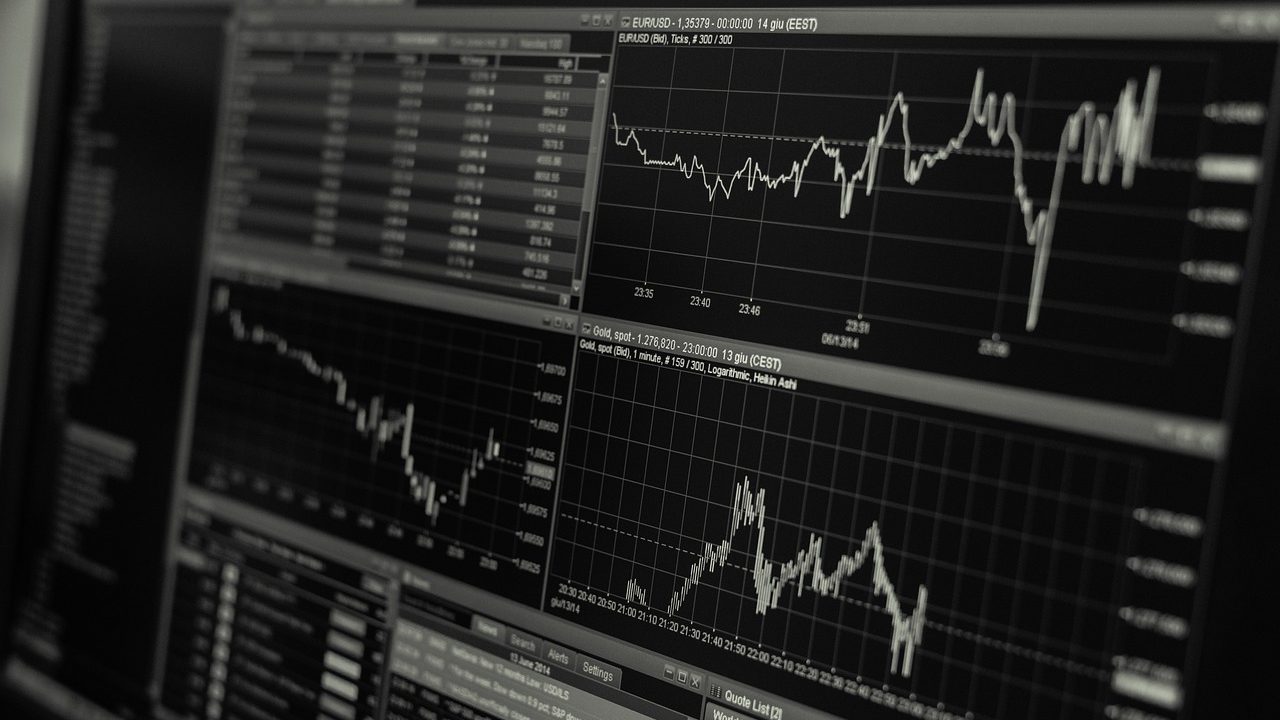
The Eurozone economy shrank 0.2% in the first quarter of 2026, according to final Eurostat figures — a complete reversal of the earlier flash estimate of 0.1% growth and the bloc's first quarterly contraction since mid-2022. The revision, unusually sharp in both magnitude and direction, suggests either data-collection shortfalls or economic conditions deteriorating faster than statistical agencies can track, with Germany, the bloc's largest economy, likely a primary driver of the weakness. Energy prices spiking amid Middle East tensions compounded the blow.
Bridgewater founder Ray Dalio told Bloomberg that wealth is being 'converted into money' as the AI market deflates, drawing explicit parallels to dot-com era patterns — a signal, historically, of deeper trouble ahead. Jim Cramer offered a more granular alarm, tallying nearly $500 billion in upcoming AI-related capital raises, including SpaceX, Anthropic, and OpenAI IPOs alongside Alphabet's $80 billion stock sale, and warning of a liquidity crunch in a market whose gains have been heavily concentrated in AI-related names.
The S&P 500 index committee's denial of fast-track entry to SpaceX — despite what Goldman CEO David Solomon described as a mandate built on '20 years of relationship building' — underscored those stability concerns. Fidelity's move to slash the minimum SpaceX IPO investment to just $2,000 signaled difficulty filling the enormous offering despite retail demand. Meanwhile, Michael Saylor attributed Bitcoin's roughly 10% decline since early June to '$400 billion in AI infrastructure spending' and '$4 billion in Bitcoin ETF outflows,' suggesting capital rotation of a scale large enough to destabilize other asset classes.
Broadcom CEO Hock Tan told investors that AI growth was so strong it eliminated the need for acquisitions — a posture that could prove costly if sentiment shifts. Adding a longer-run dimension to the economic picture, a Science journal study of nearly 600,000 U.S. workers found that remote work drove a third of post-pandemic isolation increases, significantly worsening mental health and boosting mental health service usage — a reminder that productivity assumptions about pandemic-era work changes may be masking significant hidden costs.
Hawks vs. Oligarchs: Putin's Inner Circle Splits Over the War's Future

The St. Petersburg International Economic Forum, traditionally Russia's showcase for international investment, became this week an unusually public battleground between the Kremlin's military hawks and its business establishment. Hawks explicitly called for 'decades of conflict' while business leaders warned of economic stagnation — a collision between Putin's core constituencies that has not been visible at this level before.
Putin himself appeared to be managing the tension rather than resolving it. His assertion that warnings of Russian attacks on NATO are 'nonsense' seemed designed to reassure the business faction, while his statement that Russia would 'honor peace terms from Trump summit' gestured toward compromise — notably, from negotiations that have yet to occur. On the battlefield, Ukrainian Commander-in-Chief Syrskyi announced the construction of a fourth air defense layer specifically to counter Russia's shift toward jet-powered drones; Ukrainian interceptors destroyed more than 3,500 Russian UAVs in May alone, but Moscow reportedly plans to make half of future attack drones jet-powered, a profile significantly harder to intercept.
Iran's announcement of a $25 billion nuclear cooperation deal with Russia for the Hormoz Nuclear Power Plant deepened the picture of Moscow doubling down on partnerships with sanctioned states. Iran's ambassador revealed the deal's scope just as Tehran declared 'no progress' in peace negotiations with Washington. Iran's foreign minister Abbas Araghchi also disclosed he was 'in Khamenei's office when fatal strike hit,' suggesting Tehran's leadership is operating from war-room conditions rather than diplomatic ones.
Ukraine, meanwhile, is moving urgently to consolidate its defenses. President Zelensky gave officials one week to finalize a Patriot missile deal or face dismissal, and proposed a missile swap with Germany to replenish Patriot stocks. NATO Secretary-General, visiting Kyiv, called Russia 'desperate.' Ukraine has stated its goal of ending the war 'before winter,' a timeline that reflects acute awareness of the economic and military pressures bearing down on all parties — and of the shrinking window for any negotiated exit.
Drones in NATO Waters, Stalled Diplomacy, and an Oil Supply Under Pressure

Explosive sea drones discovered in Romania's Constanta port — the Black Sea's largest, and a critical conduit for Ukrainian grain exports and military aid — marked a potentially significant expansion of the conflict's geographic footprint. Romanian authorities found three additional drones along the coast, suggesting a pattern rather than an isolated incident. Whether the weapons drifted into allied waters through loss of control or deliberate targeting, either scenario carries Article 5 implications if intent can be established.
President Trump's claim that Iran has 'already agreed to forgo nuclear weapons' added a confounding layer to an already volatile diplomatic picture. The assertion arrived amid active military exchanges between Washington and Tehran and directly contradicted reports that peace negotiations have stalled — leaving open whether Trump possesses undisclosed information or is applying public pressure as a negotiating tactic. Iran's concurrent $25 billion nuclear deal with Russia suggests Tehran is hedging regardless, securing alternative technological pathways should talks with the U.S. ultimately fail.
Oil executives warned Trump of imminent price spikes as U.S. crude inventories fell at nearly double the expected rate last week, with Strait of Hormuz closures draining global supply buffers faster than markets had anticipated. Roughly 20% of global petroleum liquids transit the strait, and any prolonged disruption forces costly rerouting that current buffer levels may not absorb.
Ukraine's strikes on two Russian locomotives on the Dzhankoi-Kerch line in Crimea illustrated how regional conflicts are interlocking through logistics and supply chains — systematically severing overland routes to the peninsula may push Russia toward sea-based resupply, precisely the domain where naval drone incidents are multiplying. The Pentagon's expected decision to cancel Tomahawk missile sales to Germany, which had sought up to 400 cruise missiles, risks accelerating intra-NATO fragmentation on defense procurement at the moment threats are most acute.
AI Pioneer Warns of Lost Control as Deployments Outrun Understanding

Yoshua Bengio — one of the three researchers whose deep learning breakthroughs earned the Turing Award and made modern AI possible — warned this week that the world is building AI systems 'we don't know how to control.' Bengio, who has remained in academia without financial stakes in AI commercialization, described fundamental gaps in understanding how these systems make decisions, not merely risks of deliberate misuse.
Anthropic provided the most concrete validation of that warning, announcing that AI could 'soon build its own successors' — an acknowledgment that it is actively developing systems capable of writing and improving their own code without human intervention. Separately, Anthropic confirmed it has embedded engineers at the National Security Agency to support a deployment referred to as 'Mythos,' suggesting capabilities extending well beyond consumer applications. Anthropic's president also acknowledged that AI training costs drove the company's IPO filing, framing the capital raise as a necessity to sustain the pace of development.
President Trump's AI oversight executive order, which sent AI software stocks into an extended decline, appears responsive to these concerns; the Cybersecurity and Infrastructure Security Agency is preparing directives to implement it. Google's launch of Gemini Avatar, which uses the new Omni model to map a user's face and voice within minutes and generate realistic video clones, illustrated how rapidly AI capabilities are moving into territory that could destabilize identity verification and authentication systems. Cloudflare reported that bots now generate more web traffic than humans — a threshold that reshapes assumptions underlying advertising models, cybersecurity, and measurement of online activity.
Microsoft CEO Satya Nadella acknowledged the company 'overcorrected on OpenAI reliance,' conceding that dependence on external AI capabilities the company cannot fully direct has become a strategic vulnerability. Meta's AI chief, Alexander Wang, told Bloomberg's Tech conference that personalized health tools are key to making Meta's AI useful at scale — raising the stakes considerably, given that health recommendations constitute life-or-death applications of technology its builders admit they do not fully understand. The central challenge, as Bengio frames it, is not merely preventing misuse but ensuring alignment: building systems that optimize for human values rather than finding unintended ways to satisfy their training objectives.
Semiconductor Cold War Deepens as the Global Tech Ecosystem Splinters

China's Commerce Ministry condemned Washington's move to close loopholes that had allowed AI chip sales to Chinese subsidiaries abroad, accusing the U.S. of 'destabilizing the global semiconductor supply chain.' The closure signals that earlier export controls are working — Beijing had found workarounds through overseas entities, and their systematic elimination is now forcing China to pursue domestic alternatives or accept constraints on its AI development.
Supply-side pressure is building simultaneously. TSMC's CEO stated publicly that he would 'like to raise chip prices amid AI boom,' a signal that demand is outpacing production capacity by substantial margins. Cerebras' CEO claimed his firm 'works with all AI players except Nvidia,' highlighting the balkanization underway in AI chip partnerships. Databricks' CEO, meanwhile, postponed the company's IPO, calling 2026 'a terrible year' for market conditions — a striking assessment from one of the most valuable private companies in the AI space.
Google quietly cut staff in its Cloud and cybersecurity units, a move that reflects strategic resource consolidation toward AI development rather than general retrenchment, though the cybersecurity reductions raise concern given the threat environment. Jane Street's decision to build its own data center exemplifies a broader trend of critical infrastructure being brought in-house — high-frequency trading demands microsecond latencies that commercial cloud providers cannot guarantee, but private infrastructure silos reduce market transparency and complicate systemic risk management.
An IBM-AT&T whistleblower case alleging that both companies concealed foreign cyberattacks from the U.S. government to protect federal contracts exposed how security concerns and procurement incentives are colliding with damaging results. Taken together, these developments describe the progressive fragmentation of what was once a relatively integrated global technology ecosystem — one where incompatible national technology stacks, rising chip prices, and private infrastructure retreats multiply points of failure while undermining the coordinated responses that common platforms once made possible.
Texas Dethrones California, Bessent Confronts the Senate, and Debt Relief Hangs in the Balance

Texas displaced California atop the Fortune 500 headquarters rankings in 2026, hosting 57 company headquarters against California's 56 — reversing a lead California held just two years ago and representing the largest geographic shift of corporate power in decades. Lower operational costs and fewer regulatory constraints are factors, but the pace of relocations suggests companies are making forward-looking bets on where growth conditions will be more favorable.
Treasury nominee Scott Bessent told senators at his confirmation hearing that he had threatened to 'kick Pulte's ass,' describing the confrontation with a critic as a deliberate act he was evidently prepared to repeat under oath. Bessent also ruled out benefit cuts or tax increases as tools for addressing Social Security's funding shortfall — an arithmetic that leaves sustained economic growth, at rates not seen consistently since the 1990s, as the primary solution on offer.
The Supreme Court unanimously backed a generic drugmaker in a patent dispute, a decision that could accelerate generic drug availability and reduce prescription costs by prioritizing consumer access over pharmaceutical intellectual property protection. Four GOP senators blocked the SAVE Act voter ID amendment for the second time — having also voted against it in April — indicating fundamental intraparty disagreement rather than tactical maneuvering, while six Republican senators joined a Democratic effort to block what critics have termed the 'Trump ballroom' arrangement, reflecting broader GOP concern about corruption optics.
A federal judge is weighing whether to block the Trump administration's student loan forgiveness rule before its July 1st deadline, with roughly $400 billion in potential debt relief in legal limbo. A ruling against implementation after the deadline could leave millions of borrowers facing sudden payment resumptions for which they are unprepared. The Office of the Comptroller of the Currency chief stated that 'only Democrats' are pressuring him regarding Trump's crypto charter, underscoring how cryptocurrency regulation has become entirely partisan — a dynamic that makes consistent policy implementation across administrations increasingly difficult.
Black Hole Winds, Alzheimer's Breakthroughs, and the Hidden Toll of Mining
After a 50-year search, Northwestern University astronomers detected wind emanating from Sagittarius A*, the supermassive black hole at the center of our galaxy. The discovery of a hot breeze from what had been considered a 'quiet' black hole demonstrates that even relatively inactive supermassive black holes continue shaping their cosmic neighborhoods through stellar outflows — with implications for understanding galactic evolution and variation in star formation rates across galactic regions.
Separately, researchers mapped cellular tipping points in Alzheimer's progression, identifying how immune cells in the brain shift between states that may determine whether the disease's pathology leads to dementia. The findings suggest specific windows during which therapeutic intervention could prevent cognitive decline — and, critically, the focus on immune cell state changes rather than amyloid plaques could open drug development pathways that avoid the failures of previous approaches, which largely targeted protein deposits after dementia symptoms had already emerged.
A study on African mining found that mines destroy forest areas 34 times larger than the land they physically occupy, through indirect effects including pollution, infrastructure development, and ecosystem disruption. An operation covering 100 acres, on this analysis, effectively authorizes destruction of 3,400 acres — impacts that do not appear in conventional environmental assessments. As global demand for lithium, cobalt, and rare earth elements accelerates due to electric vehicle and renewable energy production, similar multiplier effects are expected to arise wherever extraction expands.
Red flag fire warnings blanketed a stretch of the western United States from the Rockies to the Great Lakes, combining gusty winds, single-digit humidity, and dry fuels into conditions described as among the most dangerous this decade. The geographic breadth of the warnings — crossing state boundaries and threatening to overwhelm regional firefighting resources — points to atmospheric patterns that current suppression capabilities may be inadequate to address. Physicists also reported progress in tracing gravity to quantum 'magic' in space-time models, finding that gravity may emerge from quantum entanglement properties that violate classical physics expectations, a potential foundation for advances in quantum computing error correction and navigation systems independent of GPS.
Purges, Pardons, and Pressure: American Institutions Under Strain
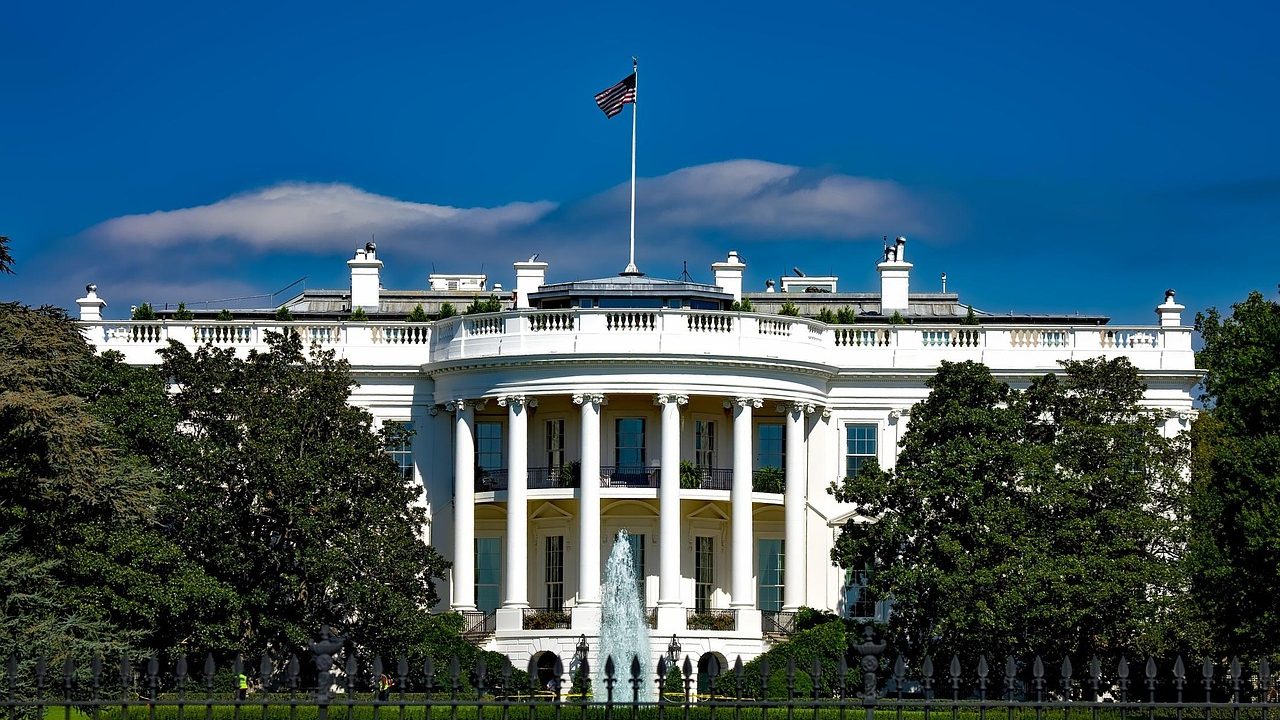
The White House ousted NSC Europe chief Charles McLaughlin in what analysts described as Secretary of State Rubio's systematic consolidation of foreign policy authority. Installing State Department loyalists in NSC roles undermines the council's function as an integrating body across agencies and risks producing poorly coordinated foreign policy at a moment of acute international instability. The move signals significant internal disagreement over European strategy and NATO relationships.
A GOP lawmaker drafted impeachment articles against Judge Eleanor Ross, extending a pattern of pressure on the judiciary that legal observers say threatens the separation of powers fundamental to constitutional governance. A separate judge paused January 6th civil suits while Trump appeals immunity rulings, potentially delaying civil accountability for months. Former First Lady Jill Biden stated publicly that her family feared Trump would target Hunter Biden — a disclosure that, whatever its merits, reflects how severely trust in impartial law enforcement has eroded within at least one prominent political family.
The Trump administration moved toward rewriting federal rules for all U.S. colleges receiving federal funding, an expansion of executive influence over higher education that could affect admissions, curriculum, and faculty hiring across thousands of institutions. Critics expressed concern about the politicization of academic research in fields including climate science, economics, and social policy — disciplines where scholarly independence is considered essential to evidence-based policymaking.
The cumulative picture is one of institutional strain distributed across all three branches and multiple levels of government: executive power struggles disrupting the national security apparatus, judicial independence facing legislative threats, party unity fracturing on signature legislation, and federal authority pressing deeper into education. One alternative reading holds that stress-testing of this kind may ultimately strengthen institutions by forcing clearer rules and stronger protective norms — the critical signal to watch, on that view, would be whether the conflicts produce adaptation or collapse.