Ceasefires Collapse, Debt Alarms Sound, and AI Economics Disappoint: A World in Simultaneous Crisis
From a crumbling Middle East ceasefire and a seven-day presidential absence to Goldman Sachs declaring AI economics worse than two years ago, June 4, 2026 delivered one of the most turbulent news cycles of the year. Diplomatic failures, constitutional questions, and financial stress signals converged across nearly every front of global affairs.
How this was made Verified AI
Every Intellegix briefing is generated from that day's broadcast and run through automated checks before it publishes — with a human paged on any flag. Here is the trail for this edition.
Middle East on the Brink: Ceasefires Collapse and Blockades Loom All Summer

Iran's Foreign Minister issued what amounts to an ultimatum this week, warning that any Israeli strike on Beirut would trigger a full-scale war — a threat that arrived just days after President Trump announced a US-brokered ceasefire in Lebanon. That truce appears to have disintegrated almost immediately. IDF Chief Lieutenant General Eyal Zamir publicly declared 'no ceasefire' in Lebanon, and Israeli strikes killed at least nine people on Wednesday, two days after Trump's announcement.
Adding to the breakdown of diplomatic channels, US Central Command took the extraordinary step of publicly calling Iran a liar over Tehran's claims that it struck a US destroyer in the Gulf of Oman. Military commands rarely use such direct language, suggesting either that Iran is manufacturing incidents for propaganda purposes or that mistrust has reached a level where even factual assertions are being contested.
The Strait of Hormuz has become a separate and potentially more lasting crisis. Trump has said the blockade could last all summer, a timeline that would be economically catastrophic for global energy markets. Greek shipping executives have reportedly indicated a willingness to pay toll fees rather than risk a complete closure — a signal, according to those tracking the situation, of how dire the shipping industry views the prospect of total shutdown.
The Pentagon is already absorbing one billion dollars in unplanned fuel costs as energy price volatility reshapes American spending. Secretary of State Rubio has conditioned any advance in nuclear talks on Iran reopening the strait, while simultaneously laying out a two-phase framework tying sanctions relief solely to Iran's nuclear program — two demands that analysts describe as potentially conflicting. Separately, leaked audio from Iowa reportedly showed Republican primary concern about Iran war fears affecting electoral outcomes, even as Ashley Hinson won her Senate primary there.
Meanwhile, Ukrainian drone strikes hit St. Petersburg as President Zelensky stated readiness to meet Vladimir Putin — presenting Washington with simultaneous escalation challenges on two continents. House Speaker Johnson faces expiring surveillance powers, war powers votes, and missed funding deadlines with a razor-thin majority, making the management of parallel foreign crises especially fraught.
Presidential Absence, Constitutional Cracks, and Democratic Infighting

President Trump has been absent from public view for seven consecutive days, generating mounting health questions at a moment of acute foreign policy and economic stress. His own party's pollsters are reportedly warning of Republican turnout trouble ahead of midterms, with approval ratings hitting new lows according to GOP internal surveys.
Constitutional questions are multiplying within the executive branch itself. Former Vice President Mike Pence has publicly questioned the legality of Trump's selection of Pulte as acting Director of National Intelligence — an unusual challenge from a member of the same party. Treasury Secretary Bessent, meanwhile, told senators he is 'performing the duties' of IRS commissioner even though his formal acting tenure expired months ago, raising unresolved questions about proper legal appointment and executive succession.
On the Democratic side, former First Lady Jill Biden is pushing back in her new memoir against characterizations made by Vice President Kamala Harris, insisting that President Biden would have defeated Trump in 2024 and objecting to Harris's framing of certain events as 'reckless.' Such public disagreements between senior party figures typically remain private.
In Congress, the House is advancing a constitutional amendment to cap the Supreme Court at nine justices — widely seen as a response to court-packing fears rather than realistic legislation, given the two-thirds congressional threshold and three-fourths state ratification requirement. California voters rejected tax measures statewide in the June primary, signaling anti-government sentiment even in one of the country's most reliably liberal states.
Republican lawmakers filed a resolution to end the annual 3.8 billion dollars in military aid to Israel, a notable shift in traditional GOP foreign policy alignment during an active Middle East crisis. The Senate moved to advance a 72 billion dollar immigration bill after stripping contested provisions, including an anti-weaponization fund and ballroom funding. During a Senate hearing, Treasury Secretary Bessent and Senator Wyden traded personal attacks over Epstein files — an exchange that underscored what observers described as a complete breakdown of governmental decorum.
AI's Broken Economics and the Information Wars Beneath Them

Goldman Sachs released a sobering assessment this week concluding that AI economics are actually worse now than they were two years ago — a striking indictment of an industry that has absorbed hundreds of billions in investment since the ChatGPT boom. The finding suggests either that the technology is not delivering promised returns or that implementation costs have proven far higher than anticipated.
Against that backdrop, Google completed its Gemini 'Thinking Levels' rollout across all platforms, representing the company's bid to match OpenAI's reasoning capabilities. Separately, Google launched its encoder-free Gemma 4 12B model, designed to process text, images, and audio on consumer laptops equipped with as little as 16 gigabytes of memory — a move toward edge computing that would reduce dependence on cloud infrastructure and allow local data processing.
TSMC Chief Executive C.C. Wei told shareholders that chip supply will not meet AI demand for years, even with new US manufacturing capacity coming online. The company projected over 30 percent sales growth for the year but said it still cannot fulfill surging AI chip orders — a physical bottleneck that limits AI deployment regardless of software advances. Nvidia's Jensen Huang was separately reported to be pitching what he called 'insane' AI returns to billionaire family offices, though photonics stocks pulled back after a Huang-fueled rally, suggesting investor enthusiasm may have outpaced realistic growth projections.
A new form of information pollution has emerged alongside these hardware constraints. Companies are reportedly spamming Reddit in order to manipulate responses from ChatGPT and Google AI systems. Because AI models are trained on Reddit data, systematic manipulation of that content can compromise AI outputs without users being aware — a subtle but significant form of information warfare.
In the legal arena, a judge ordered Elon Musk to hand over Tesla and SpaceX emails in the xAI lawsuit, raising the possibility of shareholder fraud if company resources were improperly used. A separate legal dispute saw xAI ask courts to reveal the identities of individuals who are plaintiffs in a Grok deepfake case, while plaintiffs argued that disclosure would cause further harm and deter future victims from coming forward.
Amazon Dethrones Walmart, Dimon Courts SpaceX IPO, and Dalio Sounds the Debt Alarm

Amazon claimed the number one spot on the Fortune 500 this year, ending Walmart's thirteen-year reign at the top and marking the first time in the ranking's 72-year history that the company has held the position. The ascent reflects Amazon's dual engine of retail expansion and AWS cloud services, illustrating the degree to which digital transformation has reorganized the American economy.
JPMorgan Chief Executive Jamie Dimon is personally pitching the bank's wealthy clients on the SpaceX IPO in what is described as an unprecedented move. Dimon hosted live discussions broadcast to 90 offices nationwide ahead of what could be the largest IPO in history. China is reportedly blocking US stock access just as SpaceX is set to unveil its IPO terms, meaning Chinese investors would be excluded from participating in what may be the defining American technology offering of the decade.
Quantinuum raised 1.68 billion dollars in what is being called the largest quantum computing IPO, reflecting investor belief that practical commercial applications of quantum computing are approaching. The Federal Reserve's semiannual supervision report flagged modest but notable increases in bank loan delinquencies across consumer, commercial, and real estate categories in 2025 — a warning signal, analysts noted, because such deterioration typically does not occur during periods of economic expansion.
Ray Dalio, whose Bridgewater Associates manages over 100 billion dollars, stated that the United States is 'past the point of no return' on debt — language that carries weight in financial markets given the scale of assets he oversees. Treasury data released this week showed that 82 billion dollars in tax cuts went mostly to earners below 100,000 dollars, with 97 percent of filers receiving reductions and tips and overtime deductions reaching tens of millions of workers.
On the trade front, Brazilian President Lula said Brazil could not 'accept' proposed US tariffs reportedly totaling up to 37.5 percent. Prediction market competitors Polymarket and Kalshi are embroiled in corporate espionage allegations, reflecting the growing commercial stakes in political forecasting platforms. Prime Video launched weekly top 10 content charts but, unlike Netflix, declined to publish actual viewership figures alongside rankings.
Germany Loses Its Security Council Seat, and Alliance Fractures Spread
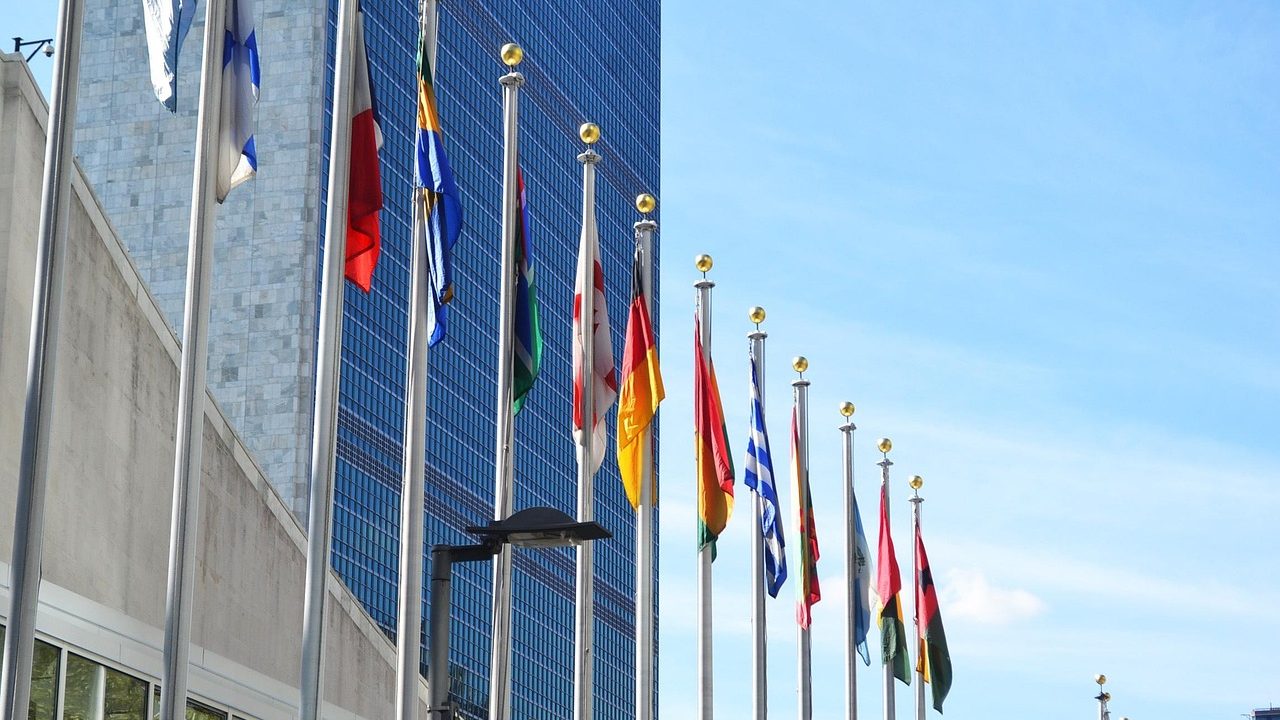
Germany suffered its first-ever loss in a UN Security Council election, with Foreign Minister Wadephul attributing the defeat to the country's support for both Ukraine and Israel, which he said cost Germany votes against Portugal and Austria. The outcome carries historical weight: Germany has been a reliable Security Council member when eligible, and the defeat signals significant shifts in international diplomatic alignments.
The loss illustrates the mounting political costs of principled foreign policy. Berlin chose to maintain strong support for Ukraine despite Russian pressure and strong backing for Israel despite broader international criticism — stances that may have alienated non-aligned voting blocs. Secretary of State Rubio confirmed that Trump will attend the NATO summit in Turkey next month, a diplomatically complex setting given Turkey's complicated relationship with the alliance and the simultaneous management of Middle Eastern and Eastern European crises.
In Central Africa, Islamic State-linked fighters killed sixteen people near the Ebola zone in eastern Congo, representing the intersection of active terrorism and public health vulnerability. Security analysts noted that attacks near Ebola zones risk severely complicating medical response efforts if healthcare workers cannot safely access affected areas.
Rubio condemned the Tiananmen crackdown publicly, just weeks after Trump's friendly summit in Beijing — a juxtaposition that analysts described as either deliberate good cop-bad cop diplomacy or genuine policy disagreement within the administration. The Department of Homeland Security added another layer of diplomatic inconsistency when its chief stated that the US would send Salvadoran national Kilmar Abrego Garcia to Costa Rica, contradicting months of Department of Justice arguments in favor of deporting him to Liberia.
The simultaneous management of conflicts in the Middle East, Ukraine, Central Africa, and tensions with China — alongside a domestic legislative calendar defined by expiring surveillance powers, war powers votes, and missed funding deadlines — presents what observers described as an extraordinary test of Washington's diplomatic and governmental capacity.
Consumers Push Back: Fitness Data Revolts, Waymo Safety Doubts, and MAVEN Goes Silent

A developer released Goose, a pre-alpha iOS application that connects directly to the WHOOP 5.0 fitness band over Bluetooth to extract health data locally, entirely bypassing WHOOP's subscription requirement. The project reflects a widening consumer revolt against the model of paying hundreds of dollars for hardware and then facing ongoing monthly fees to access data generated by one's own body.
McDonald's is testing AI-powered drive-thru ordering again, this time using Google's 'Archy' technology. The company has attempted AI drive-thru previously with mixed results. The drive-thru environment presents particular challenges for voice AI — background noise, varied accents, complex menus, and time pressure — making the Google partnership a test of whether natural language processing has matured sufficiently for high-volume, high-stress commercial deployment.
A CNN investigation documenting Waymo robotaxi safety failures found, through a review of public records, instances of driverless cars running red lights, driving into flooded roads, and nearly striking pedestrians. The findings raise questions about the autonomous vehicle deployment timeline, given that Waymo vehicles are widely regarded as the most advanced commercially operating self-driving cars.
NASA declared the MAVEN Mars spacecraft officially dead after six months of silence, having last made contact in December. MAVEN studied Martian atmospheric conditions for over a decade, far exceeding its original mission timeline. Its loss removes one of the primary scientific instruments available for understanding Martian conditions relevant to planning future human missions.
A study linking ultraprocessed food consumption to a 58 percent higher risk of dementia drew attention this week. Researchers noted that correlation does not establish causation, but the findings raised questions about the long-term cognitive health implications of an American food system dominated by heavily processed products.
A UFC Octagon on the South Lawn and the Politicization of American Culture

Nick Saban, widely regarded as college football's most successful coach, urged Congress to 'tap the brakes' on changes to college sports — an appeal from an industry insider suggesting that the pace of commercialization through name, image, and likeness rights, transfer portals, and direct athlete compensation has become unsustainable. His congressional testimony reflects concern about preserving competitive balance and the educational mission of collegiate athletics.
President Trump floated the idea of permanently installing a UFC octagon on the White House South Lawn following the June 14th UFC Freedom 250 event, reportedly comparing the structure to the Eiffel Tower. The proposal would be without precedent on White House grounds and reflects Trump's ongoing effort to connect the presidency to working-class sports entertainment audiences — a constituency with strong overlap with his political base.
Press freedom organizations issued warnings this week that CNN could face pressure similar to what has already affected '60 Minutes,' suggesting a pattern of systematic strain on mainstream media independence. The '60 Minutes' situation has been cited as a potential template for challenging investigative journalism programs at other outlets.
A detransitioner testified at a Senate hearing on youth gender care, contributing one personal perspective to ongoing policy debates about transgender healthcare for minors. Critics of such hearings have argued that politically charged settings tend to reduce complex medical decisions to partisan narratives rather than engage medical evidence on its merits.
Across sports, entertainment, and cultural policy, personal testimony and individual narrative have become increasingly central to public debate — a shift that, as observers noted, carries both democratic legitimacy and the risk of making collective policy decisions on the basis of evidence too limited to address the complexity of issues affecting millions of people.
Debt 'Past the Point of No Return,' Delinquencies Rise, and AI Returns Disappoint

The Federal Reserve's semiannual supervision report flagged modest but broad-based increases in bank loan delinquencies across consumer, commercial, and real estate categories in 2025. Analysts described any uptick in defaults during a period nominally characterized as economic expansion as a warning signal — suggesting either that underlying credit standards have been too loose or that the expansion is weaker than headline figures indicate.
Ray Dalio, whose Bridgewater Associates manages over 100 billion dollars in assets, stated that the United States is 'past the point of no return' on debt. The framing implies that debt dynamics have become self-reinforcing, with interest payments consuming a rising share of federal revenue against a backdrop of demographic trends that are expected to drive entitlement spending above long-term growth rates.
Incoming Federal Reserve Chair Warsh is reportedly planning to eliminate the dot plot — the mechanism by which individual Fed officials publicly project future interest rate paths — at his first meeting. Removing the dot plot would reduce forward guidance available to markets, potentially increasing bond and equity price volatility as investors lose a key reference point for monetary policy expectations.
Goldman Sachs concluded that AI economics have deteriorated since the ChatGPT boom two years ago, a finding with direct implications for technology sector valuations. TSMC's chief executive confirmed that chip supply will not meet AI demand for years even as the company projects over 30 percent sales growth — a physical bottleneck that delays any productivity gains AI was expected to deliver to the broader economy.
In a 'what if we're wrong?' framing, some economists point out that modern monetary theory proponents argue sovereign currency issuers can sustain debt levels far higher than conventional models suggest, citing Japan's debt-to-GDP ratio above 250 percent without fiscal crisis. If AI eventually delivers sustained productivity growth above historical averages, debt dynamics could prove more manageable than current projections imply — though the key variable, analysts noted, may be timing rather than direction.