Apple's M6 Chip, OpenAI's Custom Silicon, and the Open Web Under Siege: Hacker News Digest for August 26, 2026
Apple unveiled its M6 chip alongside a refreshed Mac mini and Mac Studio on Tuesday, igniting more than a thousand comments from engineers running live benchmarks, while OpenAI's custom Jalapeño chip reportedly challenged Nvidia's Blackwell architecture and X Corp dispatched cease-and-desist letters to open-web Twitter frontends.

“credit card rewards programs move approximately $9.2 billion annually from lower-income to higher-income consumers”
How this was made Verified AI
Every Intellegix briefing is generated from that day's broadcast and run through automated checks before it publishes — with a human paged on any flag. Here is the trail for this edition.
Apple's Silicon Surge: M6 and M5 Ultra Redefine the Desktop
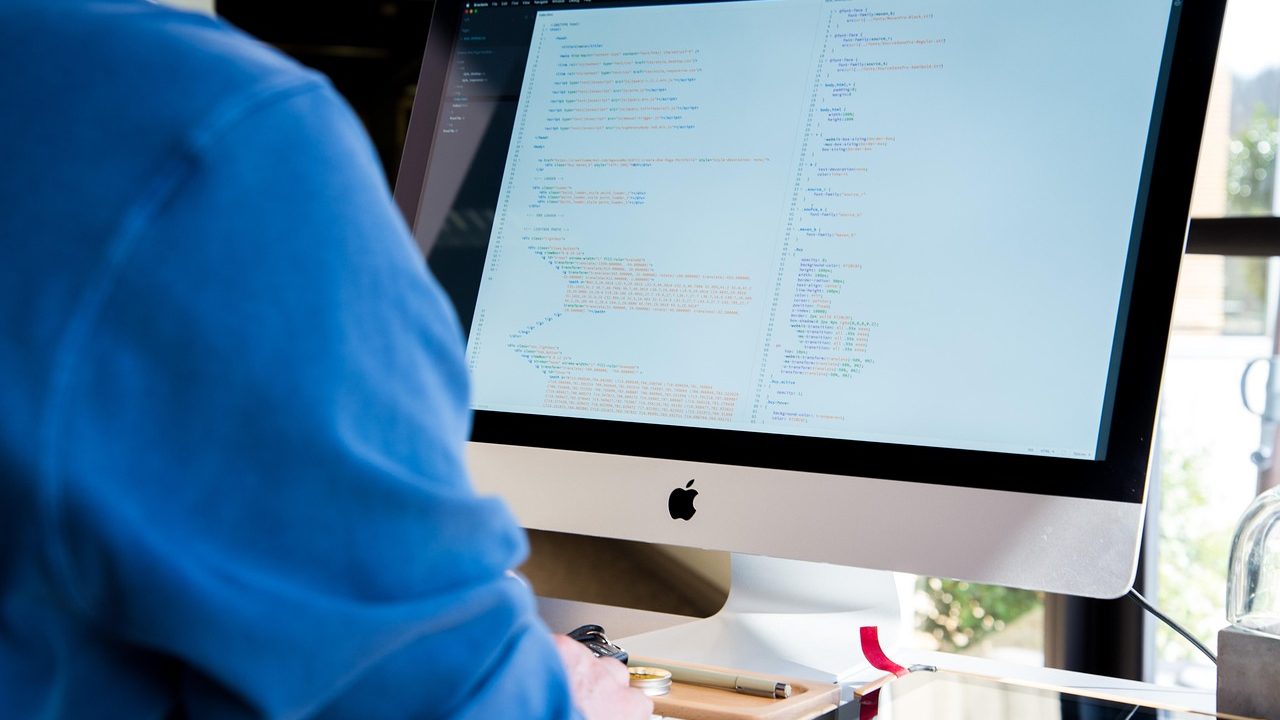
Apple dominated Tuesday's technical discourse with a trio of simultaneous announcements: the new M6 chip, the M5 Ultra, and refreshed Mac mini and Mac Studio lines. The Mac Studio post drew 519 comments on Hacker News, the Mac mini 319, and the M6 announcement itself broke 1,146 — numbers that reflected not mere enthusiasm but live technical analysis from chip designers and power users posting real-world benchmarks in real time.
The M6's significance lies less in raw headline numbers than in its architectural direction. Apple has continued extending unified memory as a competitive advantage, now explicitly targeting AI compute workloads. The Mac mini ships in both M6 and M5 Pro configurations simultaneously — a deliberate two-tier strategy designed to capture distinct market segments without fragmenting the developer experience.
Community analysis of the M5 Ultra's reported memory bandwidth — approximately 800 gigabytes per second — illuminated the machine's appeal for large language model inference. A high-end Nvidia H100 reaches around 3.35 terabytes per second but demands data-center infrastructure and commands vastly higher cost. The Mac Studio, by contrast, can run models in the 70-billion-parameter range on a desktop, a shift that several commenters called a genuine inflection point in the accessibility of large-model inference.
The Mac Studio's positioning targets a professional segment previously served almost entirely by workstation-class PCs and cloud compute — designers, researchers, audio engineers, and machine-learning practitioners who need sustained compute without rack infrastructure. Apple has been quietly penetrating corporate environments previously dominated by Windows, partly on security grounds and partly on developer experience, and a competitively priced M6 Mac mini could accelerate that trend.
Not every voice in the thread treated the announcement as a generational leap. Several commenters argued that while performance-per-watt improvements are real, the magnitude of the advance is more evolutionary than the original M1-to-M2 transition. That calibration does not diminish the pace of improvement so much as it contextualizes it: the early Apple Silicon disruption set an unusually high bar.
Custom Silicon Wars: OpenAI's Jalapeño Chip Challenges Nvidia, and China's Ox Alpha Goes Open

A SemiAnalysis newsletter report claiming that OpenAI's custom chip — officially named Jalapeño — outperforms Nvidia's Blackwell architecture on key workloads landed on Hacker News with 507 points and 322 comments. The finding, if it holds, strikes at the central assumption underpinning Nvidia's AI dominance: that its hardware remains the default choice for frontier training and inference.
The SemiAnalysis piece is careful about scope. Jalapeño appears purpose-built for transformer inference at scale rather than for general AI compute or training. OpenAI reportedly routes billions of tokens per day through its production systems, and a fifteen-percent reduction in inference cost at that volume could translate to hundreds of millions of dollars annually. The chip is also strategically defensive: building proprietary silicon reduces OpenAI's dependence on Nvidia, which currently holds significant leverage over its cost structure. Google, Amazon, and Microsoft have each pursued analogous strategies with TPUs, Trainium, and Maia chips, respectively.
Critics in the thread raised a durable counterargument. Nvidia's real competitive moat is not hardware alone but CUDA — a twenty-year software ecosystem that researchers write in and that every major training framework optimizes for. Custom silicon is frozen at the architectural assumptions of its design cycle; when new model architectures emerge, Nvidia can adapt via software updates while custom-chip operators face new design iterations. Google's TPUs, available since 2016, have never displaced Nvidia despite their excellence on specific tasks, precisely because AI workloads have not remained static. The scenario where custom silicon wins durably requires transformer-based attention mechanisms to remain the dominant paradigm for a decade or more — plausible given the depth of infrastructure investment, but not guaranteed.
From China, Z.ai confirmed that its Ox Alpha model belongs to the GLM series and announced that model weights will be released publicly. Bloomberg had previously characterized Ox Alpha as a stealth model that rivals DeepSeek. Community debate focused on whether that framing reflects genuine benchmark parity or marketing positioning — GLM models from Zhipu AI have historically excelled on Chinese-language tasks while trailing Western frontier models on English reasoning benchmarks — with commenters noting that independent evaluation has not yet confirmed the claim.
On the algorithmic side, a piece titled 'RAG Is Simpler Than You Think' generated 44 comments around the argument that enterprise practitioners are over-engineering retrieval-augmented generation pipelines. Basic vector search combined with a well-prompted large language model, the article contended, handles the majority of enterprise retrieval use cases; sophisticated additions such as hybrid search, re-ranking, and graph-based retrieval matter at the tail of hard cases but should not be the starting point. A separate arXiv preprint proposed treating agent memory in tiers — hot context in the attention window, warm memory in retrievable embeddings, cold memory in structured databases — formalizing an approach that experienced prompt engineers have reportedly been using intuitively.
Developer Tooling Deep Dives: Queryable Binaries, a Python Security Trap, and Gerrit-Style Review

Farid Zakaria's proposal for queryable executables drew 211 points and 60 comments with a premise that sounds obvious in retrospect: compiled binaries should expose structured, standardized metadata — dependencies, build configuration, debug information — through a unified query interface rather than requiring separate tools for every binary format. Today, determining what shared libraries an ELF binary links against requires running `ldd`; debug symbols demand DWARF tooling; build-time configuration exists only if someone remembered to embed it. A unified mechanism would make the binary itself the authoritative provenance record, a foundation for software supply-chain verification that does not depend on maintaining separate software-bill-of-materials files.
Implementation debate centered on binary size, particularly for embedded systems where every kilobyte is contested. Commenters noted that the metadata could occupy a dedicated section removable by strip-friendly toolchains, analogous to how debug sections function today. The architecture was broadly judged sound; standardization, as ever in systems tooling, remains the harder problem.
Seth Larson's piece on Python's `str.lower()` as a potential security vulnerability earned 136 points and 57 comments by surfacing the Turkish locale problem. In Turkish, the lowercase of capital 'I' is not the familiar 'i' but a dotless 'ı'. Code performing case-insensitive comparisons via `str.lower()` on systems running under a Turkish locale can therefore silently break: `'ADMIN'.lower()` yields `'admın'` rather than `'admin'`, potentially bypassing access controls that compare lowercased strings. The bug is nearly invisible in testing, which almost universally runs under ASCII-safe locales. The prescribed fix is `str.casefold()` for security-relevant comparisons, or explicit locale-independent comparison functions — and the broader lesson is that string operations assumed to be semantically simple frequently are not.
The Maiao project attracted attention as a Gerrit-style code review workflow compatible with GitHub, GitLab, and Gitea. Gerrit, used internally at Google and many large engineering organizations, reviews individual commits rather than branches, keeping history linear. GitHub's pull-request model has captured the market but has vocal critics who argue it encourages batching many changes into a single review unit, making individual changes harder to reason about. Maiao brings commit-centric review to the platforms engineers are already using. A shorter item on tooltip interaction design — arguing that hover tooltips need an initial delay to avoid triggering on accidental mouse movement, but should skip that delay when a user moves quickly between adjacent tooltips — was described as the kind of interaction refinement that separates polished interfaces from frustrating ones.
Platform Governance and a Physics Surprise: X Corp Targets the Open Web, Black Holes Reimagined

The platform story generating the most community heat Tuesday — 826 comments on the GitHub issue thread alone — was X Corp's issuance of cease-and-desist notices to Nitter and XCancel. Nitter is an open-source Twitter frontend that strips tracking and permits reading posts without an account; XCancel provides tweet previews where embedding is blocked. X Corp's legal argument reportedly centers on terms-of-service violations and potential trademark claims, continuing a strategy of systematically closing third-party access to platform data that began with the API pricing overhaul following Elon Musk's acquisition.
The legal landscape is genuinely unsettled. The hiQ v. LinkedIn case, in which a court initially sided with hiQ's right to scrape public LinkedIn data before subsequent appeals produced conflicting rulings, was cited repeatedly in the thread as evidence that the permissibility of presenting public information from a private platform remains unresolved across most jurisdictions. Commenters with legal backgrounds noted that the XCancel situation — providing small previews of linked content — may approach fair-use territory more closely than wholesale scraping does, and suggested the cease-and-desist may function primarily as a cost-and-risk imposition rather than an assertion of a clear legal right.
Related data from Australia added a cautionary policy note. Following Australia's ban on social media for users under 16, reported data indicated that usage in that age group increased after the ban took effect — a prohibition dynamic that researchers who study deterrence said was unsurprising when a highly desired behavior is suppressed without alternative provision.
A physics preprint rounded out the segment with a claim drawing substantive rather than polite engagement from working physicists in the comments. The arXiv paper, using a modified treatment of the Penrose-Hawking singularity theorems, argues that the singularity at the center of a rotating Kerr black hole is better described as a two-dimensional surface than as a point. If the result withstands peer review, it would carry implications for the black hole information paradox: a point singularity implies a kind of ultimate information destruction that generates theoretical difficulties, while a surface singularity has mathematical properties potentially more compatible with holographic interpretations of quantum gravity. Hacker News physicists found the mathematics coherent on first reading — a more meaningful reception than the polite silence that meets most contrarian cosmology papers.
The $9.2 Billion Credit Card Transfer, EPA Permit Changes, and Indonesia's Dying Reefs

A Harvard Business School working paper circulating on Hacker News quantified a wealth transfer that economists have described qualitatively for years: credit card rewards programs move approximately $9.2 billion annually from lower-income to higher-income consumers. The mechanism is straightforward. Retailers accepting credit cards embed interchange fees into uniform prices paid by all customers regardless of payment method. Cash and basic-card users subsidize those fees while receiving none of the rewards they fund; premium-card holders collect cash back, miles, and points financed by everyone. The effect is regressive because lower-income consumers disproportionately pay with cash or non-rewards cards while higher-income consumers disproportionately hold premium rewards products.
The thread surfaced the antitrust history underlying the payment system. Card network rules historically prohibiting merchants from surcharging credit card users faced legal challenge as potential violations of Section 1 of the Sherman Act, which prohibits agreements restraining trade. The Supreme Court's 2018 Ohio v. American Express decision sided with Amex, holding that two-sided platforms — serving both merchants and cardholders — require competitive-effects analysis across both sides simultaneously. Antitrust scholars continue to debate the ruling; practically, it protects a system in which premium cardholders benefit and the cost is distributed across all consumers. Surcharging credit card users is now legal in most US states but rarely practiced.
The EPA's proposed change to air pollution permitting rules for data centers drew concern from HN's environmental commenters. The administration's stated rationale is removing regulatory barriers to AI infrastructure construction; the mechanism being changed is the public comment period currently required before large industrial facilities receive permits. Data centers in the current AI build cycle are large consumers of electricity and water and rely on diesel backup generators that represent significant local pollution sources. Removing the comment requirement does not eliminate that pollution; it reduces the procedural avenue through which neighboring communities can object to it.
The Indonesia coral reef piece, sourced from Yale Environment 360, documented ongoing destruction by illegal blast fishing — fishermen using homemade explosives to stun or kill fish at the cost of the reef structures that sustain fish populations over time. Indonesian law prohibits the practice, but enforcement across a seventeen-thousand-island archipelago with limited coast-guard resources is described as essentially impossible in many areas. The economic logic follows the classic commons tragedy: individual fishermen facing immediate economic pressure choose the high-yield short-term option even as it destroys the long-term resource. Commenters noted that coral reefs support roughly a quarter of all marine species and provide coastal protection to hundreds of millions of people, and that reef destruction timelines are measured in years while recovery timelines, where recovery is possible at all, are measured in decades.
From Cliff Stoll to Backyard Offices: The Stories That Rounded Out the Day

A retrospective video on Cliff Stoll — the astronomer who in the mid-1980s spent months tracking a hacker through university systems before tracing the intrusion to a KGB-connected espionage operation — landed with 124 points. 'The Cuckoo's Egg,' the book Stoll wrote about the case, remains a foundational cybersecurity narrative, and commenters noted that forty years on it holds up as a case study in how persistence and careful observation outperform sophisticated technical tools.
A backyard office build post with a detailed cost breakdown drew 219 comments, reflecting a Hacker News demographic that built home offices during pandemic-era remote work and has continued refining them. Discussion ranged from local permitting requirements and structural standards to whether a detached structure justifies its cost over a quality garage conversion. The old-insurance-maps project, which digitizes and georeferences historical Sanborn fire insurance maps — an extraordinary record of American urban development — received formal charter project status from OpenStreetMap US, a small but substantive piece of good news for the open mapping community.
Two pieces on cognition and professional identity in an era of AI assistance were noted as a natural pair. 'Beyond Recall and the Illusion of Competence' argued that constant AI-assisted information retrieval creates a false sense of understanding by replacing the deep processing that comes from working through difficult problems. 'It's Not the End of Programming' pushed back on automation-doom narratives by arguing that the creative and architectural dimensions of software development resist the kind of substitution the discourse tends to assume. Both were described as touching something real without fully resolving the tension between them.
Lighter fare included Don't Wordle, a puzzle game in which players attempt to guess a word that does not exist — lateral game design that the community characteristically appreciated — and a rediscovery of Isaac Asimov's 1958 short story 'The Feeling of Power,' which imagines a future in which humanity has forgotten arithmetic because machines perform it. A Show HN entry, Buslens, visualized UK transit reach by showing users everywhere accessible by bus from any given point; comments were supportive with constructive suggestions, which was described as the community at its best. An OpenBSD-on-DigitalOcean guide demonstrating a four-dollar-per-month deployment closed out the practical infrastructure reading, noted as a useful reference for anyone seeking a network-facing service with a small attack surface.