Border Felonies, Trade Wars, and the Systems That Control Us: Hacker News's August 22nd Feed
From a US citizen facing felony charges for deleting data at a border crossing to Canada suspending trade talks with Washington, Saturday's Hacker News feed presented a striking portrait of institutional control being tested at every level — personal, national, and digital.

“When AI completes the homework, the encoding does not. Students arrive at exams with a record of strong performance and without the underlying knowledge.”
How this was made Verified AI
Every Intellegix briefing is generated from that day's broadcast and run through automated checks before it publishes — with a human paged on any flag. Here is the trail for this edition.
A Day When Every Story Was About Who's in Control

Saturday's Hacker News front page arrived as a kind of compressed weekly dispatch: a US citizen charged with a felony for tapping delete on his phone at a border crossing; Canada's Prime Minister declaring a dollar-for-dollar tariff match against the United States; a Rust language server claiming to run on one-hundredth the memory of its dominant competitor; a Kobo e-reader quietly becoming a general-purpose app platform; and research showing that AI tutoring is lifting homework scores while driving exam scores down.
Threaded through the technical and political stories alike was a single animating tension — between convenience and control, between openness and restriction — that gave the day's feed an unusual coherence.
Delete at Your Peril: A Felony Charge, Anti-Surveillance Tools, and Canada's Trade Ultimatum
The story generating the highest comment count on Hacker News Saturday — 958 comments as of the morning — was the case of Samuel Tunick, a US citizen who deleted data from his phone at a US border crossing and now faces felony charges. The New York Times piece covering the case applies a legal theory of obstruction: that deleting data in the presence of border agents constitutes destruction of evidence those agents had a legitimate interest in examining.
What inflamed the Hacker News thread was the escalation to felony. Misdemeanor obstruction or civil penalties would represent a serious deterrent; a felony conviction carries career-ending, freedom-threatening consequences whose chilling effect extends well beyond the individual case. Courts have remained inconsistent on whether the longstanding 'border search exception' — which historically permitted warrantless inspection of physical luggage — extends to the full contents of a smartphone.
A companion piece from Defcon added a direct technical dimension: security researchers at the conference were showcasing tools designed specifically to protect data, communications, and location information from institutional extraction. Anti-surveillance hardware and software that five years ago was niche territory for journalists working in authoritarian contexts has, according to the discussion, become a mainstream civil liberties concern in the United States.
Canada's Prime Minister Carney chose the same news cycle to announce the suspension of trade negotiations with Washington and a policy of matching US tariffs dollar for dollar. Canada and the United States conduct roughly 900 billion dollars in annual two-way trade, and Canada serves as the top export destination for more than thirty US states, meaning retaliatory tariffs will be felt quickly in American manufacturing, agriculture, and energy. Carney's use of 'suspend' rather than 'terminate' was deliberate — signaling that Ottawa is withdrawing from a process it has concluded is not being conducted in good faith, while leaving the door formally open.
The Hacker News discussion drew a structural parallel between the two stories: a private citizen and a sovereign nation each calculating that compliance now costs more than resistance, with the weaker party pressing back against a power asymmetry that has reached its limit.
AI Tutors Are Acing Homework and Failing Tests — and Readers Are Going Blind

Research published by The Economist this week — generating 324 comments on Hacker News — documents a stark divergence: AI tools measurably boosted students' homework scores while their exam scores dropped. The mechanism is not complicated once named. Homework is where the cognitive work of encoding new information occurs; exams measure whether that encoding happened. When AI completes the homework, the encoding does not. Students arrive at exams with a record of strong performance and without the underlying knowledge.
Teachers in the Hacker News thread described the phenomenon from direct classroom observation: students who use AI fluently to complete assignments struggle to explain basic concepts in follow-up conversations. Researchers have warned about analogous effects with every successive educational technology — calculators, Wikipedia, search engines — but this time the effect size appears large enough to be unmistakable in the data.
The cultural companion piece trending alongside the research was an essay titled 'I'm Becoming AI-Blind,' whose 382-comment thread was described as one of the richest conversations on Hacker News in weeks. The author describes a gradual, involuntary shift: reading a paragraph and automatically pattern-matching for AI tells rather than engaging with the content. The essay argues that the ambient presence of low-friction AI output has subtly degraded the scarcity signal that once gave writing its weight — if everything can be generated instantly, the fact that someone spent real time on a piece of prose ceases to function as a marker of worth.
A GitHub project called Claudette, which drew 288 upvotes, treats that degradation as an engineering problem. Its goal is to strip what the creator calls 'BuzzFeed-style' language patterns from AI outputs — performative enthusiasm, reflexive hedges, listicle structures — and replace them with plainspoken prose. The appetite for a tool that makes AI communication stop sounding like AI communication functions as a market signal: the default outputs are being perceived as a recognizable, gameable form of noise.
An ACM profile of Go technical lead Russ Cox and a personal essay by legendary security researcher Thomas Dullien — 'Three Important Steps in My Maturation Process,' reflecting on learning to hold uncertainty rather than project fluent confidence — both surfaced in the same feed, offering an implicit contrast to AI systems that are always complete-sounding and never visibly unsure.
A Hundred Times Leaner: The Case for Rethinking Developer Infrastructure
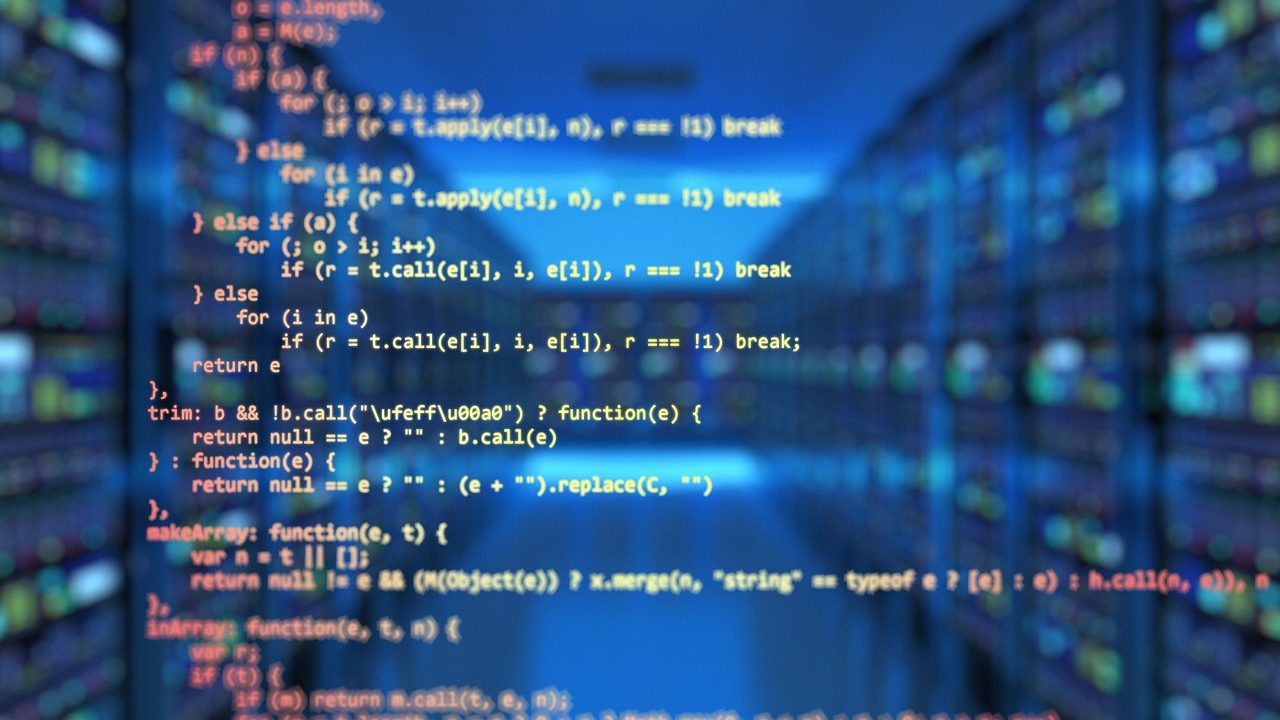
The highest-scored developer tool story of the day — 274 points and 55 comments — was Rust Glancer, a new Rust language server claiming to use one hundred times less RAM than rust-analyzer, the current standard. The author is Aleksey Kladov, known in the Rust community as matklad, who was one of rust-analyzer's original architects. The provenance mattered: the Hacker News thread reflected genuine technical engagement rather than skepticism, with commenters drilling into specific architectural tradeoffs rather than questioning credentials.
Rust Glancer's core argument is that a language server does not need to maintain a complete semantic model of an entire codebase to provide useful feedback in most editing interactions. Rust-analyzer's comprehensiveness is what makes it powerful, but that completeness carries a memory cost that has become significant on large codebases and resource-constrained machines. Glancer bets that a lighter, faster, more selective approach can cover the majority of use cases that matter in daily editing.
Dan Luu's essay 'There's No Reason for Software to Be Slow Anymore' provided the philosophical backdrop, drawing 448 upvotes and 316 comments. Luu argues that hardware available to developers today is so fast relative to what most software demands that perceived slowness is almost always an architectural or incentive failure. The comment thread accumulated specific examples of sluggish software with obvious optimization paths alongside pushback from those who argue that correctness, maintainability, and developer velocity are legitimate competing priorities.
A piece titled 'OTel Isn't Going Well' added a cautionary note to the optimism. OpenTelemetry, the open standard for distributed tracing and observability in cloud infrastructure, has grown comprehensive enough to be genuinely complex — and the author documented a specific failure: a distributed tracing system that had itself become the kind of sprawling, hard-to-debug infrastructure that distributed tracing was supposed to make legible. The Hacker News community did not miss the irony.
An essay arguing 'Stop Making TUIs' sparked a 232-comment argument about who terminal user interfaces are actually for. Critics contended that TUIs carry significant implementation complexity while serving a narrow user base; defenders responded that portability — running over SSH with no dependencies, on headless servers, in GUI-unavailable environments — is precisely the point. The debate ultimately turned on which user and which environment the designer is assuming.
Vintage Silicon and Accidental Surveillance: Systems Stories From the Depths
Matklad appeared twice in Saturday's feed. Alongside Rust Glancer, his post on Zig's `io.threaded` mechanism drew attention for its accessible explanation of a genuine design achievement: a way to write straightforward sequential-looking I/O code that executes asynchronously, without the cognitive overhead of callbacks or explicit thread management.
An essay by Odin programming language designer Ginger Bill — 'Everyone Says Assembly Is Untyped; Everyone Is Wrong' — made a substantive argument hiding behind a provocative headline. Assembly instructions do encode type information implicitly: whether an operation treats its operand as a signed integer, unsigned integer, or float is determined by the instruction chosen. That constitutes a type system enforced by hardware behavior rather than a compiler, and the insight has practical implications for how higher-level languages should design their inline assembly interfaces.
The security story of the day was striking in its particulars. A researcher writing as 'lina' documented how they accidentally ended up logging hundreds of thousands of phone calls to US military bases through a quirk of the E.164 ARPA reverse DNS system — the infrastructure that maps phone numbers to international routing endpoints. An administrative oversight had left certain military numbers pointing to an endpoint the researcher could observe. The disclosure was described as handled responsibly, but the underlying finding — that routing infrastructure for calls to military installations could be manipulated by someone with access to the relevant DNS records — is, as the Hacker News comments carefully noted, the kind of result that warrants serious institutional attention.
Cloudflare published a technical writeup documenting a remote variant of the Spectre speculative-execution attack against its Workers edge compute environment, including specific timing measurements and attack code, alongside the mitigations applied. The security research community noted the value of the disclosure posture: being transparent about a mitigated vulnerability class rather than quietly patching it.
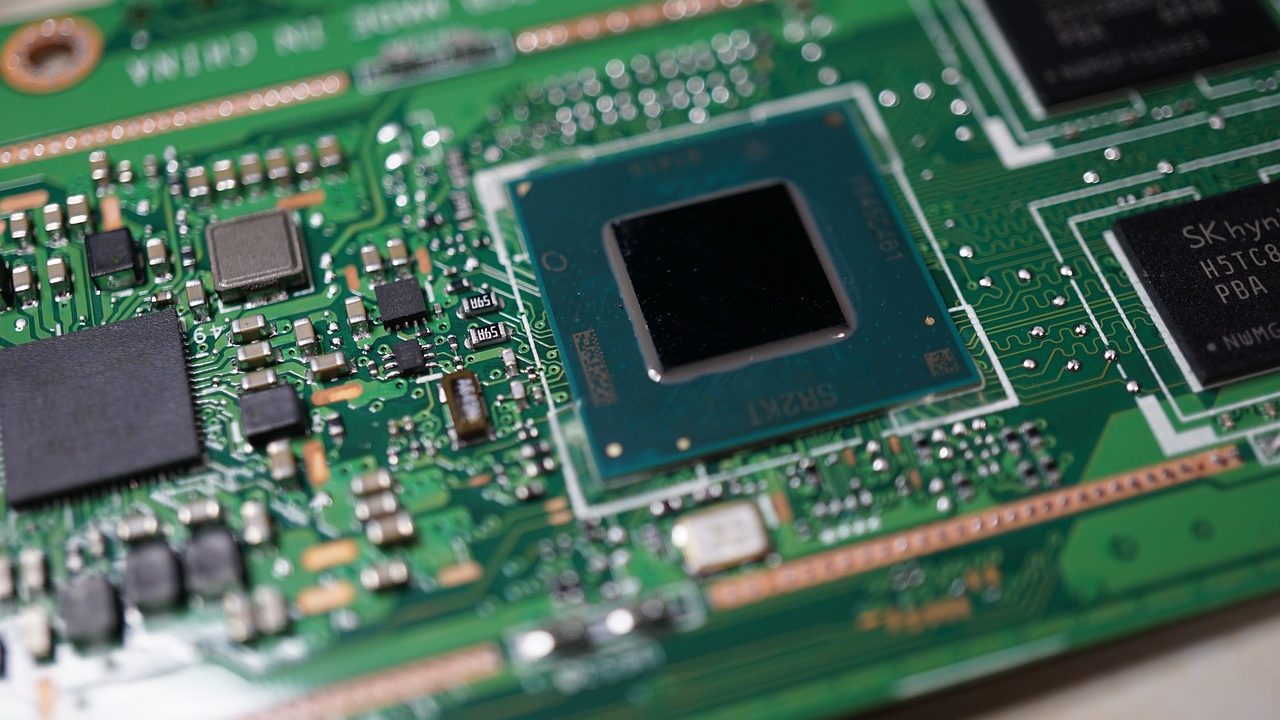
And then there was the Z80. Released in 1976 and designed by Federico Faggin and Masatoshi Shima after they left Intel, the processor powered the TRS-80, the ZX Spectrum, and the early CP/M machines. It is, genuinely, still in production and still being integrated into new embedded control designs, where its deterministic behavior, extreme reliability track record, and fifty years of documented behavior make it preferable to more powerful but less understood alternatives.
Open Everything: Kagi Kills Paywalls, Kobo Opens Up, and Scientists Map the Universe

The single highest-scored story on Hacker News Saturday — 1,149 points and 370 comments — was Kagi's announcement of a setting to remove paywalled links from search results entirely. Kagi is a subscription-based search engine with no advertising and no tracking; its explicit model is that the user is the customer. The paywall filter's logic is straightforward: a result linking to content behind a subscription wall the user does not hold has negative value — it wastes time and produces frustration. A search engine that respects users should let them opt out of that class of result entirely.
The business model context matters. Kagi has no revenue relationship with publishers who would lose referral traffic from paywalled content; Google and Bing operate inside the same advertising ecosystem as those publishers, which would make an equivalent feature politically difficult regardless of its user-facing merit. A thoughtful minority in the comment thread pushed back, arguing that filtering paywalled links degrades results in domains where the best journalism lives behind subscription walls — a genuine tension between immediate accessibility and information quality.
The Kobo e-reader story was the hardware counterpart, drawing 670 upvotes and 189 comments. A developer project called Cobalt has enabled Kobo devices — which run Linux underneath — to execute applications beyond the built-in reading software, without invasive modifications. The comment thread immediately populated with proposed use cases: RSS readers, note-taking applications, language-learning tools exploiting the e-ink display's eye-friendly properties.
Scientists at Lawrence Berkeley National Laboratory released what was described as the largest two-dimensional map of the universe, compiled from the Dark Energy Spectroscopic Instrument survey and covering millions of galaxies. The dataset, released openly, represents a fundamental expansion of the observational record for understanding dark energy and the large-scale structure of the cosmos.
Taken together — a search engine filtering results to serve users rather than publishers, an e-reader unlocking its own Linux core, an astronomy dataset released as open data — Saturday's hardware and open-web stories shared a common orientation: computing made more legible, more accessible, and more accountable to the people actually using it.
What If Lighter Is Wrong? Testing the Glancer Assumption

The strong consensus in Saturday's Hacker News thread on Rust Glancer treated the tool's hundred-times-lower memory footprint as a straightforward win. But the assumption deserves scrutiny. Rust-analyzer maintains a comprehensive semantic model because Rust's type system — lifetime analysis, trait resolution, borrow checking — genuinely requires understanding large portions of a codebase to produce correct results. A lighter server that doesn't maintain that full model makes explicit tradeoffs about which semantic analysis it performs.
The claim is coverage of eighty or ninety percent of use cases. The risk is that the ten or twenty percent left out are disproportionately the hard cases — the ones where a language server's analysis is most valuable. A tool that returns a 'no errors' signal on code that rust-analyzer would flag, and that a developer ships on that basis, has negative value regardless of how much memory it saved.
The assumption to test is the user distribution. Glancer's architectural bet makes sense if the median developer interaction with a language server is simple: autocomplete on known types, basic error highlighting. That is probably true for most interactions. But developers working on the most complex parts of a codebase — where Rust's borrow checker bites hardest — may be exactly the users who need the full semantic model most.
The signal to watch: error reports from sophisticated users on large codebases, not enthusiastic early adopters on smaller projects. And whether rust-analyzer itself adopts any of Glancer's architectural ideas — which would suggest the intended trajectory is a merged set of insights rather than two permanently competing tools. Kladov building Glancer as a research project alongside rust-analyzer is consistent with that reading.