From GitHub's Cascade Failure to CIA-Funded Software: The Hidden Dependencies Shaping Modern Tech
A week of infrastructure crises, supply chain attacks, and unearthed history exposed how much of the technology world runs on foundations of invisible trust — and what happens when that trust breaks.

“the question of who controls the platform layer has always been as much a geopolitical question as a technical one.”
How this was made Verified AI
Every Intellegix briefing is generated from that day's broadcast and run through automated checks before it publishes — with a human paged on any flag. Here is the trail for this edition.
A Week When Every System Showed Its Seams

A malicious Rust package executes arbitrary code the moment a developer compiles a project. A retail giant silently probes audio hardware through a browser tab, breaking Bluetooth connections as a side effect. GitHub, the backbone of global software development, goes dark for hours. And beneath it all, a decades-old revelation surfaces: the CIA helped keep Steve Jobs' NeXT computer company alive in the 1980s. These were the stories dominating Hacker News in the week ending August 21, 2026.
The throughline connecting nearly every major story of the week was the same: dependency and trust. Who controls the infrastructure developers rely on? Who can execute code on a user's machine without asking? And how much of the technology world's foundational architecture was shaped by geopolitical forces that had nothing to do with technical merit? The Hacker News community — engineers, researchers, and founders who were often in the room when these systems were built — provided unusually candid answers to all three questions.
Today's lineup spans GitHub's post-mortem, a Rust supply chain attack, mystery AI models, the browser platform's quiet maturation, intelligence community money in Silicon Valley's lineage, and a pointed debate about whether AI models are actually reasoning — or just performing it convincingly.
GitHub's Cascade Failure Reveals the Cost of Platform Concentration

GitHub's August 17th outage generated 608 comments on Hacker News — one of the highest engagement figures the community has produced this quarter — and the volume reflected something beyond ordinary frustration. Engineers were collectively processing what it means when a single platform sits at the center of the global software supply chain and goes dark simultaneously for millions of users.
GitHub titled its post-mortem 'The August 17 Outage and the Work Ahead,' an unusually candid framing that the HN community read as a structural admission rather than a routine retrospective. The 'work ahead' language signals that the company recognizes systemic problems, not a one-off anomaly. Developers in the comment thread reported CI/CD pipelines dead for hours, blocked deployments, and pull requests that could not be merged at critical moments — cascading failures that dwarf what any uptime percentage conveys.
The outage exposed a risk profile that has transformed since Microsoft acquired GitHub for $7.5 billion in 2018. GitHub is no longer primarily a repository host: it now provides Actions for continuous integration, Pages for documentation, Packages for artifact storage, and Copilot for AI assistance. A single authentication or availability failure now strikes all of those simultaneously. The companies affected are not just startups — they include banks, healthcare systems, and defense contractors, making outages enterprise-class incidents.
One particularly sharp comment noted that GitHub's own status page was delayed during the incident — meaning the primary communication channel for outage updates shared failure domains with the system it was supposed to be reporting on. The HN community also debated self-hosted alternatives such as Gitea, Forgejo, and GitLab, but the consensus counter-argument held firm: most organizations use GitHub not for cost savings but for network effects and ecosystem integrations that cannot be replicated by spinning up a private instance. Retrofitting fault isolation into a system that grew organically over fifteen years, while keeping it live for millions of users, is the 'work ahead' GitHub now has to deliver on.
Mystery Models, Reasoning Theater, and the Tools Rethinking How Developers Code

A model called Ox Alpha appeared on OpenRouter this week under a 'stealth' provider namespace — no public announcement, no disclosed training data, no named creator. It collected 176 upvotes and 135 comments as the community benchmarked it against frontier models and speculated about its provenance. OpenRouter's stealth mechanism is a known channel for model providers who want real-world usage data before staking their reputation on a formal launch, and the Ox Alpha release illustrates how sophisticated that community has become: curated benchmarks no longer suffice, so providers increasingly seed real users first.
DeepSeek released a vision experiment — v4 Flash Vision — pushing multimodal capability into its speed-optimized inference architecture. The HN discussion was smaller, at 8 comments, but the observers tracking it read it as a signal that DeepSeek is moving to close the multimodal gap at low latency, not just compete on reasoning benchmarks. DeepSeek's previous releases have, by community consensus, punched above their announced compute budgets in ways that defy conventional scaling assumptions.
The AI paper drawing the most substantive debate — 251 upvotes and 195 comments on a 2025 paper receiving renewed attention — argues that the field should stop treating intermediate tokens in a model's reasoning trace as a window into cognition. When a model produces a long chain of tokens before its final answer, the paper contends, those tokens are not a record of actual inference steps. They are a continuation of the output distribution — statistically consistent with what a thinking process looks like in training data, but not necessarily correlated with the internal computation producing the result. For organizations using models in high-stakes medical, legal, or financial decisions and treating chain-of-thought output as an audit trail, the implication is pointed: that audit trail may be a post-hoc narrative rather than a genuine record.
On the tooling side, a project called Huzzah — by developer Daniel Vaughn — earned 325 upvotes and 172 comments for its argument that the standard AI coding paradigm has a fundamental problem: the feedback loop between intention and implementation is too long and too opaque. Huzzah surfaces architectural decisions rather than generating finished code, attempting to keep the developer's mental model engaged throughout. A separate project named Vomit — deliberately provocative, and genuinely discussed — uses a secondary language model to strip verbose or structurally redundant output from Claude 5, applying separation-of-concerns logic to LLM output quality.
The Browser Grows Up — and a Rust Package Poisons the Build Chain

Two posts landed on the Hacker News front page this week making the same case from different angles: modern browsers are far more capable than most developers realize. 'HTML Can Do That,' by Chris Burnell, scored 847 upvotes and 190 comments — the second-highest total in this week's lineup — by cataloguing browser-native features that developers routinely reach for JavaScript frameworks to replicate: the details and summary elements for accordion interfaces, the dialog element for modals, the popover API, CSS scroll-driven animations, and input types handling date pickers and color selectors. A companion piece, 'Small, Native Web Tricks Worth Remembering,' served as a reference list for the same argument. Together they made a pointed economic case: teams that use React to build features native HTML handles adequately take on framework dependency, build tooling complexity, bundle-size overhead, and longer developer onboarding — all for functionality the browser provides at no cost.
The HN comment threads carried a nostalgic undercurrent from developers with fifteen or more years of experience who noted that the web has genuinely matured, while also acknowledging the counterargument: frameworks offer not just capability but consistency, testing patterns, and a community of established solutions. The consensus was not 'abandon frameworks' but rather 'know what the platform can do before deciding to abstract it.'
The Rust supply chain story demands slower treatment. A malicious crate called Arrayref — deliberately named to exploit confusion with the legitimate, widely used arrayref package — contained a proc macro that executed a build-time payload. Proc macros in Rust run at compile time with full system permissions; there is no sandboxing. The moment a developer ran cargo build with this crate in their dependency tree, arbitrary code executed on their machine. No prompt. No user action. Just compilation. The post drew 511 upvotes and 435 comments.
The Safedep writeup linked from HN described how the payload was structured to evade casual inspection — hidden in a location where reviewers do not typically look for runtime behavior. The Cargo ecosystem currently lacks the provenance attestation infrastructure that npm has built, and even npm's protections have not prevented supply chain attacks. The HN community divided along familiar lines: some arguing the sandbox-free proc macro model requires structural rethinking, others contending that name-squatting prevention, verified publishers, and automated scanning are the appropriate mitigations. The Rust community is expected to produce formal RFC proposals on build-time sandboxing and publisher verification in the coming weeks.
Intelligence Community Money, Japanese Ambition, and the Infrastructure Underneath the AI Boom
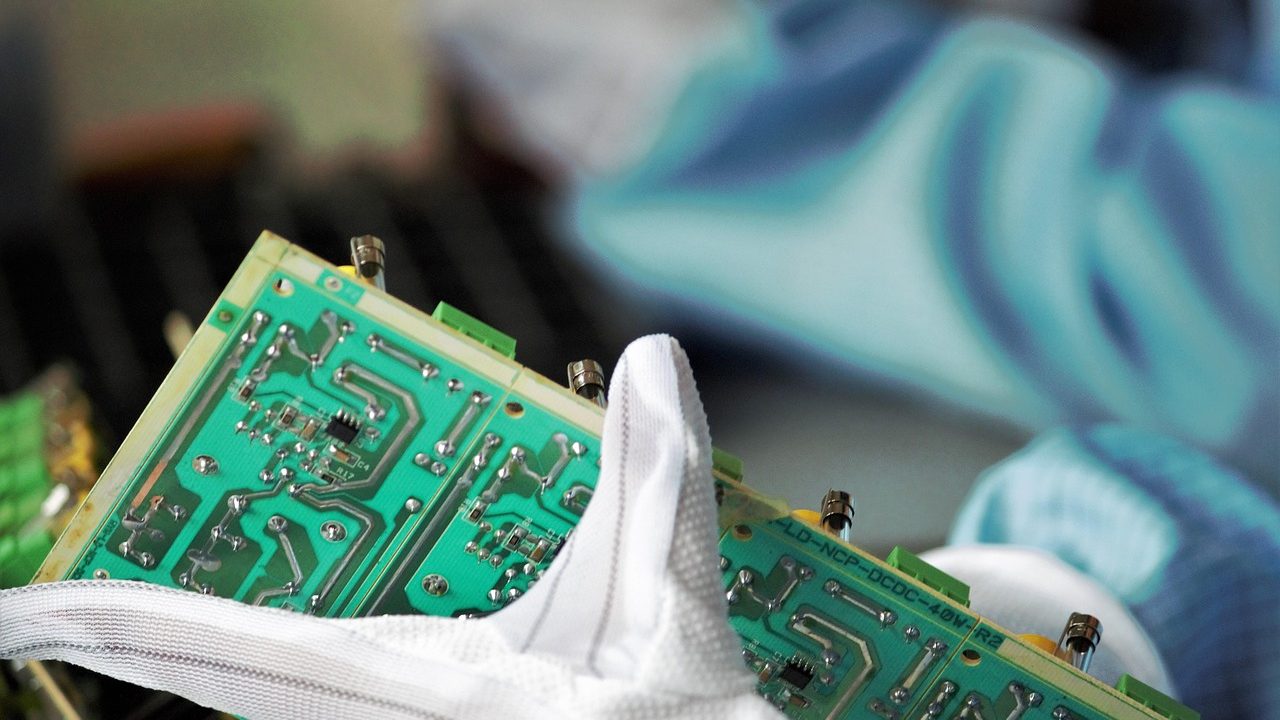
Linux 7.2 released this week, drawing 259 upvotes and 105 comments. An Igalia post covering the release highlighted the kernel's continued adaptation to heterogeneous compute environments — a direct response to the AI hardware boom, which has produced a widening variety of accelerator architectures, custom ASICs, and memory configurations that do not map cleanly onto traditional CPU-centric models. Separately, the Encore.dev team documented getting Firecracker — the AWS-developed microVM hypervisor designed for sub-millisecond startup times — running natively on Apple Silicon Macs, enabling developers to test Linux microVM environments locally without a heavier virtualization layer or remote instances.
Micron announced a ten-billion-dollar research hub in Boise, framed as a long-horizon innovation facility rather than a manufacturing expansion — a statement that the competitive advantage in memory technology now lies in the architectures that AI workloads will require five to ten years out. Boise is also a geopolitically deliberate choice: domestic semiconductor investment has been a priority since the CHIPS Act, and a ten-billion-dollar commitment in Idaho generates bipartisan political support while benefiting from proximity to Micron's existing manufacturing operations in the region.
The historical story that reframed much of the week's conversation came from XDA Developers: Japan's TRON project, a 1980s initiative to build a Japanese operating system capable of becoming a global standard. The project had serious academic and industrial backing and was making genuine technical progress. In 1989, the U.S. Trade Representative listed TRON as a trade barrier under Section 301 — the same legal mechanism used for tariff disputes — arguing that Japanese government support for TRON in school procurement constituted unfair competition. Japan backed down. TRON survived in embedded systems, reportedly still running in a significant number of Japanese industrial devices and consumer electronics, but it never became the global platform it might have been.
More striking still is the story of NeXT — Steve Jobs' post-Apple computer company, whose operating system became the direct ancestor of macOS and, through the iPhone's derived Unix kernel, iOS. CIA funding reportedly helped keep NeXT financially viable in the 1980s. The intelligence community money in the genealogy of the world's most widely used smartphone operating system is not, as observers noted, a conspiracy — it is simply history that has not received adequate examination. The parallel to current debates over Chinese AI models, EU cloud alternatives, and U.S. semiconductor export controls is direct: the question of who controls the platform layer has always been as much a geopolitical question as a technical one.
In Defense of Dense Prose, and the Retail Site Quietly Breaking Your Headphones

The most-upvoted story in this week's entire Hacker News lineup was an essay titled 'I Like 'Em Thick: An Apology to My English Teachers,' from the Experimental History blog, which scored 754 upvotes and 306 comments. The author argues that dense, layered writing — the kind most modern style guides discourage — is better suited to conveying genuinely complex ideas than the stripped-down, short-sentence clarity that has become the dominant aesthetic of digital communication. The essay distinguishes between density and obscurity: complexity of expression, it contends, can be appropriate and even necessary when the underlying ideas are themselves complex. The Hemingway-app aesthetic, which penalizes subordinate clauses and any sentence exceeding roughly fifteen words, may be optimizing for the wrong variable.
The HN comment thread drew programmers and engineers into an unusually substantive discussion of writing style, with several comments noting that scientific and legal writing is dense for principled reasons — the precision that density enables is the feature, not the bug. A companion piece from the same author, 'Why Aren't Smart People Happier?,' earned 195 upvotes and 273 comments, with the observation that intelligence correlates with a heightened awareness of failure modes that does not necessarily improve decision-making but does compound anxiety — a framing that resonated specifically with a community that has spent careers modeling how systems break.
The AliExpress fingerprinting story, reported by a blogger at Laserphile, deserves wider attention beyond the technology community. AliExpress webpages reportedly run a silent WebAudio API fingerprinting script that probes a system's audio hardware configuration without user disclosure or consent. The script generates audio signals that Bluetooth multipoint devices — headphones connected to two devices simultaneously — interpret as audio activity, preventing the automatic handoff between devices from triggering. Users experiencing degraded Bluetooth functionality had no normal troubleshooting path that would identify a retail website as the cause.
The underlying fingerprinting technique is more consequential than the Bluetooth disruption alone. WebAudio fingerprinting generates a highly stable identifier based on subtle variations in how specific hardware processes audio signals — variations that differ by CPU, audio chip, driver version, and OS configuration, and that survive cookie clearing, incognito mode, and VPN use. Running such scripts without user consent is not a regulatory gray area under GDPR. The fact that the technique also breaks device functionality creates a separate harm calculation that is difficult to dismiss as victimless tracking. A related piece on anti-AI fonts — typefaces designed to be illegible to vision models — concluded that such techniques are both technically futile as model capability improves and potentially harmful to accessibility, since distorted glyphs that confuse AI systems frequently create equal or greater problems for screen readers and users with visual impairments.
Trust as Infrastructure: The Week's Lesson and What Comes Next

The common thread running through the week's most-discussed stories was not any single technology but a single question: what has the industry handed over, and what has it received in return? GitHub's outage broke trust in availability. The Arrayref malware broke trust in the build chain. AliExpress's fingerprinting script broke trust in the browser as a neutral environment. The reasoning-tokens paper questioned whether trust in a model's stated thought process is warranted at all. Different domains, different technical specifics, the same underlying reckoning.
The historical stories reinforced the point from a longer view. NeXT surviving on reportedly CIA money and Japan's TRON project killed by U.S. trade pressure are reminders that the platforms the technology world takes for granted were shaped by forces that had nothing to do with technical merit. The best operating system does not automatically win. The best-funded company does not automatically survive independent of its geopolitical context.
Looking ahead: the Rust community is expected to produce formal proposals on build-time sandboxing and publisher verification in coming weeks. GitHub's 'work ahead' framing signals forthcoming architectural announcements — observers should watch for the gap between what the company commits to structurally versus what it gestures at rhetorically. And the CIA-NeXT thread remains, by the hosts' own admission, underexamined; the full implications of intelligence community money in the lineage of macOS and iOS have yet to receive the sustained scrutiny they warrant.