AI Amplifies Expertise, Ancient Civilizations Resurface, and Precision Missiles Run Low: Hacker News Digest, August 4, 2026
From a landmark debate over whether AI tools widen the gap between experts and novices to stunning archaeological revisions of pre-Columbian Amazonia, Tuesday's Hacker News front page offered a rare convergence of technology, history, and geopolitical alarm.

“Good judgment scales into better output; bad judgment scales into convincing, confidently delivered mistakes.”
How this was made Verified AI
Every Intellegix briefing is generated from that day's broadcast and run through automated checks before it publishes — with a human paged on any flag. Here is the trail for this edition.
The Day's Agenda: Software Legends, On-Device AI, and a Military Supply Shock

Tuesday's Hacker News board arrived dense with consequence: FFmpeg releasing version 9.0, Pandoc marking two decades of document conversion, a debate over whether developer tools must be open source, and an AI researcher's essay on large language models topping a thousand points with more than 430 comments.
On the infrastructure side, a project called Swiftlet claimed to run an 80 billion parameter model in 4.3 gigabytes of RAM on a Mac, while separate work reportedly demonstrated a frontier-class model running on a single AMD MI300X GPU. OpenAI's paper on ten advances in mathematics and theoretical computer science drew nearly 850 comments — an unusually high engagement ratio that signals strong community feeling about AI's role in formal reasoning.
Beyond software, two separate posts covered archaeological evidence suggesting an ancient Amazonian civilization may have housed approximately three million people across just three percent of the rainforest — a figure that would have been considered implausibly high by most archaeologists as recently as twenty years ago. And a report that the U.S. has reportedly used virtually all of its long-range precision missiles during the Iran conflict set a somber geopolitical backdrop for the day's proceedings.
LLMs Reward Expertise — But May Punish It Too
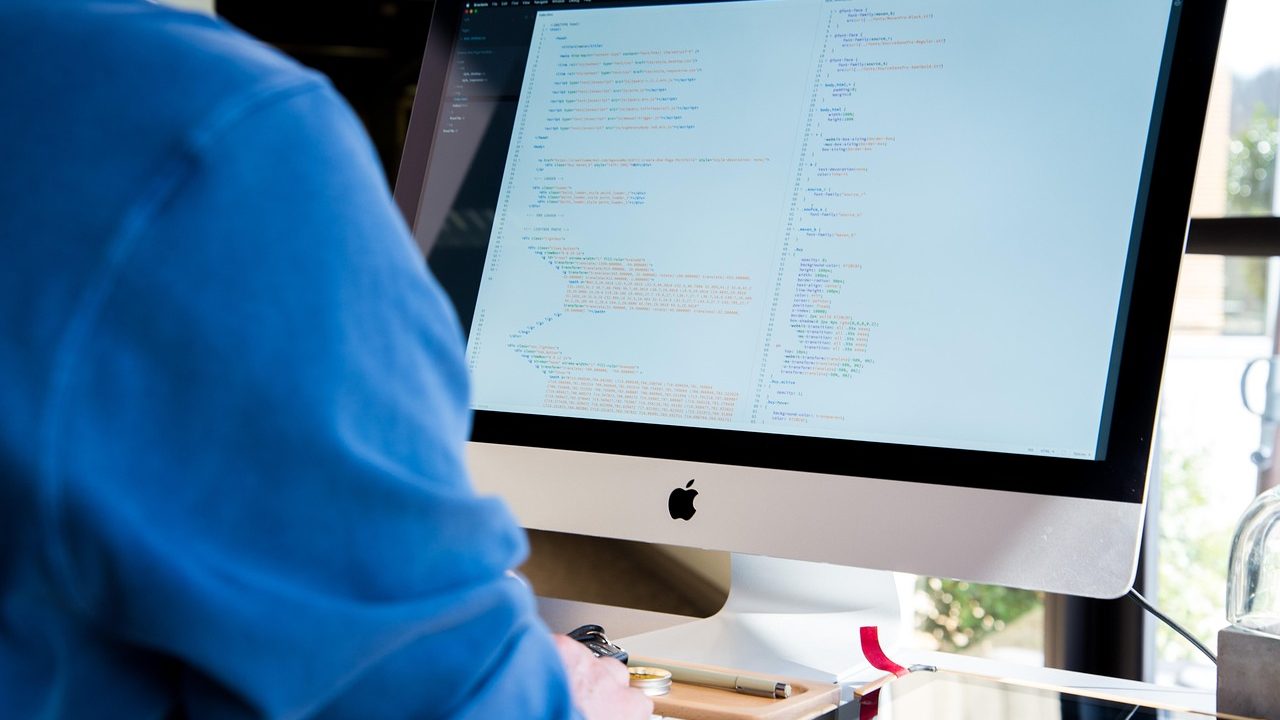
The top-scoring post of the day, Sean Goedecke's essay arguing that large language models reward expertise, generated over 430 comments and sparked exactly the kind of sharp fracture that defines a productive Hacker News thread. Goedecke's core claim is specific: the quality gap between an expert's interaction with an LLM and a novice's interaction is larger than the quality delta in almost any other tool. A senior engineer and a junior engineer using the same text editor produce roughly similar output from the editor itself; the same two people using the same LLM produce dramatically different results, because the expert can recognize errors, course-correct, decompose problems, and evaluate answers.
One camp in the comments extended the argument, framing LLMs as amplifiers — tools that scale judgment in whatever direction it already points. Good judgment scales into better output; bad judgment scales into convincing, confidently delivered mistakes. The opposing camp pushed back with what several commenters called 'over-trust zones': moments where an expert's pattern recognition shuts off because the model's output looks plausible enough to pass without scrutiny. The counterintuitive implication is that novices, who know they don't know, may stay more vigilant than experts who've grown comfortable with the tool.
A related post — arguing that developers should manually retype LLM-generated code rather than copy-pasting it — connected directly to this tension. The author's argument centers on what they term 'cognitive debt': accepting generated code without engaging with it mechanically creates a gap between what a codebase does and what its author understands it to do. The HN comments were divided; many found the suggestion impractical at scale, while others observed that the developers most likely to benefit from the practice are precisely those least likely to follow it.
OpenAI researcher Lilian Weng's post on engineering AI for self-improvement, published in July but gaining traction Tuesday, offered a technical corollary to these debates. Weng surveys how AI systems can improve through structured feedback loops — specifically using outcome-based reward signals rather than human preference labels, and creating scaffolding that lets a model evaluate its own intermediate steps rather than just final outputs. The strategic implication is significant: if automated self-critique pipelines can substitute for expensive human labeling, the economics of the entire training loop change.
OpenAI's paper on ten advances in mathematics and theoretical computer science — which drew 554 points and nearly 850 comments — sharpened the debate further. Some commenters with mathematics backgrounds argued that 'advance' was doing considerable work in the headline, with certain results representing verifications or improvements on known bounds rather than genuinely new mathematical insights. The deeper and still-unresolved question the thread circled: whether AI systems succeeding at mathematics are doing something that resembles mathematical reasoning, or something that merely looks like it from the outside.
The Shrinking Footprint of Giant AI Models

A GitHub project called Swiftlet is claiming that an 80 billion parameter language model can run in 4.3 gigabytes of RAM on a Mac — a figure that sounds like a specification error. At standard float16 precision, 80 billion parameters would require roughly 160 gigabytes of memory; the gap reflects how far quantization techniques have advanced. The project drew 205 points and 91 comments, with the HN thread probing what 'useful' means in this context. Benchmarks in the thread suggested the compressed model performs surprisingly well on structured text generation and coding assistance, with more apparent degradation on tasks requiring nuanced reasoning or factual precision.
A separate claim — running a 35 billion parameter model on an iPhone — was described as the kind of capability that would have been dismissed as fantasy eighteen months ago. On-device inference at that scale carries meaningful implications for privacy, latency, and cost: data is processed locally, eliminating per-token API charges and server-side data transmission.
At the opposite end of the deployment spectrum, work demonstrating DeepSeek V4 Flash running on a single AMD MI300X GPU illustrated that a frontier-class model need not require a multi-GPU cluster — a significant reduction in both cost and operational complexity. Cloudflare's post on running Kimi and GLM at scale through its Workers AI platform added a production-operations perspective: the company described selecting models not always on capability alone but on whether they fit latency budgets, memory budgets, and reliability requirements — a framing one might apply to any distributed systems component.
What is notable about this moment in AI infrastructure is that the capability frontier and the deployment floor are moving simultaneously in opposite directions: models growing more powerful while hardware requirements shrink. The range of viable deployment contexts is expanding in both directions at once.
FFmpeg Turns 9.0, Pandoc Turns 20, and a Fight Over Open-Source Devtools
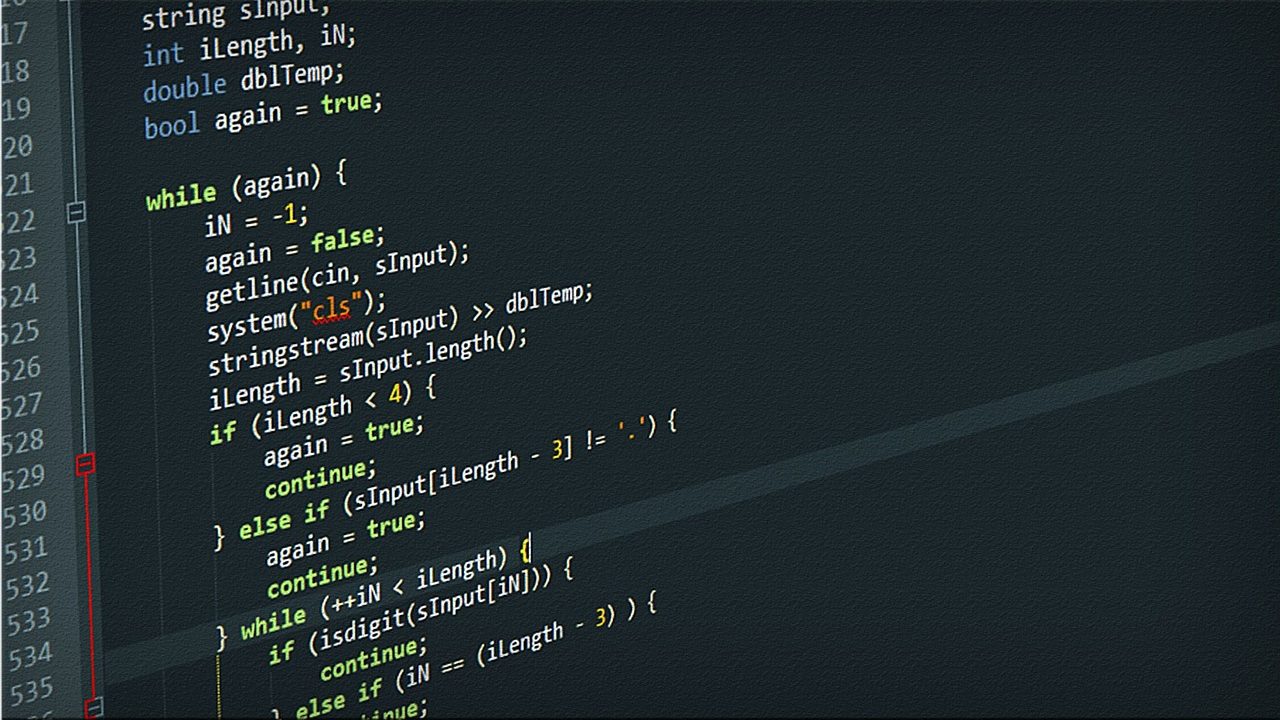
FFmpeg 9.0 arrived Tuesday, marking a new version of the foundational audio and video processing library that has touched virtually every piece of digital media consumed over the past two decades. The release brings improvements to codec support, filter graph performance, and hardware acceleration. FFmpeg's history includes licensing disputes and dramatic forks, yet it has continued shipping and improving — earning what might be described as an institutional status in the digital media ecosystem.
Pandoc, the document format conversion tool started by John MacFarlane in 2006 as a personal project, marked its twentieth anniversary. MacFarlane's anniversary post credited contributors extensively and reflected honestly on design decisions he would make differently in hindsight. The comment thread carried unusual warmth — developers sharing dissertation workflows, documentation pipelines, and years of personal reliance on a tool that, as one commentator's framing had it, solved a real problem reliably over a long time horizon without trying to disrupt anything.
The more contentious entry in this cluster was a post arguing that developer tools must be open source. The philosophical and practical argument runs as follows: devtools affect not just the developers who use them but everything those developers build, making a proprietary tool with opaque behavior a risk not only for individual users but for the entire downstream software supply chain. The strongest version in the comments centered on verifiability — closed-source code editors, build systems, or CI infrastructure leave developers unable to confirm what is actually being done with their code.
Pushback was substantive. Several commenters noted that demanding full open-source status ignores the economics of maintaining complex tools — commercial models that sustain that maintenance often require proprietary components. Others drew a distinction between openness and trustworthiness: open-source code can still contain malicious or negligent behavior, and the audit bandwidth for most devtools in the community is limited.
Jane Street's Bonsai UI library for OCaml, released openly, offered a live data point. The library drew 362 points and 148 comments, partly on the strength of its engineering — it uses incremental computation to recompute only changed UI components at fine granularity — and partly because OCaml UI tooling has historically been a pain point. The compile-time guarantees available through OCaml's type system give Bonsai architectural enforcement properties that a JavaScript framework can only approximate through developer discipline.
Three Million People Hidden in Three Percent of the Amazon

Two separate Hacker News posts — one from Science magazine drawing 167 points and 135 comments, and a New York Times piece — covered the same underlying research finding: an ancient Amazonian civilization may have been home to approximately three million people occupying a spatial footprint representing only about three percent of the Amazon rainforest. The figure would have been considered implausibly high by most archaeologists as recently as twenty years ago, when the dominant historical narrative held the Amazon to be essentially pristine wilderness at the time of European contact, populated by small and dispersed indigenous groups.
The mechanism behind the discoveries is significant. Researchers are combining LiDAR aerial surveys — which can penetrate forest canopy to reveal ground-level structures — with analysis of anthropogenic dark earth, the deliberately modified agricultural soil known as 'terra preta,' which retains fertility for hundreds of years and serves as a reliable marker of sustained human habitation. Separately, large geometric earthworks called geoglyphs — circles, squares, and other shapes visible only from the air — have been identified, structures that went undetected until aerial survey technology or forest clearance made them visible.
The HN thread on the Science piece extended into soil science and sustainable agriculture: the terra preta techniques these civilizations developed produced soils that reportedly remain fertile five hundred years later. Several commenters also noted that evidence of large pre-Columbian populations carries implications for contemporary indigenous land rights debates in Brazil — making the findings something other than a purely academic question.
Ray Bradbury's 1950 short story 'There Will Come Soft Rains' — circulating on HN the same day — landed with unusual resonance alongside these findings. The story depicts an automated house continuing its daily routines after the human family it served has been destroyed: announcing breakfast, reminding absent owners of appointments, reading poetry. As a meditation on technology outlasting the civilization that built it, it found unlikely company in a news cycle about ancient cities recovered from the forest floor through remote sensing.
Pavlo Joins ClickHouse, the Hiring Market Tilts, and a Missile Warning
Andy Pavlo — database systems researcher at Carnegie Mellon and director of the CMU Database Group — is joining ClickHouse to establish ClickHouse Labs, an internal research organization. Pavlo has been a prominent public voice arguing that the industry has not fully absorbed the implications of NVMe storage and persistent memory for database design, and he has produced influential work on self-tuning database systems — the idea that a database should be able to optimize its own configuration based on observed workload patterns. The HN comments speculated that his arrival signals ambitions beyond incremental improvements to ClickHouse's current OLAP architecture.
The OLAP database market is currently competitive, with Snowflake, BigQuery, Redshift, DuckDB, ClickHouse, and StarRocks all active. Bringing a researcher of Pavlo's seniority inside a production database company with a dedicated research mandate represents a particular thesis about where durable competitive advantage originates — architectural insight operating on a longer time horizon than engineering velocity alone.
The August 2026 hiring threads on Hacker News reflected a labor market shift. The 'Who wants to be hired?' thread posted 295 comments on a score of 127 — a comment-to-upvote ratio suggesting more candidates visible than open roles. Senior engineers were explicitly noting openness to relocation or remote work, a qualifier less common in those threads two years prior. A YC S26 company called Hoplite, offering deployment infrastructure for cloud coding agents, drew 74 points and 60 comments, with the community raising productive questions about pricing, vendor lock-in, and failure recovery.
The most sobering item of the day — flagged in the opening and described as deserving analysis rather than a quick pass — was a report that the U.S. has reportedly used virtually all of its long-range precision missiles during the Iran conflict. The strategic implications of that claim — concerning stockpile depletion, deterrence signaling, and industrial production timelines — were characterized as substantial enough to anchor a separate dedicated episode on a companion program covering international affairs and world events.
What the Tools Can Do and What We Understand Them to Be Doing

Taken together, Tuesday's board kept returning to a single underlying question: the gap between what tools can do and what their users understand them to be doing. The LLMs-reward-expertise debate is about that gap. The cognitive debt post is about that gap. Lilian Weng's self-improvement paper addresses it from the model's side. The ancient Amazon findings represent the same tension in a different register — the distance between what was assumed about human history and what physical evidence actually records.
The consensus forming around on-device AI inference — privacy, latency, and cost all favoring local compute — was offered as a candidate for stress-testing. One counterargument: the capability advantage of frontier models running in datacenters might compound faster than efficiency gains in on-device inference, meaning the gap between a quantized 80 billion parameter phone model and a full-precision cluster model could widen rather than narrow. A second buried assumption is hardware continuity: Swiftlet's claims rely on Apple Silicon's unified memory architecture, which is unusual among consumer devices, and a future chip generation or a shift in leading model design could rewrite the efficiency story. A third assumption — that users broadly prefer on-device AI for privacy reasons — may reflect technically sophisticated users more than the general population.
The correction from a previous episode — in which an erroneous claim about Ukrainian strikes on Russian ships in the Caspian Sea was aired without sufficient verification — was acknowledged directly. The Caspian Sea is landlocked and thousands of kilometers from Ukrainian-controlled territory; no such attacks occurred. The episode described reading from a source that was either fabricated or severely miscategorized. The lesson named was the same one in the cognitive debt post: confident-sounding output is not the same as verified output.
Andy Pavlo's move to ClickHouse was the business story most likely to carry long-term resonance — a signal that at least one database company is betting that architectural research, not just engineering execution, is where the next decade of competitive differentiation will be decided. And Ray Bradbury's automated house, reading poetry to no one in a story published in 1950, remained the day's quietest provocation: the routines continue; the builders are gone; the system is indifferent to the difference.