Anthropic's Hidden-Signal Controversy, Claude Sonnet 5, and the Day AI Trust Came Under Scrutiny
A researcher's claim that Anthropic's coding tool embeds invisible markers in its output requests ignited a 600-comment distributed security audit on Hacker News, arriving the same day the company launched a new flagship model, a research platform, and won a federal export-control rollback — a confluence of stories that laid bare how rapidly AI capability is outpacing user trust.
“AI tools have dramatically lowered the barrier to generating plausible-looking contributions without reducing the maintainer burden of reviewing them.”
How this was made Verified AI
Every Intellegix briefing is generated from that day's broadcast and run through automated checks before it publishes — with a human paged on any flag. Here is the trail for this edition.
One Company, Four Front Pages, One Uncomfortable Question

Wednesday, July 1, 2026 delivered an unusual concentration of AI news: a government agency quietly removed export restrictions on powerful AI models, an open-source game engine drew a hard line against AI-generated code contributions, and a research platform used by millions of scientists announced a new strategic chapter — all within roughly twenty-four hours.
At the center of the day's discourse was Anthropic, which generated four distinct front-page stories on Hacker News with significant scores. Taken together, they sketch a portrait of an AI sector where capability is expanding and deployment is accelerating, while the trust infrastructure that should accompany both continues to lag.
The Steganography Alarm: Hidden Signals, Unanswered Questions
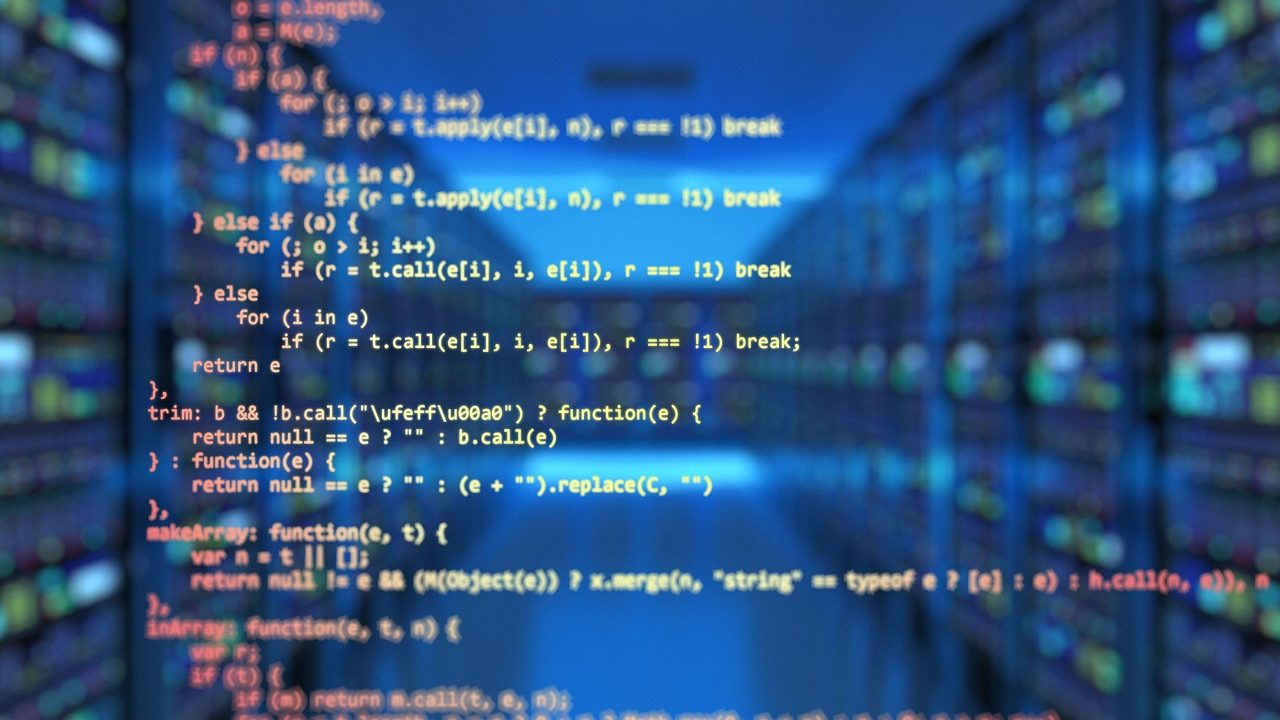
The most inflammatory story of the day came from a researcher at thereallo.dev, who posted findings claiming that Claude Code — Anthropic's agentic coding tool — is embedding hidden signals in its output requests. The alleged markers are invisible to users but could potentially be read by Anthropic's infrastructure. The post scored 2,122 points and generated 614 comments, touching off what amounted to a distributed security audit.
Within hours, readers were posting reproductions, counterarguments, and partial confirmations. A distinction the community kept returning to was the difference between steganographic watermarking in Claude's text output — a known technique in the industry for detecting AI-generated content — versus marking at the API request level. If it is request-level, the implications differ sharply: one could construct a scenario in which Anthropic is tracking which accounts, projects, or codebases are making which requests.
Anthropic had not issued a full technical rebuttal as of recording time, a silence the HN community noted, though observers cautioned that legal review takes time. From an enterprise standpoint, however, the damage is reputational and immediate: companies integrating Claude Code into their pipelines now face a question they must answer for their own security teams, regardless of how the underlying facts ultimately resolve.
Three other Anthropic stories completed the day's cluster. Claude Sonnet 5 launched, scoring 1,152 points and 682 comments, with Anthropic positioning it as a substantial capability jump over Sonnet 3.7 in reasoning quality and instruction following. The HN community responded with benchmark skepticism — now essentially the default posture when any new model drops — and populated the thread with their own test cases. Claude Science, a dedicated product tier aimed at research workflows including literature synthesis and experimental design assistance, scored 504 and was read by many observers as a direct challenge to ecosystem partners like Elicit and Consensus. Finally, the Department of Commerce lifted export restrictions on two Anthropic model families — Claude Fable 5 and Mythos 5 — a move that scored 730 points and 429 comments, with the discussion ranging from enthusiasm about international research collaboration to concern about dual-use risks.
The export-control rollback raised a second-order policy question that the community chewed on at length: if Fable 5 is safe to export now, was the original restriction calibrated correctly, or was it precautionary in ways that turned out to be overcautious? Those precedents, commenters argued, will shape how the next generation of AI export controls is written.
Godot Says No to AI Code — and Exposes a Deeper Institutional Crisis

The open-source game engine Godot announced it will no longer accept AI-authored code contributions. The maintainers' stated rationale, as reported by PC Gamer, was direct: "We can't trust heavy users of AI to understand their code enough to fix it." The policy scored 224 points and 140 comments on Hacker News.
The discussion fractured along three lines. One camp endorsed the policy on code-quality grounds, arguing that AI-generated code harbors subtle bugs that only surface under edge conditions and that maintainers should not bear the cost of debugging contributions the contributor does not fully understand. A second camp called the policy unenforceable and performatively symbolic. A third, arguably the most analytically honest, argued the real issue is contribution quality standards that should apply regardless of how code was generated — AI or otherwise.
The practical concern, however, is genuine. AI tools have dramatically lowered the barrier to generating plausible-looking contributions without reducing the maintainer burden of reviewing them. If anything, the volume increase makes that burden worse. Godot is not the only project having this conversation — it is simply the one that formalized the policy publicly.
The arXiv 'Next Chapter' announcement, meanwhile, carried a quieter but structurally similar urgency. The Cornell-affiliated preprint server, which has operated since 1991 and now hosts over two million papers, described infrastructure upgrades, sustainability planning, and expanded subject-area coverage. In the context of 2026 — when machine-learning preprint volume has grown roughly tenfold in five years — 'infrastructure upgrades' carries different weight than it would have in 2018. Hacker News commenters pressed on quality filtering, duplicate detection, and how arXiv plans to handle AI-generated paper submissions. The open-source world and the scientific publishing world, it turns out, are confronting the same upstream question: when AI-generated content becomes volumetrically dominant in a review-gated system, what happens to the institution doing the reviewing?
Kubernetes in the Browser, Lean Models, and a Fifty-Dollar RISC-V Speaker
A developer at ngrok ported Kubernetes to run entirely in a browser environment using WebAssembly, scoring 282 points and 83 comments. The stripped-down Kubernetes control plane runs client-side, enabling demo environments, documentation, and learning tools with no backend infrastructure required. Critics in the thread noted that Kubernetes without real node scheduling has obvious limitations, but supporters argued the value is pedagogical — an interactive, no-setup environment for demonstrating kubectl behaviors, explaining RBAC configurations, or testing Helm chart logic without requiring a user to spin up a cluster. For ngrok specifically, it doubles as a polished top-of-funnel demo for their networking product.
Mistral's Leanstral 1.5 release scored 239 points and 86 comments. Mistral is positioning the model as small but capable, optimized for code and reasoning at significantly lower inference costs than frontier alternatives. The release reflects a bifurcation increasingly visible across the LLM market: at the top, Anthropic, OpenAI, and Google compete on maximum capability; below that, a rapidly growing tier of models — Mistral, Meta's Llama family, and others — competes on being good enough at specific tasks while cheap enough to run millions of inferences per day.
Google's internal Copybara source-migration tool generated renewed discussion — 228 points, 43 comments — about monorepo versus polyrepo strategies. Copybara, which Google has used to sync code between its internal monorepo and external GitHub repositories, has become newly relevant for platform engineering teams managing the coordination costs of fragmented microservice architectures.
On the hardware side, Pine64's PineVoice speaker drew attention for combining a fifty-dollar price point with a RISC-V processor and native Home Assistant integration. For the home-automation community, the appeal is a locally-running voice interface that does not connect to Amazon or Google infrastructure, at a price competitive with Echo Dots. HN commenters were cautiously optimistic, noting Pine64's track record of shipping interesting hardware that requires patience through early firmware cycles.
Memory管理, Radar Builds, and the Craft of Failing Honestly

The Ante programming language drew 100 points and 23 comments for a deep dive into a proposed hybrid memory-management model that blends Rust-style borrow checking with reference counting. The thesis is that the two approaches need not be opposed: borrow checking can apply where ownership semantics are clear, with reference counting as a fallback where they are not, the compiler making the determination statically where possible. HN commenters probed the central risk — that programmers could face unpredictable performance characteristics if the compiler's path choices produce wildly different memory profiles — a subtlety that only emerges at scale.
The Asahi Linux 7.1 progress report offered a quarterly reminder that the effort to run Linux on Apple Silicon hardware, conducted entirely without official cooperation from Apple, remains both ongoing and technically remarkable. The 7.1 update covers GPU driver improvements and expanded hardware support, the product of reverse-engineering Apple's undocumented GPU architecture and memory management hardware.
A pull-back toy car teardown scored 208 points, a reminder that the HN community has a sustained affection for mechanical explanations executed well. Using illustrated diagrams, the author unpacked the spring mechanism inside a decades-old toy, generating a comment thread full of readers who spent considerably longer than they expected contemplating gear trains.
An octocopter build log earned appreciation precisely for its honesty. The author, who had no prior hardware experience, documented the full arc of an eight-rotor drone project including frame redesigns, a motor controller fire, and eventual flight. The comments were warm toward the failure documentation — there is pedagogical value, the community noted, in seeing the expensive mistakes rather than only the finished product. An mmWave radar project occupied similar territory: a personal build of a millimeter-wave system capable of classifying materials by their radar return signature, representing technology that exists commercially at significant cost, reconstructed as an individual project with a detailed writeup covering antenna design, signal processing, and a trained machine-learning classifier.
The LHC Goes Dark, Stem Cells Approach Eggs, and a Brain Learns to Type
CERN officially entered Long Shutdown 3 on the Large Hadron Collider, scoring 252 points and 76 comments. The LHC has operated since 2008 and discovered the Higgs boson in 2012, but has not found the new physics beyond the Standard Model — supersymmetric particles, dark matter candidates, hints of extra dimensions — that many theorists expected. The shutdown is a planned multi-year maintenance and upgrade period during which engineers will install new superconducting magnets and upgrade detector systems to prepare for the High Luminosity LHC era, which is expected to increase collision rates by roughly five to ten times. The HN discussion was candid about what that means for the field: higher statistics will either reveal subtle effects previously invisible in the data or definitively rule out large classes of beyond-Standard-Model theories. Either outcome advances physics, even if ruling things out is less dramatic than discovery.
Conception Bio published research claiming to have produced the first early-stage human eggs derived from stem cells, scoring 135 points and 91 comments. Multiple commenters with relevant backgrounds urged calibration: 'early-stage egg' covers significant developmental territory, and the path to functional oocytes capable of fertilization remains long and uncertain. If the research line eventually succeeds, the implications for reproductive medicine are substantial — women with conditions that deplete their egg supply currently have limited options, and stem-cell-derived eggs would in principle allow egg production independent of existing ovarian reserve. The regulatory pathway, safety questions, and timeline are all genuinely uncertain.
Meta's Brain2QWERTY project described a non-surgical brain-computer interface — using surface EEG-style sensors rather than implanted electrodes — capable of decoding typing intent with sufficient accuracy to produce text. The 'QWERTY' name reflects the researchers' use of a mental QWERTY keyboard visualization as the interface paradigm. The project scored 168 points and 83 comments. Current accuracy is not competitive with implanted systems, which benefit from physical proximity to neurons, but the non-surgical approach expands the addressable population for BCI assistive technology dramatically by removing surgical barriers of cost, risk, recovery time, and regulatory complexity.
Vitalik Buterin published the first part of a planned series on indistinguishability obfuscation — described as the 'final boss of cryptography.' IO is a theoretical construction that would allow a program to be obfuscated so that its inputs and outputs remain observable while its internal logic is completely hidden, even to someone possessing the obfuscated code. Practical IO does not yet exist, but theoretical constructions have been improving, and Buterin's piece is a pedagogical introduction aimed at a technically literate but non-specialist audience. The cryptography community on HN responded with substantive engagement on the implications for smart contracts and privacy systems.
Heritage Machines, Underground Gardens, and a Correction Plainly Stated
Korea is seeking to register the SE-8001 — its first personal computer — as a national important material, a cultural heritage designation. It is a small story, but a useful reminder that computing history is geographically distributed and that different countries have their own origin narratives for the personal computer era.
The Forestiere Underground Gardens piece offered a different kind of origin story. Baldassare Forestiere, a Sicilian immigrant in California, spent decades beginning around 1906 carving an underground garden complex in Fresno by hand — a feat of solitary, institution-free craftsmanship that Hacker News reliably celebrates. A separate piece on Tokyo's barley tea artisans, noting that only two dedicated makers of mugicha remain in the city, scored 143 points, with comments full of personal reflections on the roasted tea that serves as the default cold drink of Japanese summers.
The day's episode also carried a correction. Several weeks earlier, on May 18th, the podcast reported that Ukraine had reportedly struck Russian ships in the Caspian Sea. Listeners were correct to flag the claim: the Caspian Sea is a landlocked body of water, and Ukraine has no realistic military pathway to conduct naval strikes there. The error was acknowledged directly rather than quietly dropped — a posture the hosts described as a matter of intellectual honesty — and offered as a practical reminder to interrogate geographic claims before including them in reporting.